


Health authorities across South Asia are on alert after India confirmed an outbreak of the Nipah virus (NiV) in the eastern state of West Bengal in January 2026. This deadly virus has a high fatality rate and no approved vaccine or specific treatment, causing concern among healthcare officials and travellers. The outbreak was linked to a cluster of cases around Kolkata and nearby districts. Five confirmed infections were reported, and dozens of people who had close contact with the patients were placed under home quarantine. At least one case was critical, and medical teams immediately launched contact tracing to contain further spread. Nipah is a zoonotic virus carried by fruit bats, pigs and other animals. It can transmit to humans through direct contact with secretions or bodily fluids from infected animals or people. Once infected, people can spread the virus to others through close personal interactions, especially in healthcare or household settings. The World Health Organization (WHO) lists NiV as a priority pathogen because of its epidemic potential and severe outcomes. Signs of infection begin with fever, headache, muscle aches and sore throat, progressing in severe cases to respiratory problems, neurological issues, seizures or encephalitis (brain swelling). Because these early symptoms resemble those of flu or dengue, timely detection depends on vigilant screening and diagnostic testing. In response to the outbreak, several Asian countries have reinforced health screening at airports and border points, reminiscent of systems used during the COVID-19 pandemic. Thailand, Nepal and Taiwan expanded use of temperature checks, symptom questionnaires and isolation procedures for arrivals from affected regions. Health officials also distributed advisory cards that explain Nipah symptoms and recommended next steps. Experts emphasise that airport screenings are early detectors, not definitive tests. “If a traveller shows symptoms or reports recent contact with an infected person, health teams must act swiftly,” says a regional health official. This approach aims to catch possible cases before they spread further. While the outbreak remains limited geographically, authorities urge the public to practice good hygiene, avoid contact with sick animals or people, and report symptoms early. Continued surveillance and cooperation between countries remain key to stopping broader transmission.

Nipah Virus Outbreak in India Triggers Asian Airport Health Alerts
An outbreak of the deadly Nipah virus (NiV) in India has triggered health alerts across Asia, prompting several countries to tighten health checks and airport screenings for international travellers. The virus, which carries a high fatality rate of 40–75% and for which no specific vaccine or approved treatment exists, has placed authorities on high alert. The current outbreak was confirmed in the West Bengal state of India in January 2026, where five cases have been identified, including infections among healthcare workers. Nearly 100 contacts are under home quarantine while investigations continue into up to 200 potential exposures. One patient remains in critical condition. Nipah virus is a zoonotic pathogen that spreads from animals such as fruit bats and pigs to humans, and can also transmit through close person-to-person contact. Early symptoms include fever, headache, muscle pain, vomiting and sore throat. Severe cases may lead to respiratory distress, brain inflammation (encephalitis), seizures or coma. Because early signs are non-specific and overlap with other illnesses, detection without screening can be difficult. In response to the outbreak, airports in Thailand, Nepal and Taiwan have reinstated COVID-style health surveillance measures to prevent cross-border transmission. Screening includes temperature checks, symptom checks, travel history questionnaires and, in some cases, isolation of symptomatic travellers arriving from high-risk regions. “Health Beware Cards” advising travellers on warning signs and appropriate actions after potential exposure are also being issued at some airports. At Thailand’s Suvarnabhumi, Don Mueang and Phuket airports, travellers from West Bengal now face enhanced monitoring. Nepal has strengthened screenings at Tribhuvan International Airport and border crossings with India, while Taiwan plans to classify Nipah as a top-tier notifiable disease, enabling rapid reporting and control. Authorities stress that airport screenings are triage tools, not diagnostic tests, designed to flag possible infections and support early containment. Health officials advise passengers to report symptoms promptly, follow hygiene protocols and disclose any recent travel to outbreak zones. The World Health Organization (WHO) lists the Nipah virus as a “priority pathogen” due to its potential for severe outbreaks and high mortality, reinforcing the need for vigilance. Despite the serious nature of Nipah, experts say the risk to the general public remains low in the absence of direct exposure to infected individuals or animals. Continued surveillance, contact tracing and international cooperation aim to limit spread while enabling air travel to continue with caution.

New AI-Powered Sarco ‘Suicide’ Pod Designed for Couples to Die Together
A controversial euthanasia device is once again drawing global attention after its inventor revealed plans for a new version designed specifically to allow couples to die together, raising fresh ethical questions around assisted suicide and consent. The updated design, currently under development, would enable two people to end their lives simultaneously using the same capsule. The device would only activate if both individuals press their buttons at the same time, a feature intended to ensure mutual and voluntary participation. The Sarco euthanasia pod was developed by Philip Nitschke, an Australian physician who has been campaigning for assisted suicide since the 1990s. First introduced in Switzerland in 2019, the pod allows a person to die without medical supervision by releasing nitrogen gas, rapidly reducing oxygen levels inside the capsule. Nitschke said the idea for a couples-only version emerged after repeated inquiries from partners wishing to die together. He cited interest from several couples, including one from Britain who reportedly told him they wanted to “die in each other’s arms.” The proposed model—dubbed the “Double Dutch” Sarco—would be larger than the original and incorporate artificial intelligence to assess whether both users possess the mental capacity to make the decision. Instead of a conventional psychiatric assessment, prospective users would complete an online evaluation administered by an AI avatar. “One of the parts of the device that hadn’t been finished but now is, is the artificial intelligence,” Nitschke said. “You do the test online with an avatar, and if you pass, the avatar confirms you have mental capacity.” The Sarco pod has faced legal scrutiny before. In 2024, a 64-year-old American woman became the first publicly documented person to use the device at a forest retreat in Switzerland. Authorities temporarily seized the pod and detained individuals present while investigating the death. Although early reports suggested the possibility of intentional homicide, Swiss prosecutors later ruled out international homicide charges, allowing the case to be closed. The announcement of a couples-focused version has intensified debate among ethicists and medical professionals, with critics warning that romanticizing joint suicide could have serious societal consequences. Supporters, however, argue that the design adds safeguards by requiring explicit consent from both parties. As development continues, the proposed device is expected to reignite global discussion over assisted suicide, emerging technology, and the ethics of couples choosing to die together.

Scotland’s World Cup Dream Faces Visa Test Ahead of T20 World Cup
Scotland’s surprise entry into the T20 World Cup 2026 has brought excitement—and urgency—as the team races to secure visas for its players ahead of the tournament in India and Sri Lanka. The situation has drawn particular attention due to visa sensitivities involving players of Pakistani heritage, including fast bowler Safyaan Sharif. Scotland replaced Bangladesh in the upcoming global event, earning a late but historic place in the marquee tournament. However, the short turnaround has left officials focused on logistical hurdles rather than on-field preparations. Sharif, one of Scotland’s key pace bowlers, was born in Huddersfield, England, to a Pakistani father and a British-Pakistani mother. He moved to Scotland at the age of seven and has since become a mainstay of the national side. His background has placed him at the center of visa-related concerns as the squad prepares to travel to India. Introducing your Scotland squad heading to the ICC Men's #T20WorldCup in India and Sri Lanka 🤩➡️ https://t.co/cmtJB52phQ pic.twitter.com/2EQgZb5CdH— Cricket Scotland (@CricketScotland) January 26, 2026 Speaking on Monday, Trudy Lindblade, Chief Executive of Cricket Scotland, said the board is working closely with tournament authorities to resolve the matter. “We are all committed to working with the ICC to make that happen,” Lindblade said. “The visa piece is always slightly unknown, and it doesn’t matter whether you’ve got three days or whether you’ve got 45 days.” She added that securing travel clearance for players has been the organization’s top priority since Scotland’s qualification was confirmed. “Certainly that’s been our focus in the last 48 hours—just getting those visas done so our players are all ready to go,” Lindblade said. “They’re in the middle of submitting their visas, and we’ll be on the ground in India as quickly as we can.” According to Lindblade, International Cricket Council has provided assurances on matters within its control and is coordinating with the Board of Control for Cricket in India and local authorities to support all participating teams. “There’s a team working very hard not just to help us, but to help 19 other teams going to a World Cup,” she said. “Right now, though, we are their intense focus.” The issue follows recent comments from Ali Khan, who said several USA players of Pakistani origin were initially denied visas for travel to India. Tournament officials later clarified that the issue was due to procedural delays rather than outright rejection. With the clock ticking, Scotland remains hopeful that all squad members will receive clearance in time, allowing the team to focus fully on its first appearance at a T20 World Cup hosted across India and Sri Lanka.

Instagram, Facebook & WhatsApp to Get Paid Features: What Meta’s Next Move Means
Meta, the parent company of Facebook, Instagram, and WhatsApp, is preparing a major shift in how it makes money from its vast user base. In early 2026, Meta confirmed it will test premium subscription tiers across its three most popular apps, offering exclusive features while keeping the core services free for everyone. The announcement — confirmed by Meta to TechCrunch on January 26, 2026 — marks a strategic move to diversify revenue beyond advertising. With digital ads facing pressure from privacy rules and competition, subscriptions could become a new recurring income stream for the social media giant. Unlike single bundled plans, Meta intends to offer separate subscription options for each app. Early code leaks and developer findings suggest Instagram’s premium tier may include features long requested by power users. These could include unlimited audience lists, visibility of followers who don’t follow you back, and the ability to view Stories without alerting the poster. Meta also plans to weave its growing AI ecosystem into the subscriptions. The company’s nearly $2 billion Manus AI agent acquisition — aimed at providing intelligent assistance — is expected to play a central role. Meta will integrate Manus into user-facing tools inside apps and continue selling standalone subscriptions for business customers. Additionally, Meta may include access to Vibes, its AI-powered short-form video creation tool. Originally free, Meta now plans to offer basic access at no cost while charging subscribers for expanded creative options. Details about premium tiers for Facebook and WhatsApp are still unconfirmed. However, reports indicate WhatsApp may let paying users remove ads from features like Statuses and Channels, offering a more streamlined experience. This push into premium subscriptions builds on earlier Meta experiments. The company already offers Meta Verified, a paid program that provides badges, impersonation protection, and support for creators and businesses. Changes tested in late 2025 included limits on link sharing for non-verified users, highlighting Meta’s growing focus on monetization through digital services rather than traditional advertising alone. Meta’s move toward paid features mirrors trends seen elsewhere. Platforms like Snapchat+ have shown there is demand for premium social media experiences, with Snapchat reporting millions of paying subscribers. For ordinary users, the core apps will remain free. But the rollout of paid tiers could reshape how people use Meta’s platforms, especially creators, businesses, and power users who want greater control and advanced tools.

Top Europe Destinations Pakistanis Can Visit Without a Schengen Visa in 2026
For Pakistani travellers, exploring Europe without a Schengen visa has traditionally been challenging. In 2026, however, a set of visa-friendly European and Europe-edge destinations is opening easier doors, thanks to simplified e-visas and visa-on-arrival policies. This change is expanding travel options and boosting mobility for Pakistan passport holders. According to the Henley Passport Index 2026, Pakistan now ranks 98th, with access to 31 destinations that offer visa-free entry, visa-on-arrival (VOA) or electronic travel authorisation (eTA). While none of the core Schengen Area countries currently allow Pakistani passport holders to enter without a visa, several nearby countries now make European-style travel more attainable. Among fully European nations, Albania and Moldova stand out. Both allow Pakistani citizens to apply online for e-visas, avoiding embassy visits and lengthy paperwork. Albania, with its Mediterranean beaches, historic cities, and affordable travel costs, offers an appealing gateway into the Balkans. Similarly, Moldova’s cultural towns and accessible e-visa system provide a taste of Eastern Europe without Schengen constraints. In addition to those two countries, several Europe-edge destinations provide simpler access for Pakistani wanderers. Türkiye (Turkey) offers online e-visas, giving visitors from Pakistan easy entry into cities like Istanbul, Cappadocia and Ankara. The country blends rich culture with modern urban life, making it a popular stopover or destination itself. Likewise, Azerbaijan and Georgia offer online e-visas or visa-free stays, inviting Pakistani travellers to explore their scenic capitals and diverse landscapes. Georgia, for example, has a nationally defined visa-free entry regime that allows citizens of many countries to visit without a visa for a short stay, granting Pakistanis access to its historic old towns and vibrant capital, Tbilisi. These destinations function as practical alternatives to the Schengen Area, each offering European heritage, culture and natural beauty without the Schengen visa burden. Beyond Europe and its edges, Pakistan’s passport now allows access visa-free or with streamlined entry to 31 countries across Asia, Africa, the Caribbean and Oceania, opening broader global travel pathways. Still, travellers must prepare properly. Visa conditions, length of stay and entry requirements differ by country, and planning ahead remains essential to a smooth journey. But for many Pakistanis, these e-visa and simplified entry routes signal a new era of accessible travel beyond borders and bureaucracy.

Sindh Allocates Rs900m to Train 35,000 Students in Modern IT Skills
The Sindh government has taken a major step to boost digital skills and employment opportunities for youth by allocating Rs900 million to train 35,000 students in modern Information Technology (IT) competencies. The decision came during a meeting of the Sindh Cabinet’s Sub-Committee on Finance in Karachi on January 26, 2026, chaired by the local government minister Syed Nasir Hussain Shah. Under the People’s Information Technology Programme, funds will support students from three major universities — Institute of Business Administration (IBA), NED University of Engineering & Technology, and Mehran University of Engineering & Technology — to gain in-demand digital skills that can improve their employability. The programme is part of a wider push in Pakistan to prepare young professionals for the digital economy. In recent years, both federal and provincial governments have expanded initiatives to train youth in fields such as artificial intelligence, cybersecurity, cloud computing, and digital marketing. Such efforts align with broader national goals like the Prime Minister’s Youth Programme — launched to empower young Pakistanis with skills, jobs, and business opportunities — and similar public–private training partnerships that help local talent connect with global tech markets. “No delay or negligence in public welfare projects would be tolerated,” Syed Nasir Hussain Shah told reporters at the conclusion of the meeting, underscoring his government’s commitment to education and youth development. The financial boost comes as Pakistan faces high youth unemployment. According to the Pakistan Bureau of Statistics, a large share of university graduates struggle to find jobs that match their qualifications. Experts say modern IT skills can help bridge that gap and make young professionals competitive both locally and globally. The Sindh initiative is also complementary to existing programmes at the federal level. Earlier, the federal government announced plans to provide IT certifications to 500,000 young people and expand training opportunities nationwide. The planned training under the Rs900m allocation will not only help students learn technical skills but may also include support for entrepreneurship and freelancing — areas where a growing number of young Pakistanis already generate income online. Online platforms like DigiSkills.pk have shown that structured digital training can significantly enhance job prospects and income-generating opportunities. By equipping students with practical and modern IT skills, the Sindh government hopes to create a more digitally capable workforce, ready to meet the demands of a fast-changing economy and contribute to Pakistan’s long-term growth.

Daraz Launches Lifeline for Gul Plaza Traders After Devastating Karachi Fire
When tragedy struck Karachi’s bustling Gul Plaza shopping complex on the night of January 17, 2026, hundreds of traders saw their livelihoods reduced to ashes. A fierce blaze tore through the multistorey commercial centre, destroying more than 1,000 shops and claiming at least 73 lives, according to official accounts. In the aftermath of this catastrophic fire, Daraz Pakistan, a leading e-commerce marketplace and Alibaba Group subsidiary, launched a timely relief initiative to help affected sellers rebuild and regain economic footing. Under the company’s Daraz Cares social impact programme, a dedicated section will be added on the Daraz app and website to spotlight products from traders who lost physical inventory in the blaze. This online space is designed to help customers discover these sellers and support their recovery by shopping from them across Pakistan. “Gul Plaza has never been just a marketplace; it has been a place of livelihoods, relationships, and decades of hard work,” said Ehsan Saya, Managing Director of Daraz Pakistan. “What has happened is heartbreaking. Our focus now is to stand with these entrepreneurs in a way that is practical and compassionate.” Beyond visibility, Daraz will provide hands-on onboarding support, targeted training for online selling, warehouse space for inventory storage, and subsidised delivery options to help sellers restart operations quickly. The company also plans to extend free marketing support through its digital assets to drive visibility and sales momentum for affected traders. A three-month support track will keep these efforts active through the crucial commercial periods of Ramadan and Eid, when demand typically spikes. Organisers hope this targeted timeframe will help sellers stabilise and return to growth after suffering severe disruption. Gul Plaza was more than a shop-filled building; it acted as a key economic hub for small businesses and entrepreneurs, including home-based producers and suppliers who routed products through its thousands of vendors. The fire not only destroyed stock and premises but also disrupted supply chains and customer relationships built over years. In response, voices across social media called on the public to support the Gul Plaza affectees, urging solidarity with families and traders still reeling from loss. Daraz’s initiative blends corporate reach with community impact — offering practical tools meant to help sellers re-emerge from devastation and reconnect with customers nationwide.
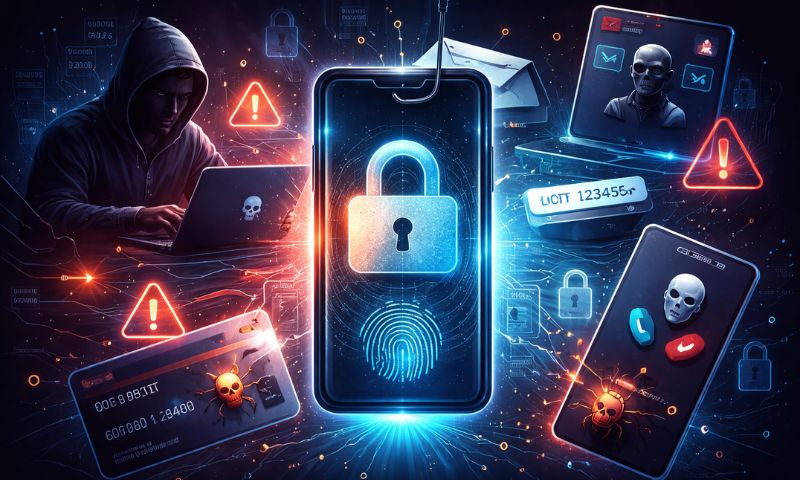
The Digital Mistakes That Cost Users Millions Every Day
Your phone unlocks your bank, your email resets every password, and your messaging apps carry receipts, OTPs, and private photos. That convenience has quietly turned “being online” into a higher-stakes activity than it was even a few years ago. In 2026, the biggest shift is not that hackers suddenly became geniuses. It’s that cybercrime has become faster, cheaper, and more scalable especially with AI helping criminals write convincing scams, clone voices, and automate social engineering. Microsoft warns that “AI-driven phishing is now three times more effective than traditional campaigns,” and notes how attackers use infostealers and exposed services to fuel follow-on compromises. The result: yes, everyday users are more exposed than ever but not helpless. The risk is rising because identity is now the main battlefield, and identity is easiest to steal from people. The new reality: identity is the “master key” For most people, the most valuable thing on their device is not a file—it’s access. Verizon’s 2025 Data Breach Investigations Report highlights how central credentials have become, noting that within “Basic Web Application Attacks,” about 88% of breaches involved the use of stolen credentials. That tracks with what many users experience in real life: one breached password can cascade into email takeover, social account hijacks, SIM swaps, and finally banking fraud. Fraud is exploding, and it’s hitting real people Cybersecurity stories often focus on companies, but the sharp end of this problem is personal financial loss. The FBI’s Internet Crime Complaint Center (IC3) said its 2024 report covered 859,532 complaints and over $16 billion in reported losses (a sharp jump from the prior year). The FBI also listed the most-reported cybercrime categories in 2024 as phishing/spoofing, extortion, and personal data breaches. Older adults are especially exposed. The IC3 report shows people 60+ reported massive losses across scams, including investment fraud and tech support fraud (with detailed category breakdowns and totals). This is why the question “Are users more at risk?” increasingly means: “Can criminals trick you once—and drain you fast?” AI didn’t invent scams. It supercharged them. Phishing used to be easier to spot: broken English, strange links, awkward tone. That advantage is shrinking. Microsoft says it blocked 1.6 million bot-driven or fake account sign-ups every hour and thwarted $4 billion in fraud attempts signals of the scale defenders face now. And the World Economic Forum’s 2026 outlook (published January 2026) puts AI and cyber inequity at the center of the risk landscape, highlighting how uneven security capabilities leave many organizations—and their users—more exposed. A blunt summary of the moment came from Accenture’s Paolo Dal Cin in reporting tied to that outlook: “The weaponization of AI, persistent geopolitical friction and systemic supply chain risks are upending traditional cyber defenses.” Why scams feel “more personal” in 2026 Three trends are making attacks feel targeted, even when they’re mass-produced: 1) Brand impersonation is getting brutally effective Check Point data cited in late-2025 reporting found Microsoft was the most spoofed brand in phishing attempts (22%), followed by Google (13%), Amazon (9%) and Apple (8%). That matters because those brands sit at the center of login and password reset workflows. 2) Smishing is industrial-scale Reuters reported Google sued alleged scammers behind a large text-message phishing scheme, alleging more than a million victims globally and nearly 200,000 fraudulent websites created in 20 days. 3) “Time-to-impact” keeps shrinking Google’s Mandiant reports the global median dwell time (time attackers remain undetected) rose to 11 days (from 10), but ransomware cases often compress timelines dramatically—many incidents get discovered within a week because attackers move fast toward extortion. So… are users more at risk than ever? In practical terms: yes because: Identity theft is easier to monetize than ever (credentials, OTP interception, session hijacking). AI helps attackers scale believable messages and social engineering. Fraud volumes and losses are climbing in official reporting. But there’s a twist: users can reduce risk dramatically with a few high-impact moves. The gap is widening between people who still rely on passwords alone and people who harden their accounts. A 2026 “anti-scam” checklist that actually works Turn on phishing-resistant login where you canUse passkeys (or hardware security keys) for email, Apple/Google/Microsoft accounts, and banking when available. Protect your email like it’s your walletYour email is the reset button for everything. Use a strong unique password + MFA (prefer app/passkey over SMS where possible). Stop reusing passwords—especially for your main accountsA password manager isn’t “extra.” It’s basic safety in a stolen-credential world. Treat texts as untrusted by defaultIf a text claims “delivery failed” or “account locked,” do not tap. Open the official app or type the official site yourself. Smishing operations now scale globally. Add a SIM/number lock with your mobile carrierSIM swaps remain a common bridge to OTP theft and account takeover in many countries.
