

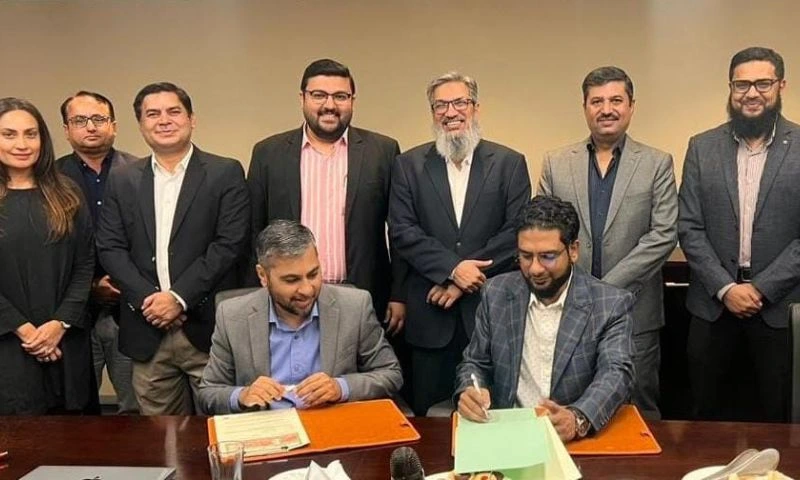
K-Electric and Mega Motor Company, the local partner of BYD Pakistan, have signed a Memorandum of Understanding (MoU) to provide a dedicated 5MW power connection, scalable up to 7.5MW, for BYD-MMC’s upcoming manufacturing facility in Pakistan. The plant is scheduled to go live in 2026. Under the agreement, BYD-MMC will develop and fund the dedicated power infrastructure, with K-Electric facilitating the connection and supply. The arrangement ensures reliable, flexible, and scalable electricity as production volumes increase. The power solution is designed to support BYD-MMC’s automated and technology-driven manufacturing operations, aligning performance with global production standards. The partnership reflects growing confidence among international manufacturers in Pakistan’s industrial ecosystem and energy framework. As BYD prepares to localise production of its New Energy Vehicles (NEVs), uninterrupted power supply remains critical to maintaining efficiency, quality, and automation across manufacturing lines. Commenting on the development, Moonis Alvi, CEO of K-Electric, said:“This collaboration underscores the growing trust of global manufacturers in KE’s capability to support complex and high-demand industrial operations. By enabling scalable power solutions, KE remains committed to supporting industrial development while advancing Pakistan’s journey towards sustainability and clean energy goals.” From BYD-MMC’s side, Aly Khan, CEO of BYD Pakistan – Mega Motor Company, emphasised the strategic importance of the agreement.“We are committed to leading Pakistan’s transition to sustainable mobility by bringing the world’s number one NEV technology to the country, localising manufacturing, and building ecosystems that lay the foundation for long-term industrial growth,” he said.“As we prepare our manufacturing operations to go live, this partnership and investment with K-Electric is critical to operating at global standards and scaling our operations. Such collaborations encourage further greenfield investment and support Pakistan’s future economic goals.” Beyond immediate manufacturing needs, the MoU lays the groundwork for a long-term strategic partnership between the two companies. It supports broader objectives, including clean energy adoption, the expansion of sustainable mobility, and the shared vision of a Greener Pakistan aligned with global sustainability goals. The agreement also marks the latest in a series of K-Electric’s private-sector partnerships aimed at accelerating Pakistan’s industrialisation. It signals rising private-sector confidence in KE’s ability to deliver dependable, scalable power solutions, particularly for industries that rely on advanced technology and continuous operations. Founded in 1913 and privatised in 2005, K-Electric remains Pakistan’s only vertically integrated power utility, supplying electricity to Karachi and adjoining areas. With majority ownership held by a consortium of regional investors and the Government of Pakistan retaining a significant stake, KE continues to play a central role in supporting large-scale industrial growth across the country.

Honda Atlas Bounces Back Strongly as Profits More Than Double in FY26
Honda Atlas Cars (Pakistan) Limited (HCAR) reported a strong financial turnaround in the first nine months of Market Year 2026 (9MFY26), driven by robust sales of its Honda HR-V Hybrid and renewed interest in the Honda City sedan. The company’s profit after tax jumped 117% to PKR 2.22 billion, compared with PKR 1.02 billion in the same period last year, according to a recent industry report. Earnings per share (EPS) also showed significant improvement, more than doubling to PKR 15.59 in 9MFY26, up from PKR 7.19 in 9MFY25, signaling renewed investor confidence and stronger bottom-line performance. This rebound comes as Honda Atlas leverages its updated product lineup to capture demand in Pakistan’s recovering automotive market. The Honda HR-V e:HEV hybrid SUV, launched in August 2025, has been a key contributor to sales volumes, appealing to buyers seeking fuel-efficient crossover options in a segment that was traditionally limited to petrol variants. In addition, the Honda City 1.5L Aspire S CVT, introduced in September 2025, helped invigorate interest in the compact sedan segment, long a strong category for Honda across Pakistan’s major urban centres. Despite the strong top-line momentum and surging sales, Honda Atlas faces some ongoing cost and margin challenges. A stronger Pakistani rupee against the Japanese yen aided gross margins, which remained stable at 7.9%, but marketing and distribution expenses went up three-fold due to aggressive nationwide promotions. Finance costs also surged by 157%, as the company increased borrowings to PKR 14.3 billion to support operations and growth initiatives. Heavy taxation remains a hurdle for the auto industry, with Honda Atlas recording an effective tax rate of 43.1% during the period. Nonetheless, the company’s ability to expand earnings while navigating these headwinds has been notable. Pakistan’s broader automotive sector is showing signs of recovery, supported by lower interest rates, easier financing and rising consumer demand. Car sales in the market recently surged 76% to over 17,800 units, and the sector’s profit projection climbed to roughly PKR 6.6 billion in Q2 FY26, highlighting industry-wide growth. Analysts say sustained demand for SUVs, hybrids and reliable compact cars — combined with supportive policy measures — are key to continued momentum. Honda Atlas, a joint venture between Honda Motor Co. and Atlas Group with decades of presence in Pakistan, is positioned to benefit from this uptrend as it expands its hybrid offerings alongside traditional models. As the company heads into the final quarter of FY26, the focus will be on maintaining profitable growth while managing cost pressures and capitalising on evolving consumer preferences in an increasingly competitive auto market.

Germany Offers €1 Million Reward After Arson Attack Cripples Berlin Power Grid
Germany has announced an unprecedented €1 million reward for information that leads to the arrest of suspects responsible for a deliberate arson attack on Berlin’s power grid earlier this month, authorities said. The federal government described the measure as an exceptional step to break an investigation that has so far yielded few leads. The arson attack on January 3, 2026 crippled high-voltage cables in the Lichterfelde district, triggering the longest electricity outage in the German capital since World War II. The sabotage cut power to roughly 45,000 homes and 2,200 businesses, leaving up to 100,000 residents without electricity and heating amid cold winter weather. The attack targeted five 110 kV and ten 10 kV cables on a critical cable bridge over the Teltow Canal at a combined heat and power station. Because these lines supplied multiple substations across southwest Berlin neighborhoods such as Dahlem, Schlachtensee and Wannsee, the outage had a broad impact that took four days to fully restore. A self-described far-left extremist collective calling itself Vulkangruppe (Volcano Group) claimed responsibility in online statements. The group has been linked to multiple acts of sabotage and arson in the Berlin region since 2011, including an attack on Tesla’s local factory in 2024. German domestic intelligence has labelled the organisation a far-left extremist movement, though its exact structure and membership remain murky. Berlin’s Interior Senator Iris Spranger and Germany’s Interior Minister Alexander Dobrindt both stressed the severity of the incident. Spranger described the attack as an act of terrorism and said the size of the reward reflected the gravity of the crime. Meanwhile, Dobrindt vowed to “strike back” against left-wing extremism and said federal investigators were intensifying efforts to find those responsible. “I think it is appropriate to underscore the seriousness of the situation with a reward of this magnitude,” Dobrindt told lawmakers during a parliamentary session. The Federal Prosecutor’s Office and the Federal Criminal Police Office (BKA) have opened a terrorism investigation into the blackout. Authorities hope that the public appeal — backed by posters, leaflets and a broad publicity campaign in Berlin’s transit system — will generate tips that fast-track arrests. The outage exposed Germany’s vulnerability to attacks on critical infrastructure, reigniting debate about protections for energy networks amid broader concerns including cyber threats and geopolitical pressures. The incident has prompted officials to review infrastructure safeguards while stepping up surveillance and protective measures.

Evee Gen-Z Pro Launch in Pakistan: Longer Range, Safer Battery, Same Urban Price Point
Evee Electric has officially launched its latest electric scooter — the Gen-Z Pro — in Pakistan, marking a significant step forward in the country’s expanding electric two-wheeler market. The new model is powered by a Lithium Iron Phosphate (LiFePO₄) battery, a safer and more durable alternative to the “graphene” or conventional lithium-ion batteries commonly found on local electric scooters. Priced at Rs 259,000, the Gen-Z Pro brings advanced battery technology to urban commuters and eco-minded riders seeking affordable electric mobility without compromising performance. The announcement was made via Evee’s social media channels and quickly stirred interest among Pakistan’s growing EV community. The heart of the Gen-Z Pro is its 76.8V 25Ah LiFePO₄ battery, which delivers enhanced safety, thermal stability and a longer service life compared with many lithium-ion setups. LiFePO₄ batteries are lauded for their greater resistance to overheating, higher cycle life and environmental friendliness, features that make them particularly suitable for Pakistan’s climate and road conditions. Paired with a 1000W electric motor, the scooter can reach a top speed of around 45-50 km/h and offers a real-world range of 60–80 km per charge — ideal for daily commuting within cities. Charging time averages 3–5 hours, making it practical for everyday use, whether riders plug in at home or at work. Design-wise, the Gen-Z Pro features ergonomic handling and durability with 12-inch tubeless tyres, front disc and rear drum brakes, and a modern LCD display. The scooter also includes practical touches such as fingertip controls, LED lighting and a sturdy chassis that handles Pakistan’s urban terrain. Evee’s decision to adopt LiFePO₄ battery technology for the Gen-Z Pro addresses key concerns in Pakistan’s EV scooter market. Many brands previously marketed “graphene” batteries, but such technology has yet to be commercially viable and often delivered longer charge times and shorter lifespans similar to older lead-acid systems. By contrast, the Gen-Z Pro’s LiFePO₄ battery offers a longer life cycle, reduced degradation over time, and improved safety — all backed by a 36-month warranty that demonstrates the company’s confidence in its product. The launch of the Gen-Z Pro comes at a time when Pakistan’s electric scooter segment is expanding rapidly, with more riders seeking cleaner, cost-effective transportation. Urban commuters, students and delivery riders are among those expected to benefit from the Gen-Z Pro’s blend of affordability, performance and long-term reliability. As EV adoption continues to grow, models like the Evee Gen-Z Pro are likely to play a key role in shaping sustainable mobility solutions across Pakistan’s cities.

Babar Azam, Saim Ayub Boost Pakistan’s World Cup Hopes With ICC Rank Gains
Pakistan’s cricket stars have earned a timely boost in the latest ICC Men’s T20I rankings, with Babar Azam, Saim Ayub and spinner Abrar Ahmed climbing up the global charts as the national side prepares for a crucial three-match home series against Australia. According to the updated rankings released on January 28, 2026, opener Babar Azam moved up one spot to 31st in the T20I batting rankings, while emerging left-handed batter Saim Ayub climbed two places to reach joint 35th alongside West Indies batter Brandon King. “Sustained improvement in ICC rankings reflects recent form and consistency,” said a veteran cricket analyst. “For players like Babar and Saim, these moves can boost confidence ahead of high-stakes matches.” The Australia series begins on January 29 at Lahore’s Gaddafi Stadium and will also serve as final preparation for the ICC Men’s T20 World Cup 2026, starting on February 7 in Sri Lanka and India. While Pakistan’s batting gains draw attention, the bowling charts offer strong news too. Leg-spinner Abrar Ahmed made a notable rise, now ranked joint fourth among T20I bowlers, sharing the spot with New Zealand pacer Jacob Duffy. The climb for Abrar highlights his growing reputation as one of the world’s most effective spinners in the shortest format. Pakistan’s T20I captain Salman Ali Agha remained steady at 41st among batters, while Sahibzada Farhan held firm at fifth place, making him the highest-ranked Pakistani batter in the format. Other national players saw mixed movement: wicketkeeper-batter Mohammad Rizwan, currently out of T20I selection, slipped two spots to 61st; opener Fakhar Zaman dropped three places to 69th; Hassan Nawaz and Mohammad Haris also declined in the rankings. At the top of the batting charts, India’s Abhishek Sharma continued to lead, followed by England’s Phil Salt in second and India’s Tilak Varma in third — showing global competition remains fierce. In the bowling rankings, India’s Varun Chakaravarthy retained the No. 1 position, with Afghanistan’s Rashid Khan at second. The rise of Pakistani players in the rankings comes after strong individual performances in recent bilateral series, including a memorable home series against South Africa where Babar became the highest run-scorer in T20 Internationals, surpassing Rohit Sharma’s previous record. Cricket fans will be watching closely as these ranking shifts add context to the upcoming Pakistan vs Australia series. With momentum on their side, Pakistan’s batters and bowlers aim to convert form into victories — a key stepping stone ahead of the global T20 event.
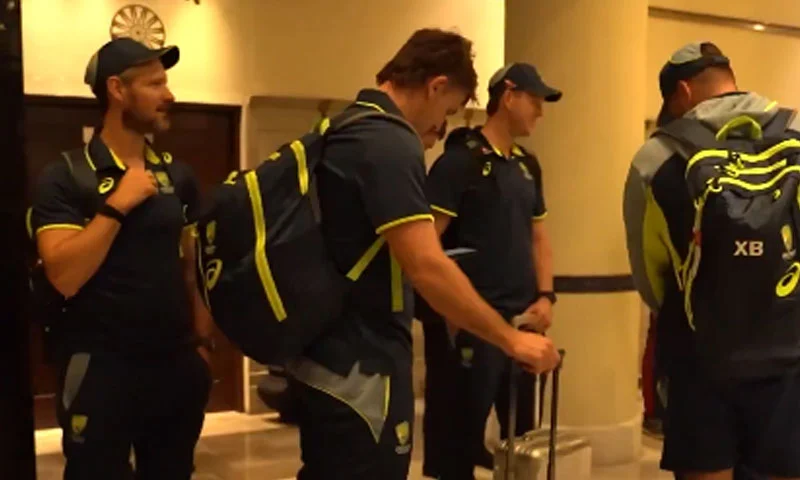
Australia Tour of Pakistan 2026 Begins as Aussies Touch Down in Lahore
The Australian men’s cricket team arrived in Lahore on Wednesday ahead of a three-match Twenty20 International (T20I) series against Pakistan, the Pakistan Cricket Board (PCB) confirmed. The series will begin on January 29, followed by matches on January 31 and February 1, with all three games scheduled at Lahore’s Gaddafi Stadium. Each match will be played as a day-night fixture, with the first ball set to be bowled at 6:00 pm local time. However, the PCB later confirmed that the second and third T20Is will start at 4:00 pm PKT on Saturday and Sunday respectively. Read More: Can the ICC Sanction Pakistan if It Boycotts the T20 World Cup? What the Rules Actually Say The series is being viewed as an important preparatory phase for both teams ahead of the ICC Men’s T20 World Cup 2026, where Pakistan and Australia have been placed in separate groups. The PCB announced Australia’s arrival through a video message on social media platform X, stating: “Australia team arrives in Lahore for the three-match T20I series against Pakistan.” 🛬 Australia team arrives in Lahore for the three-match T20I series against Pakistan 🇵🇰🇦🇺#MateWeAreReady | #PAKvAUS | #BackTheBoysInGreen pic.twitter.com/wXMBZk7oQc— Pakistan Cricket (@TheRealPCB) January 28, 2026 Australia have opted to rest five senior players, including Pat Cummins, Glenn Maxwell, Josh Hazlewood, Tim David and Nathan Ellis, as part of workload management. They have been replaced by Sean Abbott, Mahli Beardman, Ben Dwarshuis, Jack Edwards, Mitch Owen, Josh Philippe and Matt Renshaw.The visiting side will be led by Mitchell Marsh, with a squad that blends experience and emerging talent. The upcoming contest will mark Australia’s third tour of Pakistan since 2022, when the two teams played a full Test and ODI series, followed by a solitary T20I won by Australia. The Australians also featured in three matches of the ICC Champions Trophy 2025 held in Pakistan. Pakistan enter the series after a 1–1 drawn T20I series in Sri Lanka, where one match was abandoned due to rain. The hosts will be captained by Salman Ali Agha and feature key players such as Babar Azam, Shaheen Shah Afridi, Shadab Khan, Naseem Shah and Fakhar Zaman. Former Australian Test batter Simon Katich is also set to return to Pakistan as part of the commentary panel. Katich last visited the country in March 2022, when Australia toured Pakistan after a 24-year gap. He will be joined by former Pakistan Test captains Aamir Sohail and Ramiz Raja, former Test batter Bazid Khan, and ex-Pakistan women’s team captain Urooj Mumtaz. Zainab Abbas will anchor the PCB’s PitchSide Studio, providing pre- and post-match analysis throughout the series. The matches will feature high-definition coverage using 28 cameras, including a buggy cam, while HawkEye and UltraEdge will be part of the Decision Review System (DRS). Fans in Pakistan can watch the series live on PTV Sports, with digital streaming available on Tamasha, Tapmad and Myco. International broadcasts will be carried by T Sports (Bangladesh), Willow (North America), Cricbuzz (MENA), SuperSport (Africa) and Fox Sports (Australia), while PCB Live will stream the matches for viewers in the United Kingdom. The series is expected to attract strong fan interest and serve as a key competitive test for both sides ahead of the global tournament.

China Greenlights Nvidia H200 Chip Imports as Tech Demand Soars
China has taken a significant step in the global technology race by approving the first batch of Nvidia’s H200 artificial intelligence (AI) chips for import, according to multiple sources familiar with the matter. The approvals were granted during a visit to China by Nvidia CEO Jensen Huang, marking a notable shift in Beijing’s stance toward cutting-edge U.S. tech products. The H200, Nvidia’s second most powerful AI processor, delivers roughly six times the performance of the earlier H20 model — previously the most advanced AI chip allowed into China. This high computing power makes the H200 critical for large-scale AI workloads, including machine learning research, deep learning models and data centre operations. Chinese tech giants are expected to be the first beneficiaries of the nod. ByteDance, Alibaba and Tencent have reportedly received approvals for several hundred thousand H200 units, with additional companies now waiting for subsequent rounds of green lights. The approval comes after the U.S. government formally authorised exports of H200 chips to China earlier in January 2026. That decision reversed a long-standing ban on advanced AI chips, allowing Nvidia to seek sales in the lucrative Chinese market under certain conditions, including national security reviews and usage limitations. Until now, Chinese customs had blocked H200 shipments despite the U.S. export clearance, creating uncertainty for Nvidia and its supply chain. Chinese firms had already ordered more than two million H200 chips, far exceeding the company’s inventory, highlighting the scale of demand. Experts see the move as part of a broader balancing act by Beijing. On one hand, China wants to access top-tier AI hardware to support research and development and compete with global peers like OpenAI. On the other, the government remains committed to nurturing its own semiconductor industry, which has been growing quickly but still lags behind U.S. designs in many categories. Despite the clear demand, some observers note that import approvals come with conditions. Beijing is reportedly discussing rules that could require companies to purchase a proportion of domestically made chips alongside foreign imports, a move intended to protect local manufacturers. The approvals also occur amid political pushback in the United States. Some U.S. lawmakers have voiced concerns that exporting advanced AI technology could help China narrow the technology gap, with proposals under consideration to give Congress more oversight over AI chip exports. For now, China’s decision to allow the import of Nvidia’s H200 AI chips reflects a nuanced strategy — one that seeks to satisfy immense internal demand for AI capabilities while preserving momentum toward semiconductor self-sufficiency.

From Spider-Man to Big Hero 6: Remembering Alexis Ortega’s Legacy
Mexican voice actor Alexis Ortega, beloved across Latin America for his iconic Spanish-language portrayal of Spider-Man (Peter Parker) in the Marvel Cinematic Universe (MCU), has died at the age of 38. The news of his passing was confirmed by World Dubbing News and reported by Gulf News on January 28, 2026, sending shockwaves through the entertainment industry and fan communities. Ortega’s voice defined Spider-Man for Spanish-speaking audiences in major MCU films. He first voiced the character as played by Tom Holland in Captain America: Civil War (2016) and continued through Spider-Man: Homecoming and Avengers: Infinity War. His performance gave emotional depth to Peter Parker’s journey and helped bridge global cinema with Latin American pop culture experiences. Born on August 31, 1987, in Mexico, Ortega began his professional career around 2013. Alongside Spider-Man, he lent his voice to characters such as Tadashi Hamada in Big Hero 6 and roles in animated hits like Finding Dory, Cars 3, and Star Wars: Rogue One. His voice work extended beyond animation and superhero films; he also appeared on screen in well-loved television series such as Luis Miguel: The Series, The House of Flowers, El Candidato, and Las Viudas de los Jueves. Despite his wide reach and influence, details around the cause of Ortega’s death have not been publicly released. Family representatives have not shared official medical information, and colleagues are respecting the family’s request for privacy at this difficult time. Fans and industry peers quickly took to social media to express grief and tribute. One admirer wrote, “I loved his voice as Spider-Man, it felt super fresh, it suited Tom so well and I love the feeling he put into his performance. Rest in peace Alexis.” The loss is felt deeply within the dubbing and entertainment community in Latin America, where Ortega’s work helped shape how generations of viewers experienced major Hollywood films in their native language. Industry bodies including the ALDA Awards — which honour excellence in dubbing — issued statements of condolence, underscoring Ortega’s impact on the craft of voice acting. Beyond his most famous roles, Ortega’s versatility as an actor and voice artist made him a respected creative in both animated and live-action spaces. His performances connected with audiences of all ages. As fans continue to share memories and tributes, his voice — once the Spanish-language sound of a friendly neighbourhood Spider-Man — lives on through the characters he brought to life.

How a Pakistani Farm Boy Built Eight Businesses in Dubai: A True Success Story
When Muhammad Abu Bakar Imtiaz arrived in Dubai in 2014, he was a 26-year-old with no privileges, no capital and a small farming background from Punjab, Pakistan. At the time, his only goals were stability, income and a chance to build a future beyond limited rural opportunity. Today, Abu Bakar leads eight companies spanning real estate, facilities services, contracting, marketing and more, showcasing an extraordinary entrepreneurial transformation. His father was a government schoolteacher, and Abu Bakar grew up helping run their small family farm. He chose Dubai because it promised safety, stability and support for business — essential conditions for someone starting with nothing. “Here, the system works,” he told Gulf News. “Salaries are paid on time. Laws protect both employees and employers.” His Dubai journey began at the bottom. With limited funds to obtain a UAE driving licence, he took a job as a building cleaner. Just three months later, a contact placed him as an office assistant on Sheikh Zayed Road. Though the work involved simple tasks like opening the office and serving tea, it dropped him straight into a professional environment and opened doors. Soon, Abu Bakar’s dedication caught attention. He was asked to collect property inventory in Sonapur and Al Muhaisnah — a task that pushed him into real estate sales. After persistent effort and a major early success when he closed the largest deal his company had seen so far, he knew he belonged in the industry. In October 2020, at the height of the COVID-19 pandemic, Abu Bakar launched his own firm, Inspire Properties Management. Early pressures were intense. Revenue plunged, costs stayed high and the firm posted a Dh400,000 loss in 2021. Instead of giving up, he negotiated with property owners and asked for time rather than concessions. He promised to pay in full, and eight months later the debt was wiped clean — a decisive moment that reset his trajectory. As Inspire Properties grew across Dubai, Sharjah and Ajman, Abu Bakar expanded vertically into brokerage, technical services, facilities management, contracting, marketing, tax advisory, document clearing and even tourism. His businesses collectively employ more than 25 professionals and serve corporate clients such as Emaar, ENOC, RTA and Amlak. People remain at the heart of Abu Bakar’s success. His first employee is now his business partner, and early team members hold equity across his enterprises. “If someone stood with me when I had nothing, they deserve to grow with me,” he says. Abu Bakar credits Dubai’s business ecosystem and leadership vision for giving him room to grow. “Challenges never stop,” he says. “But if you stay focused and honest, this place gives you room to build.”
