


Pakistan continued its commanding form against Australia by defeating the visitors in the second T20 International of the three-match series at Gaddafi Stadium on Thursday, reinforcing its stronghold in the shortest format. This victory followed a 22-run triumph in the opening match on 29 January 2026, giving Pakistan a 2–0 lead and placing them on the brink of a series sweep. Having posted 198/5 batting first, Pakistan bowled out Australia for 105/9, sealing a convincing win and underlining the hosts’ dominance at home. Historic Context — Pakistan’s Rare T20 Success Against Australia This current series victory carries added significance because Pakistan’s success over Australia in T20 cricket has historically been limited. Australia has traditionally held the upper hand, including during their 2024 tour when they completed a 3–0 whitewash in Pakistan earlier that year. However, Pakistan has had memorable moments against Australia in the format, most notably their 3–0 T20 series whitewash of Australia in 2018 — a result that resonated through the cricketing world. That series was played in the United Arab Emirates (UAE), where Pakistan’s spinners and versatile batting dismantled the Australian lineup in all three matches — a rare “whitewash” win over a consistently strong T20 side. The series was played in Dubai and Abu Dhabi and marked Pakistan’s first-ever clean sweep over Australia in T20 internationals. It also came at a time when Pakistan were playing all “home” series abroad due to security concerns, adding further weight to the achievement. The standout performer of that series was Babar Azam, who was named Man of the Series for his consistency at the top of the order. Babar scored crucial runs in all three matches, anchoring Pakistan’s innings and providing stability in pressure situations. His calm presence and ability to accelerate at key moments proved decisive throughout the series. Match-by-Match Snapshot 1st T20I (Dubai)Pakistan set a competitive total and then bowled Australia out for a modest score, sealing a convincing 33-run victory. Pakistan’s disciplined bowling attack, led by spinners, set the tone for the series. 2nd T20I (Abu Dhabi)The second match was a tighter contest, with Pakistan defending a modest target. Australia came close but fell short, as Pakistan secured an 11-run win, effectively taking an unassailable 2–0 lead in the series. 3rd T20I (Dubai)Pakistan completed the whitewash with another dominant performance, winning by 33 runs. Babar Azam played a composed innings with the bat, while Shadab Khan delivered a match-winning spell with the ball, dismantling Australia’s middle order. Beyond individual performances, the 2018 series was remembered for Pakistan’s exceptional spin bowling, sharp fielding, and tactical discipline. Shadab Khan emerged as a major threat, while Pakistan’s bowlers consistently strangled Australia during the middle overs. That 3–0 result remained Pakistan’s last T20 series win over Australia for seven years, until the ongoing 2026 series brought an end to that long gap. The current victories, therefore, are being seen not just as match wins, but as a revival of a standard Pakistan last set in the UAE in 2018. That 2018 eries win stood as one of Pakistan’s most dominant performances against Australia in T20 cricket, and the current 2026 campaign now echoes that success — but this time on home soil and with deeper competitive stakes ahead of the ICC Men’s T20 World Cup 2026. Standout Performances Fuel Pakistan’s Rise In the first T20I, Pakistan’s bowlers restricted Australia to 146/8 after setting a target of 168/8. The second match featured aggressive batting at the top order, culminating in nearly 200 runs. Pakistan’s bowlers then delivered a disciplined performance, dismantling Australia’s lineup and tying up the series with authority. The series has seen Pakistan’s young core, including dynamic all-rounders and disciplined bowlers, shine collectively, inspiring confidence across batting and bowling departments. Looking Ahead Pakistan now needs just one win in the third and final T20I, scheduled for 1 February 2026, to seal a historic T20 series victory against Australia — a feat they haven’t achieved in years outside of 2018’s UAE whitewash. Cricket fans, especially in Pakistan, see this as a major cricketing achievement, marking both a return to form and a new high in T20 bilateral competition against a traditionally powerful Australian side.

India-Pakistan Clash Gets Top Officials as ICC Unveils T20 World Cup Panel
The International Cricket Council (ICC) has unveiled the list of match officials who will oversee the group stage of the ICC Men’s T20 World Cup 2026, appointing a highly experienced panel of umpires and match referees for the opening phase of the tournament. The T20 World Cup, scheduled to run from February 7 to March 8, will be jointly hosted by India and Sri Lanka, featuring 20 teams competing across multiple venues. The ICC has confirmed 24 on-field umpires and six match referees for the group stage, underlining its focus on experience, neutrality, and consistency in officiating. Elite Umpires for High-Profile Matches The tournament opener between Pakistan and the Netherlands at Colombo’s Sinhalese Sports Club on February 7 will be officiated by Kumar Dharmasena and Wayne Knights. Dharmasena, one of the most seasoned officials in international cricket, has officiated 37 matches across previous T20 World Cups, including the finals in 2016 and 2022. Wayne Knights, meanwhile, will mark a personal milestone during the tournament. The New Zealand umpire will make his T20 World Cup debut and is also set to officiate his 50th T20 International during the group stage. Several marquee fixtures have been assigned elite officiating teams. Rod Tucker, who holds the record for the most matches officiated in T20 World Cup history, will stand in multiple high-profile games and is expected to reach the 50-match mark during the tournament. Tucker will officiate fixtures including India vs USA, England vs Nepal, and South Africa vs UAE. The much-anticipated India vs Pakistan group match in Colombo on February 15 will be handled by Richard Illingworth and Kumar Dharmasena, both of whom officiated the 2024 T20 World Cup final, highlighting the ICC’s preference for proven officials in pressure fixtures. Other prominent umpires named include Nitin Menon, Paul Reiffel, Chris Gaffaney, Sam Nogajski, and Richard Kettleborough, all of whom have extensive experience in ICC tournaments. Match Referees Panel The ICC has also appointed a seasoned group of match referees for the group stage. The panel includes Ranjan Madugalle, Javagal Srinath, Richie Richardson, Andrew Pycroft, Dean Cosker, and David Gilbert. These officials will be responsible for enforcing playing conditions, overseeing disciplinary matters, and maintaining the spirit of the game throughout the tournament. Focus on Integrity and Consistency With T20 matches often decided by narrow margins, accurate decision-making becomes critical. The ICC’s choice of a veteran officiating panel reflects an emphasis on maintaining fairness and credibility during the early stages of the competition. Officials for the Super Eight and knockout stages will be announced later, with selections expected to be based on performance during the group phase.

‘Home Alone’ Star Catherine O’Hara Dead at 71, Fans Remember Iconic Role
Hollywood legend Catherine O’Hara, known for her unforgettable roles in Home Alone, Schitt’s Creek and numerous iconic films, has died at the age of 71. The Canadian-American actress passed away at her home in Los Angeles on January 30, 2026, after a short illness, her representatives confirmed. O’Hara’s career spanned more than five decades, during which she won critical acclaim and worldwide admiration for her versatility in comedy and drama. She first came to prominence in the 1970s as a cast member of the influential Canadian sketch comedy series Second City Television (SCTV), known for its sharp wit and ensemble cast. Her breakthrough film roles included Beetlejuice (1988), where she played Delia Deetz, and The Nightmare Before Christmas (1993), for which she provided the voice of Sally. However, it was her role as Kate McCallister, the resourceful mother in Home Alone (1990) and Home Alone 2: Lost in New York (1992), that became beloved by generations of fans around the world. O’Hara’s television work reached new heights with the hit comedy series Schitt’s Creek (2015–2020), where she portrayed the eccentric and dramatic Moira Rose. Her performance garnered universal praise and earned her two Primetime Emmy Awards for Outstanding Lead Actress in a Comedy Series, along with a Golden Globe Award and Screen Actors Guild Awards. In recent years, O’Hara continued to shine. She played memorable roles in the Apple TV+ comedy The Studio and the HBO drama The Last of Us, earning further Emmy nominations for both performances. News of her death sparked an outpouring of tributes from fans and fellow entertainers alike. Macaulay Culkin, who played her on-screen son in Home Alone, wrote emotionally on social media: “Mama. I thought we had time. I wanted more. I love you. I’ll see you later.” Tributes also came from other stars, including Pedro Pascal, Michael Keaton, Amy Sedaris and Meryl Streep, who celebrated her genius, warmth and impact on generations of performers and audiences. Canadian Prime Minister Justin Trudeau honoured her as “a beloved Canadian icon with a rare gift for comedy and heart,” while his predecessor Mark Carney noted that fans around the world were mourning her loss. Born March 4, 1954, in Toronto, Ontario, O’Hara became a dual Canadian-American citizen and was appointed to the Order of Canada in 2017 for her contributions to the arts. She met her husband, production designer Bo Welch, on the set of Beetlejuice in the late 1980s, and the couple shared two sons. Catherine O’Hara’s legacy as one of comedy’s most beloved and enduring performers will continue to inspire audiences, actors and writers for years to come.

Toyota Smashes Global Sales Record, Tops Auto Industry Again in 2025
Toyota Motor Corporation has once again proven its dominance in the global automotive industry by setting a new sales record in 2025. The Japanese giant retained the title of the world’s best-selling automaker for the sixth consecutive year, selling an unprecedented number of vehicles worldwide. According to the latest figures, Toyota and its subsidiaries — including Lexus, Daihatsu, and Hino — sold 11.3 million vehicles globally in 2025. This marked a 4.6% increase compared with 2024, underlining the company’s broad appeal across markets and product segments. Toyota’s performance not only kept it ahead of its closest rival, Volkswagen Group, but also widened the gap. Volkswagen reported roughly 8.98 million unit sales in the same period, representing a slight decline of about 0.5% year-on-year. Hybrid vehicles were a major growth driver for Toyota in 2025. Models with gasoline-electric powertrains accounted for a significant share of sales worldwide, reflecting continued consumer demand for fuel-efficient and low-emission vehicles. Strong sales in key markets helped Toyota achieve this milestone. In the United States, combined Toyota and Lexus deliveries rose by approximately 7.3%, with nearly 2.93 million vehicles sold. China, the largest auto market globally, also contributed to Toyota’s success with a modest but notable sales increase of about 0.2% — Toyota’s first rise there in four years. The company’s SUV lineup, especially models like the RAV4, remained popular exports from Japan to the U.S., helping meet robust demand. Exports to the U.S. increased more than 14%, highlighting Toyota’s capacity to adapt production and supply chains to multinational markets. Despite the ongoing shift toward electrification, Toyota’s battery-electric vehicle (BEV) numbers remained small compared with hybrids. BEVs made up only around 1.9% of total global sales in 2025, showing that the brand’s hybrid-first strategy still resonates with many buyers. Toyota’s position as the world’s top automaker comes as the global auto industry grapples with slowing demand in some regions, trade headwinds, and intensifying competition from emerging brands. Yet, its sales resilience underscores the strength of its diversified product portfolio and broad global reach. Industry analysts believe Toyota’s performance in 2025 reinforces its long-term leadership and sets the stage for how the company will approach the continued transition toward electrification in the coming decade.
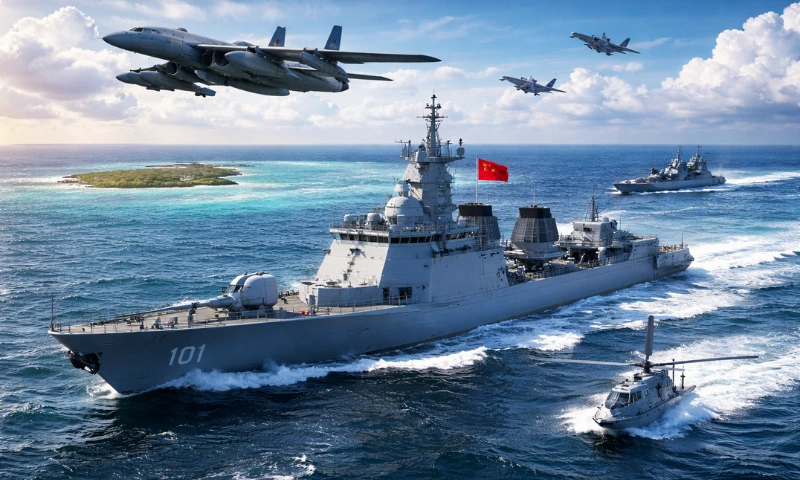
China’s Warships and Bombers Patrol Scarborough Shoal as US-Philippine Drills Continue
China has launched naval and air patrols around the disputed Scarborough Shoal in the South China Sea, a move that underscores ongoing regional tensions over maritime sovereignty. The operation was confirmed by the Chinese People’s Liberation Army (PLA) Southern Theater Command on January 31, 2026, highlighting Beijing’s efforts to assert control in contested waters. The shoal, known in Chinese as Huangyan Dao and in Filipino as Bajo de Masinloc, lies within the Philippines’ Exclusive Economic Zone (EEZ). Manila and Beijing both claim sovereignty over the area, and past rulings have supported the Philippines’ maritime rights under international law. According to state media, China’s military carried out coordinated patrols involving warships and aircraft, describing the activity as “combat readiness drills.” These operations were framed as necessary to protect China’s claimed national sovereignty and to counter what Beijing calls “provocations and infringements by individual countries.” A video released by Chinese military sources showed an H-6K bomber armed with YJ-12 anti-ship missiles and a Type 055 large destroyer participating in the patrols. This demonstration of force comes amid a broader pattern of Chinese military activity across the South China Sea, as Beijing continues to reinforce its presence in disputed maritime zones. The Philippines has not publicly responded to the latest patrols, and its embassy in Beijing did not immediately comment on the situation. This patrol operation follows recent joint exercises by the Philippines and the United States near the Scarborough Shoal. Manila’s armed forces announced that this week’s drills marked the 11th such exercise since November 2023, reflecting closer military cooperation in response to increasing Chinese assertiveness. The presence of U.S. ships and personnel signals Washington’s commitment to upholding freedom of navigation and supporting allies under international law. Analysts point out that China’s patrols are part of a larger strategic approach often referred to as “gray-zone tactics.” These involve military and paramilitary activities designed to enforce territorial claims without crossing into full-scale conflict. The South China Sea remains one of the most contested regions in the Indo-Pacific, with overlapping claims from multiple nations. In addition to Scarborough Shoal, disputes extend to the Spratly Islands and the Second Thomas Shoal, where past incidents, including collisions and aggressive maneuvers, have heightened regional anxieties. The latest patrols will likely deepen strategic competition in the region, testing diplomatic and military responses from ASEAN members, the United States, and other Indo-Pacific partners. As Beijing continues to push its maritime agenda, the risk of miscalculation or unintended confrontation remains a persistent concern.

Pat Cummins Ruled Out of T20 World Cup; Australia Makes Bold Squad Changes
Australia has confirmed a significant shake-up to its squad for the ICC Men’s T20 World Cup 2026, with captain Pat Cummins ruled out of the tournament due to injury. The decision comes ahead of their campaign in Sri Lanka, where Australia will begin their title defence later this month. Cummins, who captained Australia to victory in the 2021 edition of the T20 World Cup, suffered a knee injury during the 2025–26 Big Bash League and has been unable to regain full fitness. Cricket Australia stated that the fast bowler will focus on rehabilitation and is unlikely to feature in the shortest format until later in the year. Cummins’ absence leaves a leadership and bowling void in the squad, prompting selectors to fine-tune their lineup. In a notable selection move, Matt Short, who impressed in the Big Bash and was in strong form earlier in the year, was dropped from the final T20 World Cup squad despite being named in initial training squads. Selectors cited a combination of balance, team composition and match conditions as reasons behind his omission, saying they “felt the team needed a different mix of skills for Sri Lanka’s pitch conditions.” Also missing out is experienced top-order batter Matt Renshaw, who has not played limited-overs international cricket since 2021. Renshaw was part of Australia’s Test setup and strong first-class performances had put him in contention, but selectors opted for other options in the 15-member side. The exclusion of Steve Smith, a world-class batters and former captain, has attracted particular attention. Smith is not part of the T20 World Cup selection, even as he continues to feature prominently in Australia’s Test and ODI teams. Cricket pundits have noted that Smith’s skillset is traditionally more suited to longer formats and that selectors preferred players with explosive skills tailored to T20 cricket’s demands. Australia has named a balanced squad that includes dynamic all-rounders, pace-bowling depth, and power hitters suited to spin-friendly Sri Lankan pitches. James Faulkner and Pat Cummins’ vice-captain backup and pace spearhead replacements are expected to shoulder leadership and bowling duties in the fast bowler’s absence. Cricket Australia’s head coach reiterated confidence in the group, saying that while losing Cummins is “disappointing,” the side has the depth and experience to compete at the highest level. Australia’s campaign begins against West Indies in Colombo, and fans will be watching closely to see how the team adapts without its inspirational skipper and veteran match-winners.

The New Online Shopping Rule: Shoppers Want Speed, Clarity, and Zero Surprises
Online shopping is still growing, but the rules are changing. Shoppers now care less about flashy personalization and more about basics that remove friction: clear pricing, fast delivery, easy returns, and checkout that works on mobile. First, consumers want price transparency. Research on checkout behavior shows why. Baymard’s latest cart-and-checkout findings (compiled from multiple studies) report that 39% of shoppers abandon a purchase because extra costs like shipping, tax, or fees feel too high, and 14% leave because they can’t see the total order cost upfront. That’s a warning to retailers: hidden costs don’t just annoy people—they kill conversions. Second, shoppers want delivery and returns to feel “free” and predictable. In a 2025 survey analysis, McKinsey says more than 95% of respondents prefer free shipping with standard delivery over paying for faster shipping. That preference shows up in market reporting too. A January 2026 Reuters report on Latin America’s e-commerce boom found growth is tied to demand for fast, reliable delivery and transparent pricing, and that nearly half of consumers may abandon a platform after a negative experience—especially around delivery and returns. Third, consumers want less effort at checkout. Baymard reports a global average cart abandonment rate of about 70%. And many reasons are fixable: 19% don’t trust a site with card details, 19% get blocked by forced account creation, and 18% find checkout too long or complicated. In other words, shoppers now expect trust signals, guest checkout, and fewer steps—especially on phones. And that leads to the next shift: mobile-first shopping is the default. In the same Reuters report, 84% of transactions in the surveyed Latin American market happened on smartphones. Retailers that design for desktop first are falling behind. Finally, people increasingly want shopping to happen where they already spend time: social apps. eMarketer estimates US social commerce sales will reach $87.02 billion in 2025 (+21.5% year over year) and grow past $100 billion in 2026. Social commerce is still a slice of total e-commerce, but it’s rising steadily. Zoom out and the story becomes clear. Online shopping has matured. Consumers aren’t chasing novelty. They want value, speed, simplicity, and certainty—and they switch brands quickly when those needs aren’t met.
