

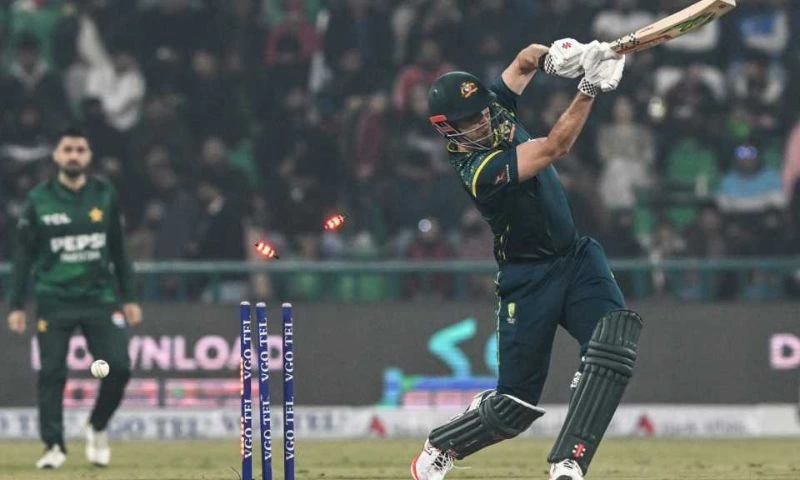
Pakistan’s national cricket team stamped its authority on visiting Australia by completing a 3-0 whitewash in their three-match T20I series at Gaddafi Stadium in Lahore on Sunday. The emphatic series sweep was highlighted by a match-winning bowling performance from all-rounder Mohammad Nawaz, who grabbed a sensational five wickets in the final game. In the third and deciding T20I, Pakistan posted a commanding 207 for 6 in their 20 overs after electing to bat, their highest total against Australia in T20 internationals. Saim Ayub scored a lively 56 runs, while Babar Azam remained unbeaten on 50, anchoring the innings with poise and skill. The team’s power hitters thrived, with Shadab Khan smashing 46 off 19 balls, including five towering sixes that punished the Australian attack. The Australian batting lineup was then dismantled by Pakistan’s bowlers. Australia were bowled out for just 96 runs, giving Pakistan a crushing 111-run victory in the third encounter — the most dominant T20I win by Pakistan over Australia. Nawaz was unplayable with his spin bowling. His five-wicket haul turned the match decisively in Pakistan’s favor as he reduced Australia to a fragile batting display. His performance not only helped secure the series sweep but marked a personal milestone in a series dominated by Pakistan’s bowlers. Earlier in the series, Pakistan set the tone with strong performances across all departments. In the first T20I, Pakistan had beaten Australia by 22 runs, laying the foundation for their dominance. The bowlers applied constant pressure, and the batting unit crossed 190 in a competitive total. In the second match, Pakistan again overwhelmed Australia, winning by 90 runs and effectively sealing the series before the final game. This comfortable victory came with Pakistan’s spin attack exploiting home conditions, as Australia crumbled under pressure. The series whitewash was particularly significant as it came just ahead of the 2026 ICC Men’s T20 World Cup, scheduled to begin in early February in India and Sri Lanka. Pakistan’s players will take confidence from their comprehensive wins, showing balance between batting firepower and bowling depth. Pakistan captain Salman Ali Agha praised his side’s all-round performance, noting that the team performed with intensity and commitment throughout the series. Their collective effort across batting, bowling, and fielding highlighted Pakistan’s readiness for bigger challenges ahead. For Australia, the tour represented a challenging preparation period for the World Cup, with several senior players missing and batting struggles exposing weaknesses that opponents will look to exploit. Nevertheless, the team will aim to regroup and address shortcomings as they shift focus to the global tournament. Pakistan’s clean sweep over Australia sends a strong message about their T20 credentials and boosts morale as they eye success on the world stage.
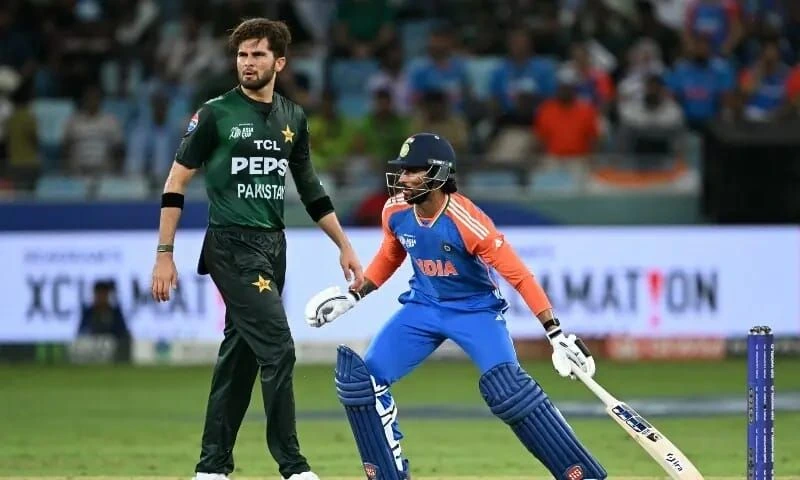
Why Pakistan Won’t Take the Field Against India in T20 World Cup
Pakistan’s cricket team will participate in the 2026 ICC T20 World Cup, but it will not take the field against India in their scheduled Group A match on February 15 in Colombo, the Government of Pakistan announced on Sunday. The decision ends days of uncertainty about Pakistan’s stance ahead of the marquee 20-over event, which is being co-hosted by India and Sri Lanka from February 7 to March 8. In an official statement shared on social media, the government said: “The Government of the Islamic Republic of Pakistan grants approval to the Pakistan Cricket Team to participate in the ICC World T20 2026, however, the Pakistan Cricket Team shall not take the field in the match scheduled on 15th February 2026 against India.” Pakistan’s squad will still play its other group matches, including games against Netherlands, United States, and Namibia as part of Group A. The move to skip only the India fixture came after intense domestic discussions involving the Pakistan Cricket Board (PCB) and the prime minister’s office. Reports suggest the boycott decision grew from wider diplomatic tensions and cricketing disputes that have long shadowed India–Pakistan relations. Pakistan supported fellow Asian team Bangladesh after the International Cricket Council (ICC) replaced Bangladesh with Scotland in the tournament schedule. That shift followed Bangladesh’s refusal to travel to India over security concerns, prompting Islamabad to signal solidarity by opting out of the India fixture. Cricket analysts note that Pakistan’s boycott of only one match may be a calibrated effort to balance political signals with sporting commitments. Early reports indicated that a total boycott of the event was not Pakistan’s top priority. Instead, the PCB explored legal avenues to forfeit just the India game while avoiding sanctions from the ICC or broadcaster penalties. While Pakistan’s government framed the decision as compliance with national directives, broadcasters and fans will be watching closely. The India–Pakistan fixture traditionally ranks among the most watched and commercially valuable matches in cricket, driving major parts of broadcast revenue and global viewership. This development adds to a series of diplomatic and cricketing challenges on the tournament’s doorstep. Just days earlier, Bangladesh pulled out of the T20 World Cup, citing political tensions with India and security concerns, forcing the ICC to adjust the draw. As the T20 World Cup race builds toward its February 7 start date, Pakistan’s unique boycott stance underscores how geopolitics continues to intersect with cricket in South Asia even as players prepare to chase World Cup glory.

February 18 or 19? When Will Ramadan Start in Pakistan?
Pakistan is preparing for Ramadan 1447 Hijri, with the first fast most likely to begin on Thursday, February 19, 2026, based on current moon-sighting projections and astronomical visibility data. The official start, however, will be decided by the Central Ruet-e-Hilal Committee after its scheduled moon-sighting meeting on the evening of Wednesday, February 18. The committee has already confirmed the beginning of Sha’ban after failing to sight its crescent earlier this month, officially fixing 1st Sha’ban on January 21, 2026. Based on the Islamic calendar calculation, Ramadan’s holy month will begin only after the crescent moon for Ramadan is sighted locally or regionally. What Astronomers Say Astronomers around the region are reinforcing these predictions with scientific data. According to lunar visibility charts used by global moon-sighting groups, the astronomical new moon (conjunction) for Ramadan 1447 occurs on Tuesday, February 17. At that stage, the young crescent is generally too thin and too low on the horizon to be seen with the naked eye, and may not be visible even with optical aid. Experts say this makes it unlikely to be sighted on the evening of February 17. However, by Wednesday, February 18, the moon will have gained enough age and altitude after sunset for possible visibility in Pakistan and neighbouring regions under clear skies. Astronomers note that several factors — including atmospheric clarity, horizon obstruction, and precise sunset times — influence actual visibility, so confirmed sightings remain dependent on observers in the field. “According to the lunar visibility predictions, the crescent is not expected to be observable on Feb 17, but there is a high probability for detection on Feb 18 in South Asia,” explained Dr. Khalid Mahmood, a senior astronomer involved in regional moon-sighting research. “If observers on the ground report a confirmed sighting on the evening of Feb 18, then Pakistan’s first fast on Feb 19 is astronomically plausible.” He added that cloud cover or poor atmospheric conditions on Feb 18 could delay the start by a day, which would move the first fasting day to February 20. Saudi Arabia May Lead the Moon Sighting In neighbouring Saudi Arabia, the Supreme Court has already called on residents to look for the Ramadan crescent on February 17, corresponding to Sha’ban 28 in the Islamic calendar. If Saudi astronomers and moon-sighting teams successfully confirm the crescent that evening, the Kingdom could begin Ramadan a day earlier than Pakistan, with the first fast on February 18. Saudi Arabia traditionally guides moon-sighting for many Muslim communities worldwide. Despite scientific projections, Pakistan’s decision will rest on the official moon-sighting announcement by the Central Ruet-e-Hilal Committee after its Feb 18 meeting. Members gather reports from across the country before declaring Ramadan’s start.
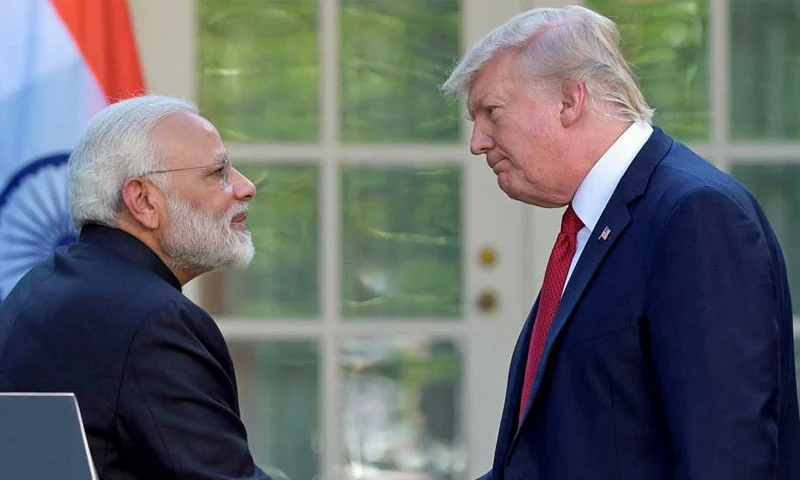
Epstein Email Mentions Modi ‘Danced and Sang’ in Israel, Prompting Backlash in India
Newly released documents from the US Justice Department have drawn fresh controversy in India by including an email by the late financier Jeffrey Epstein that refers to Prime Minister Narendra Modi’s 2017 visit to Israel, describing it as having taken place “for the benefit of the US president.” The reference has stirred political debate and drawn official denial from the Indian government. The tranche of files, released on January 30, 2026, comprises millions of pages of material connected to Epstein — a convicted sex offender and human trafficker who died in US custody in 2019. Among them is a July 2017 email written by Epstein to an individual identified as Y. Jabor, which mentions Modi’s meeting with then-US President Donald Trump and his subsequent visit to Israel. In the message, Epstein wrote: “The Indian Prime Minister Modi took advice, and danced and sang in Israel for the benefit of the US president.” Modi did indeed visit Israel in July 2017, marking the first official visit by an Indian prime minister to the country. The trip followed Modi’s meeting with Trump in Washington and was widely viewed as a milestone in India–Israel ties, especially since the two nations established diplomatic relations in 1992. However, India’s Ministry of External Affairs (MEA) has strongly rejected the message’s suggestion and dismissed other allusions in the email. MEA spokesperson Randhir Jaiswal said the reference was “little more than trashy ruminations by a convicted criminal, which deserve to be dismissed with the utmost contempt.” The ministry reiterated that the email does not reflect official diplomacy or policy. Political Reaction and Calls for Accountability The documents’ disclosure has triggered sharp reactions from leaders of India’s opposition. The Indian National Congress described the reference as “extremely shameful,” with party officials demanding greater clarity from Modi’s office about his interactions around that period. Congress leaders have questioned what advice the prime minister could have sought from Epstein and pointed to the timing of Modi’s meetings with Trump and subsequent Israel visit. One Congress spokesperson posted on social media: “Narendra Modi’s name has surfaced in the Epstein files… The Indian public deserves answers about what advice was taken and what was meant by ‘for the benefit of the US President’.” Extremely shameful!!Narendra Modi’s name has surfaced in the Epstein files. America’s serial rapist, child sex offender, and human trafficker Jeffrey Epstein wrote in an email on July 9, 2017: 👇 “The Indian Prime Minister Modi took advice and danced and sang in Israel for… pic.twitter.com/TTkO2Z7Sfi— Congress (@INCIndia) January 31, 2026 Pakistani politician Mushahid Hussain Syed also weighed in, implying that the reference raised questions about Modi’s judgment and diplomatic conduct. Amazingly explosive revelations about Indo-Israeli Axis: Prime Minister @narendramodi who, despite being a Yogi & Brahmachari, had no compunction in seeking advice & guidance from a certified paedophile like Epstein on how to please President @realDonaldTrump during his 2017… https://t.co/U8SStVVjTV— Mushahid Hussain Sayed (@Mushahid) February 1, 2026 US Documents and Wider Context The Epstein Files Transparency Act required the release of all remaining records connected to Epstein, which now include over 3 million pages, 2,000 videos, and 180,000 images. Analysts note that references to prominent global figures appear throughout the files, but stresses remain that inclusion in the documents does not equate to verified wrongdoing. The Indian government has limited its response to reaffirming the facts of Modi’s official visit and rejecting speculative interpretations of the email. There has been no immediate comment from the Prime Minister’s Office or Bharatiya Janata Party (BJP) on the matter.

Disturbing Mid-Flight Meltdown as Passenger Strips, Demands Door Open on AirAsia Flight
An AirAsia flight from Nha Trang, Vietnam to Bangkok, Thailand was forced to make an emergency landing after a passenger went into a violent and erratic meltdown mid-air, stripping down to his underwear, confronting cabin crew and ultimately jumping from the plane once it landed. The dramatic episode ended with Thai authorities arresting the man on the tarmac. The incident occurred on Thursday, January 29, aboard AirAsia flight 647, which had already been delayed by more than one hour and 40 minutes at departure. Shortly after take-off, a passenger described in social media posts as a Russian-speaking man began acting increasingly agitated. Mid-Flight Meltdown Videos shared widely on social platforms showed the man stripping off his clothes, leaving him in only black underwear, wandering down the aisle and confronting flight attendants. Fellow passengers filmed him pacing through the cabin, entering and exiting the toilet repeatedly and shouting at the crew in English: “Don’t touch me.” He also demanded that cabin staff unlock and open the aircraft door. At times, the man appeared dangerously unstable, with some footage showing him yelling loudly in Russian, including comments such as “Do they want us to die here?” Passengers reported that he even challenged crew members to a physical altercation. Emergency Landing and Runway Incident As the situation escalated, the flight captain declared an emergency and diverted the flight to Don Mueang International Airport in Bangkok. Despite efforts by crew and passengers to calm him, the man continued his tirade as the aircraft landed. Once the plane came to a stop, the passenger reportedly tried to force open the aircraft door. Before emergency stairs could be placed, he jumped from the plane onto the tarmac, injuring his leg in the fall. He attempted to flee the area but was intercepted and taken into custody by Thai police shortly afterwards. Local media and social posts suggest that the man could face severe penalties under Thai law for his behaviour, including fines or criminal charges, given the high safety risk and disruption caused by his actions. Airline and Passenger Reactions AirAsia has not yet released an official statement on the incident. Passengers described the ordeal as “chaotic” and “terrifying,” with several noting that the man’s behaviour seemed to worsen after the flight’s long departure delay. Incidents of air rage — when a passenger behaves disruptively or violently onboard — have been increasing globally, prompting airlines and aviation authorities to tighten policies and penalties to protect passengers and crew. According to aviation safety data, unruly in-flight behaviour has included everything from verbal abuse to attempts to open emergency exits, often resulting in law enforcement intervention after landing. Experts say that alcohol, stress and mental health issues can contribute to such episodes, and that airlines are increasingly trained to manage and report these incidents to ensure safety. Previous Unruly Passenger and Fighting Incidents on AirAsia Flights While incidents of severe disruption remain relatively rare, AirAsia has faced multiple cases over the years involving unruly behaviour, verbal abuse, and physical altercations onboard, reflecting a wider global issue affecting commercial aviation. In 2023, an AirAsia flight from Kuala Lumpur to Sydney reported an onboard disturbance involving intoxicated passengers, which required crew intervention and police action upon landing. In 2022, an AirAsia India flight witnessed a physical altercation between two passengers during boarding, leading to delays and the removal of those involved before takeoff. AirAsia has also dealt with verbal abuse incidents, including a widely reported case in which a passenger called a female passenger “stupid” during an argument onboard, prompting intervention by cabin crew and a warning under the airline’s code of conduct. The incident highlighted how even non-physical confrontations can escalate quickly in the confined environment of an aircraft cabin. Other reported cases have involved passengers refusing to follow safety instructions, shouting at crew members, or arguing aggressively over seating and baggage. Alcohol consumption, travel stress, and long delays have frequently been cited as contributing factors. Aviation safety experts stress that such incidents are not unique to AirAsia. According to international aviation authorities, reports of unruly passenger behaviour have increased globally in recent years, particularly following pandemic-era disruptions to air travel. AirAsia’s official policy maintains a zero-tolerance approach to behaviour that threatens safety or order onboard. Depending on severity, consequences can include restraint during flight, handover to law enforcement after landing, fines, or permanent bans from future travel. The latest Vietnam-to-Bangkok incident has once again drawn attention to the need for strict enforcement of in-flight conduct rules to protect passengers and crew alike.
‘Crybaby’ Meme Sparks Buzz as Usman Tariq Hits Back at Cameron Green
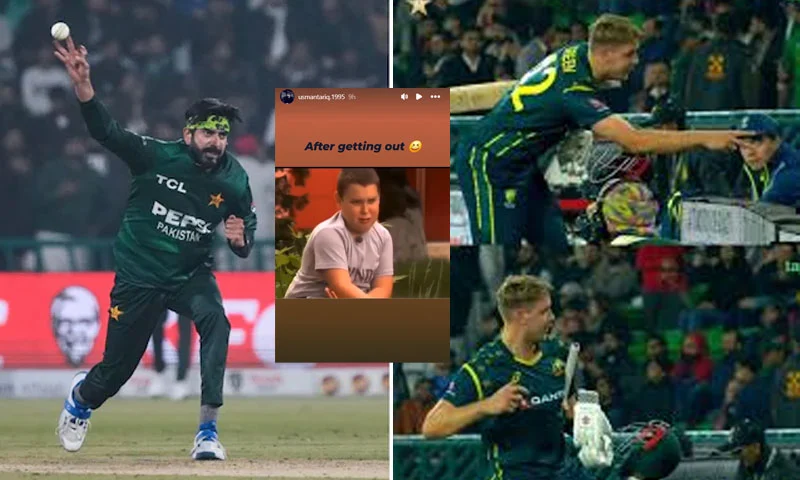
Pakistan’s rising spinner Usman Tariq sparked fresh controversy during the ongoing T20 series against Australia after posting a “crybaby” meme on social media following a heated exchange with Australian all-rounder Cameron Green over his bowling action. The incident has ignited debate over sportsmanship, bowling legality and player conduct amid Pakistan’s dominant display in the series. The meme appeared on Tariq’s social accounts shortly after Green appeared to mimic his bowling action as Green walked off the field after being dismissed. The gesture was widely interpreted as an accusation that Tariq’s action was illegal, drawing sharp reactions from fans, analysts and former players. Green’s Gesture Causes Stir The moment unfolded during the second T20I at Gaddafi Stadium, where Pakistan thumped Australia by a massive margin. After Green was dismissed, video footage and fan posts on social media showed him gesturing in a way that many interpreted as suggesting that Tariq’s bowling was “chucking” — a term used when a bowler’s arm extends illegally during delivery. While some commentators described the gesture as frustration on Green’s part, others saw it as unprofessional, especially given the context of a heavy defeat for Australia. Australia’s top order struggled on a spin-friendly pitch, and Tariq finished with key wickets that helped bowl Australia out. Cameron Green publicly expressed concerns regarding the legality of Usman Tariq’s bowling action. pic.twitter.com/nX7q6CRahM— Cricketopia (@CricketopiaCom) January 31, 2026 Tariq’s Response and History of Clearance Rather than let the controversy die, Tariq responded by sharing a meme depicting a crying child — which many perceived as a direct jab at Green’s reaction following his dismissal. The meme went viral across social media platforms, intensifying discussions among cricket fans. Tariq’s bowling action has been scrutinised before, but he has consistently defended it and cleared official testing on two separate occasions after being reported for suspect action. During his time in franchise leagues, English batter Tom Banton once raised concerns about Tariq’s action, prompting public discussion. Tariq responded at the time by explaining: “There are two corners on my (elbow) which make it hard for me to straighten. That makes confusion for the spectators. I have given two tests at labs in Pakistan, and my action was cleared.” Cricket broadcaster Paul Dennett also weighed in, criticising the online backlash and expressing support for Tariq. “Usman Tariq deserves better. His action has twice been tested — and cleared. Today should be a day to celebrate contributing to a win, not getting blasted on social media,” Dennett wrote on X, adding: “Cricket needs to handle this issue better. And people need to stop being cruel.” Rules and Reactions Under International Cricket Council (ICC) regulations, a bowler’s elbow extension must not exceed 15 degrees, and bowlers with unusual actions are often biomechanically tested to ensure compliance. Critics argue that cricket must balance fair play with respect for players’ natural abilities, especially when actions have been formally cleared. The episode has overshadowed Pakistan’s dominant 90-run victory, which put them 2–0 up in the series ahead of the final match. Australia’s captain acknowledged his team’s struggles: “Pakistan outplayed us… we weren’t able to build partnerships today, so there are some really good lessons for us,” he said after the second loss. As the controversy continues to trend online, the debate over bowling actions and on-field conduct remains a key talking point among cricket enthusiasts worldwide.

What Is NASA’s Practice Countdown — and Why It Matters for the First Crewed Moon Mission in Over 50 Years
The National Aeronautics and Space Administration (NASA) has entered a decisive phase in preparations for its Artemis II mission, the first crewed lunar mission in more than 50 years, with a full-scale practice countdown taking place this week at Kennedy Space Center.This comprehensive rehearsal — known as a wet dress rehearsal — tests launch systems and procedures in real time and ensures NASA is ready to send astronauts beyond Earth orbit again. The practice countdown involves loading the giant Space Launch System (SLS) rocket and the Orion spacecraft with hundreds of thousands of gallons of super-cold rocket propellant, moving through launch configurations, timing the countdown, and rehearsing abort scenarios and system checks. The process stops just before ignition. “This rehearsal is critical,” said Jim Free, NASA’s Associate Administrator for Exploration Systems Development. “We’re taking the time to know that every system we ask our crew to rely on is proven, tested, and ready for this mission.”He added that the countdown primarily focuses on “fueling operations, communication networks, and crew safety checks that might be impossible to test any other way.” Why the Practice Countdown Matters Practice countdowns are not simple technical dry runs. They serve as the final chance to spot issues in hardware, software, or launch procedures before a mission carrying astronauts leaves Earth. NASA engineers watch how components behave under real-world loading conditions and how teams coordinate in a live, timed environment. According to NASA Flight Director Mellisa Thompson, the practice countdown is as close as you can get to an actual launch without flying. “We verify all critical connections, life support interfaces, rocket performance, and contingency plans,” she said. “Doing this now keeps our astronauts safe and prevents surprises once we commit to the real countdown.” Because Artemis II will be NASA’s first crewed lunar mission since Apollo 17 in 1972, the practice countdown carries extra scrutiny. Any failure during this rehearsal could delay the launch window and require repairs that might push the date back further. Broader Implications for NASA’s Moon Goals Artemis II is scheduled no earlier than February 8, 2026 and will send four astronauts on a 10-day lunar flyby mission before returning to Earth. The mission will test life support, navigation, deep space communication, and reentry systems with humans onboard — before NASA attempts a crewed lunar landing on Artemis III. NASA Administrator Bill Nelson explained the long view: “The Artemis program isn’t just about one mission. It’s about sustaining human presence on and around the Moon, and ultimately using it as a stepping stone to Mars.”He pointed out that every test and rehearsal now builds confidence for future, more ambitious missions. In addition to technical checks, Artemis II’s rehearsal has highlighted NASA’s hard-earned expertise in integrating complex spaceflight systems across dozens of contractors and international partners. It also marks an opportunity for young engineers and mission controllers to demonstrate their readiness to operate in deep space for years to come. “Today’s countdown safeguards tomorrow’s explorers,” Free said. “Success here means NASA can send humans to the Moon safely, confidently, and sustainably.” As NASA completes this rehearsal, global space enthusiasts will be watching — not just for a launch date, but for the successful start of a new chapter in human space exploration.
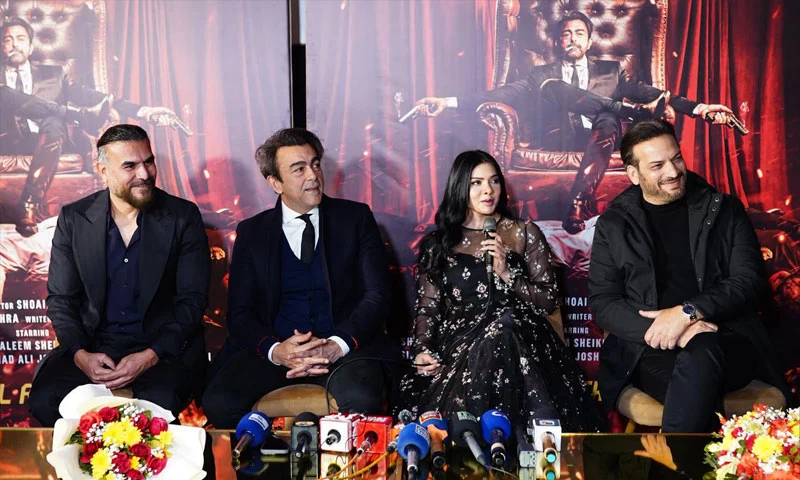
Shaan Shahid Returns in Power-Packed Punjabi Action Film BULLAH, Set for Eid 2026
Shake Films has officially lifted the curtain on the much-anticipated Pakistani Punjabi action thriller BULLAH, releasing its first motion poster and igniting excitement across the film industry. The unveiling marks the beginning of the promotional campaign for what is being positioned as one of the biggest local cinematic releases of 2026. Headlined by veteran star Shaan Shahid, the film features an ensemble cast that includes Mona Liza, Naeema Butt, Adnan Butt, Ali Josh, Maham Mirza, and Asif Khan. One of the most talked-about aspects of BULLAH is the long-awaited on-screen reunion of Shaan Shahid and Saleem Sheikh, who are sharing the big screen again after nearly three decades — a moment that has generated significant nostalgia among cinema fans. The motion poster offers a powerful first look at the film’s dark, intense, and visually striking world, hinting at a high-stakes narrative driven by action and emotion. The poster release also sets the stage for the official teaser launch, scheduled to take place on January 30, 2026, at CineStar, Xinhua Mall, Lahore, in the presence of the cast, crew, and members of the media. Directed by acclaimed filmmaker Shoaib Khan, BULLAH tells the story of a modern-day hero who rises against injustice, deeply rooted in Punjab’s cultural and spiritual heritage. The film blends high-octane action with emotional storytelling, exploring themes of resistance, faith, dignity, and moral courage. Bullah Teaser🔥🔥🔥 pic.twitter.com/fdAjrcDxOw — Lollywood Film Industry (@LFI_Lollywood) January 31, 2026 Speaking about the project, Shoaib Khan described the film as a deeply personal endeavour. “BULLAH is a labour of love and hard work, which will speak to a global audience as it addresses universal themes of oppression, resistance, faith, and dignity while remaining deeply rooted in the Punjabi culture,” he said. Shaan Shahid, who essays the titular role, echoed the sentiment, calling the film more than just entertainment. “BULLAH is not just a film—it’s a voice. It represents the kind of cinema we need right now: fearless, meaningful, and grounded in truth. It’s a story that stays with you long after the screen fades to black,” he remarked. Producer Mr. Vohra expressed strong confidence in the project’s impact and commercial potential. “BULLAH is a testament to the cultural power and commercial viability of Punjabi cinema. We believe it will open doors for a new wave of high-quality, locally rooted productions and strengthen the future of Pakistani cinema,” he said. Adding further weight to the project, the film is penned by legendary writer Nasir Adeeb, whose work has defined generations of South Asian cinema. Distributed by HKC Entertainment, BULLAH is scheduled for a nationwide theatrical release on Eid-ul-Fitr 2026, positioning it as a major festive box-office contender.

Anxiety Isn’t Just Overthinking: The Symptoms People Miss and What Helps
Anxiety is a normal human alarm system. It can help you prepare, focus, and stay safe. But when fear and worry become constant, intense, or hard to control, anxiety can shift from a feeling into a health condition that affects sleep, work, relationships, and the body. The scale is not small. The World Health Organization says 359 million people were living with an anxiety disorder in 2021, making it the most common group of mental disorders, and estimates about 4.4% of the global population experiences an anxiety disorder. What anxiety looks like in real life Anxiety doesn’t always look like “panic.” Many people feel it first as physical discomfort, a racing mind, or an inability to relax. Common symptoms include: Persistent worry that feels hard to stop Restlessness, irritability, or feeling “on edge” Trouble concentrating Sleep problems (difficulty falling asleep or staying asleep) Fast heartbeat, tight chest, shortness of breath Stomach issues, nausea, or changes in appetite The World Health Organization describes anxiety disorders as involving “excessive fear and worry” and notes symptoms can be severe enough to cause “significant distress or significant impairment in functioning.” Triggers: why anxiety can rise over time Anxiety is often fueled by a mix of biology, stress exposure, and daily habits. Common triggers include: Work pressure, financial stress, or family conflict Major life changes (moving, marriage, childbirth, exams) Trauma, illness, or ongoing health worries Stimulants (too much caffeine or energy drinks) Poor sleep and lack of movement Research tracking anxiety burden shows it is widespread and persistent across countries and age groups. When it becomes a health issue A good rule: it’s time to take anxiety seriously when it is frequent, lasts weeks, and starts shrinking your life. Red flags include: Avoiding normal tasks (work, social events, travel) due to fear Repeated physical symptoms that don’t match medical tests Panic attacks or sudden surges of fear Anxiety that disrupts sleep most nights Using alcohol, nicotine, or sedatives to cope If you ever feel unsafe or have thoughts of self-harm, seek urgent support from local emergency services or a trusted medical professional right away. What treatment actually works The evidence-backed approach is not “one-size-fits-all.” Many people improve with therapy, medication, or both—plus practical lifestyle support. The National Institute of Mental Health states: “GAD treatment typically involves psychotherapy, medication, or both.” Clinical guidelines also support a stepped-care approach, where cognitive behavioral therapy (CBT) is a key option, and medications such as SSRIs/SNRIs are commonly used when needed. Lifestyle changes help too, especially as “maintenance”: consistent sleep timing, regular walking, reducing caffeine, and building stress skills (breathing exercises, journaling, time boundaries). They don’t replace care when symptoms are severe—but they can reduce relapse and improve day-to-day control.
