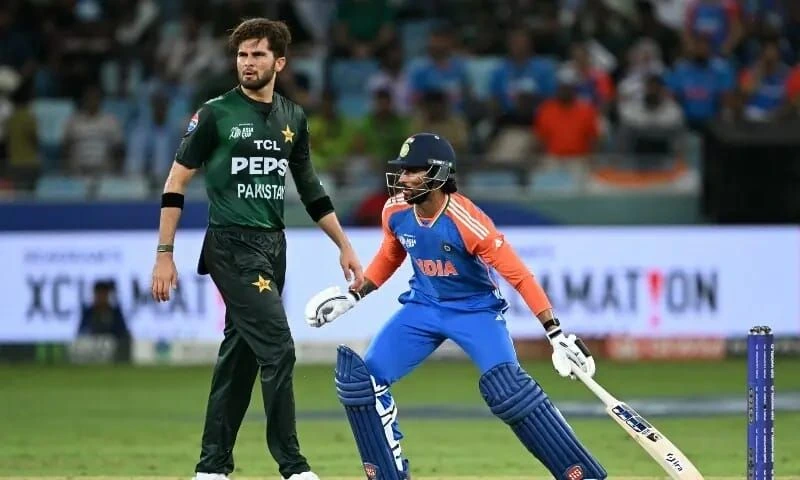
Pakistan’s cricket team will participate in the 2026 ICC T20 World Cup, but it will not take the field against India in their scheduled Group A match on February 15 in Colombo, the Government of Pakistan announced on Sunday.
The decision ends days of uncertainty about Pakistan’s stance ahead of the marquee 20-over event, which is being co-hosted by India and Sri Lanka from February 7 to March 8.
In an official statement shared on social media, the government said: “The Government of the Islamic Republic of Pakistan grants approval to the Pakistan Cricket Team to participate in the ICC World T20 2026, however, the Pakistan Cricket Team shall not take the field in the match scheduled on 15th February 2026 against India.”
Pakistan’s squad will still play its other group matches, including games against Netherlands, United States, and Namibia as part of Group A. The move to skip only the India fixture came after intense domestic discussions involving the Pakistan Cricket Board (PCB) and the prime minister’s office.
Reports suggest the boycott decision grew from wider diplomatic tensions and cricketing disputes that have long shadowed India–Pakistan relations. Pakistan supported fellow Asian team Bangladesh after the International Cricket Council (ICC) replaced Bangladesh with Scotland in the tournament schedule. That shift followed Bangladesh’s refusal to travel to India over security concerns, prompting Islamabad to signal solidarity by opting out of the India fixture.
Cricket analysts note that Pakistan’s boycott of only one match may be a calibrated effort to balance political signals with sporting commitments. Early reports indicated that a total boycott of the event was not Pakistan’s top priority. Instead, the PCB explored legal avenues to forfeit just the India game while avoiding sanctions from the ICC or broadcaster penalties.
While Pakistan’s government framed the decision as compliance with national directives, broadcasters and fans will be watching closely. The India–Pakistan fixture traditionally ranks among the most watched and commercially valuable matches in cricket, driving major parts of broadcast revenue and global viewership.
This development adds to a series of diplomatic and cricketing challenges on the tournament’s doorstep. Just days earlier, Bangladesh pulled out of the T20 World Cup, citing political tensions with India and security concerns, forcing the ICC to adjust the draw.
As the T20 World Cup race builds toward its February 7 start date, Pakistan’s unique boycott stance underscores how geopolitics continues to intersect with cricket in South Asia even as players prepare to chase World Cup glory.