

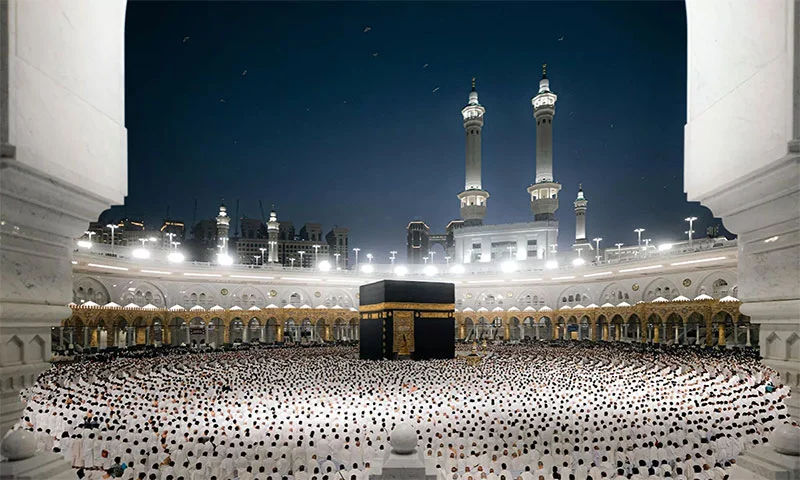
Saudi Arabia has taken significant action to tighten oversight of the religious travel sector by suspending contracts with around 1,800 foreign Umrah travel agencies, underscoring the Kingdom’s intent to raise service standards and protect the rights of pilgrims worldwide. The move, announced in early February 2026, affects nearly one-third of the roughly 5,800 agencies that operate Umrah services in foreign markets. The Saudi Ministry of Hajj and Umrah has given the affected firms a 10-day grace period to rectify deficiencies and meet classification and performance standards required for reinstatement. Agencies that fail to comply risk ongoing suspension. The decision comes at a time when Saudi Arabia has been intensifying regulation across its tourism and pilgrimage industries. It follows a wider enforcement campaign by the Ministry of Tourism that saw travel and tourism offices inspected across the Kingdom, especially in major cities like Riyadh, as part of its “Our Guests Are a Priority” initiative. That effort resulted in the closure of 10 travel and tourism offices in mid-2025 for operating without proper licenses, organising unauthorised Umrah and Hajj packages, and failing to meet regulatory requirements. Saudi authorities have emphasised that these steps aim to ensure quality, safety and transparency for both international visitors and pilgrims. The Ministry of Tourism has stated that licensed and compliant agencies are essential to safeguarding tourists and ensuring reliable and well-regulated services throughout the Kingdom’s expanding travel sector. The broader regulatory push also aligns with Saudi Arabia’s Vision 2030 strategy, which seeks to diversify the economy and elevate tourism as a major growth pillar. The Saudi Tourism Authority, the official body responsible for marketing and developing tourism in the Kingdom, has been instrumental in promoting licensed service providers and cracking down on irregular operators. In addition to enforcement actions against travel offices, inspections nationwide have uncovered hundreds of violations across tourism service providers, prompting regulators to remind tourists and pilgrims to engage only with licensed agencies to avoid potential issues such as unauthorised accommodation arrangements or unverified transport services. Officials stress that these regulatory measures are not punitive but aim to build confidence in Saudi Arabia’s tourism infrastructure and ensure that religious visitors, especially during peak seasons like Umrah and Hajj, experience smooth, safe, and professionally managed pilgrimages. The Kingdom has also been updating visa protocols to require confirmed hotel and transport bookings before visa approval, enhancing overall organization and traveller security. As Saudi Arabia continues to open up to global travel and strengthen its tourism ecosystem under Vision 2030, the clampdown on unlicensed travel agents and the suspension of foreign Umrah agency contracts reflect a coordinated effort to uphold standards and protect the rights of millions of pilgrims and visitors each year.

The Biggest Bitcoin Mistakes Pakistanis Make And Why They Keep Happening
Bitcoin has become a recurring headline in Pakistan—on YouTube explainers, WhatsApp forwards, and late-night “investment” pitches. Pakistan also ranks high in global adoption measures, including Chainalysis’ crypto adoption index, which has repeatedly placed the country among leading markets for grassroots use. But the loudest conversations often mix facts with myths—and that confusion can be costly. Myth 1: “Bitcoin is legal tender in Pakistan.” It isn’t. The State Bank of Pakistan (SBP) has been explicit that virtual currencies “are not legal tender, issued or guaranteed by the Government of Pakistan.” The same SBP guidance says it has “not authorized or licensed any individual or entity” for issuing, selling, purchasing, exchanging, or investing in such virtual currencies in Pakistan. At the same time, the policy landscape is evolving. In May 2025, SBP said it and the Finance Division were “engaged with the Pakistan Crypto Council… for… developing an appropriate legal and regulatory framework for VAs in Pakistan.” That’s not the same as Bitcoin becoming official money—it signals regulation discussions, not legal-tender status. Myth 2: “Bitcoin is anonymous, so it’s always ‘safe’ to use.” Bitcoin transactions are recorded on a public blockchain. Identities may be hidden behind addresses, but money trails can still be analyzed, especially when funds touch exchanges or payment ramps. “Anonymous” is not the same as untraceable—and it doesn’t protect users from scams. Myth 3: “It’s guaranteed profit.” Bitcoin’s price can rise sharply, but it can also fall fast. Anyone promising fixed returns is selling a fantasy. In Pakistan, the bigger risk is people treating Bitcoin like a monthly income plan instead of a volatile asset. Myth 4: “Everyone is doing it, so it must be huge and legit.” There is real adoption, but numbers online are often exaggerated. One widely cited estimate (from payments firm Triple-A) suggests around 9 million Pakistanis own crypto (about 4.1% of the population). That’s meaningful—but it’s not “everyone,” and it doesn’t guarantee safe markets. Myth 5: “Buying Bitcoin is the hard part—cashing out is easy.” This is where many users get trapped. Fees, account blocks, fraud, and unreliable “dealers” can turn profits into losses. Until clear licensing and consumer protection are in place, cash-out risks remain a major real-world issue. Bitcoin’s popularity in Pakistan is real. But the biggest mistake is confusing popularity with protection. The smarter conversation isn’t “How fast can I profit?” It’s “Do I understand the rules, the risks, and who is accountable if something goes wrong?”
