

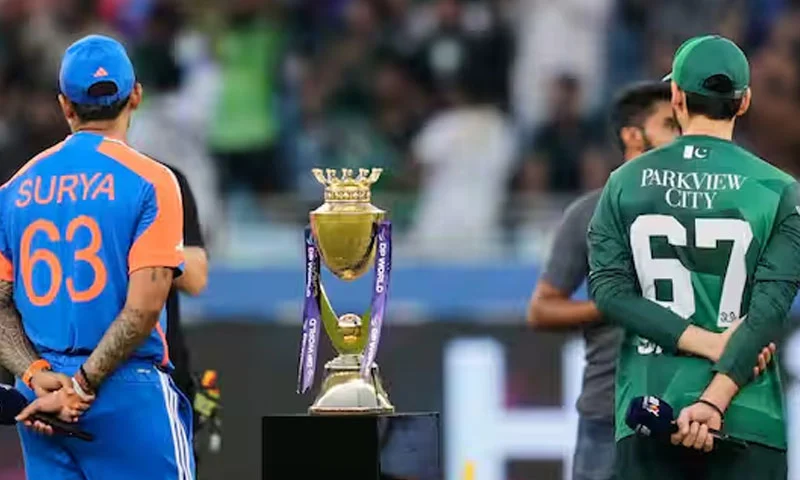
The debate around World Cup venues and participation often overlooks a more fundamental reality: the ICC’s commercial sustainability is driven not by geography, but by viewership. At the centre of that equation lies one fixture that has consistently underwritten the financial success of global cricket — India vs Pakistan. Former Pakistan captain Rashid Latif has repeatedly argued that the ICC’s revenue logic must reflect actual audience contribution rather than political convenience or hosting arrangements. His stance has gained renewed relevance amid discussions over Pakistan’s participation, revenue share, and the ICC’s long-term financial planning. The ICC’s Biggest Revenue Engine Across formats and tournaments, India–Pakistan remains the most-watched match in international cricket. Broadcast data over the past decade shows that no other fixture consistently delivers comparable global reach: 2011 World Cup final (India vs Sri Lanka): 558 million unique viewers 2011 World Cup semi-final (India vs Pakistan): 495 million 2017 Champions Trophy group match (India vs Pakistan): 324 million 2015 World Cup group match (India vs Pakistan): 313 million 2022 T20 World Cup (India vs Pakistan): record digital viewership surging from 10 million to 16 million in the final over 2021 T20 World Cup: India–Pakistan reached 167 million TV viewers These figures highlight a structural truth: Pakistan’s participation is central to the ICC’s broadcast value, especially in marquee events. Revenue Distribution: A Structural Imbalance Under the 2024–27 ICC revenue model, India is allocated 38.5% of total revenues, while Pakistan’s share stands at 5.75%. Rashid Latif and other analysts argue this gap fails to reflect Pakistan’s disproportionate role in generating peak viewership. From Pakistan’s perspective, the India–Pakistan fixture is a shared commercial asset, not a unilateral one. Without Pakistan, the most valuable broadcast property in global cricket simply does not exist. Latif has publicly stated that the PCB should have pressed harder during negotiations for the next cycle, proposing that Pakistan’s share be revised to 18–20% for the 2027–30 financial period, aligned more closely with its contribution to audience demand. What If Pakistan Does Not Play? A key question confronting the ICC is the potential revenue impact if Pakistan were absent from ICC events. Industry experts agree the effect would be financially severe, particularly in broadcast markets across South Asia, the Middle East, the UK, and digital platforms worldwide. While sponsors such as Emirates Airline, DP World, and Saudi Aramco play major roles, sponsorship alone does not replace live viewership-driven broadcast income, which remains the ICC’s primary revenue stream. This raises another critical issue: should revenue sharing be driven by sponsorship geography or by actual audience numbers? Latif’s position is clear — viewership, not venue or sponsor nationality, should determine revenue distribution. The Strategic Reality The ICC’s long-term viability depends on recognising that commercial sustainability flows from audience engagement. Any model that underrepresents Pakistan’s contribution risks weakening the very product that global cricket relies on. As Rashid Latif has consistently argued, the solution lies not in confrontation, but in a realistic, data-driven revenue framework that reflects where cricket’s true value is generated.

Pakistan’s First Locally Assembled Electric Vehicle Enters Volume Production
Pakistan has entered a new era of automotive manufacturing with the start of volume production of the Deepal S05, the country’s first locally assembled range-extended electric vehicle (REEV). The milestone was unveiled by Master Changan Motors at its manufacturing plant, marking a significant step toward sustainable mobility and advanced local auto production. The Deepal S05 is a range-extended EV, combining the benefits of electric driving with a small onboard generator that charges the battery, allowing longer travel ranges without frequent charging stops. This technology helps reduce range anxiety while maintaining eco-friendly performance. Range-extended EVs are often seen as a practical transition between traditional internal combustion engines and fully battery-electric vehicles (BEVs). Master Changan said the production shift reflects increased confidence in Pakistan’s automotive sector and the readiness of local supply chains to support advanced vehicle assembly. The company noted that the Deepal S05’s local assembly will generate jobs, build automotive expertise, and reduce dependency on fully imported electric vehicles. It also comes as the government promotes electric mobility through incentives and regulatory support. The Deepal S05 is equipped with a modern electric powertrain and a compact range extender unit, allowing for an estimated range that can rival many BEVs. Local industry analysts have said nationwide demand for EVs and range-extended vehicles is rising due to high fuel costs and growing environmental awareness among consumers. Pakistan’s EV market is gradually expanding as charging infrastructure improves and buyers look for cost-effective, low-emission alternatives to traditional cars. This production milestone follows similar moves by other automakers in Pakistan. For instance, Master Motors previously announced partnerships for electric trucks and hybrid solutions, reflecting a broader industry shift toward cleaner transportation. However, the Deepal S05 stands out as the first mass-produced EV variant assembled locally, which makes it a historical achievement for Pakistan’s auto industry. In his remarks, the CEO of Master Changan said the company aims to make EV ownership more accessible to Pakistani drivers, while building an ecosystem that includes local parts suppliers, skilled technicians, and EV charging networks. Local experts predict that such assembly initiatives will help reduce costs and make electric vehicles more affordable over time. Investment in EV technology and production also aligns with broader global trends. Major automakers worldwide are transitioning to electric and electrified models as governments and consumers prioritise emission reductions and energy efficiency. European and Asian markets have shown rapid EV adoption, inspiring emerging markets like Pakistan to follow suit. The launch of local Deepal S05 production represents both an economic and environmental milestone that could reshape Pakistan’s automotive landscape.
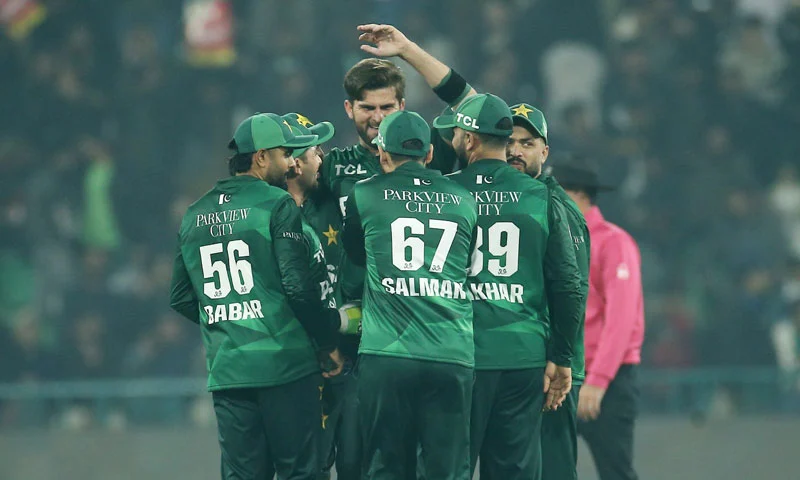
Pakistan Stands Firm on India Match Decision as Team Leaves for T20 World Cup
Pakistan’s national cricket team has departed for the ICC Men’s T20 World Cup with a clear mandate: compete fully in the tournament while upholding the state’s decision to not play the scheduled group-stage match against India on February 15. The move, taken on the directives of the Government of Pakistan, reflects a principled stance rather than a sporting withdrawal, as the team remains committed to all other fixtures in the global event. Footage released by the Pakistan Cricket Board (PCB) showed players leaving for Sri Lanka in high spirits, underlining that the boycott decision is administrative and political in nature, not a reflection of the team’s readiness or intent to compete. Pakistan will play its remaining group matches as scheduled and has reiterated its focus on on-field performance. A State Decision, Not a Cricketing One Pakistan’s position has been consistent: the decision regarding the India match was taken at the state level, and the PCB and players are bound to follow government policy. Captain Salman Ali Agha acknowledged this reality, stating: “It’s not our decision. We will do whatever our government and the PCB chairman instruct us to do.” آئی سی سی مینز ٹی ٹونٹی ورلڈ کپ قومی سکواڈ لاہور سے سری لنکا کے لیے روانہ پندرہ کھلاڑیوں پر مشتمل قومی سکواڈ میں کپتان سلمان علی آغا، ابرار احمد ، بابر اعظم ، فہیم اشرف ، فخر زمان شامل خواجہ محمد نافع ، محمد نواز ، محمد سلمان مرزا ، نسیم شاہ ، صاحبزادہ فرحان ، صائم ایوب ،… pic.twitter.com/u9TReOr3zU — PCB Media (@TheRealPCBMedia) February 2, 2026 From Pakistan’s perspective, this places the issue squarely in the domain of sports diplomacy, where similar precedents already exist. India itself has repeatedly declined to tour Pakistan or play matches on Pakistani soil in the past, leading to neutral-venue and hybrid arrangements that were accepted by the ICC and other governing bodies without punitive action. ICC’s Response and the Question of Consistency The International Cricket Council has expressed concern over what it termed “selective participation,” but Pakistan maintains that state-directed decisions cannot be equated with unilateral sporting defiance. Officials and analysts in Pakistan argue that the ICC now faces a test of consistency in how it applies its regulations, especially given past accommodations made for other member boards. Crucially, the ICC has so far not announced any sanctions beyond the standard walkover provisions outlined in tournament rules. Under those rules, a forfeited match results in points being awarded to the opposing team — a sporting consequence Pakistan accepts — but does not restrict participation in the rest of the tournament. Pakistan’s World Cup Campaign Remains Intact Despite the boycott, Pakistan’s qualification prospects remain firmly within its own control. With multiple group matches still to be played, victories against other opponents can comfortably secure progression to the knockout stage. Former players and analysts have noted that World Cups are decided by consistent performances, not single fixtures. Pakistan enters the tournament with confidence, having recently completed a clean sweep T20 series win against Australia, reinforcing belief in the squad’s depth and form. From Islamabad’s standpoint, the decision sends a broader message: Pakistan is prepared to participate in global sport, but not at the cost of compromising state policy or accepting selective pressure. As the World Cup unfolds, attention is likely to remain on how the ICC navigates this complex intersection of sport, governance, and international relations — while Pakistan focuses on cricket.
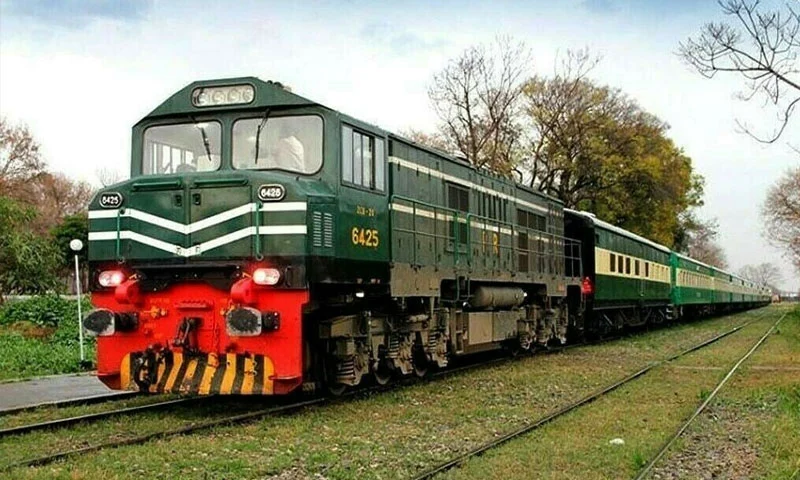
Pakistan Opens Historic British-Era Minister’s Railway Saloon to the Public
Pakistan Railways has opened a piece of its historic luxury travel legacy to the public after decades of limited official use. The recently restored ministerial saloon coach — once reserved exclusively for British officers and later Pakistani government officials — is now available for passengers to book on select long-distance routes, offering a rare glimpse into the golden age of rail travel. The announcement was made in Rawalpindi, where the restored saloon is stationed at the local railway station. In its heyday, this carriage — sometimes referred to as the Minister’s Saloon — was used by top government dignitaries for travel across the country, including major cities like Islamabad, Lahore and Karachi. A ‘Palace on Wheels’ from a Bygone Era Built during the British colonial period, the saloon was designed to offer unparalleled comfort and luxury at a time when train travel was the premier mode of intercity transportation. Its interiors feature plank-finished teak wood, spacious bedrooms, a drawing room, dining space and staff quarters. Modern conveniences such as air conditioning, television and internet facilities have since been added during recent renovations. Earlier, a German-made bogey formed part of this saloon before being replaced by a Chinese carriage in the late 1980s. The coach carries the number 1937, marking its long history in the nation’s railway network. Officials say the saloon still feels like a “palace on wheels,” with ornate furnishings and comfortable spaces that once hosted official meetings on the move. A kitchen equipped with modern appliances allows onboard meal preparation, and attendants are provided for passengers who rent the saloon. From Exclusive Use to Public Experience Previously, such luxurious carriages were off-limits to ordinary passengers. The Prime Minister’s Saloon — even more exclusive — remains unavailable for public rental, as per current railway policy. However, the Minister and Chairman saloons have now been restored and are offered on popular passenger routes, including attachments to the Green Line train and other key services. Railway Superintendent Nooruddin Darwar confirmed that public interest in booking these historic saloons has grown since the renovation. Depending on distance and service, fares range from Rs50,000 to Rs190,000 per trip. Why This Matters For many Pakistanis, this initiative represents more than a novelty. It preserves living heritage, historical craftsmanship, and a sense of national identity tied to the railway system that helped shape mobility and commerce since the 19th century. Enthusiasts and history buffs now have a rare opportunity to experience first-class railway travel from a different era.
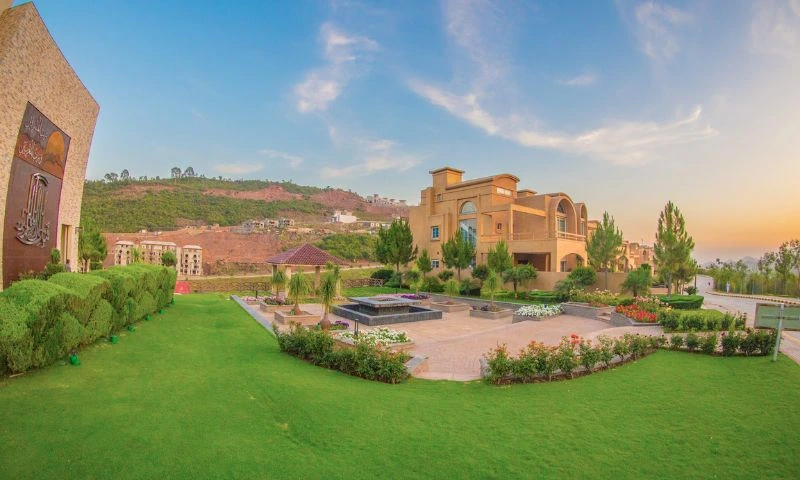
FBR to Auction 527 Kanals of Bahria Town Land in Murree to Recover Rs26bn
The Federal Board of Revenue (FBR) has announced plans to auction 527 kanals and 10 marlas of land in Tehsil Murree owned by Bahria Town as part of ongoing efforts to recover billions in unpaid taxes. The auction is scheduled for February 16, 2026, under enforcement measures linked to the company’s outstanding tax liabilities. The FBR’s latest move forms part of a broader crackdown to recover approximately Rs26 billion from Bahria Town in outstanding tax dues. Earlier auctions have already been held, including a high-value plot on Park Road in Islamabad, which generated Rs2.05 billion for the national exchequer. According to the tax authority, the government has also issued public notices for the upcoming auction of Bahria Town Tower land in Karachi, indicating that the recovery actions will span multiple cities across Pakistan. The FBR has prohibited any sale, purchase or transfer of seized Bahria Town properties in Karachi without prior approval from the tax body, warning that unauthorized transactions will be treated as invalid. The land scheduled for auction in Murree was previously attached by the FBR in late 2025 as part of the revenue collection process. The plot, identified as 527K-10M at Mouza Kathar Sharqi, Angori Road, was attached due to a default on tax liabilities amounting to Rs26.46 billion, according to earlier tax notices. Bahria Town’s development footprint extends across Pakistan, including major gated communities in the Twin Cities, Lahore and Karachi. The group is a privately-owned company led by founder Malik Riaz and is known for large-scale real estate projects featuring residential, commercial, and hospitality developments. Despite its major presence, the company has faced legal and financial challenges in recent years. The FBR and other government bodies have intensified enforcement actions against the developer for both tax and accountability cases. Some observers note that Bahria Town’s asset auctions follow a string of legal actions, including auction sales conducted by the National Accountability Bureau (NAB) in 2025 to recover defaulted funds via court-approved plea bargain agreements tied to properties in Rawalpindi and Islamabad. The FBR has invited objections or claims related to the seized properties, which can be submitted to the Large Taxpayer Office in Islamabad under existing tax laws. Authorities have emphasized that all such claims will be reviewed before auctions proceed, giving stakeholders an opportunity to present their cases. Real estate market analysts say the auction could draw interest from local and institutional investors, particularly given Murree’s appeal as a hilly tourist destination with strong residential and commercial potential. However, uncertainties remain around legal clearances and the property’s valuation once tax dues and legal encumbrances are factored in. The FBR’s aggressive auction strategy marks one of the most significant tax-recovery drives against a private real estate giant in recent Pakistani history. As the process unfolds, it could set a precedent for how tax enforcement intersects with high-value property assets in the country.

Full Winners List: Kendrick Lamar, Billie Eilish and Olivia Dean Shine at Grammy Awards
The 68th Annual Grammy Awards took place on February 1, 2026, at the Crypto.com Arena in Los Angeles, celebrating the year’s top achievements in music. Hosted by Trevor Noah for the final time, the night honored global stars across nearly 100 categories, blending show-stopping performances with historic wins. Leading the awards was Bad Bunny, who made history by winning Album of the Year for Debí Tirar Más Fotos. His victory marked the first time a Spanish-language album earned the Recording Academy’s most prestigious award. In his acceptance speech, Bad Bunny celebrated his roots, dedicating the win to immigrants pursuing their dreams and to those enduring personal loss. Hip-hop icon Kendrick Lamar also dominated the night, adding multiple Grammys to his name. He won Record of the Year alongside SZA for their track “luther,” a song that highlighted the duo’s dynamic synergy. Kendrick’s GNX took Best Rap Album, contributing to his status as one of the evening’s biggest winners. Billie Eilish and her brother Finneas clinched Song of the Year for “Wildflower,” an emotional celebration of artistic resilience. On stage, Billie reflected on her journey as an artist, speaking candidly about her family and creative evolution. Her win underscored the duo’s continued influence on contemporary music. In one of the night’s most anticipated categories, British singer-songwriter Olivia Dean won Best New Artist, defeating a competitive field that included performers like Addison Rae, Leon Thomas and Lola Young. Dean’s soulful style and rising global profile positioned her as one of music’s most exciting emerging voices. The pop categories also saw standout wins. Lola Young earned Best Pop Solo Performance for her heartfelt song “Messy,” marking a triumphant return after a mental health break in 2025. Her journey and emotional acceptance speech resonated with fans worldwide. Other notable winners included Lady Gaga, who received Best Pop Vocal Album for Mayhem, and collaborative winners like Cynthia Erivo & Ariana Grande for Best Pop Duo/Group Performance on “Defying Gravity.” The ceremony also spotlighted genres spanning R&B, dance, country and global music, reflecting the Grammys’ expansive scope. In addition to awards, the Grammys featured electrifying performances from artists such as Bruno Mars, Sabrina Carpenter, Tyler, The Creator, and Justin Bieber, delivering music-filled spectacle for fans worldwide. From breakthrough acts to historic triumphs, the 2026 Grammys celebrated artistic excellence and cultural diversity, making it one of the most memorable award ceremonies in recent years.
What Makes the World’s Largest Military Aircraft Boneyard in Tucson Truly Unique?
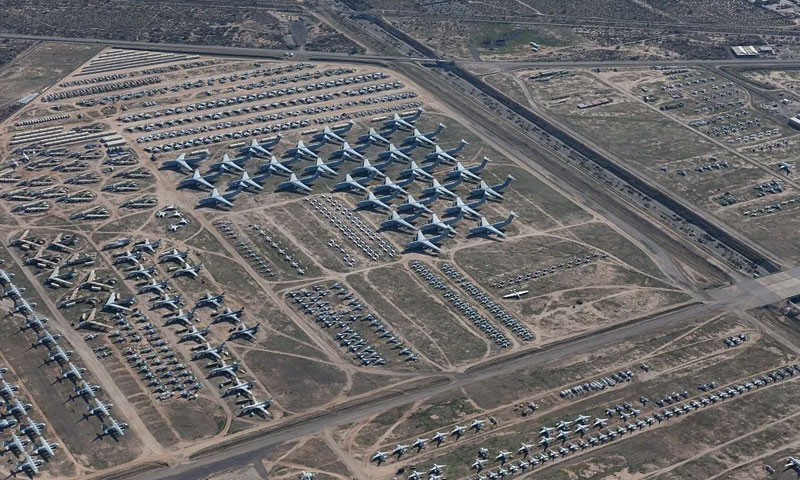
In the vast deserts of Tucson, Arizona, lies a place that is far more than a graveyard for old aircraft. Known as the world’s largest military aircraft boneyard, this facility is unique not simply because of its size, but because of what it represents, how it operates, and why it still matters today. At first glance, the boneyard at Davis-Monthan Air Force Base appears to be a resting place for thousands of retired military aircraft. In reality, it functions as a strategic reserve, a parts warehouse, a maintenance hub, and a living archive of military aviation history. According to the World Record Academy, the site holds more than 4,000 aircraft, making it the largest of its kind anywhere in the world. Why Tucson? The Climate Advantage What makes this location especially valuable is its desert climate. Tucson’s dry air, minimal rainfall, and hard alkaline soil dramatically slow corrosion. This allows aircraft to be stored outdoors for decades with far less structural damage than would occur in humid regions. Experts note that aircraft preserved here can remain in recoverable condition for years, sometimes even decades, with minimal maintenance. Not Just Storage — Strategic Preservation Unlike typical scrap yards, aircraft at this facility are not immediately dismantled. Managed by the 309th Aerospace Maintenance and Regeneration Group (AMARG), the boneyard categorizes aircraft into different preservation levels. Some are kept in near-flyable condition, others are used as spare-parts donors, and a select few are regenerated and returned to service when military needs arise. This makes the boneyard a strategic asset for the US military. Engines, landing gear, avionics, and structural components reclaimed here save billions of dollars by extending the life of active fleets. This is what the world’s largest airplane graveyard looks like today. Located in Tucson, it holds over 3,200 retired aircraft. pic.twitter.com/p5AY9fRzXg — Historic Vids (@historyinmemes) February 2, 2026 A Timeline of Military Aviation Another defining feature is the breadth of aviation history on display. Aircraft from World War II, the Cold War, and modern conflicts sit side by side. Fighters, bombers, cargo planes, refuelling tankers, helicopters, and even NASA aircraft are preserved here, offering a rare chronological view of how military aviation evolved over nearly a century. Security, Scale and Precision Every aircraft that arrives undergoes a carefully controlled process. Weapons systems, classified electronics, and fuel are removed, after which the aircraft is cleaned, sealed, and coated with protective materials. Rows are mapped with military precision, allowing engineers to locate specific parts quickly across thousands of aircraft. Why It Still Matters The Tucson boneyard is special because it turns retirement into readiness. It ensures that past technology continues to support present and future missions. At the same time, it stands as a reminder of the scale of modern warfare and the cost of maintaining air dominance. In essence, what makes this aircraft boneyard extraordinary is not the silence of grounded planes — but the fact that many of them are not truly retired at all.

BYD Shares Dive After 30% Sales Drop: What This Means for the EV Giant
Shares of Chinese electric vehicle maker BYD Co. Ltd. slumped sharply this week after the company reported a significant drop in vehicle sales, raising concerns among investors about its growth trajectory and competitive edge in the global electric vehicle (EV) market. On February 2, BYD’s Hong Kong-listed stock fell 7.8% to HK$90.10, its lowest level in over a year. Shares on the Shenzhen exchange also slipped, down as much as 4.3%, following the January sales data that showed a 30.1% year-on-year decline in vehicle deliveries. January marked the fifth consecutive month of falling sales for BYD, with total deliveries of 210,051 vehicles, compared with more than 300,000 units in the same period last year. The downturn represents the weakest January performance since 2020, when the COVID-19 pandemic severely disrupted production and demand. Industry data show the slump affected nearly all segments. Plug-in hybrid electric vehicle (PHEV) sales — which account for more than half of BYD’s total sales — fell 28.5%, extending a decline that began in 2025 after a 7.9% drop the prior year. Battery electric vehicle sales also lagged, reflecting weaker domestic demand and a stagnating Chinese EV market. Production figures mirrored the sales slump. BYD’s January output fell 29.1%, with PHEVs down nearly 25% and pure battery EVs sliding 35.7%. However, commercial vehicle output, particularly buses, showed growth, rising more than 50% as BYD diversified beyond passenger EVs. The slump in sales comes as China’s domestic EV market weakens amid the scaling back of government subsidies, which previously boosted demand for electric vehicles. Analysts say reduced incentives have shifted consumer behaviour and intensified competition among domestic rivals such as Geely, Leapmotor, XPeng and Li Auto. Despite the domestic challenges, BYD has seen stronger performance overseas, with foreign sales up 43.3% in January, accounting for nearly half of total deliveries. The company has targeted 1.3 million overseas shipments in 2026, a nearly 24% increase from last year, even though this falls short of earlier projections of up to 1.6 million units. This global focus helped BYD become the world’s largest EV seller in 2025, overtaking U.S. rival Tesla in annual vehicle deliveries thanks to robust export growth last year. However, the recent sales slump underscores that foreign markets alone may not fully offset pressures at home. As Chinese EV stocks broadly reacted to the weak data, other manufacturers also saw share price declines. Analysts warn that the EV industry’s early-year performance could shape investor sentiment and competitive dynamics in 2026. For BYD, the challenge now lies in balancing long-term global expansion with the need to revive domestic demand and reinvigorate its product lineup as subsidies wane and competition intensifies.
Sky Poised to Fill With Kites: Basant Festival Returns to Lahore After 20 Years
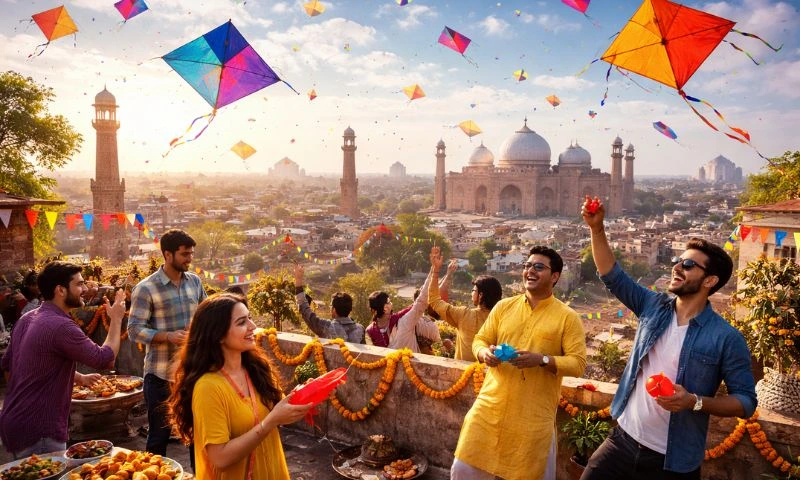
Lahore is buzzing with excitement and activity as the iconic Basant festival makes its highly anticipated return after nearly 20 years. Long seen as a signature cultural event in Punjab, Basant was banned across the province for safety reasons, but this month the provincial government has allowed a three-day celebration in the city of gardens. The move has sparked both nostalgia and debate among residents, authorities and visitors alike. Traditionally held in spring, Basant marked the arrival of brighter weather and was famous for colourful kite flying that filled the skies above rooftops across Lahore. The festival became a symbol of communal joy and local culture, drawing crowds from inside and outside Pakistan. In preparation, kite markets in the old city have already come alive. Shopkeepers display brightly coloured guddis (kites) and pinnay (kitestring). Soaring demand has pushed prices sharply higher — kites that once sold for Rs200 are now going for nearly double the price, and balls of string cost up to Rs12,000. Rooftop rentals, crucial to Basant celebrations, are being booked at premium rates, with some properties commanding hundreds of thousands of rupees for a few days of festivities. For many Lahore youth, the upcoming Basant will be an unforgettable first experience. Locals aged in their early twenties grew up hearing tales of bo kata — the triumphant shout when a kite string cuts an opponent’s kite — but never saw the sky filled with colour. Twenty-five-year-old Aayat-i-Noor said: “This will be my very first Basant… Experienced not through words or screens but with my own eyes, and that makes it feel incredibly special.” Older Lahoris remember the glory years vividly. Businessman Abu Bakr Masood calls Basant “Lahore’s only genuine product,” while 47-year-old Hassan Ejaz Wyne recalls flying kites almost every day during his youth. This year’s festival is not without new rules. The Punjab Regulation of Kite Flying Act 2025 has been implemented to reduce past dangers — especially from chemical-coated kite strings that caused injuries and deaths. Under the law, violations related to dangerous kite strings can lead to fines of up to Rs5 million or several years in prison. Vendors and manufacturers must register with authorities and affix QR codes to all kite-flying materials. City authorities are also rolling out safety measures to protect festival-goers. 300 buses and 6,000 auto-rickshaws will provide free transport during the Basant weekend to discourage motorcycle traffic. Officials will install protective steel wires on bicycles and patrol high-risk areas to curb accidents. While Basant is back in Lahore’s skies, debates continue about extending the celebrations to nearby cities like Rawalpindi, where a kite flying ban remains in place. Some residents deem this unequal, arguing every citizen should celebrate the cultural festival. As rooftops fill, hotels reach capacity and the skies prepare for a tapestry of colour, Lahore pauses to re-embrace a festival that once defined its spring.
One Walkover, Many Matches: India Match Boycott Won’t Stop Pakistan’s T20 World Cup Run
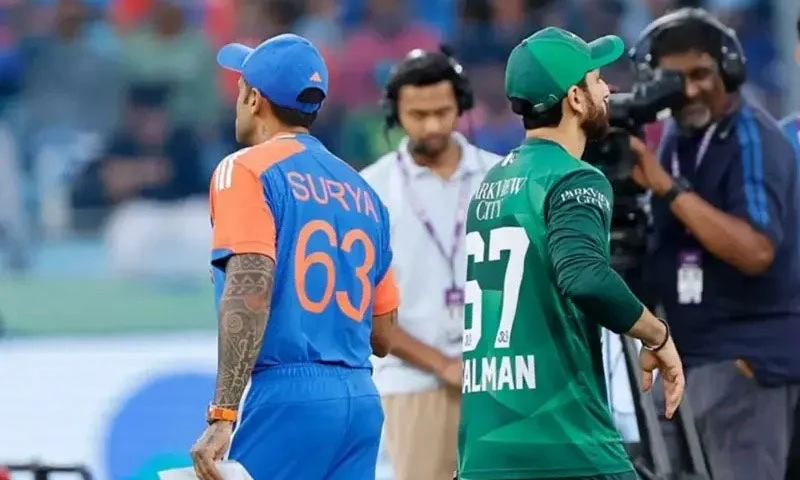
Pakistan’s decision to boycott its group-stage match against India in the ICC Men’s T20 World Cup has sparked intense debate across the cricketing world. While Indian media has framed the move as damaging to Pakistan’s tournament prospects, former Pakistan captain Rashid Latif and other experts argue that the boycott is unlikely to block Pakistan’s route to the next round. Under ICC playing conditions, India will receive a walkover and two points if Pakistan does not take the field. However, tournament formats are designed around multiple group matches, not a single fixture. Analysts point out that Pakistan’s group composition still allows the team to qualify comfortably by securing wins against other opponents and maintaining a healthy net run rate. Rashid Latif, speaking to local media, described the situation as a strategic rather than fatal setback. “This is not checkmate. Pakistan has enough matches to control its destiny. One walkover does not end a World Cup campaign,” Latif said, adding that teams qualify by winning games, not narratives. How Pakistan Can Still Reach the Next Round In the group stage, Pakistan is scheduled to play multiple matches besides India. Cricket analysts note that two or three strong victories would likely be sufficient for qualification, even with the forfeited points. Historically, teams have advanced in ICC tournaments despite losing or forfeiting high-profile matches, provided they performed consistently elsewhere. Latif emphasized that Pakistan’s strength lies in balance and adaptability, particularly in pressure situations. “If Pakistan focuses on execution instead of controversy, qualification should not be a problem,” he said. What Happens in the Knockout Stage Importantly, the knockout phase operates independently of group-stage controversies. Once qualified, Pakistan would compete purely on cricketing merit. Experts say a potential India–Pakistan clash in the knockouts would depend on both teams progressing — and at that stage, no walkover rules apply. Former players argue that Pakistan has historically thrived in knockout pressure, citing previous ICC tournaments where the team peaked at crucial moments. ICC’s Response The International Cricket Council (ICC) has acknowledged Pakistan’s stance and confirmed that tournament rules will be applied strictly but neutrally. ICC officials reiterated that participation decisions taken on government directives are treated differently from unilateral board actions, limiting the scope of punitive measures beyond match points. While the boycott carries commercial consequences, the ICC has so far avoided any indication of broader sanctions, focusing instead on keeping the tournament competitive and inclusive. From Pakistan’s perspective, the boycott is a principled stand rather than a competitive surrender. With multiple matches still to play and clear qualification scenarios available, Pakistan’s World Cup journey remains firmly in its own hands — both in the group stage and beyond.
