

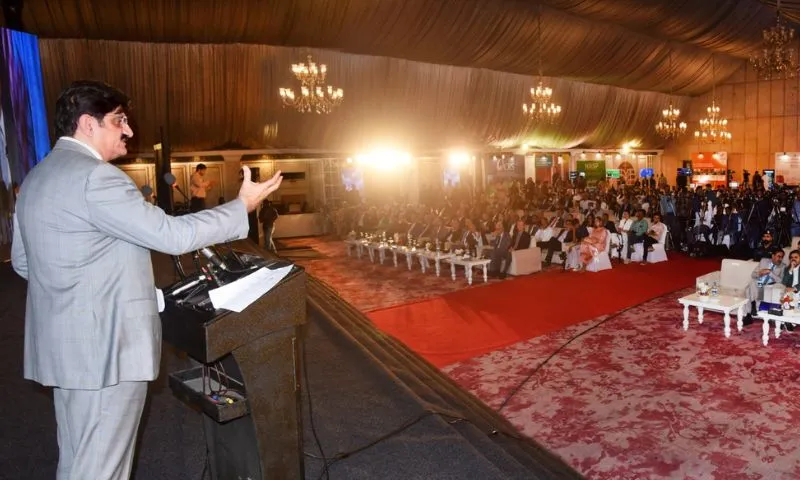
The three-day Asia-Pacific Shelter and Settlements Forum (APSSF) 2026 concluded in Karachi with Sindh Chief Minister Syed Murad Ali Shah calling for urgent action on climate-resilient and inclusive housing across the region. Addressing delegates at the closing session, the chief minister said the Asia-Pacific region faces mounting pressure from rapid urbanisation, housing shortages, climate risks and environmental stress. He stressed that shelter and human settlements are not merely infrastructure concerns but “fundamental pillars of dignity, equity, social stability and climate resilience.” The forum brought together nearly 1,200 participants, including about 600 international delegates from 41 countries, representing 206 organisations. Attendees included governments, development institutions, UN agencies, financial bodies, academia, civil society, media and the private sector. Positioning Sindh as a leader in post-disaster recovery, the province highlighted its Sindh People’s Housing for Flood Affectees (SPHF) programme as a global benchmark in climate-resilient housing. The initiative aims to build more than 2.1 million homes, benefiting over 15 million people, a scale larger than the populations of 154 countries. A defining feature of the programme is women-centred ownership, with houses and land titles issued in women’s names to promote dignity, empowerment and financial inclusion. Referring to Sindh’s experience of devastating floods, Mr Shah said the province had directly faced mass displacement and strain on urban systems. He reaffirmed the government’s commitment to partnerships that promote safe housing, resilient cities and improved quality of life for vulnerable communities. International partners including World Bank Country Director Bolormaa Amgaabazar, along with representatives of the Asian Development Bank and Islamic Development Bank, praised Sindh’s beneficiary-driven model and described it as a people-centred approach to climate recovery. Across 26 technical sessions, delegates focused on scaling resilient housing, integrating climate adaptation and mitigation, and strengthening regional cooperation. Planning and Development Minister Jam Khan Shoro said resilience must be embedded in policies, finance and institutions, adding that adaptation and mitigation should go hand in hand. He noted that hosting APSSF 2026 allowed Sindh to reflect on lessons from historic floods and renew its commitment to safer and more inclusive settlements. To bridge policy and practice, international delegates will visit Thatta, Jamshoro and Hyderabad to observe SPHF’s implementation on the ground. The forum concluded with a recap of key moments, including the inaugural address by First Lady Aseefa Bhutto-Zardari, who emphasised the transformative role of shelter in social development. Chief Minister Murad Shah presented awards to national and international partners and urged participants to move beyond dialogue toward measurable action in building climate-resilient housing across the Asia-Pacific region.
Karachi Biennale Trust Celebrates 10 Years, Announces KB27
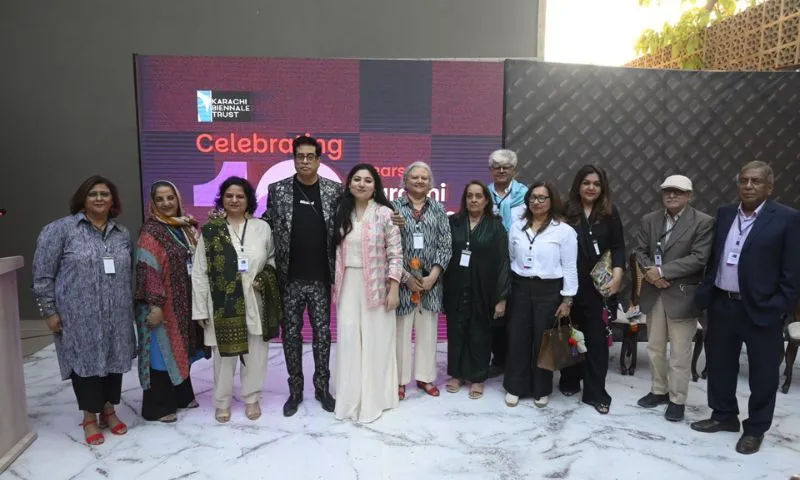
The Karachi Biennale Trust celebrated its tenth anniversary today with a major announcement at the Gulgee Museum, unveiling the fifth edition of the Karachi Biennale, scheduled from January 16 to January 31, 2027. The upcoming edition, titled “Kal — Yesterday Tomorrow,” will be curated by Noor Ahmed. The press conference drew leading figures from Karachi’s corporate and art communities along with prominent media representatives. The event highlighted the journey of the Karachi Biennale Trust, founded in 2016 as a non profit platform promoting creativity, innovation and critical discourse in contemporary visual arts. Chairperson Atteqa Malik opened the ceremony, followed by a visual presentation revisiting past biennales. The event also formally introduced the new Managing Trustee Shanaz Ramzi and curator Noor Ahmed. Speaking at the conference, Ramzi said, “At ten years, the Karachi Biennale Trust stands as a testament to what sustained cultural collaboration can build for a city. As we look toward KB27, we reaffirm our commitment to making art publicly accessible while creating global conversations rooted in Karachi’s realities.” Bushra Hussain, Artistic Director of KB27, reflected on previous editions and their impact. Noor Ahmed shared her curatorial vision, expressing her intention to expand the Biennale’s reach while remaining grounded in local narratives. Ahmed is known internationally for her work on transdisciplinary art projects. She co curated River Landscapes between South Asia and Europe and was part of the curatorial team of the Pakistan Pavilion at Dubai Expo 2020, which won a silver award among 192 participating countries. She also led the Digital Curation of Lahore and Taxila Museums, Pakistan’s largest museum digitization initiative supported by the World Bank. Following the press conference, guests attended the exclusive preview of “Aaj Aur Kal,” a one day exhibition curated by Amin Gulgee and Noor Ahmed. The exhibition featured performance, new media and installation works by 72 artists from 18 countries, including Salima Hashmi, RM Naeem, Raqs Media Collective, Meher Afroz, Heide Hatry, Natthaphon Chaiworawat, Richard Humann, Sohail Zuberi and Risham Syed. The exhibition’s title reflects the elasticity of time in South Asian thought, where the word “Kal” signifies both yesterday and tomorrow. The special performance marked the official countdown to KB27. Founded by art professionals and educators, the Karachi Biennale functions as a city wide temporary museum. It presents exhibitions, talks, seminars and public programs across heritage sites and public spaces, all free and open to the public. With strong institutional backing from partners including Vertika Limited, Rafique and Naila Bhimjee, IVS School of Art and Architecture, Starlinks PR and the Gulgee Museum, the Karachi Biennale continues to position Karachi as a vital hub of contemporary art in South Asia.

T20 World Cup: Colombo Airfares Skyrocket Ahead of India-Pakistan T20 World Cup Clash
Airfares to Colombo, Sri Lanka have surged sharply from Pakistan ahead of the blockbuster Pakistan vs India T20 World Cup clash, with return tickets from major cities crossing unprecedented levels due to overwhelming demand. According to travel industry data and booking platforms, fares from Karachi, Lahore, and Islamabad to Colombo have increased multiple times compared to regular seasonal pricing. Direct and one-stop flights that normally cost between PKR 70,000 to PKR 90,000 have jumped significantly, with last-minute bookings rising well beyond PKR 180,000 to PKR 220,000 depending on availability and travel dates. The surge mirrors reports from Indian media that ticket prices from India have touched Rs 1 lakh, underscoring how the Pakistan-India rivalry is reshaping regional travel markets. Travel agents in Karachi say seats for flights scheduled two days before the match are almost sold out. One Lahore-based travel consultant said demand has been “extraordinary, especially from cricket fan groups traveling together.” He added that even connecting flights via Dubai or Doha are filling quickly. The high-voltage Pakistan-India encounter is widely regarded as the most anticipated match of the tournament. Historically, this fixture draws massive global viewership and thousands of traveling supporters. The current spike in fares reflects that intensity. Sri Lanka’s hospitality sector is also experiencing the ripple effect. Hotels near R. Premadasa Stadium in Colombo are reporting near-full occupancy, with room rates increasing substantially for match week. Industry sources indicate that sports tourism linked to the World Cup is providing a major economic boost to Colombo. Airlines typically use dynamic pricing models, where fares increase as seat inventory drops and demand rises. With limited direct connectivity between Pakistan and Sri Lanka, supply constraints have amplified the surge. Many Pakistani fans are now exploring alternate routes, including flying via Middle Eastern hubs or adjusting travel dates to reduce costs. Some supporters are even considering traveling to southern Indian cities and then flying onward to Colombo, although visa and transit logistics complicate such plans. The airfare spike highlights the economic power of cricket’s biggest rivalry. Beyond the on-field battle, the Pakistan-India match is driving tourism, aviation revenue, and cross-border travel flows across the region. With match day approaching, experts advise Pakistani fans to monitor fare alerts and avoid last-minute bookings where possible, as prices are unlikely to drop before the highly anticipated showdown.

The Best Mobile Apps to Track Sleep, Hydration and Fitness in Ramadan
Ramadan 2026 is not only a time for spiritual reflection and fasting but also an opportunity for many to focus on health, fitness and wellbeing. As millions of Muslims fast from dawn until sunset, experts say tracking key health metrics can help people stay safe and make the most of their energy levels. A host of health and fitness mobile apps are emerging as useful tools to monitor calories, sleep, workouts and hydration during the holy month. According to reports, Ramadan comes with changes in meal patterns, activity schedules and sleep routines. Nutritionists caution that fasting can affect metabolism, making it important for individuals to be mindful of what they eat during Suhoor and Iftar. Keeping track of calorie intake, water consumption and physical exertion can help maintain balanced energy levels throughout the month. One widely recommended app is MyFitnessPal, which helps users log daily food intake and calculate calories with a comprehensive food database. Users can also set personalized goals for weight management or healthy eating, helping them make smarter choices during Ramadan feasts and social gatherings. Another popular choice is Lose It!, which offers intuitive food tracking and custom meal planning features. Sleep experts often point to disrupted rest patterns during Ramadan, as late night prayers and early wake-ups are part of the routine. Apps such as Sleep Cycle use motion and sound data to analyse sleep quality, helping users understand their rest patterns and adjust habits to maximise recovery. Better sleep can improve mood, focus and performance during long fasting hours. For those who want to stay active, Nike Training Club and Seven – 7 Minute Workout provide guided exercise routines that can be performed at home or outdoors. These apps offer workouts ranging from low-impact flexibility sessions to strength training that can be adapted around fasting hours. Trainers advise light to moderate workouts, especially before Suhoor or after Iftar, to prevent dehydration and strain. Hydration plays a key role in wellbeing during Ramadan. WaterMinder reminds users to track their water intake and set daily hydration goals. Although Muslims refrain from drinking water during daylight hours, staying hydrated during non-fasting times helps maintain healthy bodily functions. Health care professionals also recommend tracking heart rate and activity with apps linked to wearables such as Apple Health or Google Fit, which aggregate data from multiple sources. These platforms can show trends over time, motivating people to maintain overall activity and fitness levels throughout Ramadan. By integrating technology with fasting routines, people can better understand their bodies and optimise health during Ramadan 2026. As digital wellness tools evolve, they offer practical support to stay balanced, energized and mindful throughout the holy month.
Rain Threatens India vs Pakistan T20 World Cup Clash in Colombo
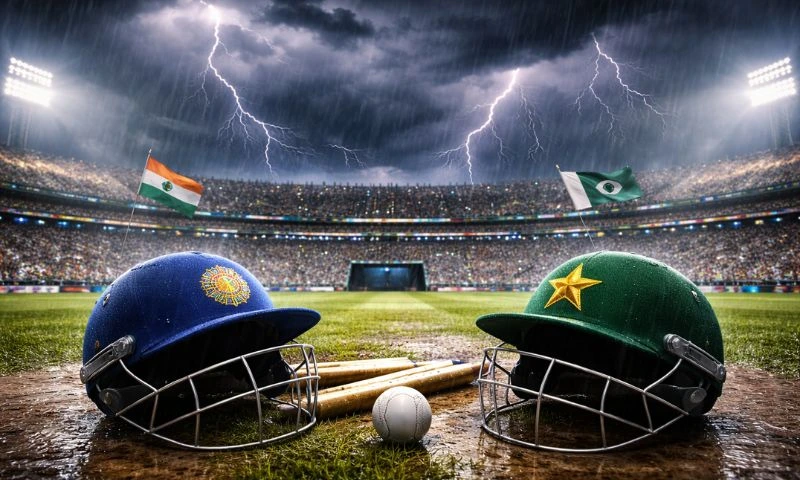
Cricket fans around the world are watching the skies as rain threatens to disrupt the highly anticipated India vs Pakistan match in the ICC Men’s T20 World Cup 2026. The blockbuster Group A encounter is scheduled for Sunday, February 15, 2026, at the iconic R. Premadasa Stadium in Colombo, but meteorological forecasts suggest that weather could play a decisive role in how the clash unfolds. According to multiple weather updates, Colombo is expected to experience scattered showers and thunderstorms during the afternoon and evening hours, substantially raising the risk of rain interruptions during the game. Several meteorological reports indicate a 50 percent chance of rainfall around match time, with occasional thunder and heavy cloud cover likely throughout the day. Rain threats are common in Colombo during February, which falls within Sri Lanka’s inter-monsoon period when short bursts of rain often occur even in otherwise fine conditions. Recent forecasts indicate that scattered rain — particularly around 6 pm local time, near toss and early overs — could delay or interrupt play, potentially forcing adjustments under the Duckworth-Lewis-Stern (DLS) method if the match is affected. The weather situation has added another layer of drama to an already charged fixture. India and Pakistan both sit unbeaten at the top of Group A going into the match, each with impressive wins early in the tournament. India thumped Namibia by 93 runs in their last outing, showcasing depth in both batting and bowling, while Pakistan’s composed victories have shown strong form ahead of this high-stakes showdown. Fans, commentators, and former players alike have voiced both excitement and concern. With conditions likely to be cloudy and humid — and rain clouds forming over Colombo in the days leading up to the game — many supporters are anxiously watching weather forecasts to see if the skies will clear in time. If rain does interrupt play, the ICC rules require a minimum of five overs per side for the match to count, and teams may need to adapt strategies accordingly. A washout would see each side share one point, a scenario that could have implications for Super 8 qualification but would still leave both teams in contention. Regardless of the weather, the India-Pakistan T20 clash remains one of cricket’s most electric spectacles. Fans will hope for clear skies and a full match so that this fierce rivalry can be decided on the field, not by the elements.

New iPhone 17e Design Leaks: Dynamic Island and Camera Boost
Apple appears set to expand its iPhone lineup soon with the launch of the iPhone 17e, a new budget-friendly model that could arrive as early as February 19, 2026. Industry leaks and reports from tech analysts suggest this next entry-level iPhone will offer thoughtful upgrades while maintaining a familiar price point, making it one of Apple’s most anticipated releases of the year. According to recent reports, the iPhone 17e is likely to debut with a starting price of around $599, the same tag as last year’s iPhone 16e. This pricing strategy aims to keep the device within reach for users who want an affordable iPhone experience without paying flagship prices. Bloomberg journalist Mark Gurman has described the iPhone 17e launch as “imminent,” indicating Apple is ready to reveal the device soon. One of the most notable upgrades is expected to be the A19 chip, the same powerful processor used in the standard iPhone 17 series. This marks a significant performance boost compared to the iPhone 16e’s A18 chip, providing better speed, efficiency, and capability for demanding apps and multitasking. Reports also suggest that the phone could include Apple’s new C1X modem and upgraded wireless chips to improve connectivity and energy efficiency. Another major addition could be MagSafe wireless charging support. This feature was absent in the iPhone 16e and has long been a point of criticism among users who expected Apple’s magnetic wireless charging on all new models. MagSafe would allow faster and more convenient wireless charging while supporting a growing ecosystem of accessories. Leaked renders and reports also highlight potential changes to the display design. The iPhone 17e may adopt Dynamic Island, moving away from the traditional notch seen on previous models like the 16e. However, the refresh rate is expected to remain at 60Hz, keeping the device’s screen familiar yet slightly dated compared to higher-end models. Camera upgrades may include an improved 48-megapixel rear sensor and a better front camera, bringing more versatility to everyday photography and video calls. Other enhancements could include slimmer bezels and a slightly refined exterior design while still retaining the classic iPhone look. In global markets, analysts believe the iPhone 17e will compete directly with mid-range Android phones like the Google Pixel 10a, offering a more modern aesthetic and Apple’s robust ecosystem. Markets such as the UAE, India and Pakistan could see strong demand if Apple maintains the same price point while adding meaningful upgrades. The iPhone 17e’s anticipated launch highlights Apple’s strategy to blend premium features with accessible pricing, aiming to broaden its customer base and deliver value to users who want sophistication without flagship cost.
Astronomers Predict Ramadan Crescent Sighting for Pakistan
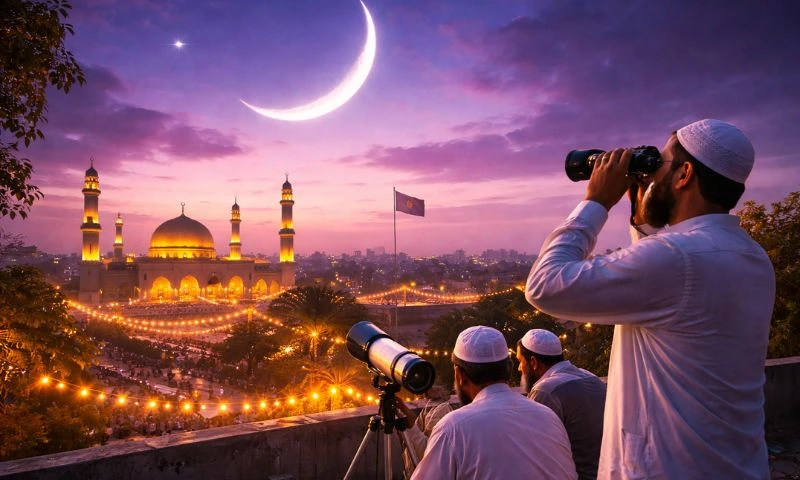
Pakistan’s top space science body, the Space and Upper Atmosphere Research Commission (SUPARCO), has shared its astronomical outlook for the upcoming Ramadan 1447 AH, offering a forecast on when the holy month is likely to begin in the country. SUPARCO’s prediction plays an important role in informing moon-sighting authorities and the general public about possible timelines for starting the fast. According to SUPARCO’s astronomical data, the new moon (conjunction) for Ramadan is expected to occur on Tuesday, February 17, 2026, marking the beginning of the crucial phase that leads to the holy month. Astronomers use scientific models to determine the moon’s age, angular separation from the sun, and its altitude above the horizon after sunset. These parameters help estimate whether the crescent moon can be sighted with the naked eye the following evening. Local meteorological forecasts also support the likelihood of crescent visibility on Wednesday, February 18, which corresponds to the 29th day of Shaban 1447 AH. In Karachi and other major regions of Pakistan, the Pakistan Meteorological Department (PMD) notes that the moon’s age and position around sunset on February 18 are favourable for sighting, provided weather conditions remain clear or partly cloudy. If the crescent is confirmed on the evening of February 18, the first day of fasting will likely be observed on Thursday, February 19, 2026, in line with traditional practice in South Asia. Moon-sighting committees across the country will convene to share and verify sightings in coordination with scientific inputs. However, SUPARCO and other experts emphasise that astronomical forecasts are not final decisions. The Central Ruet-e-Hilal Committee, Pakistan’s official authority for moon sighting, will conduct meetings, review verified testimonies, and make the final announcement on the start of Ramadan. A key session of the committee is scheduled to take place in Peshawar on February 18, when clerics, meteorologists, and SUPARCO representatives will assess claims and declare the official beginning of the holy month. Ramadan holds deep religious significance for Pakistan’s majority Muslim population. It is observed with fasting from dawn to sunset, increased prayer, charitable giving, and nightly Taraweeh prayers in mosques. The month often encourages community solidarity, reflection, and enhanced spiritual devotion. The practice of relying on both celestial calculations and verified moon sightings reflects a blend of scientific methods and centuries-old religious traditions. Across the Islamic world, different countries may observe slight variations in start dates based on local sightings or astronomical determinations. As Pakistan prepares for the sacred month, citizens are encouraged to follow official updates from the Ruet-e-Hilal Committee and local mosques to mark the start of Ramadan nationwide.
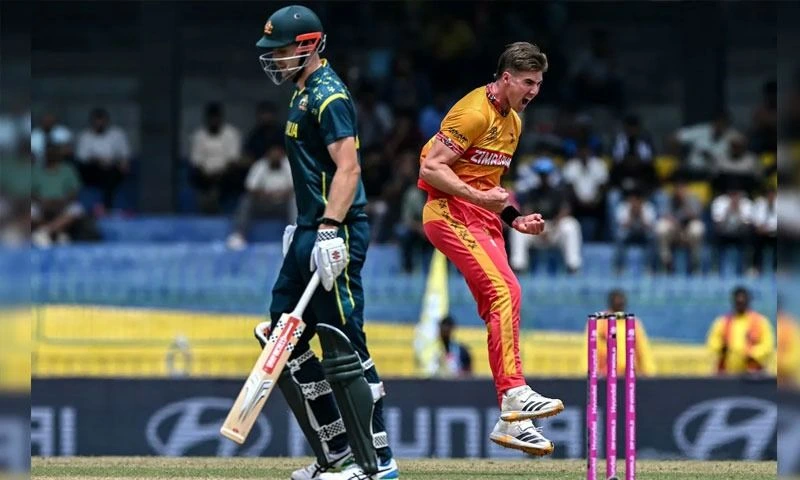
From 2007 to 2026: Zimbabwe Shock Australia Again, Seal World Cup Upset by 23 Runs
Zimbabwe produced one of the biggest shocks of the T20 World Cup today, defeating Australia by 23 runs in a dramatic Group B clash that has completely reshaped the Super 8 qualification race. Playing in Colombo, Zimbabwe posted a competitive 169 for 2, built around a composed unbeaten 64 from Brian Bennett and a late flourish from captain Sikandar Raza, who added 25 not out. The partnership ensured Zimbabwe finished strongly after a steady start against Australia’s experienced bowling attack. Australia’s chase never truly settled. Early wickets put them on the back foot as key batters Travis Head and Glenn Maxwell departed cheaply. Despite a fighting 65 from Matt Renshaw, the pressure mounted as Zimbabwe’s bowlers maintained discipline through the middle overs. Zimbabwe beat Australia by 23 runs 🎉Match Details 👉 https://t.co/v7MN1B6xMe#T20WorldCup #ZIMvAUS pic.twitter.com/tlRIJPyg2j— Zimbabwe Cricket (@ZimCricketv) February 13, 2026 The defining spell came from Blessing Muzarabani, who ripped through Australia’s lineup with figures of 4 for 17, earning Player of the Match honors. Australia were eventually bowled out for 146, handing Zimbabwe a famous 23 run victory. Today’s result immediately revived memories of another historic moment between the two sides. In the inaugural World T20 in 2007, Zimbabwe stunned Australia in Cape Town by five wickets. On that occasion, Brendan Taylor scored an unbeaten 60 as Zimbabwe chased down 139 with one ball to spare. That win had been considered one of the biggest upsets in T20 history at the time. Now, nearly two decades later, Zimbabwe have repeated the feat on the global stage. Australia’s defeat today places their Super 8 hopes in serious jeopardy. Net run rate and remaining group fixtures now become crucial. The loss also highlights the unpredictable nature of T20 cricket, where discipline and execution often outweigh rankings and reputation. Speaking after the match, Australia’s captain admitted the team failed to execute under pressure, while Zimbabwe’s skipper praised his squad’s belief and composure in key moments. For Zimbabwe, today’s victory marks a defining chapter in their modern cricket journey. It reinforces their growing competitiveness in international T20 cricket and sends a clear message that no team can be taken lightly in this format. The T20 World Cup has once again delivered drama, and Zimbabwe’s triumph today will be remembered as one of the tournament’s most powerful statements.
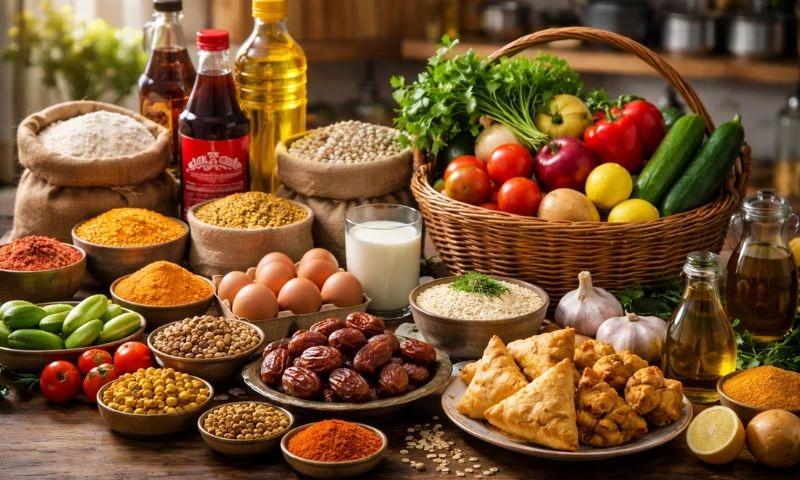
The Smart Ramadan Shopping Plan That Cuts Costs Without Cutting Joy
Ramadan brings spiritual calm, but it often brings financial pressure too. Iftar tables expand. Guests drop in. Supermarkets push “Ramadan deals.” Families shop with good intentions, yet by mid-month many realize their grocery spending has surged. Food already consumes a major share of household budgets in Pakistan. When prices fluctuate and emotional buying increases, small additions to the cart turn into large monthly differences. Overspending in Ramadan rarely happens because families lack discipline. It happens because there is no clear structure. 1) Build a Controlled Weekly Structure Before You Enter the Store The biggest mistake is shopping without a weekly food map. Instead of buying randomly for 30 days, divide Ramadan into weekly cycles. Plan seven days at a time. Start by selecting only two core proteins for the week. For example, choose chicken and lentils, or beef mince and chickpeas. Repetition reduces cost and waste. The goal is not monotony. The goal is controlled variety. One protein can transform into multiple dishes. Chicken becomes karahi one night, wraps the next, and pulao later in the week. Next, define your staple base. Buy one rice type only. Stick to one flour. Choose two lentils. Avoid experimenting with specialty grains unless they replace something else. When staples are simple, budgets stabilize. Then apply the “one main shop, one top-up” rule. Conduct one major grocery run for pantry items, oil, proteins, and durable vegetables. Midweek, do a small visit only for fresh herbs, tomatoes, salad items, and fruit. This prevents spoilage and impulse additions. Before leaving home, check your pantry physically. Do not assume oil, sugar, or spices are finished. Many families rebuy items that are already stocked. Action step: Write your seven-day meal outline on paper before making the list. If it is not on the meal plan, it does not enter the cart. 2) Control the “Ramadan Extras” Category That Breaks Budgets Most overspending happens in the extras section, not in staples. Dates are essential, but multiple syrups, frozen snack varieties, and daily dessert experiments quietly inflate bills. Create a fixed weekly “extras cap.” Decide in advance how many snack nights your family will have. If you plan pakoras, skip nuggets and fries. If you buy samosa sheets, avoid also buying spring rolls. Choose one snack style per week. Apply the same discipline to desserts. Instead of trying new sweets every night, designate one dessert evening. Reuse ingredients across recipes. If milk and custard are bought, ensure they serve more than one purpose. Fruit shopping also requires limits. Choose one daily fruit like bananas or apples. Add one seasonal fruit as a treat. Variety feels abundant, but excess fruit often spoils before it is eaten. Frozen items require caution. Bulk “family packs” seem cheaper but only save money if portioned and frozen immediately. Otherwise, they encourage larger servings and more consumption. Action step: Separate your grocery list into two columns. Column A: essentials. Column B: extras with a fixed budget ceiling. Stop adding once the ceiling is reached. 3) Change Your Shopping Behavior Inside the Store A perfect list fails if behavior collapses at the shelf. Shopping while hungry increases impulse decisions. Always shop after a meal. Use your phone calculator as you move through aisles. Maintain a running total. Watching numbers rise creates real-time awareness and prevents surprises at checkout. Avoid promotional traps that do not match your plan. Discounts are useful only if the item was already on your list. Buy-one-get-one deals often double quantity but not value if the second item goes unused. Stick to aisle discipline. Do not browse sections unrelated to your list. Supermarkets are designed to encourage exploration. Structured movement saves money. Teach family members the budget boundaries. When everyone understands the spending goal, emotional additions reduce significantly. Action step: Pause before checkout and review the cart. Remove one nonessential item. This small habit can cut monthly spending more than you expect. Ramadan is a month of reflection, moderation, and intention. Financial discipline aligns naturally with those values. A structured weekly plan, controlled extras, and disciplined in-store behavior can reduce grocery overspending without reducing the joy of iftar or the comfort of sehri. Smart planning protects not just your wallet, but your peace of mind throughout the month.
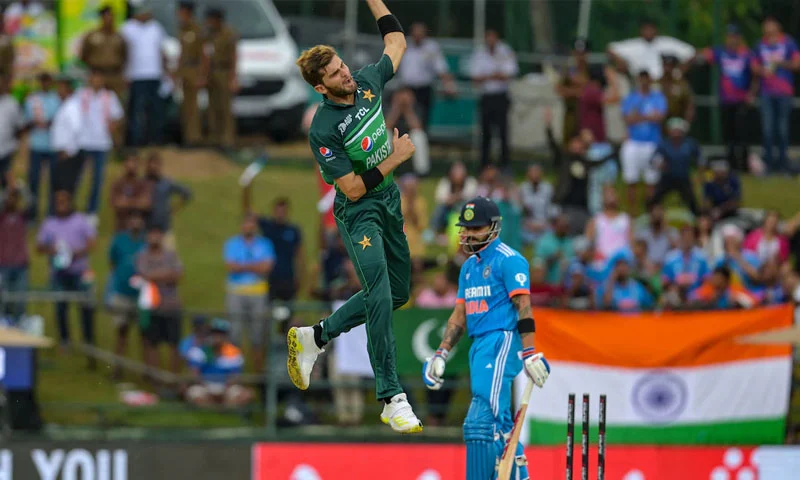
Who Shined Brightest? Complete POTM Record in India–Pakistan T20 World Cups
The India–Pakistan rivalry in the ICC Men’s T20 World Cup has consistently produced high drama, iconic performances and unforgettable moments. While India holds a dominant record in the tournament history between the two sides, individual brilliance has often defined the outcome of these encounters. With another high voltage clash scheduled for February 15, anticipation is building once again as Pakistan and India prepare to face off on cricket’s biggest T20 stage. The fixture promises intensity, pressure and global viewership. Ahead of this blockbuster encounter, it is worth revisiting the past to examine which players rose to the occasion in previous T20 World Cup meetings and were named Player of the Match for their match defining performances. Since the inaugural T20 World Cup in 2007, India and Pakistan have faced each other eight times in the competition. India has won seven of those matches, while Pakistan secured their only victory in 2021. Each of these clashes has produced a Player of the Match performance that shaped the narrative of the rivalry. 2007 T20 World Cup – Durban (Group Stage) Mohammad Asif of Pakistan was named Player of the Match after claiming 4 for 18. His disciplined spell restricted India to 141 for 9. The match ended in a tie before India won the bowl-out. 2007 T20 World Cup Final – Johannesburg Irfan Pathan delivered one of the most memorable spells in tournament history. He picked up 3 for 16 to derail Pakistan’s chase. India won by five runs to lift the inaugural T20 World Cup trophy. 2012 T20 World Cup – Colombo Virat Kohli produced a composed unbeaten 78 that guided India to victory in the Super 8 stage. His innings anchored the chase and earned him the Player of the Match award. 2014 T20 World Cup – Mirpur Amit Mishra’s spin proved decisive. He returned figures of 2 for 22 and helped bowl Pakistan out. India secured a comfortable win in the group stage. 2016 T20 World Cup – Kolkata Virat Kohli once again stood out in a rain-affected contest. His unbeaten 55 ensured India chased down the target successfully in challenging conditions. 2021 T20 World Cup – Dubai Shaheen Shah Afridi produced a fiery new-ball spell, dismissing Rohit Sharma and KL Rahul early. He finished with 3 for 31 as Pakistan registered their first ever T20 World Cup win over India by 10 wickets. 2022 T20 World Cup – Melbourne Virat Kohli delivered one of the greatest T20 innings in World Cup history. His 82 not out under pressure guided India to a dramatic last-over victory at the Melbourne Cricket Ground. What the Awards Reveal The list highlights Virat Kohli as the most influential performer in India–Pakistan T20 World Cup matches. He has won the Player of the Match award multiple times in these encounters, often in high-pressure chases. For Pakistan, Shaheen Afridi’s 2021 spell remains historic. It marked Pakistan’s breakthrough win in this tournament rivalry and ended India’s long-standing dominance in T20 World Cups. The Player of the Match winners reflect a clear pattern. Big moments in this rivalry are often shaped by either a match-winning knock under pressure or an incisive bowling spell with the new ball. With another potential clash looming in future tournaments, fans will once again look to see which player rises to the occasion in cricket’s most intense rivalry.
