

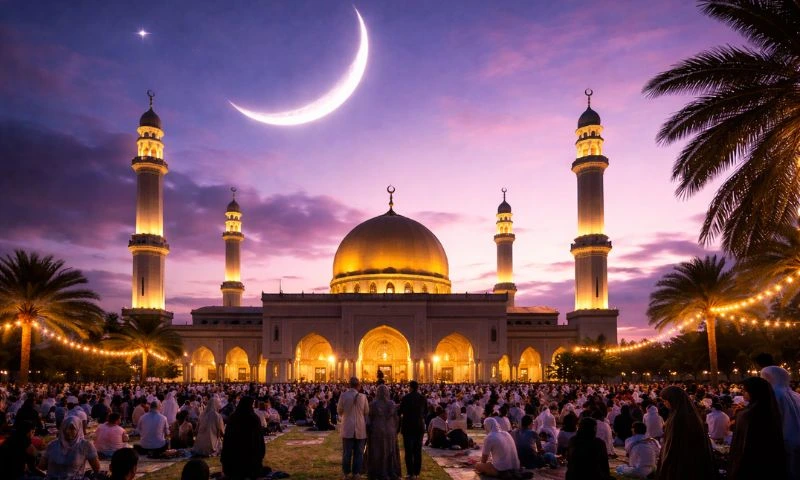
The Sultanate of Oman has become the first country in the world to officially announce the start date of Ramadan 2026, confirming that the holy month will begin on Thursday, February 19, 2026. The early declaration gives Muslim residents and institutions time to prepare for fasting, prayer and community events in one of the most observant Muslim nations. Oman’s Main Committee for Moon Sighting confirmed the decision after determining that the crescent moon of Ramadan 1447 AH will not be visible on Tuesday, February 17, which corresponds to the 29th of Shaban. The committee used astronomical calculations and traditional visual guidance to conclude that the moon will set before or at sunset across all governorates of the country, making it astronomically impossible to sight the crescent on that evening. Under established Ramadan customs, the end of Shaban signals the transition into the fasting month when the new crescent is either sighted or determined through scientific methods. In Oman’s case, the combination of observation rules and astronomical certainty led to the declaration that Wednesday, February 18 will complete Shaban, and Thursday, February 19 will be the first day of Ramadan. Ramadan holds deep religious significance as the ninth month of the Islamic calendar, observed by Muslims worldwide with fasting from dawn until sunset, increased nightly prayers, and charitable activities. The timing of Ramadan changes each year because the Islamic calendar is lunar, and months begin when the new moon appears. Using astronomical data, many countries can predict the start of Ramadan roughly ten days earlier every Gregorian year. Being the first nation to confirm the start date has cultural and practical importance. In Oman, working hours are often shortened, and business operations adapt to accommodate the fasting population, allowing employees and families to balance spiritual commitments and daily life more easily. Other Gulf Cooperation Council countries are expected to announce their start dates soon as crescent moon visibility is assessed across the region. Globally, announcements about Ramadan’s start date vary because some countries rely on physical sighting of the moon, while others use scientific calculations or a combination of both. Despite these differences, the aim remains the same: to uphold religious traditions that strengthen community bonds and nurture spiritual reflection during the holy month. Oman’s early Ramadan announcement underscores the blending of centuries-old observances with contemporary methods, helping Muslims embrace the sacred month with unity, planning and devotion.

Viral ChatGPT AI Caricature Trend: Fun or Privacy Nightmare?
A new viral AI trend has taken social media by storm as people use ChatGPT and similar tools to generate personalized AI caricatures of themselves, blending selfies with details about their job roles, interests and personality. While the trend is fun and creative, technology experts warn it carries real privacy and security risks that users must not ignore. The trend started with a simple prompt that many users are now repeating on platforms like Instagram, X, WhatsApp and LinkedIn: “Create a caricature of me and my job based on everything you know about me.” Based on this, ChatGPT and other AI systems generate cartoon-style portraits that include professional props such as laptops, coffee mugs or tools of the trade, making the caricatures feel personal and relevant. On the surface, these caricatures seem harmless. Users enjoy sharing them with friends and colleagues because the images often reflect their work persona and hobbies in imaginative ways. Many people see the trend as a playful use of the latest generative AI capabilities that can turn simple selfies into stylized digital portraits in seconds. However, cybersecurity specialists have raised alarms about what this trend means for digital privacy and data protection. Unlike previous selfie filters or avatars that simply transformed facial features, the ChatGPT AI caricatures often require users to provide detailed inputs, including photographs and contextual descriptions. This information, when combined with an AI’s memory of previous chats and usage patterns, can create a rich profile of a person’s life. Experts warn that uploading high-resolution photos, personal descriptors and job details gives AI platforms access to data far beyond what users may realize. Once images and associated information are processed by AI systems, they may be stored, reused or shared with affiliates under platform policies that are complex and often broad. In some regions, users can choose to disable data sharing features, but many remain unaware of these settings. Security researchers also worry that repeated participation in such trends could normalize oversharing information with AI tools, making users more likely to provide sensitive or professionally identifying data without considering long-term consequences. In extreme cases, personal details obtained from avatars and AI interactions might be exploited for scams, identity theft or even deepfake content. To protect themselves, specialists urge people to avoid uploading real photos, keep prompts generic, and review privacy policies before engaging with viral AI trends. They also recommend disabling chat memory and not sharing content users wouldn’t post publicly. The ChatGPT caricature phenomenon highlights the growing tension between creativity and privacy in the age of generative AI. While this trend offers a fun way to express personality online, it also serves as a reminder that digital footprints can be deeper and longer-lasting than many users expect.
Australia Announces First Day of Ramadan 2026: What Muslims Need to Know
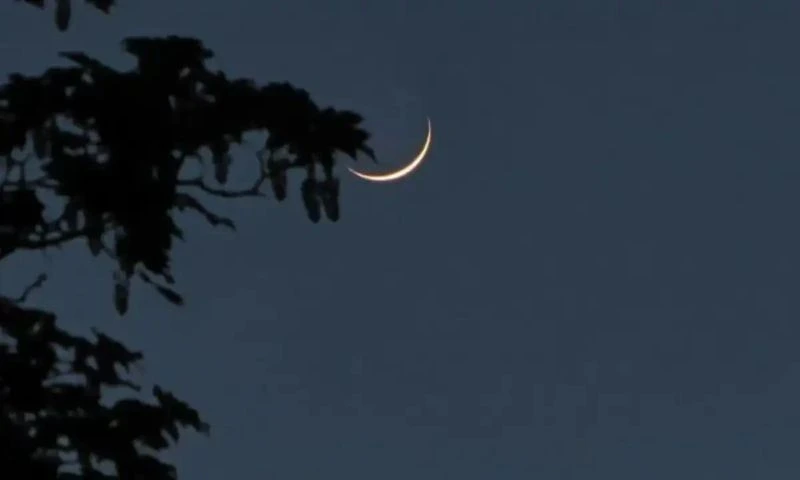
Australia’s Muslim community has officially welcomed the month of Ramadan 1447 AH after local religious authorities announced the first day of fasting for 2026, responding to moon-sighting and astronomical calculations to mark the beginning of this sacred month of Islamic worship. The announcement reflects both long-held traditions and modern scientific guidance to identify the new crescent moon that signals Ramadan’s start. Religious leaders, including the Grand Mufti of Australia, called for unity among Muslim communities as they prepare for Ramadan, a period devoted to fasting, prayer, reflection, and charity. Muslims throughout the country are making final preparations to begin fasting from dawn to sunset beginning on the first confirmed day. The start of Ramadan is determined by the sighting of the new crescent moon, known as hilal, which marks the transition from the month of Sha’ban to Ramadan in the Islamic lunar calendar. This calendar follows the phases of the moon, and sightings of the crescent after sunset are traditionally recognised by local moon-sighting committees or through validated astronomical calculations. In Australia, estimates and community moon sighting groups have been closely watching the skies. Astronomical guides suggest that Ramadan 2026 may begin around February 18 or 19, depending on the moon’s visibility in various regions of the country. Many Muslim organisations had earlier shared predicted dates based on scientific data, noting how the lunar calendar shifts by approximately 10 days earlier each Gregorian year. Australia has one of the most diverse Muslim communities in the world. With more than 800,000 Muslims, Islam is the second-largest religion in the country, representing a vibrant cultural and spiritual presence in cities like Sydney, Melbourne, Brisbane and Perth. Community events, mosque gatherings, and interfaith programs often accompany the holy month. Ramadan fosters a spirit of communal harmony, shared meals and increased charity. Many mosques organise Iftar meals each evening to break the fast at sunset, while Muslim-led charities coordinate fundraising and outreach efforts to support refugees, low-income families, and international relief. Across the globe, other countries have begun announcing Ramadan start dates based on local moon sightings and calculations. Recent declarations from nations like Turkey and Singapore demonstrate how communities blend traditional practices with astronomical certainty to fix dates for worship and fasting. As Ramadan begins in Australia, Muslims will observe the month through devotion, self-discipline, and generosity, culminating with Eid al-Fitr celebrations in March when the next new crescent moon is sighted.
Net Metering Overhaul Explained: Who Wins, Who Loses, and What Solar Users Should Know
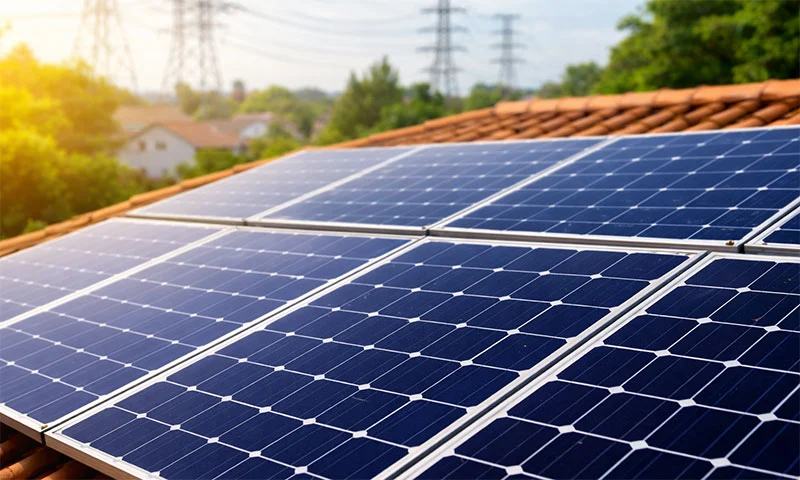
Islamabad: Prime Minister Shehbaz Sharif has ordered the Power Division to challenge NEPRA’s newly notified rooftop solar regulations, after a wave of criticism from lawmakers and solar consumers who say the changes weaken the financial case for investing in solar. The prime minister directed officials to file a review petition and ensure “every possible safeguard of the existing consumer contracts,” according to the Prime Minister’s Office. What NEPRA changed and why it triggered backlash NEPRA’s new Prosumer Regulations effectively end the one to one net metering model and shift solar users to a net billing structure for future arrangements. Under the framework reported by multiple outlets, the buyback for exported solar units is expected to drop sharply, while contract tenure is reduced from seven years to five. Critics also argue the policy shifts capacity payment burden onto solar consumers, while distribution companies continue to sell power at prevailing consumer tariffs. NEPRA and government officials have defended the overhaul as a response to rising rooftop solar penetration and the need to protect the state-run grid’s finances. Dawn reported the regulator revised terms for all existing and future net metered users on the stated logic of managing solar growth and protecting an expensive and inefficient network. The core dispute between NEPRA and solar consumers At the heart of the dispute is a fundamental question about who should bear the fixed costs of Pakistan’s power system, particularly capacity payments to independent power producers and the maintenance of the national transmission and distribution network. These fixed costs remain payable regardless of how much electricity is consumed from the grid. Solar adopters argue that they invested heavily in rooftop systems based on a stable and government-backed net metering framework that allowed them to export excess electricity at near retail rates. Many households and businesses calculated their investment payback periods on that structure. They contend that sudden policy changes that reduce export compensation or alter contract terms effectively extend the recovery period of their investment and undermine policy certainty. On the other hand, NEPRA’s position, as reflected in regulatory discussions and official statements, is that the rapid expansion of rooftop solar has reduced electricity purchases from the grid by higher-income consumers. When these consumers buy fewer units, distribution companies collect less revenue through per unit charges. However, the system’s fixed obligations, especially capacity payments and network costs, remain unchanged. As a result, regulators argue that the burden shifts to consumers who do not have solar installations, particularly lower and middle-income households. According to official data cited in media reports, around 466,000 consumers are currently registered under net metering arrangements. Meanwhile, more than 37 million domestic consumers depend entirely on grid electricity. The government has expressed concern that without regulatory adjustments, non solar consumers may end up subsidizing the fixed costs of the system. The prime minister addressed this imbalance in a high-level meeting, stating that the interests of both solar investors and ordinary grid users must be protected. He directed the Power Division to ensure that existing contractual commitments are safeguarded while also examining the broader financial sustainability of the electricity sector. Energy experts say the real issue lies in Pakistan’s high capacity payments and structural inefficiencies in the power sector. They argue that instead of penalizing rooftop solar growth, policymakers should focus on reforming the overall tariff structure, improving distribution company efficiency, and modernizing grid planning to accommodate distributed generation. Analysts also warn that if rooftop solar becomes financially unattractive, future private investment in renewable energy could slow down. At the same time, they caution that unchecked cost shifting could create political and economic pressure on non solar consumers who are already facing rising electricity bills. In short, the dispute is not just about net metering versus net billing. It is about balancing energy transition goals, protecting consumer rights, and maintaining the financial stability of Pakistan’s power sector. What happens now after PM intervention The immediate next step is the review petition before NEPRA. Reporting from Tribune and Hum English indicates existing customers are expected to remain protected until their contracts expire, after which distribution companies may terminate agreements or migrate users to the new regime. Expert Analysis: Inflation Pressure, Fixed Charges and the Risk of Grid Defection Energy analysts say the timing of NEPRA’s solar policy overhaul is critical. The decision comes at a moment when electricity tariffs in Pakistan have already surged due to fuel adjustments, capacity payments and structural reforms under IMF backed programs. Reuters quoted Ahtasam Ahmad, founder of Renewables First, who said the policy shift “adds to the compounding effect of inflation which we have experienced post 2022.” He warned that any reduction in solar export compensation or increase in fixed charges will ultimately feed into household cost pressures, especially for middle income consumers who adopted rooftop solar as a hedge against rising power bills. Experts argue that rooftop solar installations have grown rapidly over the past three years largely because consumers were seeking protection from volatile electricity pricing. Net metering allowed households to offset expensive grid units with self generated power. If that financial advantage weakens, the economic rationale for new solar investments may decline. Reuters also cited energy consultancy Arzachel, which warned, “Excessively high fixed charges risk driving consumers toward full grid defection, undermining long term system stability.” Grid defection refers to consumers disconnecting from the national grid entirely and relying on standalone solar plus battery systems. Analysts caution that if high fixed costs make partial grid use unattractive, wealthier consumers may choose to exit the system altogether. This scenario creates a structural challenge. If higher paying consumers reduce or eliminate grid consumption, the remaining cost burden shifts to a smaller base of users. That can trigger a cycle of rising tariffs and further departures, often described in energy economics as a utility death spiral. At the same time, some policy experts note that Pakistan’s power sector carries heavy fixed obligations in the form of capacity payments to independent power producers. These payments must be made regardless
