

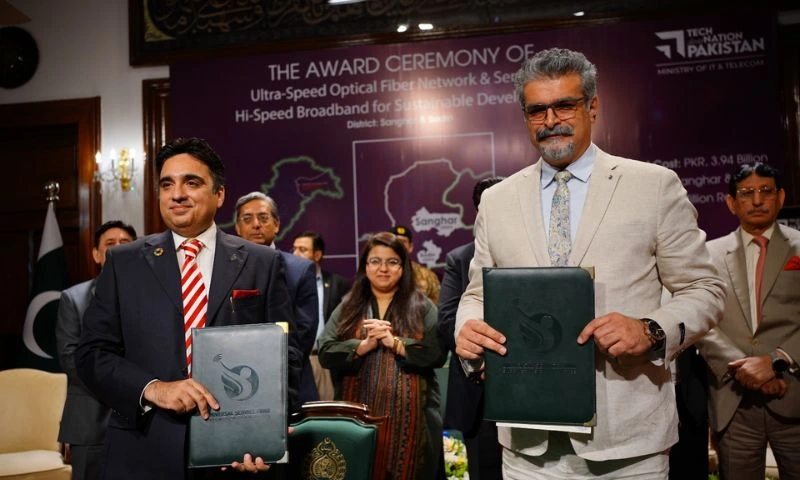
Jazz and the Universal Service Fund (USF) have taken another step to expand digital connectivity in Sindh with the signing of the Badin Project, aimed at bringing reliable mobile voice and broadband services to underserved communities in District Badin. The agreement, formalized at a ceremony in Karachi, reflects a shared effort to extend meaningful digital access to areas where connectivity has remained limited. The ceremony was attended by the Honorable Governor of Sindh, Mr. Kamran Tessori, and the Federal Minister for IT & Telecom, Ms. Shaza Fatima, as Chief Guests. The project marks continued progress in strengthening telecom infrastructure to support inclusive digital access across the province. The PKR 668 million Badin Project will strengthen telecom access in the district by deploying 45 new telecom sites and upgrading four existing ones, extending reliable voice and high-speed mobile broadband services to 144 unserved and underserved mauzas and reaching an estimated 0.43 million people. The expanded network will support access to digital financial services, online learning, telehealth, and government e-services, while enabling small businesses and farmers with improved digital tools and generating direct and indirect employment during deployment and operations. Commenting on the development, Aamir Ibrahim, CEO JazzWorld, said, “Connectivity is the foundation of inclusive growth. We appreciate the continued support of the Universal Service Fund and the Ministry of IT & Telecom in enabling partnerships that bring high-quality digital services to communities that have long remained on the margins of the digital economy. The Badin Project reflects our shared commitment to ensuring every Pakistani, regardless of geography, can participate in and benefit from the country’s digital future.” Chaudhry Mudassar Naveed, CEO USF, added, “The USF Badin Project reflects our continued partnership with Jazz to bridge the digital divide by delivering reliable connectivity to underserved communities. By expanding broadband access in District Badin, we are enabling socio-economic development, improving access to essential services, and creating new opportunities at the grassroots level.”

Pakistani Freelancers Earn Over $2.22 Billion in Just Six Months
Pakistan’s freelance economy has surged ahead as workers across the country earned over $2.22 billion (around Rs660 billion) in the first half of fiscal year 2026, according to recent data shared by the Federal Board of Revenue (FBR). This rise highlights Pakistan’s growing footprint in the global gig economy, where individuals leverage digital skills to work for international clients from home. Freelancing has become a crucial part of Pakistan’s digital economy. The FBR reported that Pakistani freelancers received payments of over $2.22 billion between July and December 2025, which marked a notable increase from previous years. The earnings came through various channels including international clients on platforms such as Upwork, Fiverr, Freelance.com, and Toptal. Many freelancers also receive payments through digital wallets and international bank transfers under the government’s Roshan Digital Account (RDA) system. The government uses the data from these payment inflows to estimate foreign exchange earnings. Globally, the freelance market continues to expand rapidly. According to research by Statista and Payoneer, over 70 million people worldwide now consider freelancing their primary source of income. The global freelance market is worth hundreds of billions of dollars, and it supports businesses from startups to Fortune 500 companies with remote talent. Experts say that the COVID-19 pandemic accelerated this trend as companies embraced remote work and tapped into global skill pools. In Pakistan, freelance professionals work in fields such as software development, digital marketing, graphic design, writing, translation, and virtual assistance. These skills are in high demand internationally and allow freelancers to earn in stronger currencies like the US dollar, British pound, or euro. This inflow of foreign currency helps support the country’s reserves and reduces the pressure on the trade deficit. A freelance technology consultant based in Lahore said that earning globally changed his lifestyle. He said “working with international clients gives me not only higher income but better exposure to global work standards.” His experience reflects what many successful Pakistani freelancers report. They enjoy flexibility, autonomy, and opportunities to build global portfolios from anywhere with an internet connection. Freelancing also offers opportunities for women and youth in Pakistan to join the workforce. Many women who face mobility restrictions find digital work an accessible path to professional growth and income generation. Youth in smaller cities and towns aspire to join the global freelance market to unlock economic opportunities that may not be available locally. Despite its rapid growth, the freelance sector still faces challenges. These include inconsistent internet access in remote areas, lack of formal training for in-demand skills, and complex payment compliance rules. Policymakers and digital skills educators urge improved infrastructure and training programs to expand Pakistan’s digital talent pool. Pakistan’s freelance success story is part of a broader global trend where flexible, remote, project-based work continues to reshape careers and national economies. With the right support, Pakistan can further scale its presence in the global gig economy and benefit from rising digital services exports.

How SLM Tyres’ $80 Million Plant Could Transform Pakistan’s Auto Industry
Pakistan’s automotive and manufacturing sectors are set for a major uplift after Service Long March Tyres Limited (SLM) approved a $80 million investment to build a new passenger car radial (PCR) tyre manufacturing facility in Nooriabad, Sindh. The announcement came in a notice to the Pakistan Stock Exchange, marking one of the most significant industrial moves in the country this year. SLM is a Chinese-Pakistani joint venture formed by Service Industries Limited and China’s Chaoyang Long March Tyre Company Ltd. The joint venture has already been producing all-steel radial truck and bus tyres at its Nooriabad plant, and now plans to expand into passenger car tyre production. Service Industries Limited and its subsidiary, Service Global Footwear Limited, hold key equity stakes in SLM, giving Pakistan an important role in driving tyre manufacturing growth. The new PCR facility is expected to serve both domestic and export markets, allowing Pakistan to reduce dependence on imported tyres and generate foreign exchange through exports. This move aligns with broader economic goals to strengthen industrial output and encourage import substitution in critical manufacturing segments. Analysts say that producing tyres locally can also help stabilize prices in the automotive sector, benefiting both consumers and vehicle manufacturers. The investment decision follows earlier expansion plans announced by SLM Tyres. In 2024, the company revealed plans to invest approximately Rs30 billion (around USD108 million) to double production capacity and boost exports to global markets such as the United States and European Union. The new PCR plant adds another layer to this long-term strategy, positioning Pakistan as a regional tyre production hub. Manufacturers say the move could create significant job opportunities in Sindh and across the supply chain. Skills development and new employment in tyre engineering, logistics, and quality testing are among the expected benefits. Experts point out that modern tyre manufacturing requires advanced machine systems and precision engineering, which can create high-value roles and strengthen industrial expertise locally. Pakistan’s tyre industry has historically included companies like Ghandhara Tyre & Rubber Company, which produces millions of tyres annually and holds an established presence in the market. The new facility by SLM Tyres adds competition and capacity, especially in the passenger car segment that has seen growing demand as vehicle sales rise in the domestic market. Service Industries Limited itself has a long history in manufacturing, starting in shoes and expanding into tyres over decades. Its presence in both consumer and industrial goods sectors gives the joint venture strength and access to distribution networks nationwide. The new investment also fits into broader Pakistan-China economic cooperation under frameworks that support industrial collaboration and technology transfer. Officials from both sides welcomed the project, noting its potential to deepen economic ties and support Pakistan’s industrialisation goals. As construction begins in Sindh, industry watchers will be watching closely to see how quickly the plant can come online and begin contributing to production, exports and job creation.
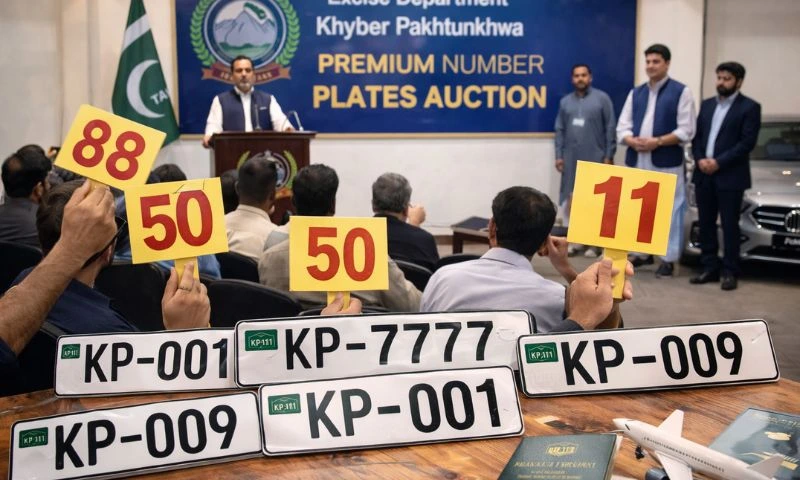
KP Earns Record Rs47 Crore From Premium Number Plate Auction
The Khyber Pakhtunkhwa (KP) government has raked in a significant sum of over Rs47 crore by auctioning premium vehicle number plates, highlighting growing demand among vehicle owners for distinctive registrations. The auction, conducted by the Excise, Taxation and Narcotics Control Department, drew strong interest from across the province and beyond, from buyers willing to invest hefty amounts for specially-designed plates that stand out on roads. Premium number plates typically consist of unique combinations such as repeated digits, auspicious numbers, or patterns that have cultural significance. These plates hold high value among businesses, professionals, and even collectors who view them as a status symbol and a memorable form of personalization. According to officials, the most expensive plate in the recent KP auction fetched several lakhs of rupees, indicating strong market interest. The largest share of revenue came from high-value entries, including plates with repeated numbers like “111” or “7777”, which commanded premium bids. Revenue officials noted that demand continues to increase as more vehicle owners seek ways to make their cars stand out. The auction outcome significantly exceeded expectations and contributed to KP’s provincial revenue for the fiscal year. Excise department officials said that revenue from premium plate auctions provides a boost to public finances without imposing new taxes on citizens. One official explained that the auction process is designed to be transparent and competitive, allowing bidders to participate online or in person. He noted that “the enthusiasm we saw in bids shows that people value uniqueness and are willing to invest in it.” This enthusiasm also reflects rising disposable incomes and changing consumer behavior in urban areas. Other provinces in Pakistan have used premium number plate auctions as a revenue-generation strategy. Sindh and Punjab advertised similar auctions in recent years, with Karachi and Lahore generating substantial amounts through exclusive number plate sales. For example, a prestigious number “1” plate in Lahore once fetched a high price at auction, demonstrating the market for exclusive vehicle identity. These examples suggest that auctions have become a mainstream tool for provincial governments seeking non-tax revenue. Experts say that premium plate auctions also stimulate formalization in vehicle registration. When buyers engage with online auction systems and digital payments, governments can track transactions and aid transparency. Such initiatives support broader digitisation goals and reduce informal practices previously associated with irregular plate bookings. Critics have occasionally questioned whether premium plates create inequality by allowing wealthier buyers to signal status. However, proponents argue that these auctions help redistribute discretionary spending into public revenue streams that fund services like road maintenance, public safety, and development projects. KP’s success in earning over Rs47 crore demonstrates the financial potential of premium plate auctions when properly promoted and executed. As more provinces adopt and refine auction practices, revenue from this niche segment could grow further, benefiting public coffers and offering motorists desirable registration options.
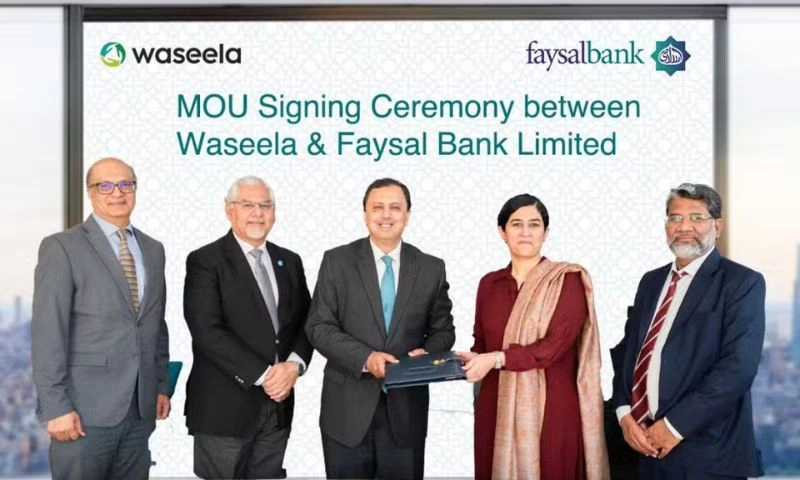
Faysal Bank and Waseela Pakistan Launch Major Islamic Finance Drive for Farmers
In a major move to support Pakistan’s agricultural sector, Faysal Bank Limited has partnered with Waseela Pakistan to provide faster and more accessible Shariah-compliant financing for farmers. The collaboration intends to help small and medium-scale farmers access Islamic financing products to grow their crops, invest in equipment and improve livelihoods. This comes at a time when agricultural financing plays a key role in stabilising rural economies and enhancing productivity. Under the new agreement, Faysal Bank will leverage Waseela Pakistan’s extensive outreach network to reach farmers across the country. Waseela Pakistan, known for its rural connectivity and grassroots initiatives, will help identify potential beneficiaries and ensure that farming communities understand Islamic financing solutions. These solutions are tailored to meet the unique needs of agricultural producers by offering profit-and-loss sharing models, leasing arrangements and working capital support without interest charges. During the signing ceremony, Faysal Bank’s Group Head of Retail and Digital Banking emphasised the importance of financial inclusion for rural populations. He explained that “Shariah-compliant financing should not be limited to urban customers. Our collaboration with Waseela Pakistan will empower farmers to access funds without worrying about interest, helping them invest in seeds, fertilisers and machinery.” This statement reflects a broader trend among Islamic banks to enhance rural access and to support economic growth across all sectors. Agriculture remains a vital part of Pakistan’s economy, contributing around 20 percent of GDP and employing nearly half of the workforce. Many farmers, however, struggle to secure affordable financing due to strict collateral requirements or high interest rates. Islamic banking products offer an alternative by complying with Shariah principles that prohibit interest, instead using profit-sharing and lease-based models that align with the ethical values of many rural communities. Industry experts welcomed the partnership, stating that access to flexible Shariah-compliant financing can boost agricultural productivity and reduce rural poverty. A senior economist specialising in agricultural finance noted that if farmers can secure funds to purchase high-quality seeds and modern equipment, yields can increase significantly, translating into higher income and better food security for the country. The collaboration also aligns with Pakistan’s goal to expand Islamic banking assets, which according to the State Bank of Pakistan, have grown at a steady rate in recent years. This trend shows increasing trust from customers seeking ethical and interest-free financial solutions. As banks introduce more tailored products for underserved sectors like agriculture, rural economies are likely to benefit through greater investment, job creation and enhanced financial resilience. In the months ahead, Faysal Bank and Waseela Pakistan plan to roll out awareness campaigns and training workshops to educate farmers about available products and how to apply for financing. This practical support aims to close gaps in financial knowledge and ensure that farmers are ready to leverage new opportunities.
China Opens Visa-Free Entry to Canadians and British Visitors
Beijing has taken a significant step in international travel diplomacy by allowing Canadian and British citizens to enter China without a visa for short stays. The new policy came into effect on February 17, 2026, offering eligible travellers up to 30 days of visa-free access for tourism, business trips, family visits, cultural exchange, or transit purposes. This development marks a major shift in China’s visa policy and reflects its efforts to boost tourism and strengthen global ties. The Ministry of Foreign Affairs of the People’s Republic of China confirmed that ordinary passport holders from Canada and the United Kingdom no longer need to apply for a visa before arriving in mainland China. According to the official announcement, travellers can stay for up to 30 days without a visa and use this access for tourism, visiting relatives, business meetings, study tours, or short transit stops through the country. The policy is valid until December 31, 2026. Diplomats say the extension of visa-free travel came after recent high-level visits by Canadian and British leaders to Beijing. Both Prime Minister Keir Starmer of the UK and Prime Minister Mark Carney of Canada held talks with Chinese officials earlier in 2026 and emphasised the importance of easing travel restrictions. Their visits helped solidify an agreement that has become reality for travellers this month. Travel experts believe this move will have notable economic and cultural impacts. China aims to increase foreign visitor numbers after pandemic-era travel declines. Before Covid-19 restrictions, millions of Canadians and British nationals visited China each year for tourism, business, or education. Offering visa-free travel could revive those figures and encourage deeper people-to-people interactions. The decision places China among nations with expanded travel access for Western visitors. Australian and New Zealand citizens already enjoy similar privileges under earlier visa-free arrangements. With Canada and the UK joining, the only major Five Eyes nation not covered by China’s visa-free policy is the United States. This visa-free regime builds on China’s broader strategy of easing travel barriers. The country already offers extensive transit visa exemptions, such as visa-free stays of up to 240 hours (10 days) for passengers from many regions, provided they transit onward to a third country. Mainland China also allows citizens from many European and Asian countries short stays without a visa. These policies support tourism growth and international business connections. For travellers from Canada and the UK, the new visa-free access simplifies travel planning and eliminates the need for long consular visa procedures. Holiday planners, business delegates, and family visitors can take advantage of this window to explore China’s rich history, landscapes, and culture with fewer hurdles.
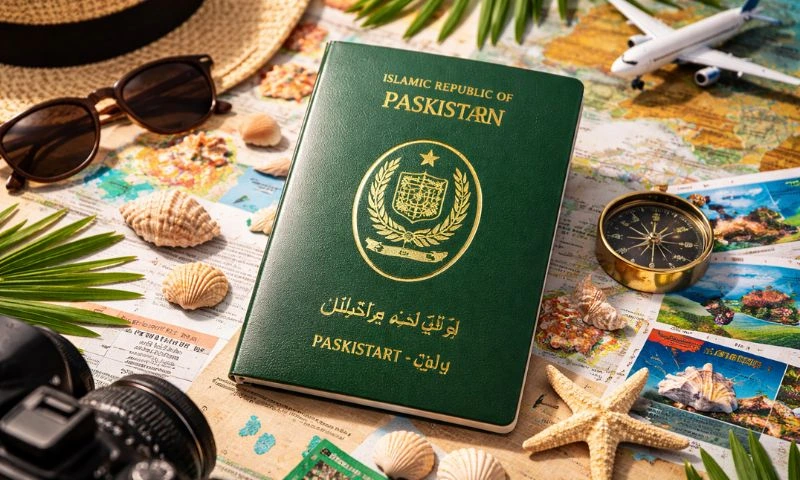
Pakistan Passport Rises Again: 32 Countries Now Visa-Free in Feb 2026
Pakistani travellers have reason to celebrate as their passport gained more travel freedom in early 2026, unlocking easier access to 32 international destinations without a pre-departure visa. According to the latest report by Gulf News, the Henley Passport Index for February 2026 shows that the Pakistani passport rose to 97th place globally, up from 98th in January and significantly higher than its ranking last year. This improvement reflects steady diplomatic efforts and new visa agreements boosting global mobility for Pakistani citizens. The Henley Passport Index ranks passports based on how many destinations their holders can enter visa-free, with visa-on-arrival (VOA), or via an electronic travel authorisation (eTA). Pakistan’s passport now allows citizens to visit a total of 32 countries using these travel options, up from 31 previously after the reinstatement of The Gambia on the list. Which Countries Can Pakistanis Visit Without a Visa? Pakistani passport holders enjoy visa-free access to 11 countries, including popular destinations in the Caribbean and the Pacific: Barbados Cook Islands Dominica Haiti Micronesia Montserrat Rwanda St. Vincent and the Grenadines Trinidad and Tobago Vanuatu The Gambia In addition, travellers can secure visas upon arrival in 18 nations, spanning Southeast Asia, Africa, and island nations such as Cambodia, Nepal, and Palau Islands. eTA options are available for three additional destinations: Kenya, Seychelles, and Sri Lanka, offering added flexibility for planning travel. These destinations offer diverse opportunities, from tropical beaches and cultural tours to wildlife safaris and historic cities. For example, Maldives and Nepal provide scenic breaks close to home, while Trinidad and Tobago and Barbados are attractive for longer leisure trips. The visa ease also supports business visits and short-term cultural exchanges, helping Pakistanis broaden their international experiences. Passport Strength and What It Means Despite the improvement, experts note that the Pakistani passport remains in the lower half of global rankings in terms of travel freedom. Passports from countries in Europe and East Asia offer significantly broader access, with some, like Singapore, enabling entry to more than 190 destinations without a visa. Interior Minister Mohsin Naqvi welcomed the rise in ranking, saying the government views the improvement as “a strong achievement” and expects further gains as diplomatic ties grow stronger. For now, the added visa-free and VOA destinations make international travel more accessible and affordable for many Pakistanis. Whether for holidays, business travel, or cultural trips abroad, these changes open new doors for exploration and global engagement.
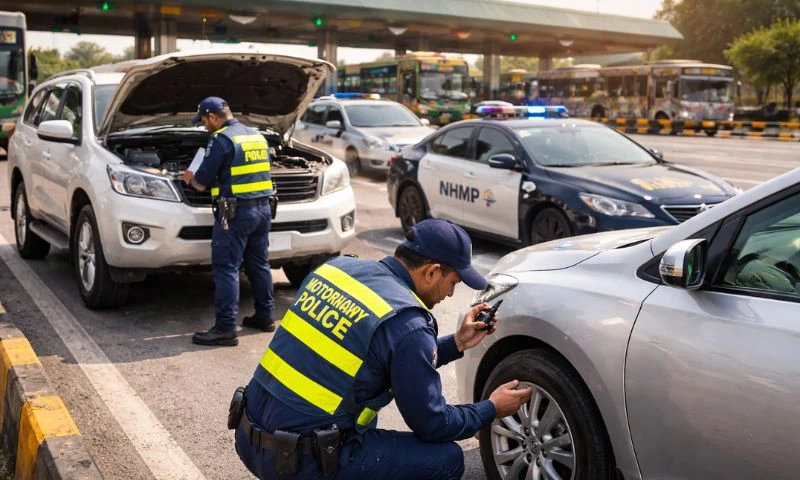
Motorways Crackdown Begins: Unsafe Cars Denied Entry Nationwide
The government of Pakistan has issued new safety rules for vehicles traveling on national motorways as part of a broader effort to reduce accidents and save lives on the country’s high-speed road network. After a recent deadly accident on the M-9 Motorway, authorities have moved quickly to enforce stricter checks and prevent unsafe vehicles from entering motorways. Federal Minister for Communications Abdul Aleem Khan directed the National Highways & Motorway Police (NHMP) to introduce mandatory vehicle fitness inspections at motorway entry points nationwide. The focus is on stopping vehicles with worn-out, weak, or expired tyres as well as other safety issues from accessing the motorway. Officials must inspect tyres, brakes, lights, and other mechanical components before allowing a vehicle to enter. In a public statement, the minister stressed that “road safety will take priority over convenience” and that there will be zero tolerance for negligence. He expressed deep sorrow for the victims of the recent crash and urged all drivers to maintain their vehicles properly to avoid similar tragedies in the future. This new enforcement follows growing concern over motorway safety in Pakistan. Motorways like the M-9, which connects Karachi and Hyderabad, see thousands of vehicles each day. High speeds and heavy traffic make tyre blowouts and mechanical failures especially dangerous. According to the National Highways & Motorway Police, rigorous fitness checks can help identify unsafe vehicles before they contribute to road accidents. The directive applies equally to both commercial and private vehicles. While heavy trucks, buses, and vans have often been subject to stricter regulations in the past, the updated rule ensures that private cars and smaller vehicles must also pass safety inspections before being granted access to motorways. Road safety experts have welcomed the move, saying proactive checks could significantly reduce accidents linked to mechanical faults. A transport safety analyst noted that “tyre condition, brake performance, and vehicle maintenance are critical for motorway travel, especially at high speeds.” Effective enforcement will likely lead to better driver awareness of vehicle upkeep. This update arrives amid broader efforts to improve road safety in Pakistan. Previous regulatory steps have targeted emission controls, commercial vehicle bans in urban areas, and fitness requirements for older vehicles. Continued collaboration between government agencies, the NHMP, and motorists will determine how effectively these rules translate into safer travel for all. For daily commuters and long-distance travelers alike, the new rule means an added layer of security on Pakistan’s motorways. It also places responsibility on drivers and vehicle owners to ensure their cars meet the required safety standards before setting out on high-speed journeys.
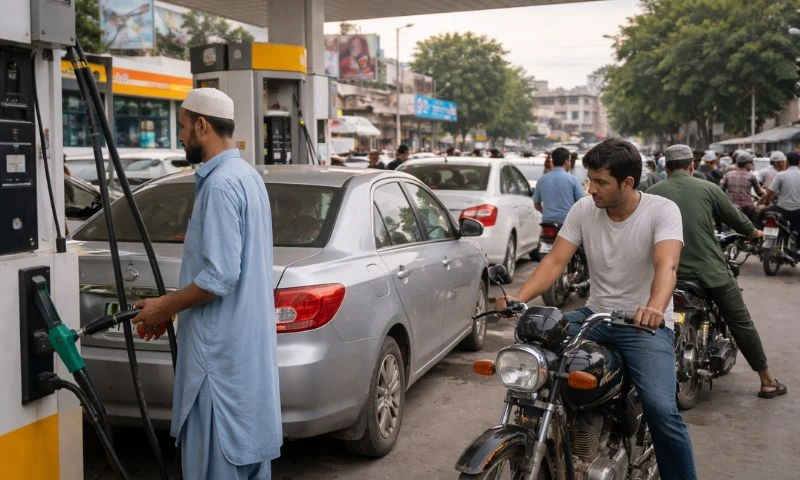
Fuel Prices Up in Pakistan: How the Latest Petrol Price Hike Will Hit Your Wallet
Millions of commuters in Pakistan faced fresh financial pressure this week after the government announced hikes in petrol and diesel prices, driving up the cost of everyday travel. The decision adds to a series of economic adjustments aimed at stabilizing government finances, but it also renewed concern among citizens already struggling with rising living costs. On February 15, 2026, the government increased petrol prices by Rs7 per liter and diesel by Rs9 per liter. This change made petrol cost Rs278 per liter and diesel Rs263 per liter in major cities, including Karachi and Lahore. The hike applies nationwide and takes effect immediately, affecting fuel stations and consumers from urban centers to rural communities. Transporters and daily commuters reacted swiftly, with many warning that the added fuel cost would soon push up fares for buses, taxis, rickshaws, and ride-hailing services. A spokesperson for a national drivers’ association said that transport operators had no option but to adjust prices to maintain profitability. They cautioned that without government support, commuters could soon pay significantly more for trips they take every day. Analysts point out that fuel price hikes often ripple through the economy. Higher petrol and diesel costs increase freight charges for goods, leading to potential price rises for food and essential items. A market expert explained that “fuel prices are a base cost for almost every product. When they go up, businesses adjust their pricing to absorb added expenses.” This effect typically hits low- and middle-income households the hardest. The government said the fuel price adjustments are part of broader economic measures to manage fiscal pressures and honor agreements with international financial partners. In recent years, Pakistan has faced challenges balancing growth with spending, leading to tough policy decisions in sectors such as energy, taxation, and imports. Officials stated that the latest price review reflected global oil market trends and currency fluctuations. Commuters shared their frustration on social media and at petrol pumps around the country. One office worker described the hike as “another blow,” saying daily travel costs had already eaten into monthly incomes. Another commuter added that if transport fares increase further, many workers might have to reconsider where they live and how they travel to jobs. Economists say the timing of the hike is sensitive. With inflation remaining elevated and salaries not increasing in proportion, households could struggle to adapt. They are urging the government to introduce targeted subsidies or relief measures for vulnerable groups. For now, the impact of the new fuel price increases is set to be felt at the pump and in commuters’ wallets across Pakistan. Many households are already calculating new budgets as the country adjusts to higher costs of running cars, motorbikes, and public transport vehicles.
