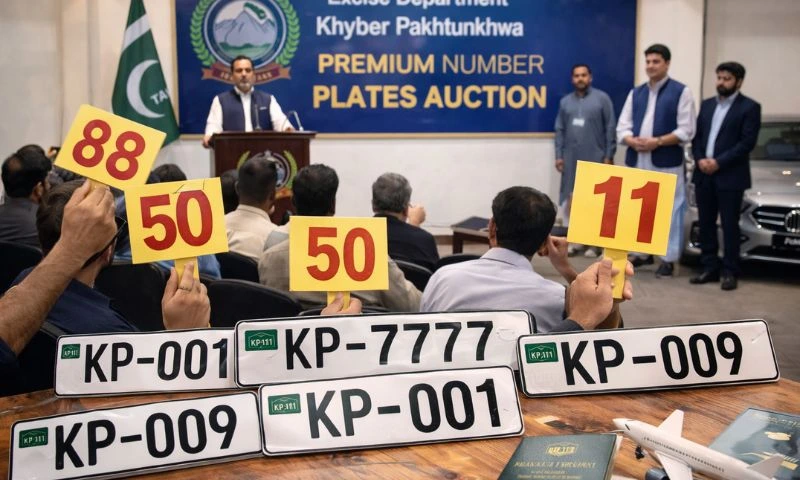
The Khyber Pakhtunkhwa (KP) government has raked in a significant sum of over Rs47 crore by auctioning premium vehicle number plates, highlighting growing demand among vehicle owners for distinctive registrations. The auction, conducted by the Excise, Taxation and Narcotics Control Department, drew strong interest from across the province and beyond, from buyers willing to invest hefty amounts for specially-designed plates that stand out on roads.
Premium number plates typically consist of unique combinations such as repeated digits, auspicious numbers, or patterns that have cultural significance. These plates hold high value among businesses, professionals, and even collectors who view them as a status symbol and a memorable form of personalization. According to officials, the most expensive plate in the recent KP auction fetched several lakhs of rupees, indicating strong market interest.
The largest share of revenue came from high-value entries, including plates with repeated numbers like “111” or “7777”, which commanded premium bids. Revenue officials noted that demand continues to increase as more vehicle owners seek ways to make their cars stand out. The auction outcome significantly exceeded expectations and contributed to KP’s provincial revenue for the fiscal year.
Excise department officials said that revenue from premium plate auctions provides a boost to public finances without imposing new taxes on citizens. One official explained that the auction process is designed to be transparent and competitive, allowing bidders to participate online or in person. He noted that “the enthusiasm we saw in bids shows that people value uniqueness and are willing to invest in it.” This enthusiasm also reflects rising disposable incomes and changing consumer behavior in urban areas.
Other provinces in Pakistan have used premium number plate auctions as a revenue-generation strategy. Sindh and Punjab advertised similar auctions in recent years, with Karachi and Lahore generating substantial amounts through exclusive number plate sales. For example, a prestigious number “1” plate in Lahore once fetched a high price at auction, demonstrating the market for exclusive vehicle identity. These examples suggest that auctions have become a mainstream tool for provincial governments seeking non-tax revenue.
Experts say that premium plate auctions also stimulate formalization in vehicle registration. When buyers engage with online auction systems and digital payments, governments can track transactions and aid transparency. Such initiatives support broader digitisation goals and reduce informal practices previously associated with irregular plate bookings.
Critics have occasionally questioned whether premium plates create inequality by allowing wealthier buyers to signal status. However, proponents argue that these auctions help redistribute discretionary spending into public revenue streams that fund services like road maintenance, public safety, and development projects.
KP’s success in earning over Rs47 crore demonstrates the financial potential of premium plate auctions when properly promoted and executed. As more provinces adopt and refine auction practices, revenue from this niche segment could grow further, benefiting public coffers and offering motorists desirable registration options.