

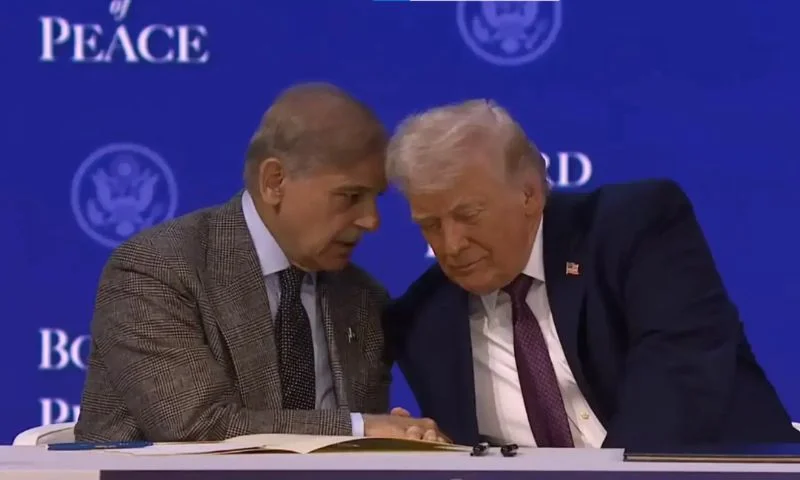
At the inaugural meeting of the Board of Peace in Washington, D.C., U.S. President Donald Trump publicly praised Pakistan’s Prime Minister Shehbaz Sharif and Chief of Defence Forces (CDF) Field Marshal Asim Munir, underscoring Pakistan’s role in regional peace efforts and the ongoing diplomatic engagement between Islamabad and Washington. The high-profile summit focused on Gaza reconstruction, peacekeeping plans and broader global stability challenges. Strong Words from Trump at the Summit In his address at the U.S. Institute of Peace, President Trump singled out Pakistan’s leadership, saying: “I like this man [PM Shehbaz] of Pakistan”, and referring to Field Marshal Munir as a “tough, good fighter, a serious fighter.” Trump’s remarks were widely reported by media attending the meeting, with world leaders gathered to discuss the future of Gaza and international cooperation. The Board of Peace was launched by Trump to mobilise global support for Gaza’s reconstruction and lasting ceasefire after years of conflict. Earlier at the meeting, Trump announced that more than $7 billion had been pledged by contributing countries for humanitarian relief and rebuilding efforts, alongside a $10 billion U.S. contribution. The funds are earmarked to restore infrastructure, provide essential services and support long-term development once a ceasefire holds. Read More: Trump Leads First Board of Peace Meeting: The Global Peace Plan Faces Criticism Pakistan’s Role and Diplomatic Balancing Prime Minister Shehbaz Sharif attended the summit representing Pakistan, highlighting Islamabad’s willingness to engage on peace initiatives while maintaining a careful stance on troop deployment. Reuters reported that Pakistan wants clarity that any involvement by its forces would be strictly peacekeeping and not include combat or disarmament of Hamas. Shehbaz’s presence and Trump’s praise came amid broader U.S.–Pakistan cooperation on issues from economic ties to regional stability. Pakistan has previously worked with Washington to mediate tensions in South Asia, including assisting in ending a brief conflict with India in 2025. Trump has acknowledged this cooperation and thanked Pakistan’s leadership for helping prevent further escalation. Pakistan’s military leadership has also been a key partner in these engagements. Field Marshal Asim Munir’s role as CDF has placed him at the centre of Islamabad’s security conversations with international partners. Trump’s reference to Munir as a “serious fighter” reflects Washington’s recognition of Pakistan’s military capabilities and its influence in regional security dialogues. Read More: Gaza After the War: Trump Assembles US-Led Board, Appoints Blair and Military Chief Board of Peace: Ambitions and Controversies Despite strong financial pledges and diplomatic support, the Board of Peace has drawn criticism from some Western nations and international observers who argue that it could undermine the United Nations’ role in conflict resolution. Some countries have not joined the board, citing concerns about its mandate and potential political implications. Trump’s initiative also aims to form an International Stabilisation Force to help secure post-conflict zones like Gaza, with commitments from several nations to contribute personnel. Indonesia, for example, agreed to a deputy command role in the force during discussions at the meeting. Looking Ahead The inaugural Board of Peace meeting showcased Pakistan’s growing engagement in international diplomacy, particularly on issues linked to peace and humanitarian aid. Trump’s public praise for Shehbaz Sharif and Munir suggests strong bilateral relations between Pakistan and the United States even as Pakistan navigates its domestic and regional priorities in global forums.
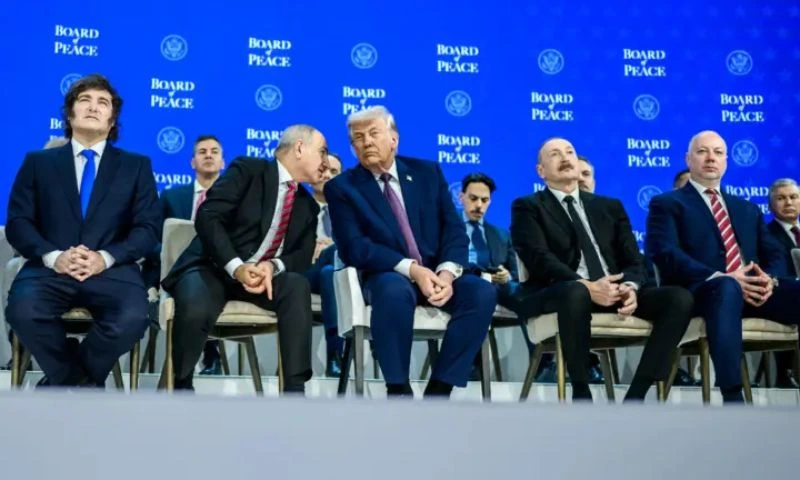
Trump Leads First Board of Peace Meeting: The Global Peace Plan Faces Criticism
U.S. President Donald Trump presided over the inaugural meeting of the Board of Peace in Washington, D.C., on Thursday, bringing together leaders and senior officials from more than 40 countries to discuss Gaza’s future and the complex task of rebuilding the war-torn Palestinian territory. The event, held at the U.S. Institute of Peace, was marked by big funding pledges alongside unresolved political and security questions about Gaza’s stability and Hamas’s disarmament. Major Funding and Commitments Trump announced significant financial support during the session. He said that the United States would contribute $10 billion to the Board of Peace, and participating nations had pledged an additional $7 billion for Gaza reconstruction and humanitarian relief. Some donors included Kazakhstan, Azerbaijan, UAE, Morocco, Bahrain, Qatar, Saudi Arabia, Uzbekistan and Kuwait. The funds are aimed at addressing the immense humanitarian and infrastructure needs in Gaza following more than two years of conflict that devastated homes, schools and basic services. The rebuilding effort is expected to cost tens of billions of dollars, with international institutions previously estimating as much as $70 billion will be needed. Trump also highlighted plans for an International Stabilization Force and broader security commitments. Several countries pledged personnel for this mission, which would work to maintain order while reconstruction gets under way. Read More: Gaza After the War: Trump Assembles US-Led Board, Appoints Blair and Military Chief Political Challenges and Criticism Despite high-profile backing, many major Western nations chose not to participate formally in the board, signaling skepticism about its mandate and independence. Some countries, including European states, declined to join as members, citing concerns that the Board of Peace could undermine the United Nations’ role in resolving conflicts. Trump addressed these concerns directly, saying the United States would continue to work with the United Nations and help make it “stronger and more viable.” He stated, “I think the United Nations has great potential, really great potential. It has not lived up to that potential.” Critics warn that the Board’s structure places broad authority in the hands of its chairman, Trump, and that Palestinian interests—especially those of Hamas and Gaza’s civilians—are limited in representation. The Board currently includes Israel but lacks official Palestinian participation, a point of contention raised by analysts and international observers. Read More: Netanyahu Meets Trump in Florida as Gaza Ceasefire and Iran Tensions Take Center Stage Statements from the Ground While global leaders deliberated in Washington, Hamas and local groups in Gaza have urged the Board to focus on stopping violence and reopening humanitarian access. Hamas calls for lifting the siege on Gaza and enabling full reconstruction and relief efforts to begin without restrictions. Other unresolved issues include Hamas’s disarmament, the withdrawal of Israeli troops from Gaza, and the organization and distribution of aid. These factors remain major obstacles in achieving lasting peace and establishing a stable governing framework for Gaza’s future. A Pivotal Moment The Board of Peace represents a new diplomatic attempt to manage post-war recovery and stabilize a region long marred by conflict. Whether this initiative will succeed in forging consensus among diverse stakeholders remains to be seen. For Palestinians and the region at large, the outcomes of this first meeting could shape the next phase of Gaza’s recovery and future security.

PSL 2026: Kingsmen Add Explosive All-Rounder Glenn Maxwell
In a major boost for the upcoming Pakistan Super League (PSL) 2026, the Hyderabad Houston Kingsmen have confirmed the signing of Australian all-round superstar Glenn Maxwell as a direct overseas recruit for the league’s expanded 11th season. The announcement has created significant buzz among cricket fans and analysts ahead of the tournament’s kickoff in late March. Maxwell’s arrival marks one of the most high-profile additions to the new franchise’s squad as the PSL transitions into a historic auction-based model and expands to eight teams for the first time. The Kingsmen, one of the two new franchises alongside Sialkot Stallionz, will begin their inaugural PSL campaign with experience and firepower added to their roster. Maxwell’s Record and Impact Glenn Maxwell is widely regarded as one of the most explosive and versatile players in modern T20 cricket. In T20 Internationals alone, he has scored 2,897 runs at a strike rate of 158.42 across 129 matches, including five centuries and 12 half-centuries. He has also taken 49 wickets with his part-time off-spin. Beyond his international record, Maxwell brings a wealth of global T20 experience. Across over 500 franchise T20 matches worldwide, he has amassed nearly 11,000 runs with a strike rate exceeding 150, along with 196 wickets with his bowling, making him a genuine all-round threat. Cricket analysts believe Maxwell’s aggressive batting style and ability to score quickly in the later stages of an innings will be invaluable for the Kingsmen, especially in tight Super League contests. His experience in leagues like the Big Bash League (BBL), Indian Premier League (IPL) and others will help the new franchise navigate the pressures of competitive T20 cricket. Read More: Waugh and Maxwell Back European T20 Premier League After Two Failed Starts PSL 11’s New Era: Auction and Expansion The 2026 PSL season marks a new chapter in the league’s evolution. For the first time, the player draft system has been replaced by a live auction format, giving franchises new flexibility and opportunity to bid for top talent. This change comes alongside the expansion to eight teams, injecting fresh competition and strategic depth into the tournament. The auction held on 11 February 2026 in Lahore represented a significant moment in PSL history, with teams building their squads through open bidding. In addition to Maxwell’s direct signing, the Kingsmen added high-potential players such as Marnus Labuschagne, Saim Ayub, Usman Khan and Kusal Perera to round out a competitive core. Under coach Jason Gillespie, the Hyderabad Houston Kingsmen appear poised to compete strongly in their debut PSL season, blending international firepower with rising local talent. Read More: PSL 11 Full Squads with Complete Player Prices Revealed After Historic Auction Fan Reaction and Excitement The Maxwell signing has sparked excitement across social media platforms, with supporters praising the franchise for securing a proven match-winner. Many fans believe his presence will elevate the quality of PSL 11 and draw increased international attention to the league. With the PSL 11 set to run from March 26 to May 3, 2026, franchises are finalising preparations and refining strategies as the countdown to the season begins. Maxwell’s participation adds a new headline act to what promises to be one of the most competitive and entertaining PSL seasons yet. Read More: PSL’s Biggest Bid Changes the Game as Multan Sultans Rebranded Rawalpindi
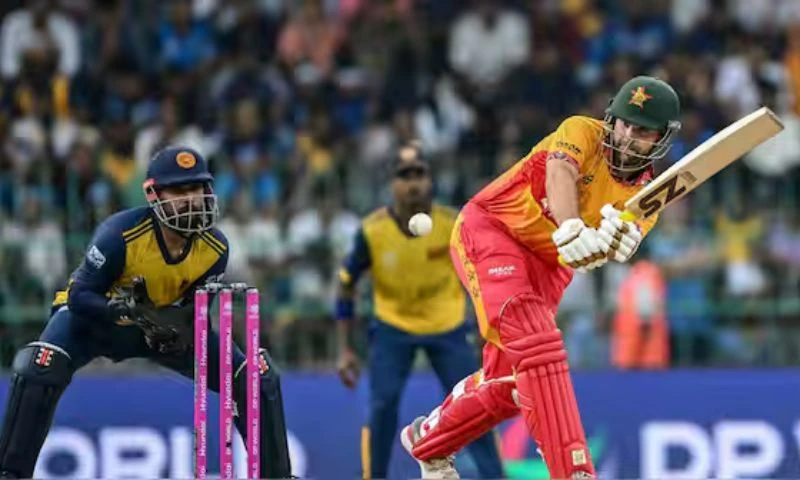
Zimbabwe Beats Sri Lanka to Top Group B in T20 World Cup
Zimbabwe continued its remarkable run in the ICC Men’s T20 World Cup 2026 on Thursday with a thrilling victory over co-hosts Sri Lanka that earned them first place in Group B and an unbeaten record in the group stage. The win not only cemented Zimbabwe’s place in the Super Eight round but also sent a strong message about their rising stature in world cricket. Clinical Chase in Colombo At R. Premadasa International Stadium in Colombo, Sri Lanka set a competitive target of 178-7 after opting to bat first. Pathum Nissanka led the effort for the hosts with a well-compiled 62 runs off 41 balls, while Pavan Rathnayake provided useful support with a quick 44 runs. Despite the challenging total, Zimbabwe’s bowlers kept Sri Lanka in check, with Graeme Cremer, Blessing Muzarabani and Brad Evans all taking two wickets each. In the run chase, Zimbabwe put together a solid batting display. Opener Brian Bennett remained unbeaten on 63 off 48 balls, anchoring the innings, while skipper Sikandar Raza contributed a quick 45 runs from 26 deliveries. Their partnership gave Zimbabwe control of the game and kept the required run rate comfortably within reach. Tony Munyonga’s late six helped seal the win as Zimbabwe finished at 182-4 in 19.3 overs, claiming victory with three balls to spare. This win ensured three victories in four group matches, as their earlier fixture against Ireland had been washed out due to rain. Zimbabwe also stunned Australia earlier in the group stage, adding to their string of strong results and contributing to Australia’s early exit from the tournament. Read More: T20 World Cup Shock: Australia Knocked Out of T20 World Cup After Zimbabwe-Ireland Washout Unbeaten Run and Super Eight Qualification Zimbabwe’s unbeaten run in Group B places them at the very top of the standings ahead of the Super Eights, where they will face teams such as West Indies, India and South Africa. Sri Lanka, despite the loss, also progressed to the Super Eight stage and will meet teams including England and Pakistan. The performance by the Zimbabwe team has been one of the most talked-about developments in the tournament so far. Analysts and fans alike have highlighted Zimbabwe’s balance in both batting and bowling units. Their success against higher-ranked opponents like Australia and Sri Lanka showcases the team’s ability to compete with full-member nations in high-pressure matches. Read More: From 2007 to 2026: Zimbabwe Shock Australia Again, Seal World Cup Upset by 23 Runs Rising Stars and Tactical Strength Brian Bennett’s consistent batting has been crucial for Zimbabwe. The young cricketer has scored valuable runs throughout the group stage and has become a key figure in Zimbabwe’s chase strategy. Bennett’s unbeaten innings against Sri Lanka followed his impressive 64-not-out performance versus Australia earlier in the competition. Captain Sikandar Raza’s leadership and experience have also been significant factors. Raza has guided the side with calculated aggression and strategic decisions that have paid dividends throughout the tournament. What Comes Next Zimbabwe’s journey continues into the Super Eights, where they will face stronger opposition. Their group-topping finish gives them confidence and momentum heading into the next round. Sri Lanka, keen to make amends, will prepare for their Super Eight opener against England. For cricket fans, Zimbabwe’s rise has added a compelling underdog story to the T20 World Cup narrative this year.

Tragedy in India: Umpire Killed by Bee Swarm at Cricket Match
A cricket umpire died and several others were injured on Wednesday during a shocking bee swarm attack at a junior league match in Unnao district near Kanpur, India. The tragic incident left the local cricket community in disbelief and prompted questions on safety around outdoor sporting events. Fatal Incident at Sapru Ground The event occurred during an Under-13 KDMA league game between YMCC and Paramount at the Rahul Sapru Ground in Shuklaganj. A swarm of bees descended on the field, stinging players, officials and spectators who were present during the match. Manik Gupta, a 65-year-old senior umpire and respected figure in the cricketing fraternity, was officiating when the attack began. Gupta was stung repeatedly by the bees and immediately rushed to medical facilities. He was first taken to clinics in Shuklaganj before being transferred to Lala Lajpat Rai Hospital in Kanpur. Doctors declared him dead on arrival after his condition worsened. Players and fellow umpire Jagdish Sharma were also attacked. Sharma and about 15 to 20 players sustained bee stings and were treated in hospital, but officials report that they are now stable and out of danger. Read More: Mystery in Kerala: Beggar’s Death Reveals Indian Rupees 4.5 Lakh and Saudi Currency Chaos and Panic on the Field Eyewitnesses described chaos as the bee swarm struck without warning. Spectators and players dropped their equipment and ran for cover to escape the stings. In desperation, individuals sought shelter under tents and behind trees around the ground. According to police and association sources, the bees remained in proximity to the group for several minutes, creating a dangerous situation that was difficult to mitigate. Tribute from the Cricket Association The Kanpur Cricket Association (KCA) confirmed Gupta’s death and expressed deep sorrow at the loss. S. N. Singh, president of KCA, said officials will provide all possible support to the bereaved family. “When Gupta was being rushed to the hospital, bees were still clinging to his face and body,” Singh told PTI, highlighting the intensity of the attack. Gupta had served as an umpire on the association’s panel for about 30 years and was well known throughout Uttar Pradesh’s cricketing circles. His passing has brought tributes from local teams and officials alike. Safety and Similar Incidents Although sudden bee attacks on sports fields are uncommon, experts say outdoor events in warmer months can attract swarms, especially near flowering trees or beehives. There have been rare but notable cases where bees disrupted athletic matches in the past, including an incident in Thiruvananthapuram in 2019, where a match was halted due to a bee attack, though there were no fatalities. Officials say authorities are investigating the area around the ground to determine if a beehive or colony nearby may have been disturbed prior to the match. Community Reaction News of Gupta’s death has reverberated through the cricket community. Many have called for improved medical support and emergency plans at local matches, especially in rural venues where emergency response can be slower. The tragic incident is a sobering reminder of the unpredictable nature of outdoor sports and the importance of preparedness even at youth and amateur levels.

Inclusive Mobility: NOWPDP and Yango Create Livelihood Paths for Disabled Drivers
In a pioneering move to promote inclusion and equal opportunity, Yango Pakistan has entered a strategic partnership with the Network of Organizations Working for People With Disabilities (NOWPDP) to support and empower drivers with disabilities. The collaboration aims to improve accessibility and create livelihood opportunities for people with disabilities who want to work as ride-hailing drivers. Under this initiative, NOWPDP will help identify and train interested candidates while Yango Pakistan provides practical support, platform access, and resources to integrate drivers with disabilities into its ride-hailing ecosystem. The partnership represents a significant step toward inclusive employment in Pakistan’s rapidly growing digital economy. Read More: PSO Launches Nationwide Ramadan Donation Drive at Fuel Stations Breaking Barriers in Ride-Hailing Mobility services around the world have increasingly focused on accessibility for both passengers and drivers. According to the World Health Organization, over one billion people globally experience some form of disability, which affects their access to employment and economic participation. In Pakistan, similar disparities exist, with people with disabilities often facing social, economic, and structural barriers that limit job opportunities and financial independence. Yango Pakistan’s initiative recognizes these challenges. The company’s Country Manager, Andrea Mazza, said the partnership with NOWPDP underscores Yango’s commitment to social inclusion and equal opportunity. Mazza stated, “We believe in creating opportunities that empower individuals, regardless of physical challenges. Together with NOWPDP, we aim to ensure a supportive environment for drivers with disabilities on our platform.” Read More: Tapmad Launches Pakistan’s First-Ever Vertical Viewing Sports Streaming Experience NOWPDP, one of Pakistan’s foremost disability rights organizations, brings decades of experience advocating for accessibility, inclusive education, and equitable employment. The group will guide candidate training, assist with necessary accessibility tools, and help shape Yango’s driver support framework to meet the specific needs of people with disabilities. Training, Support and Platform Integration Through this partnership, drivers with disabilities will receive tailored training that covers ride-hailing operations, app usage, customer service skills, and safe mobility protocols. Yango Pakistan will also offer technical support, assistive technology resources, and mentorship to enable drivers to navigate their roles confidently. Candidates may receive assistance with vehicle modifications as needed, helping them operate effectively and safely. Advocates stress that such inclusive employment initiatives benefit not only individuals but also communities. By supporting drivers with disabilities, Yango Pakistan is fostering a more diverse workforce and setting a benchmark for corporate responsibility in Pakistan’s tech and transportation sectors. Read More: TCS and Nippon Express Partnership: A Game-Changer for Pakistan’s Logistics Sector Yango Pakistan and NOWPDP have said they plan to expand the initiative over time by involving more stakeholders, including organizations that support persons with disabilities and government bodies that promote inclusive economic policies. The partnership signals hope for greater inclusion and economic opportunity for people with disabilities in Pakistan, particularly in the growing ride-hailing and gig economy.
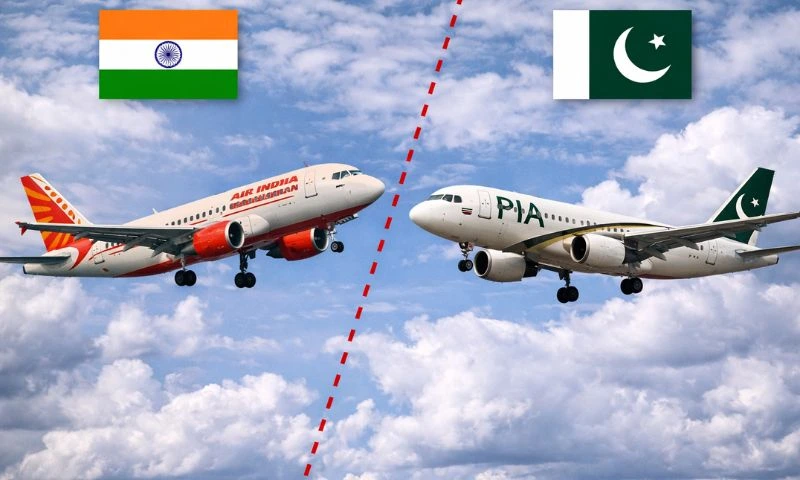
Aviation Alert: Pakistan Airspace Closed to India Until March 23
Pakistan has extended its airspace ban on Indian aircraft until March 23, 2026, as tensions with New Delhi continue to affect aviation and diplomacy between the neighbouring nuclear-armed states. The extension was confirmed through a fresh Notice to Airmen (NOTAM) issued by the Pakistan Airports Authority (PAA). The restriction covers all aircraft registered in India, including civilian, military, leased or operated by Indian airlines. Ongoing Restrictions and Context The airspace ban first took effect on April 24, 2025, after a deadly attack in Indian-administered Kashmir’s Pahalgam killed 26 people, prompting India to blame Pakistan without presenting clear evidence. Pakistan rejected those claims and offered cooperation for a neutral investigation. Following the escalation, both countries engaged in military confrontations, including cross-border engagements and aerial activity. A ceasefire brokered with U.S. mediation later eased direct hostilities, but restrictions like the airspace closure have remained in place for months. Under the latest NOTAM, the ban applies to both major Pakistani Flight Information Regions (FIRs) — Karachi (OPKR) and Lahore (OPLR) — ensuring that Indian-registered flights cannot traverse Pakistan’s airspace at any altitude. Read More: PIA Finally Restores Islamabad-London Flights After Six Years Reciprocal Closures and Regional Impact India has also closed its airspace to Pakistani aircraft at various times, most recently from April 30 to May 23, 2025, in response to Pakistan’s earlier actions. These reciprocal bans, updated through official notices on both sides, have now entered their eleventh consecutive month of mutual airspace closures. The restrictions have significant implications for both countries’ aviation sectors, but Indian carriers bear the brunt due to their broader international network. Major Indian airlines such as Air India, IndiGo, Akasa Air, Air India Express and SpiceJet previously relied on Pakistani airspace for routes to the Middle East, Europe, Central Asia and North America. With the ban in place, many flights have to take longer and costlier detours. The Indian Express estimates that around 800 weekly flights operated by Indian carriers have faced route changes, with journey times extended by anywhere from 15 minutes to several hours depending on the destination. These operational shifts have increased fuel consumption and disrupted crew and flight scheduling. Economic and Strategic Implications India’s flag carrier Air India is believed to face substantial financial losses due to prolonged detours and increased operating costs. Local reports suggest that if the airspace ban continues for a full year, the airline could incur losses in the billions of rupees. These financial pressures have prompted discussions about alternate flight corridors, including the possibility of using airspace over China’s Xinjiang region to mitigate route inefficiencies. For Pakistan, maintaining the ban also comes at a cost. Historically, revenue from overflight charges contributed significantly to the Pakistan Airports Authority’s (PAA) income. Prolonged restrictions have reduced overflight traffic and damaged the country’s reputation as a reliable air transit corridor. Read More: Pakistan–Bangladesh Direct Flights Resume After 14 Years With Dhaka–Karachi Route Outlook and Diplomatic Signals With the ban extended to March 23, the airspace dispute remains tied to broader diplomatic and security issues between Pakistan and India. Analysts say the closures reflect ongoing mistrust, unresolved diplomatic differences and the absence of effective crisis-management mechanisms between the two neighbours. Both governments may continue extending their airspace bans until mutual security conditions or diplomatic breakthroughs occur. In the meantime, airlines and travellers must adapt to continued disruptions in the South Asian aviation landscape.
Pakistan Nears Hajj 2026 as Training and Arrangements Reach Final Phase
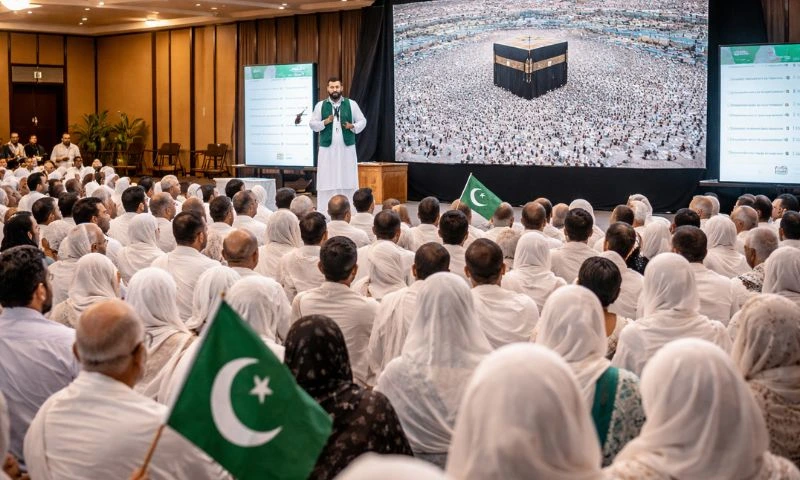
Pakistan is stepping up preparations for the Hajj pilgrimage of 2026, with officials saying arrangements are now in the final stages ahead of the annual Islamic journey to Saudi Arabia. Authorities have completed training for pilgrims in cities across the country as logistical coordination advances between Islamabad and Riyadh. This progress comes as the government works to ensure all key elements of travel are in place before the first flights begin later this year. Training and Logistical Preparations The Ministry of Religious Affairs said training workshops for prospective pilgrims have taken place in 107 cities nationwide. Federal Secretary Dr. Sajid Mahmood Chauhan said that a total of 183 training sessions were conducted to educate Hajj participants on the rites, travel procedures and administrative requirements they will face during the pilgrimage. These sessions covered the sequence of Hajj rituals, proper conduct at holy sites, and documentation essentials. Training is considered vital since many Pakistani pilgrims travel abroad for the first time during Hajj. Officials noted that visa processing, transport routes in Mina and Arafat, food arrangements, and accommodation logistics in Makkah and Madinah are now in advanced preparation stages, adding confidence to safe and smooth pilgrimages. “Makkah and Madinah accommodation has been secured better than last year,” said Director General Hajj Abdul Wahab Soomro, emphasizing an improved experience for this year’s pilgrims. Government Oversight and Quotas The Federal Minister for Religious Affairs, Sardar Muhammad Yousaf, chaired a high-level review meeting where officials assessed arrangements, including transport services and vaccination readiness. The government has also stressed that pilgrims should represent Pakistan positively while performing Hajj. Pakistan’s approved Hajj policy allocates a total quota of 179,210 pilgrims for 2026. Of these, 119,210 will travel under the government scheme while the remaining 60,000 will go with private tour operators. Applications were processed on a first-come, first-served basis, and digital monitoring systems were used to manage registrations. Officials said the next phase of one-day training sessions for pilgrims will begin immediately after Eid-ul-Fitr, targeting those who have confirmed travel plans but have yet to complete preparation workshops. Why Training Matters Experts and pilgrimage coordinators say these training sessions are critical for first-time Hajj participants. The Hajj involves specific rituals performed in a prescribed order over several days, and confusion can lead to stress or missed rites for pilgrims. Training also informs travelers about local Saudi procedures, health requirements, and emergency protocols. There is also a greater emphasis this year on digital services and support hotlines to aid pilgrims during their stay. Pilgrims often travel in large groups and may face language barriers or unfamiliar environments. Enhanced guidance and preparedness can help reduce confusion and improve safety outcomes throughout the journey. Broader Religious and Diplomatic Context Pakistan sends one of the world’s largest national contingents to Hajj each year, making Saudi-Pakistan cooperation essential for efficient pilgrimage management. Both governments coordinate on travel logistics, accommodation blocks, and health requirements, especially after experiences from large pilgrim outflows in previous years. As Hajj arrangements near completion, Pakistan’s religious affairs ministry and Saudi authorities plan final reviews to ensure a smooth and spiritually fulfilling experience for all pilgrims in 2026.

Pakistan Couriers Warned as inDrive Blocks 80,000 Fraud Accounts
inDrive, the global ride-hailing and delivery platform, has issued a major scam warning after blocking more than 80,000 accounts linked to fraudulent activity targeting its courier delivery riders in Pakistan. The scam has left some victims out of pocket by as much as Rs. 30,000, prompting urgent action by the company and law enforcement. How the Scam Worked The fraud emerged about six months ago when organised criminals began booking delivery jobs on the inDrive app using fake accounts. Many of these accounts used military titles such as Captain or Major in their display names. These ranks, combined with drop-off locations near cantonment areas such as in Karachi, created a sense of authority that made couriers less likely to question the job. Riders reported that these fake customers offered unusually high fares for very short trips. When riders arrived at the pickup location, they were contacted off-platform, often via WhatsApp. They were then told that an internal payment issue required them to send cash through mobile payment services like JazzCash or Easypaisa before the parcel could be handed over. When riders complied, the contact number was blocked and the address proved fake. This scam technique relied on urgency and perceived legitimacy. When riders hesitated, scammers either promised extra payment on top of the high fare or adopted an urgent and authoritative tone, pressuring riders to act quickly. Some couriers lost significant amounts, in some cases over Rs. 30,000. Read More: Government Launches New Tool to Help Drivers Locate Authorized Petrol Pumps Across Pakistan inDrive’s Response and Account Actions As complaints mounted, inDrive’s Pakistan management initiated an internal investigation. At a media briefing in Lahore, inDrive’s Country Manager for Pakistan, Awais Saeed, said the company quickly identified a pattern in these reports and shared behavioural data with the National Cyber Crime Investigation Authority (NCCIA) in Islamabad. They also registered formal complaints and FIRs, leading to the arrest of several suspects now in judicial custody. To curb the problem, inDrive took decisive steps on its platform. The company blacklisted and blocked over 80,000 accounts that included rank-based names like Captain, Major, Cap, and Maj, as well as other patterns linked to scam activity. According to multiple reports, very few legitimate users — fewer than ten — contacted inDrive to say their accounts were blocked in error, indicating most of the disabled accounts were fraudulent. inDrive also launched awareness campaigns for couriers. Riders were reminded they can cancel suspicious jobs without penalty and that they should not make any payments on behalf of customers. The company increased monitoring of unusual fare patterns and emphasised policies to protect its riders. Expert Views and Security Lessons Security experts say this scam highlights broader risks facing gig workers who rely heavily on trust and quick decision-making in mobile platforms. Scammers often leverage social engineering techniques to exploit riders’ certainty and urgency, making digital safety awareness crucial. Experts also stress that companies should invest in identity verification technologies to prevent such exploitation. Read More: Motorways Crackdown Begins: Unsafe Cars Denied Entry Nationwide inDrive, founded in 2013 and operating in more than 48 countries with over 360 million app downloads globally, continues its investigation with law enforcement and has urged riders to stay vigilant.

508 Million Requests For Seven Million World Cup Tickets Sees All Games Sold Out
All 104 matches of the 2026 FIFA World Cup will be “sold out,” said FIFA president Gianni Infantino on Wednesday, despite some tickets still being technically available months before the tournament begins on June 11. His comments came during an interview with CNBC from President Donald Trump’s Mar-a-Lago resort in Florida, where Infantino shared astonishing figures on global demand for the biggest soccer event in history. Record-Breaking Demand Infantino revealed that FIFA has received 508 million ticket requests in just four weeks for roughly seven million tickets available for all 104 matches. Requests poured in from more than 200 countries during the main sales phase in January. “The demand is there. Every match is sold out,” he told CNBC, adding, “(We’ve) never see anything like that extraordinary.” He explained that while tickets still exist for some matches, FIFA is holding back a number of them for the last-minute sales phase starting in April and running until the final on July 19. This approach ensures a continuous release of tickets to fans who have not yet secured seats. Pricing and Market Dynamics The FIFA president addressed widespread criticism about ticket pricing that has reached record highs. Supporters’ associations and fan groups have described prices as “exorbitant”, especially on resale markets where headline prices sometimes hit eye-watering levels. Infantino defended the pricing structure, saying it reflects market dynamics, particularly in the United States. “Ticket prices have been fixed but you have, in the US in particular, something called dynamic prices, meaning the prices will go up or down,” he said. He also noted that official resale platforms will allow ticket holders to sell their seats, which can push prices higher. Read More:World Cup 2026 Ticket Prices Under Fire as FIFA President Defends Costs Economic Impact and Legacy The 2026 World Cup will be the first to feature 48 national teams, spread across United States, Canada, and Mexico. Infantino projected that FIFA could generate more than $11 billion in revenue from the event, with every dollar reinvested into football development across FIFA’s 211 member associations. He also estimated that the tournament would boost the U.S. economy by around $30 billion through tourism, hospitality, security, and related investments. The event is expected to attract between 20 and 30 million tourists in addition to the seven million spectators. The organisation also anticipates creation of 185,000 full-time jobs connected to the tournament. Read More: Unbelievable Demand: Over 500 Million People Tried to Buy World Cup 2026 Tickets Fan Experience and Next Steps Even as tickets are effectively sold out due to overwhelming demand, FIFA will offer opportunities in April for fans to secure last-minute seats on a first-come, first-served basis. Fans are cautioned to purchase only through fifa.com/tickets and to ensure they meet travel requirements for host countries.
