

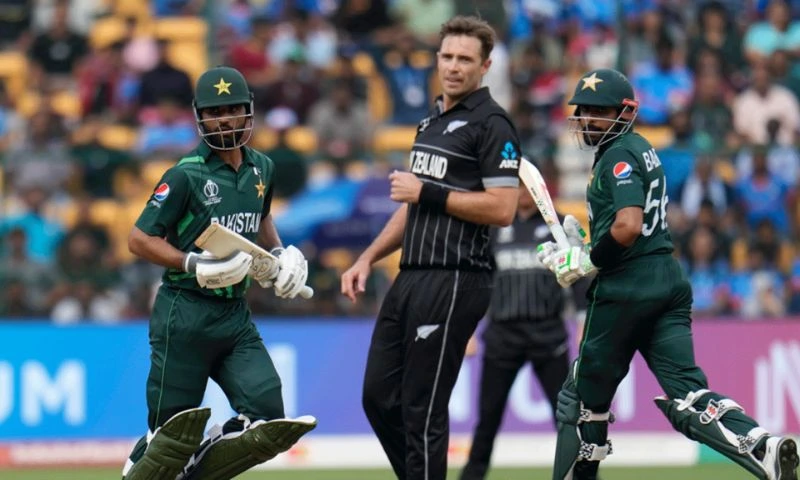
Pakistan and New Zealand will meet in the 41st match of the ICC Men’s T20 World Cup 2025 26, a Super Eights Group 2 contest that could define the semi final race. Both teams enter this fixture knowing that a win will significantly boost their chances of progressing, while defeat could leave qualification dependent on net run rate and other results. Stakes High in Super Eights Group 2 Group 2 in the Super Eights has produced tight contests, and this clash carries knockout intensity. Pakistan began the tournament with renewed momentum after strong group stage performances, while New Zealand arrived in the second round with their trademark balance and discipline. Pakistan’s campaign has revolved around its pace attack and middle order resilience. The bowling unit has delivered early breakthroughs, and the team has often relied on its fast bowlers to control the middle overs. New Zealand, on the other hand, has leaned on structured batting and calm finishing under pressure. This match could determine which side avoids a complex net run rate battle in the final games of the Super Eights. Read More: T20 World Cup: Dominant Win Over Namibia Sends Pakistan to Super Eight Team Form and Key Players Pakistan’s top order will once again face scrutiny. The team needs stability in the powerplay, especially against New Zealand’s disciplined seam attack. Pakistan’s captain has emphasized intent and fearless cricket in previous matches, and that approach will likely continue. New Zealand’s strength lies in their adaptability. Their batting lineup features experienced campaigners who rotate strike efficiently and accelerate when required. Their bowling attack blends swing in the powerplay with variations at the death. Historically, Pakistan and New Zealand have produced close T20 contests in ICC events. Pakistan famously defeated New Zealand in the semi final of the 2022 T20 World Cup, while New Zealand have often troubled Pakistan in bilateral series. Read More: New Zealand Pull Off Record Chase in T20 World Cup to Beat Afghanistan, Super 8 Hopes Fade for Afghanistan Conditions and Tactical Factors The match will take place at a venue that has already hosted high scoring games during the tournament. Teams batting first have posted competitive totals, but chasing sides have also found success when they preserved wickets. Spinners could play a crucial role in the middle overs. Both teams possess quality spin options who can slow the run rate and create pressure. Fielding standards may also decide fine margins in what promises to be a tense encounter. Weather forecasts suggest clear conditions, ensuring a full contest. Toss could influence strategy, especially if dew becomes a factor later in the evening. What Each Team Must Do Pakistan must build partnerships in the top order and avoid collapses against disciplined bowling. They will also look to exploit New Zealand’s middle order with aggressive pace bowling. New Zealand need early wickets to disrupt Pakistan’s rhythm. If their batters lay a solid foundation, they can target Pakistan’s death overs where extra runs often flow. With semi final spots within reach, both teams know the importance of this fixture. The result could shape the final standings in Group 2 and determine which side carries momentum into the business end of the tournament.
Pakistan Set for Three Match ODI Series in Bangladesh This March
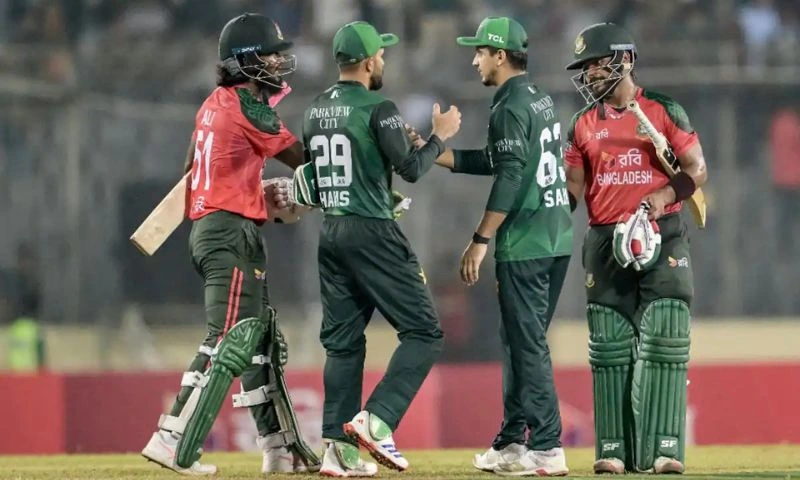
Pakistan will tour Bangladesh in March for a three match One Day International series, the Pakistan Cricket Board confirmed in an official press release, while Geo News also reported details of the schedule and venues. The series will form part of both teams’ preparations for upcoming ICC events and the next cycle of the ICC Men’s Cricket World Cup Super League. Schedule and Venues Confirmed According to the PCB, Pakistan will travel to Bangladesh in mid March, with all three ODIs scheduled to be played at the Sher e Bangla National Cricket Stadium in Dhaka. The matches are set to take place on March 15, 17 and 19. The tour is part of the Future Tours Programme agreed between the two boards. Officials said the series will help both teams fine tune their combinations and test bench strength ahead of major international assignments later this year. Bangladesh Cricket Board sources, as cited by Geo News, confirmed that Dhaka will host the entire series to ensure logistical ease and security arrangements. Pakistan to tour Bangladesh in March Details here ➡️ https://t.co/ZEC0umZBsL#BANvPAK pic.twitter.com/iIhvZ21Xex — PCB Media (@TheRealPCBMedia) February 20, 2026 Preparation for Major ICC Events The ODI series comes at a crucial time for Pakistan, which is looking to build consistency in the 50 over format. The team management is expected to use the tour to assess players’ form, especially in batting depth and pace attack combinations. Pakistan and Bangladesh have developed a competitive rivalry in recent years. Bangladesh has improved significantly in home conditions, particularly in Dhaka, where spin friendly surfaces often challenge visiting teams. Cricket analysts believe that playing in subcontinental conditions will also help Pakistan prepare for global tournaments scheduled in Asia. The team has been focusing on strengthening its middle order and death bowling, two areas that have drawn attention in recent ODI campaigns. Read More: Pakistan–Bangladesh Direct Flights Resume After 14 Years With Dhaka–Karachi Route Head to Head Record Historically, Pakistan has dominated Bangladesh in ODIs. However, Bangladesh has secured notable wins at home, including series victories in the past decade. The conditions in Dhaka often level the playing field, making contests closely fought. The Sher e Bangla National Cricket Stadium has hosted several high profile matches, including Asia Cup fixtures and ICC events. The venue’s spin friendly track is expected to play a significant role in the outcome of the series. Read More: PCB Hits Pause on T20 World Cup Preparations as Bangladesh Issue Remains Unresolved Squad Announcement and Expectations The PCB is expected to announce the squad closer to the departure date. Selectors are likely to balance experienced players with emerging talent. With a packed international calendar, workload management may also influence squad selection. Bangladesh will also look to capitalize on home advantage and strengthen its ODI credentials. The series provides valuable ranking points and an opportunity to test combinations against a strong opponent. Cricket fans in both countries are eagerly awaiting the contest. Bilateral series between Pakistan and Bangladesh often draw strong viewership and competitive cricket. With all three matches scheduled within a week, the March ODI series promises fast paced action and crucial preparation for bigger challenges ahead.

IMF Confirms Review Mission to Pakistan From February 25 After Economic Reform Gains
The International Monetary Fund (IMF) has welcomed Pakistan’s continued implementation of economic reforms and confirmed that a review mission will visit the country from February 25, 2026, to assess progress and discuss the next step under its financial support programme. IMF officials said the government’s policy efforts are stabilising the economy, curbing inflation and rebuilding investor confidence. The IMF is expected to begin formal discussions with Pakistani authorities in the last week of February as part of the third review under the Extended Fund Facility (EFF) and the second review under the Resilience and Sustainability Facility (RSF). These reviews determine the pace of future funding and policy adjustments under Pakistan’s ongoing IMF-supported programme. Read More: IMF, Pakistan Discuss Electricity Tariff Revisions with Focus on Protecting Households According to IMF spokesperson Julie Kozack, Pakistan’s fiscal performance has shown marked improvement under the EFF. She noted that the economy has posted a primary fiscal surplus of 1.3 percent of GDP for the fiscal year 2025, a key indicator that Pakistan is aligning with IMF-agreed targets. Kozack added that inflation has remained relatively contained while the country recorded its first current account surplus in 14 years. Focus Areas of the Review Mission The IMF mission will spend about two weeks in Pakistan, reviewing economic performance from July to December 2025. Officials will examine progress on key policy benchmarks, including tax reforms, energy sector restructuring, monetary policy implementation and foreign exchange reserve management. This in-depth assessment will guide recommendations for future reforms and disbursements. Officials will also discuss privatisation progress, including developments related to the Pakistan International Airlines (PIA), a critical element of structural reform under the IMF programme. Evaluators will analyse whether reforms have translated into tangible performance gains and compliance with agreed fiscal targets. Read More: Moody’s Revises Pakistan’s Banking Outlook to Stable: What It Means for the Economy The IMF’s latest Governance and Corruption Diagnostic Report has outlined a range of reform proposals aimed at increasing transparency, simplifying tax policy design, creating a level playing field in public procurement and improving asset declaration systems. Pakistan has responded with a 15-point action plan to address these issues and strengthen institutions. Background and Broader Context Pakistan first entered an IMF programme in September 2024 through a $7 billion Extended Fund Facility, aiming to stabilise its economy after years of macroeconomic instability. The country had faced a severe economic crisis between 2021 and 2024, marked by inflation spikes, foreign exchange shortages and rising public debt. Recent IMF reviews, including one completed in December 2025, endorsed Pakistan’s reform agenda and enabled the release of about $1.2 billion in funding. Read More: Pakistan Declares Export Emergency to Transform Economy Outlook and Expectations Economists say continued progress on reform benchmarks could unlock further IMF funds and build investor confidence. Officials expect enhanced macroeconomic resilience and improved fiscal discipline if Pakistan maintains its commitments during the upcoming review mission. The mission’s outcome could shape Pakistan’s economic policy priorities in the near term, influencing budget framing, tax strategies and structural reforms designed to support long-term growth and stability.

Manufacturing Boom: Apple to Set Up iPhone Operations in Pakistan
Pakistan is on the verge of a major leap in electronics and mobile device production after American tech giant Apple Inc. agreed to begin manufacturing and refurbishing iPhones in Pakistan. The agreement follows government incentives under a newly proposed Mobile and Electronics Manufacturing Framework, aimed at turning Pakistan into a regional hub for mobile and electronics production. Strategic Framework and Incentives Under the proposed framework, the Government of Pakistan will offer Apple discounted land rates and an 8 percent performance incentive to set up manufacturing facilities in the country. These incentives are targeted at attracting global tech companies and boosting Pakistan’s electronics industry. Hamad Ali Mansoor, Chief Executive Officer of the Engineering Development Board (EDB), confirmed that Apple’s entry into Pakistan’s manufacturing sector is expected to deliver multiple economic benefits. Apple has also committed to refurbish iPhones in Pakistan for re-export, with the government forecasting $100 million in revenue from re-exports in the first year. Mansoor explained that the conditions Apple requested — discounted land, 8 percent incentive, and a refurbishing strategy — have been integrated into the new framework and will be submitted for approval by Prime Minister Shehbaz Sharif. Pakistan hopes the policy will also attract other multinational manufacturers. Read More: New Apple Devices Coming Soon: Faster iPads, Smarter Siri, and More Global Precedents and Local Opportunity Apple has followed this model in other emerging manufacturing hubs such as Indonesia, Malaysia, and India, where it initially began with refurbishing older devices to train local workforce and gradually expanded into full-scale manufacturing operations. Pakistan’s government already offers a 6 percent performance incentive to existing mobile makers, but that will be increased to 8 percent to attract larger players like Apple. Officials see this move as crucial to enlarging the domestic manufacturing ecosystem and reducing dependency on imports. The policy is designed to encourage local and foreign investors to manufacture mobile phones and electronic devices within Pakistan, including laptops, tablets, smart watches, trackers, and earbuds, expanding beyond phones into broader consumer electronics. Read More: Apple’s First Multicity Launch Event Set for March 4: Here’s What You Must Know Localisation and Economic Impact Currently, Pakistan’s mobile phone manufacturing uses about 12 percent local components. With the new policy, phone manufacturers have pledged to raise the localisation rate to 35 percent in the first year, with a future target of 50 percent. This localisation could help build local supply chains and create jobs. To further support industry growth, the government plans to impose an export levy of up to 6 percent on premium smartphones costing above Rs100,000. Revenue from this levy is earmarked for technology and industry investment. Phones priced between Rs50,000 and Rs60,000 will be exempt. Read More: Apple’s Big 2026: Over 20 New Devices Including Foldable iPhone and AR Glasses Boost for Manufacturing Sector and Beyond Industry insiders believe Apple’s decision could be a game-changer for Pakistan’s tech manufacturing sector. It may signal confidence in Pakistan’s evolving industrial policies and encourage other international brands to follow suit. China has also shown interest with expected investments worth $557 million in mobile manufacturing, supported by Memoranda of Understanding (MoUs) signed during Prime Minister Shehbaz Sharif’s visit to Beijing. The government also hopes the new policy will strengthen electronics exports and reduce the country’s trade deficit linked to imported devices. Over the long term, the initiative aims to create a diversified tech manufacturing base in Pakistan that can compete in South Asia and beyond.

PTCL Flash Fiber Wins Top Ookla Awards for Best Network in Pakistan
Pakistan Telecommunication Company Limited’s flagship broadband service, PTCL Flash Fiber, has earned two major honors from Ookla, the global leader in internet testing and performance analytics. The service has been named Best Fixed Network in Pakistan for the full year 2025 and Best ISP Gaming Experience for H2 2025. The awards are based on data from the Speedtest Connectivity Report for Pakistan covering both H1 and H2 2025. They reflect PTCL Flash Fiber’s consistent performance in speed, latency, and overall user experience across the country. Recognition Based on Comprehensive Performance Metrics The Best Fixed Network award is one of Ookla’s highest recognitions in fixed broadband performance. It is determined through a detailed KPI evaluation model that measures download and upload speeds, latency, video streaming quality, and web browsing experience. According to Ookla’s published data, PTCL Flash Fiber demonstrated strong and stable performance throughout 2025. During H1 2025, the service was recognized as the Fastest Provider in four regions of Pakistan. In H2 2025, it further strengthened its position and emerged as the Fastest Provider across the majority of regions. Ookla’s Speedtest Intelligence platform collects billions of real world consumer initiated tests globally. These awards are based on verified user data rather than internal operator reports, which makes the recognition highly credible within the telecom industry. Read More: PTCL Beats Competition to Lead Broadband Rankings Best ISP Gaming Experience in H2 2025 PTCL Flash Fiber also secured the Best ISP Gaming Experience Award for H2 2025. This award highlights network performance for online gaming, including low latency, jitter control, and connection stability. Online gaming requires minimal delay and uninterrupted connectivity. PTCL’s optimized fiber network architecture has focused on reducing latency and improving packet delivery performance. This has helped provide smoother gameplay for competitive and casual gamers across Pakistan. The gaming award reflects PTCL’s investment in fiber infrastructure and network optimization. With the rise of esports and cloud gaming, stable high speed broadband has become essential for households and professional players alike. Read More: Zong vs Ufone vs Jazz: The Ramadan Bundles Everyone Talks About Expanding Fiber Footprint Nationwide PTCL has continued to expand its fiber footprint across major cities and secondary urban centers. The company has invested in next generation fiber to the home infrastructure to meet growing digital demand. Pakistan’s broadband penetration has steadily improved over the past decade, with fiber connections playing a key role in delivering higher speeds compared to legacy copper networks. Industry analysts note that fiber broadband enables faster downloads, better video streaming, and improved remote work capabilities. PTCL’s recognition by Ookla positions it strongly in Pakistan’s competitive fixed broadband market. The company reaffirmed its commitment to delivering world class digital experiences aligned with Pakistan’s growing connectivity needs. As data consumption increases due to streaming, online education, remote work, and gaming, high capacity fiber networks are expected to play an even greater role. With two prestigious Ookla awards in 2025, PTCL Flash Fiber has reinforced its position as a leading broadband provider in Pakistan.

Indus Waters Treaty Declared Fully Effective Despite India Objection
Pakistan on Friday, February 20, 2026 hailed a legal victory in its long-running water dispute with India after the Hague-based Court of Arbitration (CoA) endorsed Islamabad’s stance that the Indus Waters Treaty (IWT) remains fully operational and binding despite New Delhi’s claims to the contrary. The reaffirmation came during a meeting of the Senate Standing Committee on Water Resources in Islamabad, where senior officials released updates on the contentious issue. Treaty Status Confirmed by Court of Arbitration The Ministry of Water Resources made it clear that contrary to an Indian communication claiming the IWT had been placed in “abeyance,” Pakistan maintains the treaty is fully effective. Secretary of the Ministry Syed Ali Murtaza, who also serves as acting Indus Water Commissioner, told lawmakers that the Court of Arbitration’s endorsement strengthened Pakistan’s legal position on the matter. He said India’s letter did not change the treaty’s binding nature. “The treaty remains operational and effective and binding on India,” Murtaza told the Senate committee. The decision by the CoA aligns with previous awards by the Permanent Court of Arbitration, which has repeatedly asserted jurisdiction and upheld Pakistan’s interpretation of key treaty provisions despite India’s refusal to participate in certain proceedings. Background of the IWT Conflict The Indus Waters Treaty, signed in 1960 and brokered by the World Bank, governs the sharing of six rivers in the Indus Basin between India and Pakistan. India controls the three eastern rivers (Beas, Sutlej and Ravi) while Pakistan has exclusive rights over the three western rivers (Indus, Jhelum and Chenab). The treaty was designed to avoid water disputes and has survived multiple wars and political tensions. However, relations between the two countries have soured on water issues in recent years. In April 2025, following a deadly attack in Indian-administered Kashmir’s Pahalgam area, New Delhi suspended its participation in the IWT, citing security concerns. Pakistan rejected that move, stating the treaty does not allow unilateral suspension and calling any attempt to impede Pakistan’s water share an “act of war.” India has also objected to multiple CoA directives and has at times refused to recognise the tribunal’s authority, claiming the dispute falls under the treaty’s traditional dispute-resolution mechanisms rather than outside arbitration. Indus Water Commission and Administrative Steps At the Senate committee session, the Ministry addressed administrative matters within the Indus Water Commission, noting that no regular commissioner currently holds the position. To manage this gap, Additional Secretary Mehar Ali Shah has been assigned the additional charge as Acting Indus Water Commissioner. Concerns were also raised about past actions by former Indus Water Commissioner Jamaat Ali Shah regarding hydroelectric issues in Indian-held Kashmir. The ministry’s secretary confirmed that Shah was exonerated after a formal inquiry, and stressed that commissioners cannot issue views without state approval. Regional and Environmental Stakes Experts say the treaty’s stability is central not only to diplomatic relations but also to water security in South Asia, where vast agricultural communities depend on the Indus river system. Downstream impacts from upstream projects like India’s Kishanganga Hydroelectric Project have historically raised tensions, prompting Pakistan to pursue legal avenues to ensure compliance with treaty conditions. Climate dynamics and increasing water stress add urgency to the matter, reinforcing the importance of cooperative water governance between the two nations. Read More: From Indus to Tankers: How Pakistan Became a Water-Scarce Country Looking Ahead While the Hague court’s affirmation strengthens Pakistan’s legal footing, unresolved political frictions and India’s scepticism about the tribunal’s legitimacy pose continuing challenges. For Pakistan, however, CoA’s endorsement represents a notable affirmation of its rights under a treaty that has endured six decades of regional turbulence.

Bill Gates Cancels India AI Summit Keynote Amid Epstein Controversy
Indian tech diplomacy took an unexpected turn on Thursday, February 19, 2026, when Bill Gates abruptly cancelled his keynote address at the India AI Impact Summit in New Delhi. The Microsoft co-founder’s withdrawal came just hours before his scheduled speech, amid heightened scrutiny over his past associations with the late Jeffrey Epstein, the convicted sex offender whose recently released files have triggered global controversy. Summit Aims and High-Profile Attendance The India AI Impact Summit 2026 is one of the most ambitious global technology events held in the Global South, designed to position India at the forefront of artificial intelligence governance, research and investment. The summit brought together world leaders, CEOs and innovators under one roof, with Prime Minister Narendra Modi, French President Emmanuel Macron, Google CEO Sundar Pichai, and OpenAI CEO Sam Altman all addressing delegates. India’s government and summit organisers had counted on Gates’s participation to reinforce the event’s global appeal and underscore technological cooperation between nations. However, his last-minute withdrawal shifted attention away from the core discussions on AI investment and development. Read More: Pakistan Bets Big on AI: $1 Billion Plan That Could Change the Economy Reason for Cancellation The Gates Foundation released a statement saying the decision was made “to ensure the focus remains on the AI Summit’s key priorities.” It confirmed that Gates would not deliver his keynote address and that Ankur Vora, the foundation’s President for Africa and India, would speak in his place. The statement also reiterated the organisation’s ongoing commitments to public health and development projects in India. Gates has previously commented on the controversy tied to Epstein. He said he regretted “every minute I spent with him” and acknowledged that meeting Epstein was a mistake. The reopened scrutiny stems from recently released documents from the U.S. Department of Justice, which included references to communications involving Gates and Epstein’s network. Read More: What Are the Epstein Files, Why They Matter, and Why They Are Deepening Trouble for Powerful Figures Summit and Event Chaos Gates’s absence was not the only issue at the summit. Reuters reporting indicates that the event has been plagued by organisational challenges, including traffic disruptions, closed exhibition halls, and confusion over logistics in Delhi. Indian university exhibits sparked controversy when one institution was asked to vacate its stall for misrepresenting a Chinese-made robot as its own innovation. Adding to the challenges, another major keynote speaker, Nvidia CEO Jensen Huang, also cancelled his appearance, leaving gaps in the high-profile agenda and fuelling frustration among attendees. Reactions and Broader Impact Media and opposition voices in India weighed in as the summit unfolded. Some critics said the state’s handling of the summit raised questions about logistical planning and management. Despite these issues, the summit hosts reported that India secured over $200 billion in AI investment pledges, including from major Indian tech firms and international partners. Analysts say Gates’s withdrawal highlights the sensitivity around public figures and reputational risks, especially in high-visibility forums. Even though he remains involved through the Gates Foundation’s representation, the controversy shows how peripheral matters can overshadow key global discussions on technology policy and innovation. Read More: Inside the Epstein Files: Key Disclosures, Unanswered Questions, and Global Impact What’s Next for India AI Summit The summit continues through February 20, 2026, with discussions on AI governance, ethics and investment. Indian leaders are using the event to position the country as a technology hub while navigating diplomatic and organisational hurdles. The India AI Impact Summit remains a landmark event for global AI cooperation despite the turbulence.

Zong vs Ufone vs Jazz: The Ramadan Bundles Everyone Talks About
Every Ramadan, mobile networks see a predictable shift in how people use their phones. Activity moves late into the night, from post-iftar calling to sehri alarms, Quran recitation apps, and social scrolling after Taraweeh. To match this demand, telecom operators roll out Ramadan-themed bundles and recharge rewards that target peak hours and high-volume users. Bundles Built Around Sehr to Iftar Needs In Pakistan, operators often design offers around the Ramadan day cycle. Zong has promoted a “Ramadan Day Time Offer” that runs from sehr to iftar, positioning it as a low-cost way to stay online during fasting hours. Its press material has described a 1GB daytime data offer and a separate new SIM incentive with free data for a limited period. Ufone has taken a different approach by focusing on recharges. Its “Poora Balance Offer” asks prepaid users to dial an opt-in code before recharging Rs. 100 or more, after which customers can receive the full balance benefit under the campaign terms. Ufone framed it clearly as a Ramadan offer to reduce the load deduction pain point that many users complain about. Read More: PTCL Submits Merger Application to PTA for Telenor Pakistan and Ufone These show the common logic: keep customers active, reduce churn during a high-usage month, and encourage frequent recharges or bundle subscriptions. Fintech and Charity Tie-Ins Are Part of the Strategy Ramadan packages are not only about minutes and data. Operators also use the season to push digital payments and giving. Ufone’s UPaisa has run a Ramzan donation offer that rewards prepaid users who donate through the app with a one-day bundle that includes data, on-net minutes, and SMS, according to the company’s announcement. This ties the telecom business to Ramadan giving habits, while also pulling more users into operator wallets. Content and Utility: Religion-Focused Apps Get a Boost Another Ramadan play is content. Jazz has promoted its “Islam World” app during the holy month, highlighting features such as Ramadan sehr-o-iftar timings, Qibla finder, and tasbih counter. Such tools increase daily engagement and keep users inside the operator ecosystem. Jazz has also promoted a Ramadan-themed Saudi roaming bundle in past campaigns, aimed at travelers and Umrah visitors who want predictable usage abroad. Read More: Data Shows Jazz Has the Fastest 4G Network Across Pakistan What to Watch This Ramadan For consumers, the smartest move is to compare validity windows, peak-hour restrictions, and opt-in requirements. For operators, Ramadan remains a high-stakes month where pricing, convenience, and trust can win long-term loyalty.
