


Pakistan’s cricket team has issued a clear warning to England’s inconsistent batting line-up ahead of their Super Eights clash in the 2026 ICC Men’s T20 World Cup. With the match scheduled at the Pallekele International Cricket Stadium in Kandy, Pakistan’s batters and bowlers alike are preparing to exploit what they describe as favourable conditions for spin bowling. “We will give England a tough time on a pitch that looks good and will grip,” said Pakistan batsman Sahibzada Farhan, who tops the tournament’s run-scoring chart with 220 runs. Farhan emphasised that England’s recent batting display against spin exposed weaknesses that Pakistan intends to test again when the teams meet. England’s Susceptibility Against Spin Pakistan’s warning stems from England’s struggle against slow bowling in their Super Eights opener versus Sri Lanka. In that game, England managed just 146 for 9 with several top order batters dismissed by Sri Lanka’s spinners. Farhan pointed to that result as evidence that opponents’ slow bowling can trouble England’s line-up. Analysts note that the Pallekele pitch tends to slow down and offer greater turn in the middle overs, particularly under humid conditions. Slow bowlers who can vary pace and flight often flourish here. Pakistan has traditionally invested heavily in spin talent and versatility, which they hope will pay dividends. Read More: England Dominate Sri Lanka by 51 Runs to Kick-start Super 8s in T20 World Cup 2026 Pakistan’s Spin Arsenal Pakistan boasts a formidable spin attack at this World Cup. Across the tournament so far, its spinners have taken 26 wickets in four matches, dwarfing the pace bowlers’ tally. Veterans like Shadab Khan, known for his leg-spin googlies and deceptive flight, combined with other spin specialists, give Pakistan multiple options to vary lines and lengths. While England themselves carry capable spin options such as Will Jacks, Adil Rashid and Liam Dawson, Pakistan’s strategy centres on controlling the tempo and forcing England into high-risk shots. Jacks, in particular, has been effective as a batting all-rounder capable of striking spin and providing control with his own off-break bowling. Match Stakes and Context Pakistan’s Super Eights campaign got off to a difficult start when its match against New Zealand was washed out due to weather. That draw left Pakistan needing a positive result against England to stay in contention for the semifinals. A loss could effectively secure England’s place in the last four with a game to spare. Farhan, who scored an unbeaten century earlier in the competition against Namibia, said confidence in the squad remains strong. “We are confident and our morale is high,” he said, adding that Pakistan is “focused on this match to win and progress.” In addition to spin, Pakistan still faces England’s express pace threat in Jofra Archer, a bowler capable of lightning speed. Farhan stressed he feels prepared for the challenge, having faced fast bowling in Pakistan’s domestic conditions before. Read More: NZ vs Pakistan Called Off: How the Washout Changes the Semi Final Race Tactical and Historical Context This contest reflects a broader contrast in cricket philosophies. England often emphasises aggressive batting and rapid scoring from the outset, while Pakistan leverages spin and tactical bowling variations to control middle overs. Both approaches have merit, but in conditions favouring slower bowlers, Pakistan feels its strategy carries the edge. Historically, Pakistan has never beaten England in three previous T20 World Cup clashes, adding hunger and motivation for this game. The upcoming match in Kandy could be pivotal in shaping the semifinal race and demonstrating which team adapts best to spin-friendly conditions.
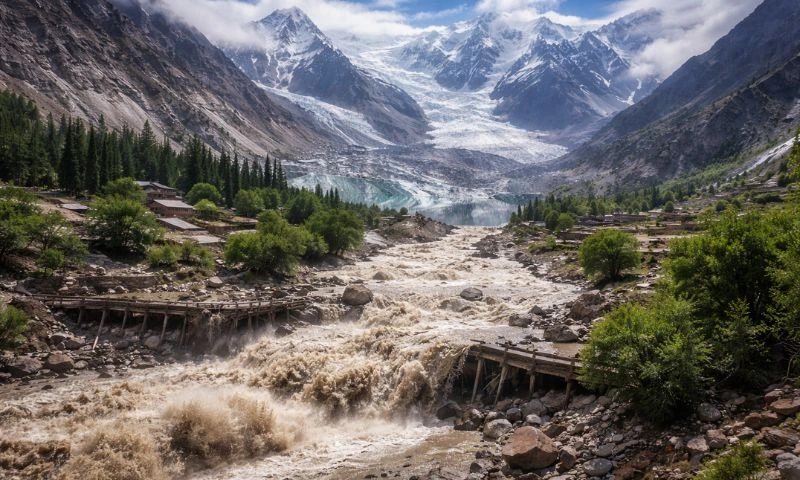
Rising Winter Heat Could Trigger Glacier Floods in Pakistan
Northern Pakistan is now confronting an unusual winter heat wave that has scientists and officials warning about the rising threat of glacial lake outburst floods. Recent weather data show daytime temperatures recorded as much as 3 to 5°C above normal, creating a dangerous combination of reduced snowfall, accelerated glacier melt, and growing flood risks in the country’s mountainous north. The Pakistan Meteorological Department (PMD) says that below-normal rainfall and limited snowfall this winter have left the region warmer and drier than usual. The warming has been particularly intense in areas like Gilgit, Bunji, Chilas, and Astore, where higher minimum temperatures are affecting overnight ice refreezing. Climate Trends Fuel Glacier Melt According to the PMD, stable atmospheric conditions and prolonged clear skies have allowed heat to build up, reducing the usual cold relief of winter nights. With less overnight cooling, snow and glacier surfaces do not refreeze as they normally would, increasing meltwater runoff into glacial lakes that sit behind natural ice and moraine dams. “Reduced nighttime cooling further enhances meltwater runoff into glacial lakes,” the PMD said in a statement, adding that rapid melting increases water accumulation in these lakes. The growing water volume raises the likelihood of Glacial Lake Outburst Floods (GLOFs) in downstream valleys, officials warned. Glacial lake outburst floods can occur suddenly and without warning, triggering flash floods that sweep through river valleys, damaging infrastructure and posing serious risks to mountain communities. Read More: Heatwaves and Floods Hit Pakistan’s Economy Hard, Officials Reveal Vulnerable Regions and Glaciers The areas most at risk include Gilgit, Ghizar, Hunza, Bunji, Chilas, and Astore, where temperature anomalies were especially high in February. Between February 1 and 22, daytime temperatures in Gilgit reached 4.7°C above normal, while nighttime increases hit 3.4°C in Chilas. Pakistan’s northern highlands, mainly in Gilgit-Baltistan, host some of the world’s major glaciers, including the Batura and Baltoro glaciers, which feed rivers and sustain local ecosystems. These ice masses are vital sources of freshwater but are already responding to warming trends. Scientific observations have shown that many glaciers in the Hindu Kush Himalaya region are receding as temperatures rise. Melting ice increases water flow into glacial lakes, a phenomenon that may both strengthen water availability in the short term and increase flood risk. In the long run, however, faster glacier loss threatens freshwater security for downstream populations. Climate Change Links and Long-Term Threats Climate experts say rising temperatures and altered precipitation patterns across South Asia are tied to broader global warming trends. Research shows that warmer air can hold more moisture and elevate melting rates, especially when snowfall is low. Pakistan is considered one of the countries most vulnerable to the impacts of climate change, facing cycles of drought, heat waves, extreme rainfall, and flood events. Historical data also tell a cautionary tale. The catastrophic 2010 Pakistan floods, which affected millions and caused massive destruction, were linked to heavy monsoon rains combined with landscape changes intensified by climate variability. Read More: The Hotspot Effect: How Warming Is Reshaping Everyday Life in South Asia What Authorities Are Doing The PMD says it is closely monitoring temperature trends, glacier melt conditions, and hydrometeorological parameters. It plans to issue timely advisories to authorities and local communities to prepare for possible GLOF events. Early warning systems and community awareness campaigns are essential in reducing disaster risk in high-altitude villages and along river valleys. Adapting to these shifting climate patterns will require both local preparedness and national strategies to strengthen infrastructure, provide early warnings, and support communities at risk.

Third Tejas Jet Crash Pushes IAF to Ground Entire Fleet After Dubai Airshow Tragedy
India’s Tejas light combat aircraft programme suffered a major blow after a third incident involving the indigenous fighter jet. The Indian Air Force (IAF) has grounded its entire Tejas fleet following a crash on February 7 during a routine training sortie, prompting a comprehensive technical investigation and renewed scrutiny of the platform’s safety and delayed upgrades. The pilot ejected safely from the aircraft after it overshot the runway at a frontline air base, according to Indian media reports citing defence sources. The dramatic mishap adds to a growing list of Tejas accidents that have raised concerns about the aircraft’s operational use and timeline for enhanced variants. Recurring Incidents Raise Questions This latest crash marks the third major Tejas mishap since the aircraft entered IAF service. The first occurred in March 2024 near Jaisalmer, when a Tejas jet crashed during a training mission and the pilot ejected safely. The second occurred in November 2025 at the Dubai Airshow, one of the world’s largest aviation events. A Tejas fighter jet crashed during an aerobatic display, killing the pilot who was unable to eject in time. Emergency response teams from the UAE assisted at the scene and the IAF launched a court of inquiry to investigate that incident. The latest crash involved significant airframe damage, and defence analysts believe it was most likely caused by a suspected onboard systems failure or brake malfunction during landing. Although the pilot survived, the severity of the damage is expected to render this aircraft unserviceable pending inspection and review. Fleet Grounding and Technical Scrutiny In response to the crash, the IAF has grounded all of its around 30 Tejas light combat aircraft as a precaution. The grounding allows engineers and investigators to conduct detailed technical inspections across the fleet to identify systemic issues and prevent further accidents. Grounding military aircraft after a crash is standard global practice, but repeated incidents can affect operational readiness and confidence in the platform. The IAF’s ordered fleet of Tejas jets has been central to its plans to modernise fighter squadrons that have been shrinking due to retirement of older aircraft. Mk1A Delays Compound Challenges The latest Tejas mishap comes amid delays in the delivery of the advanced Tejas Mk1A variant. The upgraded model, which includes improved avionics, stronger radar systems, and electronic warfare capabilities, has faced extended delivery setbacks due to production bottlenecks and supplier issues. The Indian government has placed significant orders for Mk1A jets, but missed deadlines have extended concerns about how soon the IAF can modernise its ageing fleet. These delays could lengthen reliance on older aircraft and complicate India’s air power strategy, particularly as regional security dynamics shift. Strategic Implications India’s effort to build and deploy a home-grown fighter jet under its “Make in India” initiative has long been a priority for defence planners. The Tejas programme represents a strategic move to reduce dependence on imported combat aircraft and to strengthen the domestic aerospace industry. Despite its setbacks, the aircraft continues to offer tactical advantages as a lightweight, multirole fighter suitable for air defence and ground attack missions. However, the pattern of accidents and production delays underscores the complex challenges involved in developing, certifying, and deploying modern combat jets. As investigations continue into the latest crash, the IAF and manufacturers will face pressure to demonstrate improvements in quality, safety, and delivery reliability before returning the grounded fleet to active service.

Is Instagram Really Dead for Marketers? 2026 Trends Reveal the Shift
Instagram has long been a cornerstone of social media marketing. Recent industry data, however, suggests a major shift in how effective the platform is for organic growth and brand engagement in 2026. A new benchmark report shows organic reach on Instagram continuing to slow, leading many marketers to question whether the platform is still worth heavy investment. According to the Emplifi Social Media Benchmarks Report, brands are growing fastest on TikTok, while organic reach on Instagram and Facebook continues to shrink. The slowdown is most noticeable across all post types, including photos, carousels, and Reels. Organic Reach Declines, TikTok Surges Instagram and Facebook still boast huge user bases, but their organic reach is diminishing as platforms favour content that drives strong engagement signals such as shares, saves, and watch time. This change means brands without large advertising budgets or strong content engagement struggle to show up in users’ feeds. Meanwhile, TikTok’s algorithm continues to reward engaging, short-form content regardless of existing follower counts. This dynamic lets even smaller brands gain visibility quickly. For marketers who rely on organic traction rather than paid ads, TikTok’s model appears more inviting and equitable. A separate benchmark study finds Instagram’s overall engagement has tightened. In 2025, engagement dropped about 24% year-on-year, with follower growth slowing across brand accounts of all sizes. Carousels and Reels now dominate interactions, but even these formats no longer guarantee reach without strategic planning. Changing Engagement Patterns Marketing analysts note that audiences are interacting differently on Instagram, with more emphasis on meaningful engagement such as comments and messages. A recent analysis shows drops in simple likes and passive interactions. Instead, shares, saves, and deeper conversations now matter more for the platform’s algorithm. These changes align with evolving content consumption behaviours. As users scroll across platforms like TikTok and YouTube Shorts, Instagram is adapting by requiring more compelling content to trigger algorithmic boosts. Simple posts or one-off visuals often fail to gain traction without strong signals early after posting. Platform Role Shifts in 2026 Despite these shifts, Instagram is far from obsolete. Large user numbers — around three billion monthly active users globally — still give the platform powerful reach potential, especially for target audiences under 45. Industry reports describe a changing social media marketing funnel in 2026. TikTok now often plays the discovery role, sparking interest through viral content, while Instagram is increasingly seen as the conversion platform where users research products and make purchase decisions. YouTube frequently serves as the final validation step before a purchase. In this new ecosystem, brands find they must adapt strategies rather than abandon platforms. Instagram remains vital, particularly for community building, product showcases, and visual storytelling. But relying solely on Instagram for growth is no longer a safe assumption. What Marketers Need to Do Experts recommend that marketers focus on meaningful engagement over vanity metrics like follower counts. Creating content designed to spark shares, saves, comments, and direct interactions helps content cut through tightening organic reach. Short-form video formats such as Reels remain central to Instagram’s algorithm, but brands must craft compelling hooks and deliver value quickly. Emphasis on content quality, topic clarity, and audience relevance will help sustain visibility. In summary, Instagram is not dead for marketers in 2026, but its role has evolved significantly. Organic reach has tightened and competition for attention is fiercer than ever. Smart strategies will combine platform strengths, diversify channels, and focus on deep engagement rather than sheer volume.

Has Pakistan Shut Down Its Internet Firewall? What It Means and Why It Matters
Reports have circulated that Pakistan’s internet firewall has been permanently shut down following widespread public reaction. Multiple verified sources confirm that the government had been in the process of installing a national internet firewall system to tighten online control and cybersecurity before these reports emerged. What Is an Internet Firewall? A firewall is a network security system designed to monitor and control incoming and outgoing internet traffic based on specified security rules. It acts as a barrier between a private internal network and the public internet. Read More: Pakistan Sets 5G Auction Prices, Clearing Path for Faster Mobile Internet Firewalls can filter malicious content, block certain websites, and protect systems from cyberattacks. They are widely used in enterprise networks to safeguard sensitive data and defend against unauthorized access. Why Pakistan Installed a Firewall In 2024, the Pakistan Telecommunication Authority (PTA) and the Ministry of Information Technology confirmed that the government was implementing a nationwide internet firewall. Officials described it as a cybersecurity upgrade to defend against increasing threats and to filter “propaganda and unwanted content.” A top Pakistan IT official stated the firewall was meant to boost national cybersecurity and not intended to curb free speech, saying:“It’s a system. It is not a physical wall… It will not curb anything.” Why Public Concerns Arose Digital rights groups and the tech industry raised serious concerns about the firewall’s potential to restrict access to online platforms, slow the internet, and hurt business operations. Experts warned that monitoring and filtering internet traffic could discourage international investment in Pakistan’s tech sector and reduce competitiveness. Read More: Pakistan Sets March 10 for 5G Spectrum Auction to Transform Connectivity The Pakistan Software Houses Association estimated the firewall could inflict up to $300 million in economic losses due to slower connections and disrupted digital services. Where Similar Systems Exist The most cited and comprehensive example of a national firewall is China’s “Great Firewall”, a combination of legislation and technology that blocks access to selected foreign sites and content. It checks data packets for sensitive keywords and then blocks access to sites like Google, Facebook, and Twitter within China. Investigations have found that China has exported parts of its firewall technology to several nations, including Pakistan, Myanmar, Kazakhstan, and Ethiopia. Other countries such as Russia, Iran, and Myanmar also deploy internet controls at various levels to restrict access or monitor content. Why Reports of Shutdown Are Appearing Following widespread public complaints about slower internet and difficulties accessing social media and online services, some social media accounts and online posts began claiming that Pakistan had shut down the firewall permanently. These claims reflect the transition phase of the project rather than an official policy reversal, and authorities have not yet released a formal statement confirming a permanent shutdown. Read More: SBP Launches Cyber Shield to Protect Pakistan’s Financial Sector Internet firewall projects often involve significant infrastructure and phased deployment, including testing and partial rollbacks if public impact becomes unmanageable or economic damage is high. Pakistan’s internet firewall was introduced to bolster cybersecurity and content monitoring. Debate has intensified due to real economic impact and concerns over freedom of information. Global contexts show that firewalls can help national security but often at the cost of open internet access. The claims about its shutdown reflect ongoing adjustments to a project that has not yet been fully and officially discontinued by government authorities.

PSL 11: Rawalpindi Announces Its Long Awaited Team Name
The newly established Pakistan Super League franchise from Rawalpindi has officially unveiled its team name as “Pindiz” ahead of the 11th season of the marquee T20 competition. The announcement on social media sparked instant reactions from fans, marking a major milestone in the league’s expansion plans. PSL 11 is scheduled to run from March 26 to May 3 and will feature eight teams after the PCB expanded the tournament by incorporating franchises from Rawalpindi, Sialkot, and Hyderabad. A New Identity for a Historic Franchise The Rawalpindi franchise was created following the record-breaking sale of the Multan Sultans at the historic PSL auction held on February 9. Walee Technologies secured ownership for Rs2.45 billion, the highest amount offered for a PSL team in history. The company exercised its rights to relocate and rebrand the franchise in the garrison city of Rawalpindi. In a 25-second promotional teaser released online, the franchise revealed the name “Pindiz” accompanied by visuals of iconic city landmarks and dynamic music. The short video built anticipation with the slogan: “We’re bold, We’re challenging, We’re bringing the vibe, We’re changing the game.” The team also announced that its official logo will be unveiled soon, with the video ending on a teaser message: “To be continued.” 🚨 Team Rawalpindi’s official franchise name is here. We’re bold We’re challenging We’re bringing the vibe We’re changing the game 🔥 Next up: the official team logo 👀🔜#HBLPSL11 #NewEra | @thePSLt20 | @M_Ahsan_Tahir | @CWR_WALEE pic.twitter.com/f9hXr3iRf0 — Pindiz (@thepindiz) February 22, 2026 Meaning and Vision Behind the Name The name “Pindiz” appears to be a creative take on the city’s nickname, “Pindi,” combined with a stylised “z” to give it a modern and energetic edge. According to team owner Ahsan Tahir of Walee Technologies, the choice of the one-word identity was deliberate. He described the name in early statements as “simple, clean, and powerful.” While some fans embraced the fresh and contemporary identity, others reacted with mixed opinions on social media. The unique name quickly became meme material, with debates over its catchiness and emotional connection dominating online discussions. Squad Strength and Competitive Outlook Beyond the name, the Rawalpindi franchise enters PSL 11 with a strong squad following the first-ever PSL players auction format. Among their key signings is Naseem Shah, who became the most expensive player of the auction at PKR 8.65 crore. The team also retained Pakistan’s T20 stalwart Mohammad Rizwan, who is expected to lead the side. Other notable players include Sam Billings, Rishad Hossain, Mohammad Amir, Daryl Mitchell, and promising local talents such as Yasir Khan and Asif Afridi, giving Pindiz a balanced mix of batting and bowling firepower. Rawalpindi’s Cricket Culture and Fan Expectations Rawalpindi, with its rich cricketing history and passionate fan base, is expected to embrace the new franchise with enthusiasm. The Rawalpindi Cricket Stadium will host Pindiz home matches and potentially draw large crowds eager to support their team. The club’s management is keen to convert early buzz around the name into long-term fan loyalty. Strong on-field performances in PSL 11 could quickly turn skeptics into supporters, as T20 cricket fans often rally behind teams that deliver excitement and competitive spirit. What Comes Next for Pindiz The next major reveal for Pindiz will be the official team logo, which is expected to further shape its brand identity and visual appeal. With franchise cricket increasingly driven by strong cultural and digital branding, the logo launch will be crucial in solidifying Pindiz’s market presence ahead of the big kick-off.

ECB Issues Warning to Indian-Owned Franchises Amid Pakistan Player Bias Concerns
The England and Wales Cricket Board (ECB) has issued a stern warning to franchises in The Hundred about concerns that some teams may deliberately overlook Pakistan players ahead of the March auction. The board reminded teams that selection must be based on merit, not nationality, amid reports that Indian-linked owners may avoid signing Pakistani cricketers. This year’s Draft, set for March 11–12 in London, will determine the squads for the season starting in July. The tournament features eight teams, each allowed four overseas players, with franchises increasingly attracting private investment. Four of these are now linked to ownership groups with ties to the Indian Premier League, where Pakistani players have historically been absent. Bias Allegations and ‘Unwritten Rule’ Reports from credible outlets indicate that the four IPL-linked Hundred franchises — Manchester Super Giants, MI London, Southern Brave and Sunrisers Leeds — may not consider Pakistan players at the auction. A senior ECB official reportedly told an agent that interest in Pakistan players would be limited to the four sides with no IPL ties. An agent described this as an “unwritten rule” in leagues where Indian investment exists. The issue stems partly from long-running geopolitical tensions between India and Pakistan. Pakistani players have not featured in the IPL since 2009, a trend that has spilled into other franchise leagues with Indian ownership involvement. Despite nearly 1,000 players from 18 countries entering the Hundred auction, more than 50 Pakistan players are among those hoping for contracts. ECB Steps In to Defend Inclusivity The ECB’s warning came after the league’s governing body noted the potential for discriminatory team building. Officials reminded franchises that they risk disciplinary action if evidence shows players are being ignored based on nationality. The email was sent to all eight teams, highlighting the board’s commitment to fairness and inclusivity in player selection. An ECB spokesperson said the competition “welcomes men’s and women’s players from all over the world” and expects teams to reflect that diversity. They underscored that the auction longlist includes representation from countries such as Australia, South Africa, New Zealand, Pakistan and the West Indies. Voices From the Cricket Community Former England captain Michael Vaughan called on the ECB to act quickly if Pakistani players are excluded. He argued that a sport built on inclusion should not let bias dictate selections. Meanwhile, England’s white ball captain Harry Brook described the potential snub as “a shame,” stressing Pakistan’s strong cricketing tradition and the value their players bring to tournaments. Implications for Global Franchise Cricket If franchise bias continues, it could deepen concerns that political tensions are influencing sport. Pakistan players have also been notably absent from other leagues with Indian ownership involvement, including South Africa’s SA20 and the UAE’s ILT20. Cricket fans and analysts say avoiding top talent based on nationality diminishes the spirit of competition and harms inclusivity. With the auction only weeks away, all eyes are on how franchises will respond to the ECB’s warning. The board’s stance sends a clear signal that discrimination — overt or implicit — will be scrutinized as the sport evolves.
