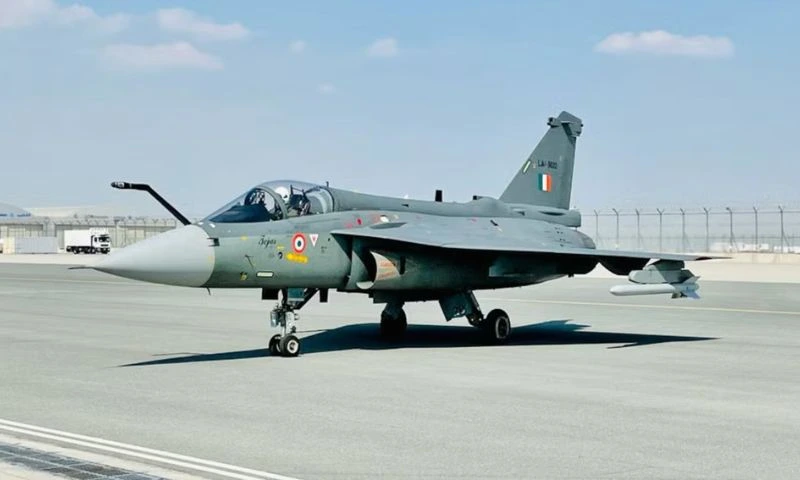
India’s Tejas light combat aircraft programme suffered a major blow after a third incident involving the indigenous fighter jet. The Indian Air Force (IAF) has grounded its entire Tejas fleet following a crash on February 7 during a routine training sortie, prompting a comprehensive technical investigation and renewed scrutiny of the platform’s safety and delayed upgrades.
The pilot ejected safely from the aircraft after it overshot the runway at a frontline air base, according to Indian media reports citing defence sources. The dramatic mishap adds to a growing list of Tejas accidents that have raised concerns about the aircraft’s operational use and timeline for enhanced variants.
Recurring Incidents Raise Questions
This latest crash marks the third major Tejas mishap since the aircraft entered IAF service. The first occurred in March 2024 near Jaisalmer, when a Tejas jet crashed during a training mission and the pilot ejected safely.
The second occurred in November 2025 at the Dubai Airshow, one of the world’s largest aviation events. A Tejas fighter jet crashed during an aerobatic display, killing the pilot who was unable to eject in time. Emergency response teams from the UAE assisted at the scene and the IAF launched a court of inquiry to investigate that incident.
The latest crash involved significant airframe damage, and defence analysts believe it was most likely caused by a suspected onboard systems failure or brake malfunction during landing. Although the pilot survived, the severity of the damage is expected to render this aircraft unserviceable pending inspection and review.
Fleet Grounding and Technical Scrutiny
In response to the crash, the IAF has grounded all of its around 30 Tejas light combat aircraft as a precaution. The grounding allows engineers and investigators to conduct detailed technical inspections across the fleet to identify systemic issues and prevent further accidents.
Grounding military aircraft after a crash is standard global practice, but repeated incidents can affect operational readiness and confidence in the platform. The IAF’s ordered fleet of Tejas jets has been central to its plans to modernise fighter squadrons that have been shrinking due to retirement of older aircraft.
Mk1A Delays Compound Challenges
The latest Tejas mishap comes amid delays in the delivery of the advanced Tejas Mk1A variant. The upgraded model, which includes improved avionics, stronger radar systems, and electronic warfare capabilities, has faced extended delivery setbacks due to production bottlenecks and supplier issues.
The Indian government has placed significant orders for Mk1A jets, but missed deadlines have extended concerns about how soon the IAF can modernise its ageing fleet. These delays could lengthen reliance on older aircraft and complicate India’s air power strategy, particularly as regional security dynamics shift.
Strategic Implications
India’s effort to build and deploy a home-grown fighter jet under its “Make in India” initiative has long been a priority for defence planners. The Tejas programme represents a strategic move to reduce dependence on imported combat aircraft and to strengthen the domestic aerospace industry.
Despite its setbacks, the aircraft continues to offer tactical advantages as a lightweight, multirole fighter suitable for air defence and ground attack missions. However, the pattern of accidents and production delays underscores the complex challenges involved in developing, certifying, and deploying modern combat jets.
As investigations continue into the latest crash, the IAF and manufacturers will face pressure to demonstrate improvements in quality, safety, and delivery reliability before returning the grounded fleet to active service.