


Saudi authorities have finalised extensive preparations to meet the spiritual and practical needs of millions of Muslim pilgrims ahead of Ramadan 2026, with a special focus on ensuring the supply of Zamzam water at key holy sites. The National Water Company (NWC) — the official operator of the King Abdullah bin Abdulaziz Zamzam Water Project — announced a strategic stockpile of 2.2 million bottles of blessed Zamzam water to serve worshippers throughout the holy month. Ramadan is one of the busiest periods of the year for ritual travel to the Two Holy Mosques in Makkah and Madinah. Millions of pilgrims and worshippers visit these sacred sites to pray, break fast, and partake in communal rites that require careful logistical planning by the Saudi authorities. The announcement comes amid other historic moments in the Kingdom this year, including record Umrah pilgrim visits during Ramadan’s early days. Robust Production and Distribution Plan The Zamzam Water Project has boosted its production capacity to 200,000 five-liter bottles per day, a scale needed to match the sharply increasing seasonal demand. Distribution will occur from the NWC’s headquarters and through a network of over 750 sales outlets across the country. Pilgrims and visitors can also purchase 330 ml bottles via the Nusuk smartphone application, reflecting the Saudi government’s effort to integrate digital services into pilgrimage logistics. Zamzam water holds deep religious significance for Muslims, believed to be blessed and spiritually noteworthy. It is traditionally consumed by pilgrims and taken home as a treasured gift. To ensure quality and safety, production operations are highly automated, starting from the well extraction point through bottling. More than 400 laboratory tests are conducted daily to maintain high standards before distribution. Read More: Saudi Arabia Breaks Umrah Record with 904,000 Pilgrims on Ramadan Day 4 Continuous Supply to Holy Mosques In addition to bottled water preparation, NWC confirmed that the continuous pumping of Zamzam water to the Grand Mosque (Masjid al-Haram) will operate around the clock. Coordination with relevant authorities also ensures that the Prophet’s Mosque in Madinah receives daily supplies exceeding 50 million liters in safe and hygienic manners. These efforts underscore the Kingdom’s commitment to high-volume service delivery during peak pilgrimage seasons. Strengthening Pilgrim Services During Ramadan This logistical milestone coincides with a surge in pilgrim services and crowd management measures in Saudi Arabia. Earlier in Ramadan, Saudi authorities recorded some of the highest single-day Umrah pilgrim counts ever, reflecting growing global interest in spiritual journeys during the holy month. These developments create additional pressure on infrastructure and service delivery, making strategic planning for basics like water supply a necessity. The Kingdom’s wider digital and service ecosystems — including app-based provision, smart crowd flow systems, and advanced safety protocols — play a central role in supporting pilgrims. This approach aligns with Saudi Arabia’s broader Vision 2030 goals of modernising services, enhancing visitor experiences, and promoting religious tourism. What This Means for Pilgrims For pilgrims, the announcement provides reassurance that essential services like access to Zamzam water will be available consistently throughout Ramadan, even during peak visitation days. Bottled water availability at outlets citywide helps reduce congestion at central water points, giving worshippers more flexibility in hydration and transport planning. Authorities continue to encourage early arrival and use of digital tools such as the Nusuk app for smoother experiences.

Banks to Stay Open This Saturday to Help Pakistan Taxpayers Pay Dues
In a bid to make tax compliance easier for the public, the State Bank of Pakistan (SBP) has directed all commercial bank branches to remain open on Saturday, February 28, 2026. This special arrangement aims to give individual and corporate taxpayers extra time to pay government duties and taxes before the deadline. SBP’s decision comes at the request of the Federal Board of Revenue (FBR) and seeks to minimise last-minute hassles for citizens and businesses. Special Saturday Opening for Tax Payments According to the SBP circular, all commercial bank branches including National Bank of Pakistan outlets handling customs collections will operate from 9:00 AM to 1:00 PM on February 28. The central bank also emphasised that if necessary, branches can extend hours beyond this window to make sure taxpayers can complete over-the-counter (OTC) payments of government duties and taxes without facing unnecessary delays. This arrangement is part of a coordinated effort between the SBP and FBR to ensure smooth special clearing of government tax receipts through the National Institutional Facilitation Technologies (NIFT) system. Banks have been instructed to keep their internet banking, mobile apps, ATMs and other digital payment channels functioning without disruption so that taxpayers can choose from multiple payment options. Why This Matters for Taxpayers In Pakistan, most taxpayers and businesses must settle their regular government dues on time to avoid late payment penalties and complications with the Federal Board of Revenue. FBR deadlines often coincide with weekends or public holidays, creating challenges for those who rely on physical bank visits to make payments. By keeping branches open on a weekend, authorities are directly addressing a common pain point. Taxpayers who prefer to visit a branch face fewer risks of queues and paperwork issues when they can go during extended hours. For those who use digital payment platforms, the directive ensures that online systems remain accessible and unaffected by maintenance work or outages during the special opening. Read More: Federal Government Announces Ramadan 2026 Office Timings Across Pakistan Bank Hours and Ramadan Schedule The announcement also comes amid newly announced banking hours for the Ramadan 2026 season. Earlier this month, SBP issued a circular setting revised public dealing times for bank branches throughout the holy month. Under those guidelines, banks would normally work from 9:00 AM to 2:00 PM Monday through Thursday, and 9:00 AM to 12:30 PM on Fridays. The special Saturday arrangement is an exception to this Ramadan schedule and reflects the authorities’ commitment to easing compliance burdens during a busy fiscal period. Taxpayers are encouraged to plan their visits during the designated hours and to make use of digital banking channels wherever possible. Read More: SBP Declares Bank Holiday on Ramadan’s First Day for Zakat Deduction How This Helps the Economy Extending banking services for tax collection on a weekend has multiple benefits. It not only supports tax compliance but also promotes trust and convenience in government-bank relations. Reliable tax collection is critical for funding public services and development programmes. Ensuring multiple channels for payment helps both individuals and companies meet their obligations on time, reducing stress on financial systems and enhancing overall economic efficiency. As Pakistan continues to emphasise better fiscal discipline and taxpayer convenience, initiatives like this weekend bank opening are likely to be welcomed by citizens and businesses across the country.

Punjab Government Imposes 30-Day Ban on Outdoor Drone Flying: What You Need to Know
The Punjab government has imposed an immediate and complete ban on flying drones outdoors across the entire province for 30 days, citing serious risks to public safety, security and maintenance of law and order. The notification was issued by the Punjab Home Department on February 25 and took effect the same day under Section 144 (6) of the Code of Criminal Procedure, 1898. The order states that “credible reports and prevailing circumstances indicate that the increasing and unregulated use of drones (unmanned aerial vehicles) within the territorial limits of Punjab poses potential risks to public safety, the security of public and private property and the maintenance of public order”. Provincial authorities believe that outdoor drone operations could obstruct official duties, disturb the peace and endanger citizens if left unregulated. Scope and Exceptions to the Ban The ban covers all outdoor drone flying activities throughout Punjab for a period of 30 days from the issuance of the notification or until the ban is withdrawn earlier. However, there are notable exemptions: Small drones used for indoor events, such as weddings, corporate functions or other gatherings in halls and marquees, are permitted provided the event organisers ensure safe operation. Intelligence and law enforcement agencies are exempt from the ban and can deploy drones for official duties, including security and surveillance work when necessary. The notification emphasises that the responsibility for safe indoor drone use rests with event organisers, who must ensure compliance and take precautionary measures during indoor functions. Reason Behind the Move Punjab authorities have pointed to a sharp rise in unregulated drone activity in recent months, which they fear could be misused for unlawful purposes. Drones are increasingly accessible and affordable, making regulation difficult without clear legal frameworks. Experts say that in many regions, drones are used for hobby flying, photography and recreational use, but provinces must balance innovation with public safety. The government’s decision aligns with its broader strategy to pre-empt any security threat to public gatherings, critical infrastructure and crowded urban spaces. Last year, Punjab experienced major floods, where drones played a positive role in search and rescue operations to evacuate thousands of people in flood-affected areas. However, authorities emphasise that unauthorised aerial activity could interfere with emergency operations, civil aviation rules and law enforcement tasks. Safety concerns have also been linked to potential accidents, privacy invasion and disruption of official duties. Enforcement and Future Prospects The Home Department has instructed law enforcement to strictly enforce the ban throughout the province. Violators of the prohibition may face legal action and penalties, although the notification does not specify fines or punishments. Drone technology continues to evolve, and many countries are updating their regulations to control aerial vehicles. Analysts point out that as the technology becomes more widespread, governments must strike a balance between innovation, public safety and security. Punjab’s 30-day outdoor drone flying ban is a clear example of proactive governance in response to evolving security challenges.
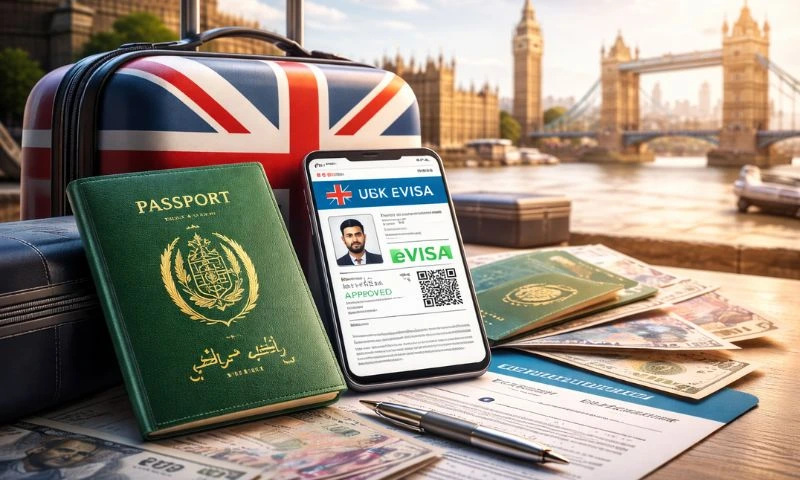
Pakistanis Can Now Travel to UK Using Digital eVisas
Pakistani nationals planning trips to the United Kingdom can now benefit from a fully digital visa system, replacing the traditional paper-based sticker process with eVisas. The British High Commission in Islamabad announced the move on 25 February 2026, marking a significant upgrade in how Pakistanis apply for and receive UK visas for tourism, business and family visits. New Digital Visa for General Visitors Under the updated system, visitors from Pakistan including tourists, business travellers and those visiting family will continue to apply online and attend a visa application centre to provide biometric data. However, after approval, successful applicants will no longer need to return to collect their passports with visa stickers. Instead, they will receive a secure electronic visa (eVisa) via email that creates a digital record of their immigration status. This eVisa can then be accessed through an online UK Visas and Immigration (UKVI) account. Applicants can also generate a share code to prove their visa status at UK entry points, with authorities emphasising that this digital shift does not change visa processing times or eligibility criteria. Read More: China Opens Visa-Free Entry to Canadians and British Visitors Convenience and Security Upgrades One of the biggest advantages of the eVisa system is passport retention following biometric submission. Under the old model, applicants had to surrender their passports to receive visa stickers, which often led to delays and inconveniences. With eVisas, applicants keep their passports after biometrics and can travel without the risk of lost or damaged documentation. British High Commissioner Jane Marriott described the change as important for travellers from Pakistan, saying: “This is a hugely exciting step for Pakistanis visiting the UK for tourism, visiting loved ones, or business meetings, that removes a big step from the application process.” Marriott also highlighted how easier access to visa status via an online account helps eliminate uncertainty during travel and planning, particularly for first-time visitors and frequent travellers alike. Broader Rollout and Background The extension of eVisas to general visitors builds on an earlier rollout that introduced electronic visas for Pakistani students and workers since July 2025. Under that earlier phase, most main applicants for study or work visas no longer required physical visa stickers, streamlining immigration procedures and improving user experience. Digital immigration records are now being used for millions of applicants around the world and the UK government says the transition to an eVisa is part of a global move toward secure, digital travel documentation. This modernisation aims to reduce administrative burdens and enhance the security of traveller identity confirmation. Read More: Top Europe Destinations Pakistanis Can Visit Without a Schengen Visa in 2026 What This Means for Pakistani Travellers For Pakistanis, the shift to eVisas means a simpler, faster and more secure visa experience. Travellers will no longer face the inconvenience of visa stickers and can avoid the additional step of passport submission after their biometrics appointment. Access to immigration status online helps reduce the risk of lost passports and speeds up trip planning. While requirements for biometric submissions and online applications remain unchanged, the overall process has become more user-friendly. According to immigration experts, digital visa systems like the UK’s eVisa also help reduce errors and improve transparency during travel. Final Note Existing physical visas remain valid until their expiry and travellers are not required to replace them immediately. The UK government strongly encourages applicants to use the official gov.uk portal for visa applications and avoid third-party agents to ensure secure and authentic processing.

History Made: Pakistan Women Post Highest ODI Score Ever
Pakistan’s women’s national cricket team etched a historic chapter in their cricketing journey by posting their highest-ever One Day International (ODI) total on 25 February 2026, despite narrowly falling short in a high-scarce match against South Africa Women at SuperSport Park. This performance underlines Pakistan’s evolving batting strength on the international stage. Record-Breaking Batting Effort In the second ODI of the three-match series, Pakistan Women were chasing a daunting target of 362 runs set by a dominant South African batting display. Pakistan responded in style, finishing at 345 all-out, surpassing their previous best of 335-3 scored against Ireland Women in 2022 in Lahore. The innings featured several well-compiled half-centuries, including a fluent 75 from Ayesha Zafar off 68 balls and 61 from Sadaf Shamas. Their partnership proved crucial in Pakistan’s chase, keeping them in contention throughout much of the game. Captain Fatima Sana continued her fine form, adding 52 runs off 36 balls and steering the team through the middle overs with intent. Pakistan’s lower order also contributed meaningfully, with Syeda Aroob Shah and Diana Baig providing valuable late runs. However, the Proteas’ bowlers, particularly Annerie Dercksen, struck at key moments to stem the Pakistani momentum and secure victory for the hosts. South Africa sealed the series 2-0 with this win. Chasing Big Totals: A Brave Effort Pakistan’s 345 is now the highest team total in their Women’s ODI history, eclipsing the previous mark by 10 runs. This performance has become a benchmark for the side and reflects the team’s commitment to improve their batting depth and resilience against strong oppositions. The match also showcased how women’s cricket has grown globally. South Africa posted a formidable 361/8, representing one of the larger totals seen in women’s ODIs. The high-scoring game thrilled fans and emphasised how batting standards in women’s cricket have elevated over the past decade. Broader Impact and Future Prospects This historic total arrives at a time when Pakistan Women are striving to build consistency in all formats. The team’s performance in this series and other recent competitions will play a vital role in future ICC tournaments and qualification scenarios. Pakistan’s batting has shown promise, and such strong totals can influence rankings and confidence across formats. While Pakistan Women did not win the match, the innings will be remembered as a defining moment that highlights their batting potential. It also adds momentum to efforts aimed at strengthening women’s cricket domestically and internationally. What Comes Next The third and final ODI of the series is scheduled at Kingsmead Cricket Stadium in Durban on 1 March 2026. Pakistan will seek to conclude the tour on a high and further build on this historic batting effort.

Richard Pybus Appointed Afghanistan Head Coach After T20 World Cup Exit
Afghanistan’s national cricket team has entered a new chapter of leadership with the appointment of Richard Pybus as its new head coach, following an early exit from the ICC Men’s T20 World Cup 2026. The Afghanistan Cricket Board (ACB) confirmed the high-profile hiring on 24 February 2026, positioning Pybus to prepare the team for an important white-ball series against Sri Lanka in March. A Bold Move After World Cup Disappointment Afghanistan struggled in the T20 World Cup 2026, winning just two of four group matches and failing to reach the Super 8 stage. That performance led to the departure of former coach Jonathan Trott, who guided the team since July 2022 but saw the side fall short of expectations. Trott oversaw notable achievements, including their first T20 World Cup semi-final appearance in 2024, yet left open the door to new leadership after the recent campaign. The ACB’s decision to bring in Pybus signals a fresh strategy. According to the board, Pybus will work closely with players and support staff, and his appointment comes at a time when Afghanistan seeks long-term stability and competitive success. The ACB emphasized that Pybus’s role begins immediately ahead of the three-match T20I and three-match ODI series against Sri Lanka, due to start in Sharjah and Dubai in mid-March. Read More: New Zealand Pull Off Record Chase in T20 World Cup to Beat Afghanistan, Super 8 Hopes Fade for Afghanistan Pybus’s Distinguished Cricketing Career Richard Pybus, 61, brings extensive international coaching experience. He began his career in coaching after a brief playing stint and quickly made a name for himself in global cricket circles. Pybus served as head coach of Pakistan’s national team and guided them to the 1999 Cricket World Cup final. He later took on key roles with West Indies cricket as head coach, director of cricket, and head of high performance from 2013 to 2019. Under his leadership, West Indies achieved a historic treble in 2016 when the men’s, women’s, and Under-19 teams all secured ICC World Cup titles in the same year. His resume also includes coaching stints with Bangladesh and various domestic teams in South Africa. Pybus has worked with internationally acclaimed players such as Faf du Plessis, Dale Steyn, and Mohammad Rizwan, emphasizing performance development and high-performance culture. The ACB praised his track record as both strategic and player-centred. Embracing the Challenge in Afghanistan Unlike some foreign coaches who have been based outside Afghanistan due to security concerns, Pybus has stated his commitment to living and working within the country. He told reporters, “I’ve lived in lots of different parts of the world and so I am fine with it.” Pybus expressed enthusiasm about engaging directly with domestic talent and working closely with selectors to build a programme centred on sustained development. Cricket in Afghanistan has not been played on home soil for several years due to ongoing political instability, with most “home” fixtures held in the United Arab Emirates. The ACB’s intent to base the coaching staff within Afghanistan reflects a desire to enhance grassroots programmes and strengthen internal structures. Read More: T20 World Cup 2026 Delivers Epic as South Africa Survive Afghanistan Scare What Lies Ahead for Afghan Cricket Pybus’s first major task will be to steer Afghanistan through its upcoming white-ball assignments against Sri Lanka, a series that promises to set the tone for the team’s new era. Analysts see his experience and global insight as crucial to reshaping Afghanistan’s approach to both training and international competition. As the Afghan national team continues its pursuit of consistency and higher rankings, Pybus’s leadership will be under close watch.

Toyota Set to Unwind $19 Billion in Shares in Historic Move
Toyota Motor Corporation is preparing what could be one of the largest strategic share movements in its history. According to sources familiar with the matter, the world’s largest automaker is planning a sale of around $19 billion (approximately ¥3 trillion) worth of its shares currently held by financial institutions such as banks and insurance companies. This move forms part of a broader effort to unwind cross-shareholdings and improve corporate governance amid increasing investor pressure. What Exactly Is the Plan? The major portion of Toyota’s stock sale would come from strategic shareholdings held by financial firms, including major names like Sumitomo Mitsui Financial Group, Mitsubishi UFJ Financial Group, and MS&AD Insurance Group. These institutions historically held Toyota shares to maintain business ties and mutual trust among companies, a practice common in Japanese corporate culture for decades. Under the proposed plan, these financial institutions would sell around $19 billion of shares, significantly increasing Toyota’s free float on public markets. Toyota is also considering share buybacks to absorb some of the stock and may explore secondary sales to other investors if necessary. The final scale and timing of the sale remain uncertain and could change depending on how willing shareholders are to participate. Read More: Toyota Smashes Global Sales Record, Tops Auto Industry Again in 2025 A Landmark Moment for Japan’s Governance Reforms The proposed share sale is not just a financial transaction. It represents a watershed moment in Japan’s ongoing corporate governance reform efforts. For decades, Japanese firms have used cross-shareholdings to reinforce business relationships. Although this setup provided stability, it also drew widespread criticism from overseas investors and governance advocates for insulating management from shareholder oversight and reducing capital market efficiency. Regulators and the Tokyo Stock Exchange have been encouraging companies to reduce these strategic linkages. Toyota’s move signals a shift toward modern corporate governance practices that prioritize shareholder returns and transparency. Analysts believe that increasing free float and cutting cross-shareholdings could help improve Toyota’s capital allocation efficiency and make its stock more attractive to global investors. Market Reaction and Investor Sentiment Following the news, Toyota’s shares extended gains in trading, suggesting that investors view the potential move positively. A larger free float could lead to better liquidity and valuation support for Toyota shares. Investors have also been pushing the company to enhance its return of capital to shareholders, including through dividends and buybacks. Context and Broader Dynamics The share sale comes as Toyota faces other governance challenges. The company is currently in the midst of a tender offer for Toyota Industries, a deal that has faced scrutiny and resistance from activist investors like Elliott Management. The activist firm has criticized the proposed price and transparency of the offer, and Toyota has had to extend the tender deadline due to insufficient shareholder support. Toyota’s push to unwind cross-shareholdings aligns with similar moves among other Japanese corporations and financial institutions that in recent years have adopted policies to reduce their strategic stock holdings. Such reforms aim to unlock shareholder value, improve decision-making accountability, and align Japanese corporate practices more closely with global standards. Read More: Why Toyota and Lexus Lead the Race for the World’s Longest-Lasting Cars What This Means for Investors If executed, the $19 billion share sale could enhance Toyota’s profile among global investors and strengthen its stock’s market performance. By promoting transparency and reducing reliance on cross-shareholdings, Toyota would set a precedent for other Japanese industrial giants. The initiative could also reshape investor expectations about capital efficiency and corporate governance in Japan’s corporate landscape.

Samsung Galaxy S26 Series Officially Launched in Pakistan: Prices, Specs and Features
Samsung has officially launched its latest flagship smartphone lineup, the Galaxy S26 series, in Pakistan, bringing cutting-edge performance and new features to the local market. The series was unveiled globally at Samsung’s Galaxy Unpacked 2026 event, following which pre-orders opened in Pakistan ahead of the retail release. The S26 series includes three models: the Galaxy S26, Galaxy S26+ and Galaxy S26 Ultra. Each device offers a blend of performance, camera capabilities and intelligent features designed to compete with the top smartphones in 2026. Samsung’s Galaxy S-series tradition continues with iterative upgrades and deeper integration of artificial intelligence (AI). Pakistan Pricing and Storage Options Samsung’s official Pakistan prices for the Galaxy S26 series have been confirmed as follows: Galaxy S26 256GB (12GB RAM): Rs299,999 Galaxy S26 512GB (12GB RAM): Rs356,999 Galaxy S26+ 256GB (12GB RAM): Rs364,999 Galaxy S26+ 512GB (12GB RAM): Rs409,999 Galaxy S26 Ultra 256GB / 12GB: Rs424,999 Galaxy S26 Ultra 512GB / 12GB: Rs489,999 Galaxy S26 Ultra 1TB / 16GB: Rs579,999 These prices place the S26 series at a premium tier, reflecting its flagship status in the Android smartphone market. PTA Taxes and Price Breakdown In Pakistan, flagship smartphones carry additional PTA taxes depending on registration method. The Galaxy S26 series is no exception. The PTA tax for Galaxy S26 models varies depending on whether registration is completed through passport or CNIC. For high end variants such as the Galaxy S26 Ultra, the PTA tax significantly increases the total ownership cost. For example, the Ultra variant attracts a PTA tax exceeding Rs130,000 when registered via CNIC. Passport registration carries slightly lower charges. Buyers are advised to factor in these additional costs when calculating the final price. This means the effective cost of the Galaxy S26 Ultra 512GB variant can cross Rs600,000 after tax, placing it firmly in the ultra premium segment of the Pakistani smartphone market. Battery Capacities Confirmed Samsung has also confirmed battery capacities across the S26 lineup. Galaxy S26 comes with a 4,200mAh battery Galaxy S26 Plus features a 4,800mAh battery Galaxy S26 Ultra packs a 5,500mAh battery The Ultra variant offers the largest battery in the series, aimed at heavy users who rely on high refresh rate displays, AI features and camera intensive tasks. All models support fast charging and wireless charging, along with optimized battery management powered by Galaxy AI. Performance and Key Features The Galaxy S26 and S26 Plus are powered by Samsung’s Exynos 2600 chipset in several regions including Pakistan. The S26 Ultra features a customized Snapdragon 8 Elite Gen 5 for Galaxy processor, designed for enhanced performance and AI processing. The Ultra model includes a 200MP primary camera sensor, improved zoom capabilities and advanced AI photography tools. Samsung continues to push AI integration with features such as intelligent photo editing, real time translation and smart battery optimization. The phones feature Dynamic AMOLED displays with high refresh rates, enhanced brightness and improved durability. Samsung’s One UI is layered on top of Android, offering a refined user experience and long term software support. Market Position in Pakistan With prices starting at Rs299,999 and climbing beyond Rs579,999 before PTA taxes, the Galaxy S26 series targets premium buyers in Pakistan. The devices compete directly with Apple’s latest iPhone models and other flagship Android smartphones. While pricing is high, Samsung’s brand strength, camera performance and ecosystem integration continue to attract loyal customers in the local market.

Pakistan’s Semi-Final Hopes Tumble After New Zealand Beat Sri Lanka
Sri Lanka New Zealand recorded a commanding 61-run victory over co-hosts Sri Lanka in the Super Eights Group 2 stage of the ICC Men’s T20 World Cup 2026 at the R. Premadasa International Stadium. The win not only breathed life into New Zealand’s semi-final hopes but also reshaped the Super Eights points table, influencing the qualification scenario for remaining teams. Match Summary: NZ vs SL Sent in to bat after winning the toss, New Zealand posted a competitive total of 168/7 in their allotted 20 overs. All-rounder Mitchell Santner’s unbeaten 47 off 26 and useful contributions from Cole McConchie helped the Kiwis set a challenging target. In response, Sri Lanka were restricted to 107/8 as they failed to build significant partnerships, leading to their elimination from the tournament. Sri Lanka’s struggle stemmed from early wicket losses and a disciplined New Zealand bowling attack that constantly applied pressure on the hosts. Sri Lankan batters couldn’t find momentum and fell well short of the target, sealing their fate in the Super Eights. Updated Group 2 Points Table After the match, the Super Eights Group 2 standings reflect New Zealand’s strong position in the race for semi-final qualification: England: 2 wins, 0 losses, 4 points New Zealand: 1 win, 0 losses, 1 no-result, 3 points Pakistan: 0 wins, 1 loss, 1 no-result, 1 point Sri Lanka: 0 wins, 2 losses, 0 points England have already sealed their semi-final spot, while New Zealand sit second with three points. Sri Lanka’s defeat confirms their elimination, leaving Pakistan and New Zealand battling for the final knockout berth. Impact on Pakistan’s Semi-Final Hopes New Zealand’s victory significantly tightens Pakistan’s semi-final prospects. Pakistan currently have just one point from a rain-affected match against New Zealand and a loss to England. While Pakistan’s net run-rate sits in negative territory, their final Super Eights match — against Sri Lanka on 28 February — becomes crucial. The Men in Green must record a convincing win and hope New Zealand lose or falter against England. Otherwise, Pakistan could miss out on the semifinals. Cricket analysts highlight that Pakistan’s qualification scenario hinges on a series of results and net run-rate calculations. A narrow or modest victory will not be enough; the team needs a dominant performance over Sri Lanka while also relying on New Zealand dropping points. What This Means for the Tournament The Super Eights stage of the T20 World Cup continues to intensify as teams jockey for position in the semi-final race. New Zealand’s comprehensive win sends a strong message about their intent, while Pakistan faces pressure to deliver in must-win conditions. Sri Lanka’s campaign ends in disappointment on home soil, prompting questions about future team strategy and consistency. With just a few matches left before the knockout stages, every run and every over will count as teams aim to secure one of the most coveted spots in the ICC Men’s T20 World Cup semifinals.
