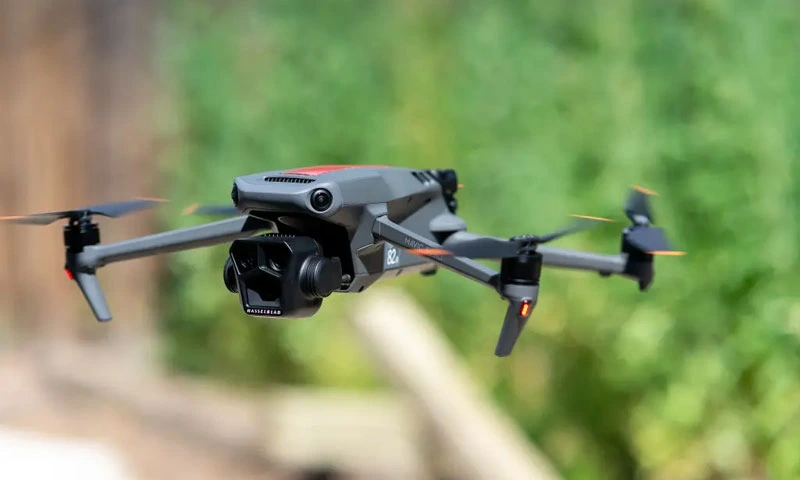
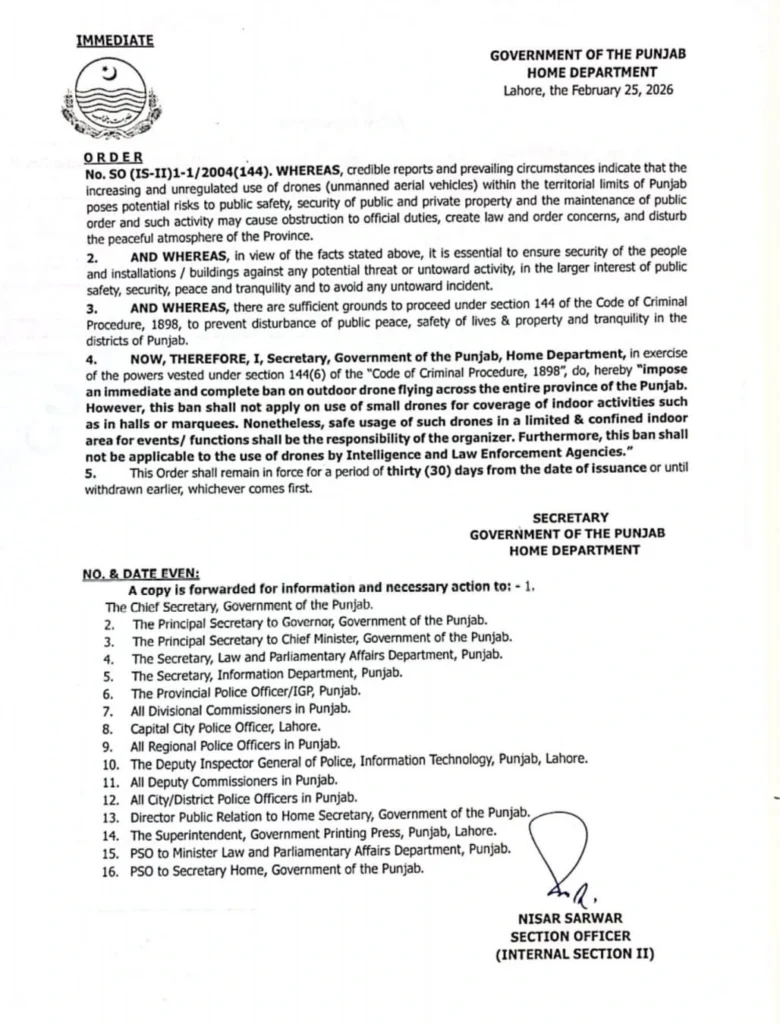
The Punjab government has imposed an immediate and complete ban on flying drones outdoors across the entire province for 30 days, citing serious risks to public safety, security and maintenance of law and order. The notification was issued by the Punjab Home Department on February 25 and took effect the same day under Section 144 (6) of the Code of Criminal Procedure, 1898.
The order states that “credible reports and prevailing circumstances indicate that the increasing and unregulated use of drones (unmanned aerial vehicles) within the territorial limits of Punjab poses potential risks to public safety, the security of public and private property and the maintenance of public order”. Provincial authorities believe that outdoor drone operations could obstruct official duties, disturb the peace and endanger citizens if left unregulated.
Scope and Exceptions to the Ban
The ban covers all outdoor drone flying activities throughout Punjab for a period of 30 days from the issuance of the notification or until the ban is withdrawn earlier. However, there are notable exemptions:
-
Small drones used for indoor events, such as weddings, corporate functions or other gatherings in halls and marquees, are permitted provided the event organisers ensure safe operation.
-
Intelligence and law enforcement agencies are exempt from the ban and can deploy drones for official duties, including security and surveillance work when necessary.
The notification emphasises that the responsibility for safe indoor drone use rests with event organisers, who must ensure compliance and take precautionary measures during indoor functions.
Reason Behind the Move
Punjab authorities have pointed to a sharp rise in unregulated drone activity in recent months, which they fear could be misused for unlawful purposes. Drones are increasingly accessible and affordable, making regulation difficult without clear legal frameworks. Experts say that in many regions, drones are used for hobby flying, photography and recreational use, but provinces must balance innovation with public safety.
The government’s decision aligns with its broader strategy to pre-empt any security threat to public gatherings, critical infrastructure and crowded urban spaces. Last year, Punjab experienced major floods, where drones played a positive role in search and rescue operations to evacuate thousands of people in flood-affected areas.
However, authorities emphasise that unauthorised aerial activity could interfere with emergency operations, civil aviation rules and law enforcement tasks. Safety concerns have also been linked to potential accidents, privacy invasion and disruption of official duties.
Enforcement and Future Prospects
The Home Department has instructed law enforcement to strictly enforce the ban throughout the province. Violators of the prohibition may face legal action and penalties, although the notification does not specify fines or punishments.
Drone technology continues to evolve, and many countries are updating their regulations to control aerial vehicles. Analysts point out that as the technology becomes more widespread, governments must strike a balance between innovation, public safety and security.
Punjab’s 30-day outdoor drone flying ban is a clear example of proactive governance in response to evolving security challenges.