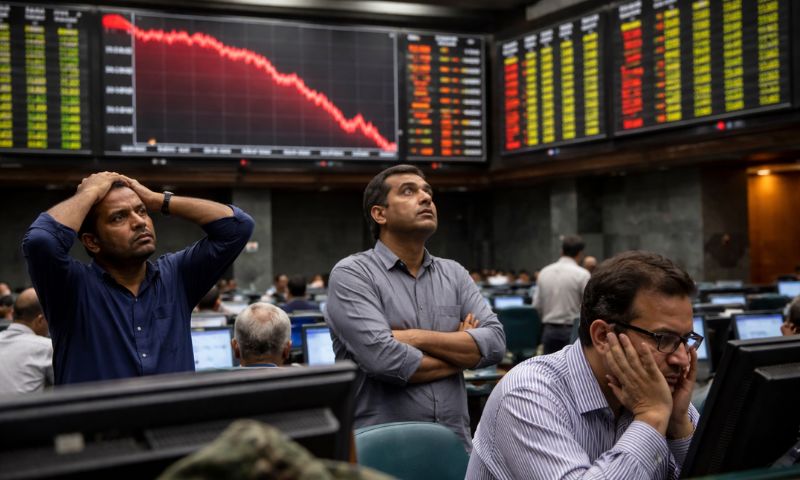
The Pakistan Stock Exchange (PSX) witnessed one of the most dramatic sell-offs in its history on Monday as the benchmark KSE-100 Index plunged more than 15,000 points shortly after the market opened. Trading commenced normally in Karachi, but panic selling quickly swept across sectors within minutes, sending shockwaves through the investor community.
Sharp Drop Triggers Trading Suspension
Shortly after the opening bell, the KSE-100 index fell by over 15,000 points, representing a decline of nearly 9 percent compared to its previous close of 168,062.16 points. This steep fall triggered an automatic trading suspension under PSX market rules, designed to halt activity when extreme volatility occurs and to prevent further panic-driven losses.
When trading eventually resumed around 10:30 am, the index was still down by 12,334.88 points from the previous close, marking a 7.34 percent drop, before marginal recovery efforts brought it back within more moderate losses later in the morning session.
Read More: PSX Sees Intense Volatility as KSE-100 Declines Over 1,600 Points
All Sectors Hit Hard
Investors saw heavy declines across multiple sectors, with fewer than five companies remaining in positive territory during the early session. The vast majority of stocks registered sharp losses as shareholders rushed to exit positions amid the sudden downturn.
Data from trading summaries shows other market indexes and indices also suffered, with the KSE-100 dropping to around 152,991 points during the most intense phase of the sell-off.
Geopolitical Tensions and Oil Prices
Analysts and market observers have largely attributed the extreme turbulence in the Pakistan market to escalating geopolitical tensions in the Middle East. Reports indicate that rising conflict in the region has riled global markets and sparked risk aversion among investors.
At the same time, Brent crude oil prices surged sharply, rising by approximately 10 percent to around $80 per barrel amid concerns that widening conflict could disrupt supply. Such spikes in commodity prices often elevate uncertainty in emerging markets like Pakistan.
Read More: Oil Prices Surge 10% as Iran Conflict Threatens Key Supply Routes, Analysts Warn $100 Oil Possible
Local Market Context
Just weeks ago, the KSE-100 had shown more stabilized conditions, with occasional rallies and declines typical of stock market cycles. For example, in mid-February, after days of selling pressure, the index managed to result in positive gains due to renewed buying interest.
Despite these intermittent positives, the broader trend over the previous month was downward even before Monday’s crash, with the KSE-100 shedding nearly 10.8 percent month-to-date, according to historical data.
What This Means for Investors
The sudden crash and trading halt have left many investors concerned about near-term market stability. Trading suspensions are used globally in such situations but also reflect the severity of selling pressure and investor sentiment during periods of high uncertainty.
Financial analysts caution that external shocks such as geo-political conflict and oil price volatility can sharply affect risk appetite among both domestic and international investors. How the market will respond in the next sessions remains closely watched by traders