


Airline ticket prices between Asia and Europe have soared sharply as key Gulf airports remain closed because of the widening US-Israel conflict with Iran. The closures have severely reduced flight capacity on major international routes, pushing fares to unprecedented levels and leaving many passengers scrambling for alternatives. Major hubs including Dubai International Airport, Doha’s Hamad International, and Abu Dhabi Airport have remained shut for several days, slashing the usual flow of flights connecting Asia and Europe via the Gulf. These airports typically handle thousands of flights every week, making them crucial transit points for global travel. As a result, traditional routes are virtually inaccessible. Flights are being rerouted north via the Caucasus, through Africa, or across North America, increasing distance, fuel usage, and overall travel costs. Industry analysts say this has led to a dramatic spike in ticket prices and disruptions across multiple continents. Fares Jump Drastically on Key Routes Surveys of airline websites show flight costs on popular Asia-Europe routes rising sharply: A one-way ticket from Hong Kong to London has been listed at over HK$21,000 (about US$2,705), far above normal levels. (turn0search9) Sydney to London economy seats are unavailable until mid-March, with limited bookings appearing at approximately A$3,129 (US$2,220) one-way. Analysts say this surge reflects both scarcity of seats and longer travel routes, as alternative corridors can add hours to flight times and increase fuel consumption. The price of jet fuel has also climbed amid the conflict, adding to airlines’ operational costs. Travelers Forced to Seek Alternatives Travel agents report heavy demand for flights that avoid the closed Gulf airspace. Australia’s Flight Centre Travel Group said inquiries have jumped by 75 per cent, with agents helping customers find routes via China, Singapore or North America to reach Europe. “Australians are … rebooking flights to the U.K./Europe via alternative routes via China, Singapore, and other Asian hubs,” its global managing director said. Passengers are also exploring different transit points in Europe or Africa to bypass disrupted corridors. But experts warn these workarounds significantly increase travel time and costs, which may deter some travelers or lead to longer layovers. Longer Delays and Wider Disruption The Gulf closures are part of broader airspace disruptions triggered by ongoing conflict. Major Middle Eastern and nearby countries including Iran, Qatar, Iraq, and the UAE have closed or restricted airspace. This has forced thousands of flights to be rerouted, delayed or cancelled, contributing to travel chaos across Asia, Europe, Africa, and North America. In some markets, economy fares have doubled or more as airlines adjust capacity and travelers look for limited seats outside the conflict zones. In India, for example, airfares from Hyderabad to London and Frankfurt have surged dramatically, reflecting the broader global pressure on flight costs. Winners and Losers in the Aviation Sector While some airlines struggle with the disruption, others may benefit temporarily. Carriers that already operate alternative direct routes between Asia and Europe such as Cathay Pacific, Singapore Airlines, Turkish Airlines, and EVA Airways are experiencing high demand and may book short-term gains. However, longer routes and higher fuel costs could erode profits over time. Some budget airlines like Ryanair have reported increased bookings for European travel as passengers avoid connections through the Middle East. Still, broader industry indicators such as stock prices and travel shares are under pressure due to ongoing cancellations and uncertainty.
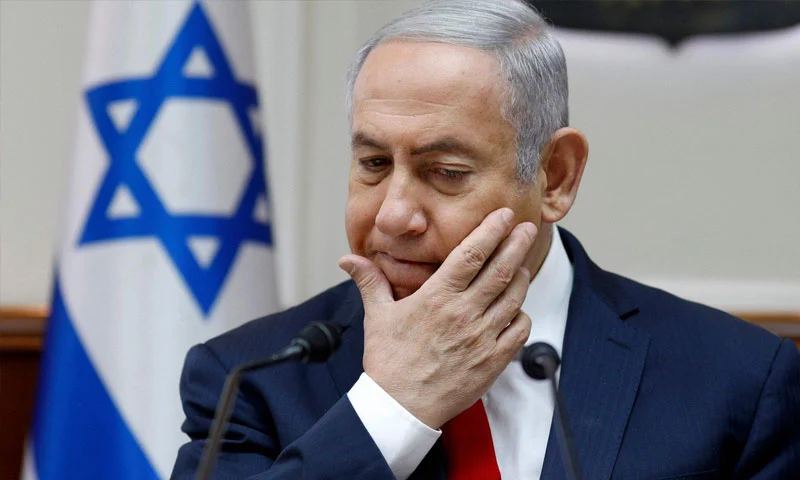
Iran Escalation Puts Israel’s PM Netanyahu’s Re-Election Hopes at Risk
Israeli Prime Minister Benjamin Netanyahu now faces a high-stakes gamble as his political future is increasingly linked to the ongoing war with Iran. Experts say how the conflict evolves could determine his chances in the next election and reshape his leadership legacy. With elections due by October 27, 2026, many political analysts believe Netanyahu will likely call early elections rather than wait, using the war to bolster his security credentials. Emmanuel Navon of Tel Aviv University notes that the conflict gives Netanyahu “a chance to restore an image deeply scarred by the October 7, 2023 Gaza attack.” War Could Become a Campaign Asset or Liability Netanyahu, who has already framed the conflict as part of Israel’s broader security strategy, told reporters that close ties with Washington enabled a decisive joint operation. “We have long aspired to striking the terrorist regime decisively,” he said. Analysts say this messaging may help him with voters, but much depends on how long and costly the war becomes. Independent analyst Michael Horowitz said the offensive reinforces the strong image Netanyahu wants to project. “This offensive undeniably reinforces the image Netanyahu seeks to cultivate,” he commented. But Horowitz also warned that public tolerance for a prolonged war with heavy casualties remains low. Netanyahu’s Record and Current Challenges Netanyahu, 76, is Israel’s longest-serving prime minister, with more than 18 years in office. His leadership has faced criticism since the failings that preceded the October 7, 2023 which damaged his popularity. The current conflict with Iran offers a chance to shift the narrative, but also carries potential political peril. The war, launched jointly by the United States and Israel, began with airstrikes on Iranian targets following warnings about nuclear and missile threats. Netanyahu has described the campaign as potentially quick and decisive, rejecting suggestions the war will drag on for years. “It may take some time, but it’s not going to take years,” he said in a recent interview. Analysts see a dual risk and opportunity in his stance. A swift, perceived success could strengthen Netanyahu’s position and help him form the next government. But a prolonged conflict with high casualties and economic strain could damage his electoral prospects. Domestic and International Context Despite Netanyahu’s hardline approach, Israel’s military gains are credited more to the Israeli army and civilian resilience than to political leadership. Some analysts caution that while military action may bolster support for armed forces, it may not automatically translate into broader political backing for Netanyahu himself. Internationally, the conflict has drawn broad condemnation from many nations, including China, South Africa, Brazil, Turkey, and Pakistan, which accused the U.S.–Israeli offensive of violating international law and bypassing diplomatic avenues. Critics argue the war undermines global stability and trust in established norms. Election Calculus and Possible Early Polls Political commentators suggest Netanyahu may use the war’s early momentum to delay domestic political crises and secure a more favourable position in upcoming elections. Walla journalist Ouriel Deskal noted that timing the conflict might help avert a government collapse if Netanyahu fails to pass a budget by April 1, forcing new elections from a position of relative strength. Still, some see the war’s outcome shaping Netanyahu’s future more than his pre-war strategy. Horowitz warned it may turn either into a political victory if successful, or weaken Netanyahu if public support erodes under prolonged conflict and costs.

FIFA World Cup 2026 at Risk Amid Escalating US–Iran Conflict
The escalating conflict between the United States, Israel, and Iran has begun to disrupt international sports events by creating major travel uncertainty for teams and athletes. Officials and analysts worry about safe passage into and out of key competitions, including the 2026 FIFA World Cup and Winter Paralympics. The conflict has led to airspace closures and canceled flights across the Middle East, leaving athletes and international teams unsure about travel routes and event schedules. The World Cup, set to begin in June, is now being overshadowed by geopolitical tensions that could affect team participation and logistics. World Cup Participation in Doubt Iran’s involvement in the 2026 FIFA World Cup is currently in question. The nation qualified for the tournament in North America but Iran’s president of football federation, Mehdi Taj, said uncertainty surrounds the team’s ability to play after recent strikes and escalation in conflict. “What is certain is that after this attack, we cannot be expected to look forward to the World Cup with hope,” he told local media. The Iranian national team was scheduled to play group matches in California and Washington state, but growing geopolitical tensions and safety concerns have cast doubt on their participation. FIFA has so far made no official decision on Iran’s status in the tournament and has stressed it will continue monitoring the situation. Winter Paralympics and Other Sporting Events Affected Travel complications are also spilling into other international competitions. The International Paralympic Committee (IPC) said travel uncertainty could affect participants heading to the Milano Cortina 2026 Winter Paralympic Games in Italy. Many teams are already in Europe for training, which helps alleviate travel pressure, but concerns remain for others en route. Beyond FIFA and the Paralympics, events such as flag football in Saudi Arabia featuring Tom Brady and other international exhibitions could face location changes or postponements amid safety concerns. Air Travel Chaos Disrupts Sports Logistics The conflict has closed airspace in much of the Middle East, including in countries such as Iran, UAE, Qatar, Kuwait, Bahrain, and Iraq, forcing flight cancellations or reroutes that affect athletes and support staff traveling worldwide. Tennis players based in Dubai, for instance, faced delays and travel delays when trying to reach tournaments in the United States, as flights to Indian Wells were rerouted or rescheduled. The disruptions ripple through several major aviation hubs globally, complicating travel plans for teams bound for tournaments across Europe, Asia, and North America. Broader Impact on Global Sports Industry Sports leagues and associations are monitoring the situation closely. Organizers are weighing contingency plans to accommodate shifts in travel and player movements. Many major sports events have no precedent for dealing with a geopolitical conflict on this scale so close to their start dates. In basketball, football, and motorsports, key international fixtures may be rescheduled, relocated, or converted to neutral venues depending on how the conflict evolves and how air travel corridors reopen. Fan and Host City Implications If Iran were to withdraw from the World Cup, it could trigger adjustments to tournament logistics. FIFA’s rules permit replacement of a team in such cases, and associations like Iraq or the United Arab Emirates have been mentioned as possible alternates. Host cities such as Seattle and Inglewood are bracing for the potential absence of Iran’s supporters, which could affect crowd dynamics and local preparations.

Aleem Dar Resigns from Pakistan Cricket Selection Committee After T20 World Cup Exit
In a major shake-up within Pakistan cricket administration, Aleem Dar, former elite international umpire and member of the Pakistan Cricket Board’s (PCB) national selection committee, has resigned from his post following Pakistan’s early exit from the ICC Men’s T20 World Cup 2026. His departure marks the first significant change in the selection panel after a tournament filled with criticism and controversy. Resignation Confirmed by PCB Sources Aleem Dar, widely respected for his distinguished 20-year career on the cricket field as an umpire, officially submitted his resignation to PCB officials on March 2, 2026, soon after Pakistan’s disappointing campaign concluded without reaching the semi-final stage of the World Cup. Sources tell media that Dar decided to step down due to the team’s lacklustre results and amid rising scrutiny of selection decisions by the committee. The News Pakistan reported that Dar’s resignation came as the first major change in the selection setup, reflecting pressure on the team’s management to improve performance and accountability. While no formal statement has yet been issued by the PCB regarding his replacement, insiders expect broader discussions within the board about selection policies and future strategies. Read More: Pakistan Beat Sri Lanka But Fall Short of Semifinals in T20 World Cup Background of Dar’s Role and Experience Aleem Dar, 56, is best known internationally for his umpiring achievements. He debuted in ODIs in 2000 and went on to become the first Pakistani on the ICC Elite Panel of Umpires, officiating in hundreds of Tests, ODIs and T20 Internationals. After retiring from elite umpiring in 2023, Dar was appointed to the PCB’s selection committee on October 11, 2024, bringing his vast on-field cricket experience to the panel. In the current selection committee setup, Dar worked alongside former Pakistan fast bowler Aaqib Javed, ex-test batter Asad Shafiq and a data analyst who offered statistical insights for squad formation. The panel’s responsibility was to identify top talent and assemble competitive teams for all formats. World Cup Struggles and Selection Criticism Pakistan’s T20 World Cup campaign was marked by inconsistency, poor tactical choices and an overall failure to adapt to match conditions. Despite high expectations after a strong lead-up, including a pre-World Cup series win against Australia, Pakistan’s performance disappointed fans and pundits alike. Critics pointed to questionable squad balancing, tactical inflexibility and slow batting rates as key issues. In many fan discussions on social media and cricket forums, Dar’s resignation was seen as symbolic of deeper frustrations with how the national team has been managed. Some cricket commentators even labelled the situation as reflective of an “ego-driven management” culture, where selection consistency and team direction need clearer leadership and accountability. Read More: T20 World Cup Disaster: Rare Moment in Pakistan Cricket History as PCB Fines Squad What This Means for Pakistan Cricket Dar’s resignation leaves a gap in the selection committee at a critical juncture for Pakistan cricket. With upcoming bilateral series and global tournaments on the horizon, the PCB now faces the challenge of appointing a successor capable of guiding squad selection during a rebuilding phase. Cricket analysts say that the move represents an opportunity for the board to reassess and possibly restructure selection operations to improve performance. As Pakistan looks to rebound from a disappointing T20 campaign, the emphasis will likely be on stronger synergy between coaches, selectors and players to deliver future success.

PSL 2026: Sialkot Stallionz Officially Renamed Multan Sultans
In a dramatic development ahead of the 2026 Pakistan Super League (PSL) season, the newly established Sialkot Stallionz franchise has been officially rebranded as the Multan Sultans, restoring one of the league’s most popular cricket identities. The move comes after a major ownership shift and strategic career planning by the franchise’s new management. CD Ventures Takes Majority Control The rebranding was confirmed at a joint press event in Lahore attended by PSL CEO Salman Naseer, franchise owner Hamza Majeed and Gohar Shah, the head of CD Ventures, which acquired a majority stake in the franchise originally bought by OZ Developers earlier this year. The PSL chief executive confirmed that the team’s annual valuation has now risen to Rs2 billion following the new investment and name change. “Gohar Shah requested to change the franchise name after becoming CEO, and that request has been accepted,” Salman Naseer said, announcing that the team will now compete as the Multan Sultans in the upcoming PSL season. Read More: Team Sialkot Ownership Shake-up: New Strategic Partner Set to Buy 90% Stake in PSL Franchise Strategic Vision and Franchise Identity Hamza Majeed described the alliance with CD Ventures as a strategic partnership sanctioned by both the Pakistan Cricket Board (PCB) and PSL officials. “With PCB and PSL approval, this strategic partnership has been finalised,” he said, adding that Shah’s energy would help strengthen the team’s prospects ahead of the new campaign. We’re in!https://t.co/NMeR3Orcgt pic.twitter.com/XJguwRtCTf— Multan Sultans (@MultanSultans) March 3, 2026 Gohar Shah, now the franchise’s CEO, emphasised the significance of reviving the Multan identity. “A stallion alone cannot win the PSL. To move forward, a stallion needs a sultan, and we have come as Sultans,” he said, outlining his vision for “Total Cricket,” a philosophy aimed at aligning franchise success with the broader needs of Pakistan cricket. Read More: PSL’s Biggest Bid Changes the Game as Multan Sultans Rebranded Rawalpindi Embracing Fans and Legacy Despite the name change, the franchise management has assured supporters of the former Sialkot Stallionz—who were set to make their PSL debut before the rebranding—that elements of the Stallionz identity will remain part of the team’s campaign. Majeed also confirmed that transport arrangements will be made for Sialkot fans to attend Multan Sultans matches during the season, reflecting a commitment to honour the loyalty shown by supporters of the original brand. The re-emergence of the Multan Sultans marks a return of one of the PSL’s most recognisable brands. The team, which has historically had a passionate fan base in South Punjab, will participate in PSL Season 11, scheduled to begin on March 26 across five venues in Pakistan. Read More: Unexpected Stars Miss Out: List of Unsold Players at Historic PSL 11 Player Auction New Era for the PSL The 2026 season already represents a “new era” for the PSL with its expansion from six to eight teams and significant franchise restructuring at the administrative level. The return of Multan Sultans under fresh ownership adds excitement and narrative depth to an already eagerly anticipated season. Fans now await the formal unveiling of the squad, coaching staff setup, and competitive strategy as the league edges closer to its March kickoff.

Imran Khan’s Ex-Wife Convicted in London Speed Limit Breach Case
Jemima Goldsmith, the British-born journalist, television producer and former wife of former Pakistan Tehreek-e-Insaf (PTI) chairman Imran Khan, has been convicted in a UK traffic case After a vehicle registered in her name was caught breaking the speed limit in north London, a Westminster Magistrates’ Court found her guilty of failing to identify the driver in time, resulting in a £1,000 fine plus additional penalties. Speeding Incident Leads to Court Conviction The offence dates back to August 28, 2025, when a Mini Clubman registered to Goldsmith was recorded travelling at 46mph in a 40mph zone on the A1 in Hampstead in north London. The Metropolitan Police sent a notice to Goldsmith requesting the identity of the driver, as UK law requires vehicle owners to provide this information within a set timeframe. Goldsmith failed to respond to the initial letters from police before the deadline and missed replying by six days, prompting authorities to begin court proceedings under the UK’s Single Justice Procedure. This process allows minor offences to be dealt with on paper without a full court hearing, making it quicker and more efficient for certain traffic and regulatory cases. Goldsmith Blames Builders and Personal Circumstances In her written explanation submitted to the court, Goldsmith apologised and provided context for the delay in responding: “Due to ongoing construction works at the property where my car is registered, which made access tricky, the original letter was mislaid by builders and I was unaware of its existence until October,” she wrote to Westminster Magistrates’ Court. Goldsmith also referenced personal difficulties, including the death of her mother, Lady Annabel Goldsmith, in October 2025 and her personal assistant being on annual leave, saying such circumstances contributed to her being “less on top of things than I am normally.” She added: “I am very sorry for the delay and inconvenience caused. I fully accept that a fine is due.” Court Verdict and Penalties Imposed Magistrate Gladys Famoriyo convicted Goldsmith of the offence of failing to give information relating to the identification of the driver of a vehicle when required by law. Goldsmith was ordered to pay: £1,000 fine Six penalty points on her driving licence £130 in court costs £400 victim surcharge The penalty points on her licence could have long-term consequences if she continues to drive in the UK. Goldsmith was among 1,905 defendants convicted and sentenced that week for similar offences related to failure to supply driver details. Over 330 of these defendants lost their licences due to their convictions. Public Profile and Reaction Jemima Goldsmith, also known professionally as Jemima Khan, has maintained a high public profile both in the UK and Pakistan through her work as a screenwriter, magazine editor and producer, as well as her previous marriage to Imran Khan. She and the former Pakistan prime minister married in 1995 and share two sons. Her social and media presence, coupled with her high-profile legal issue, has attracted significant media attention in both countries. The case highlights that even high-profile public figures are subject to the same legal obligations as other motorists under UK traffic laws, including strict adherence to courier deadlines and the timely identification of drivers when required by law.
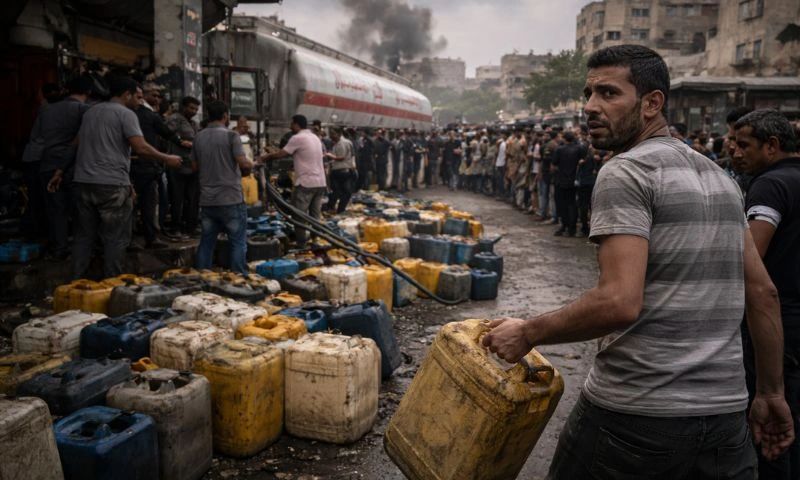
Gaza Runs Out of Fuel After Israel Closes Borders Amid Iran War
The Gaza Strip is rapidly running out of fuel and essential supplies as Israel has closed all border crossings into the territory amid the widening conflict with Iran, humanitarian officials warn. This latest development has sparked a fresh crisis in the already war-shattered enclave, threatening hospitals, water systems and daily life for more than two million Palestinians. Fuel Shortages Deepen Humanitarian Crisis Gaza relies almost entirely on fuel imports from Israel and Egypt for electricity generation, water pumping, sanitation and essential services. With the closure of border crossings following joint Israeli and U.S. strikes on Iran, fuel stocks in the territory are running dangerously low. Local officials and humanitarian workers say that supplies of fuel could be exhausted in a matter of days if the borders remain shut. United Nations officials directly involved in fuel distribution expressed alarm. Karuna Herrmann, who directs fuel distribution in Gaza, said, “I expect we have maybe a couple of days’ running time.” Aid workers also warn that stocks of food staples such as flour, vegetables and cooking oil could soon become scarce if help is not permitted to enter. Read More: Netanyahu Meets Trump in Florida as Gaza Ceasefire and Iran Tensions Take Center Stage Border Closures Interrupt Aid and Trade The Israeli military’s closure of all crossings into the Gaza Strip has effectively halted the delivery of fuel, food, medical supplies and other humanitarian goods. The Kerem Shalom and Rafah crossings, vital gateways for aid into Gaza, have been closed in response to broader regional hostilities tied to the ongoing Iran conflict. Israel’s COGAT agency, which manages access to Gaza, stated that previous deliveries of aid should be sufficient but did not specify how long existing supplies would last. The Rafah crossing with Egypt, which had recently been reopened for limited movement, has also been affected by the border closure, complicating travel and aid delivery for thousands of displaced Gazans. Humanitarian organisations had expressed hopes that Rafah could serve as an alternative route for essential goods; however, those plans have been disrupted. Read More: Iranian Airstrikes Shake Dubai’s Reputation as Safe Tourism Haven Impact on Healthcare and Daily Life Fuel shortages pose an immediate threat to hospitals and medical facilities in Gaza, many of which already face challenges due to the ongoing conflict. Without fuel to run generators, medical equipment, incubators and oxygen systems could fail, endangering patients who depend on uninterrupted power for life-saving treatments. Historical crises during earlier sieges have shown the lethal consequences of fuel and electricity shortages in Gaza’s health sector, with previous hospital outages linked to avoidable deaths. Beyond hospitals, water and sanitation systems in Gaza depend on fuel to pump clean water and operate sewage treatment. A fuel cutoff could quickly disrupt safe water supplies, increasing the risk of disease and compounding suffering in communities already displaced by years of conflict. Voices from Gaza and the International Community Residents voice frustration and fear over the worsening conditions. Hamada Abu Laila, a displaced Palestinian in Gaza, said the closures could bring back memories of a past famine: “Why is it our fault, in Gaza, with regional wars between Israel, Iran, and America? It is not our fault.” His remarks reflect deep anger at being caught between geopolitical conflicts that have direct consequences for civilian survival. International aid agencies and rights groups have called for immediate reopening of border crossings and unhindered humanitarian access, emphasising that fuel and food are essential for civilian life and protecting vulnerable populations amid war.
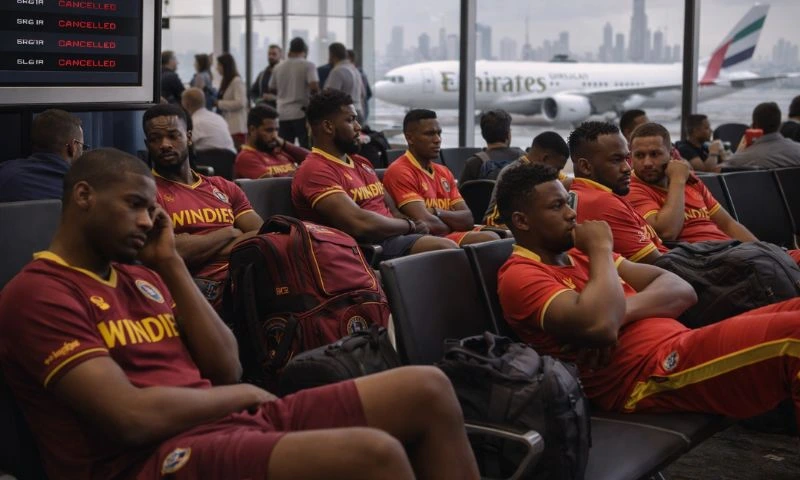
West Indies and Zimbabwe Cricket Teams Stranded in India After Airspace Closures
The West Indies and Zimbabwe national cricket teams have been unable to return home from India following their exits from the ICC Men’s T20 World Cup 2026 due to widespread airspace closures in the Middle East. The unprecedented disruption to international flight routes is linked to escalating geopolitical tensions in West Asia that have shaken global travel networks. Teams Delayed After T20 World Cup Campaigns End Both teams finished their World Cup journeys this weekend, but neither could board flights destined for home. The West Indies were knocked out after a five-wicket defeat to hosts India in the Super Eight stage, while Zimbabwe exited after failing to win any of their Super Eight matches. Normally, both teams would have flown back via major Gulf hubs such as Dubai International Airport, which serve as central transit points for international flights. However, the ongoing conflict in the Middle East has led to closures of airspace over several countries including the United Arab Emirates, Iran, Iraq, and Israel, prompting mass flight cancellations and transit disruptions. Read More: T20 World Cup 2026: Semi-Final Lineup Confirmed, Full Match Schedule Revealed Safety Arrangements and Alternative Plans Zimbabwe Cricket confirmed that its squad remains “safe and well in India” while waiting for new travel arrangements. The organization said that the team had been scheduled to return home via Dubai before the closures halted plans. Officials emphasized that the safety and welfare of players and staff are the top priority as alternative travel logistics are worked out. Cricket West Indies (CWI) released a statement saying it is cooperating with the International Cricket Council (ICC) and airline partners to ensure safe travel. “The safety and well-being of our players, coaches, and officials remain our highest priority,” CWI noted, adding that contingency plans had been activated to help players and staff transit safely out of India. The ICC’s headquarters being in Dubai — one of the affected transit hubs — further complicated immediate travel back routes. Global Travel Chaos from Airspace Closures The situation affecting the cricket teams mirrors broader woes being faced by global aviation. Thousands of flights were cancelled across the Gulf region as carriers such as Emirates, Etihad Airways and Qatar Airways suspended services in response to the airspace shutdowns. Analysts describe the travel disruption as the worst since the COVID-19 pandemic, and passengers worldwide have been left stranded. Some airlines are now offering limited special flights or evacuation-style departures, while others wait to resume normal operations once safety assurances are secured. The U.S. government and several other nations are reportedly urging their citizens to consider departure from the region if possible and to monitor travel advisories closely. Read More: PIA Suspends Flights to UAE, Qatar, Kuwait and Bahrain After Middle East Tension Ripple Effects on Cricket and Travel Cricket authorities say that although the disruption has not impacted World Cup match schedules, the return journeys for teams and officials have been significantly affected. With key air corridors closed, rerouting via unaffected regions such as Asia or Europe may be necessary, potentially increasing travel costs and time spent away from home. The West Indies and Zimbabwe squads, focusing on player comfort and safety, are expected to remain stationed in India temporarily until airline carriers and cricket board officials secure alternate routes and flights. Both cricket boards remain in close contact with stakeholders to provide regular updates to families, fans and media.
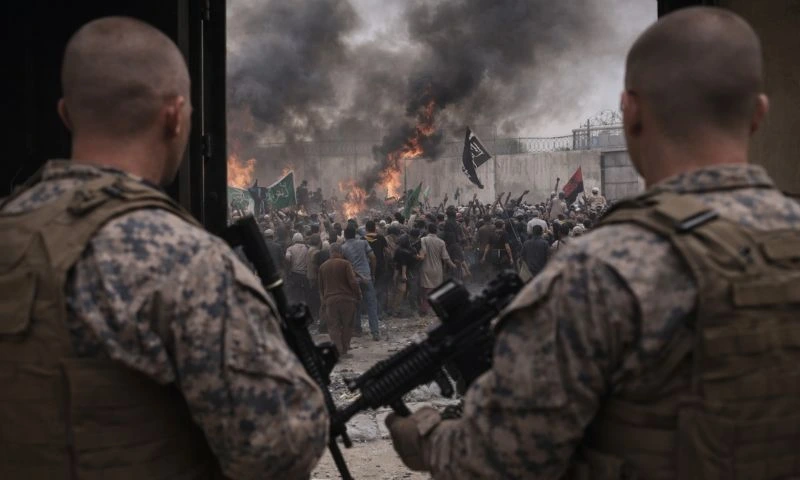
U.S. Marines Fire on Protesters at Karachi Consulate, Officials Defend Actions
U.S. military personnel opened fire on protesters trying to storm the U.S. Consulate General in Karachi on March 1, 2026, according to American officials, marking a rare and stark response by Marines at a diplomatic mission. The incident occurred amid nationwide unrest and violent protests sparked by the death of Iran’s Supreme Leader Ayatollah Ali Khamenei in U.S. and Israeli airstrikes. The American response has drawn international attention and debate over diplomatic security and use of force. Violence at the Consulate and U.S. Response On Sunday, hundreds of demonstrators gathered outside the Karachi consulate, chanting “Death to America” and “Death to Israel”, and eventually breaching the compound’s outer security wall. According to U.S. officials speaking to Reuters, U.S. Marine Security Guards opened fire on the advancing crowd at the consulate, a highly unusual step intended to protect the mission and its personnel. In its initial comment, the U.S. Marines did not offer a detailed operational explanation, but questions were directed to the U.S. military and the State Department for further clarification. There has been no official statement yet from the State Department or the embassy on the rules of engagement that led to the use of deadly force. Read More: Iran’s Supreme Leader Khamenei Killed in US-Israeli Strikes, 40 days of mourning announced in Iran Strong Words from a Marine Veteran The U.S. reaction extended beyond official silence with outspoken commentary from some American voices. Vic Mellor, a Republican political candidate and U.S. Marine veteran, commented on social media about the incident. Mellor said, “Armed rioters tried to storm our U.S. Consulate in Karachi, Pakistan”, defending the Marines’ response to the breach. He asserted, “United States Marines met them at the door – and sent a message the entire world just heard: The days of America not defending itself are OVER.” Mellor added, “As a Marine, I’ll tell you what every Marine already knows: you don’t touch American soil. Not in Karachi. Not anywhere on earth.” Today, armed rioters tried to storm our U.S. Consulate in Karachi, Pakistan. They breached the perimeter. They set fires. They thought this was 1979. It’s not. United States Marines met them at the door — and sent a message the entire world just heard: The days of America not… — Vic Mellor For Congress RI (@VicMellorForRI) March 2, 2026 While Mellor’s comments reflect a perspective of defending U.S. interests, they are not official Pentagon policy but show how difficult and sensitive the situation has become politically and militarily. Context of the Unrest Across Pakistan The clashes in Karachi were part of a broader wave of protests across Pakistan following the reported killing of Ayatollah Khamenei in U.S. and Israeli airstrikes on Iranian territory. Protesters in cities including Lahore, Islamabad and Gilgit-Baltistan rallied, some violently, voicing solidarity with Iran and condemning the United States and Israel for the military action. Pakistani authorities responded by deploying troops, banning large gatherings and imposing curfews in sensitive areas. According to multiple reports, at least 26 people have died in protests across the country, with 10–16 fatalities in Karachi stemming from the consulate clashes and other violent confrontations. Authorities said many of the injured were hit by gunfire or caught in clashes with security forces, including local police and paramilitary units. Read More: US Embassy in Pakistan Cancels Visa Services After Violent Protests Diplomatic Fallout and Security Measures In the wake of the consulate incident, security around American diplomatic missions across Pakistan has been significantly heightened. The U.S. Embassy in Islamabad and other consulates in Lahore and Peshawar temporarily suspended services or closed operations as officials assessed ongoing risks to staff and visitors. American citizens in Pakistan were advised to avoid large crowds, monitor local news, and stay alert to changing conditions. The use of lethal force by Marines at the Karachi consulate represents a notable escalation in diplomatic security measures during times of civil unrest and underscores the complex challenges faced by U.S. missions worldwide during geopolitical crises.
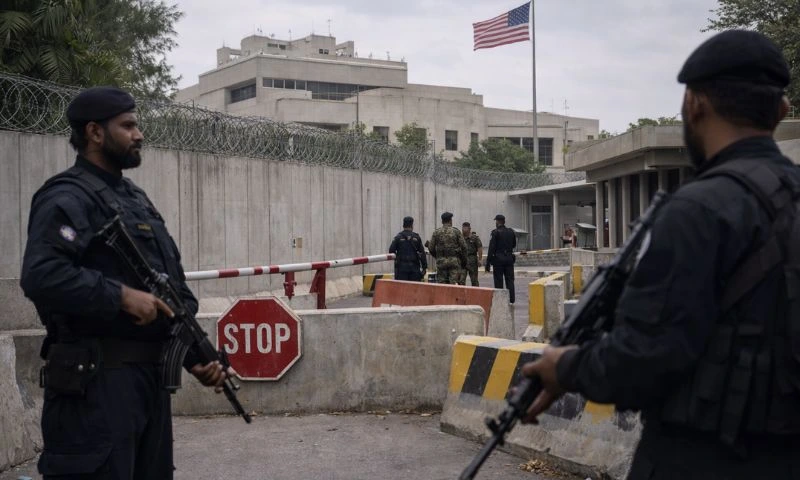
US Consulate in Peshawar Temporarily Shuts Operations Amid Protest Surge
The United States Consulate General in Peshawar has temporarily suspended its operations beginning March 2, 2026, as security concerns rise in multiple Pakistani cities linked to widespread protests over recent geopolitical developments. The closure reflects increasing challenges for diplomatic missions in a tense national climate. Closure Amid Widespread Unrest The decision to suspend operations at the Peshawar consulate was announced by the US Mission in Pakistan, citing rapid protests and calls for demonstrations outside diplomatic facilities across the country. The move comes after clashes and protest activity in Karachi, Lahore, Islamabad and Peshawar, which have prompted concerns for staff safety and public access. The closure affects routine services such as visa appointments and American Citizen Services, which involve passport renewals, educational visas and other consular matters. Authorities noted that security conditions around the consulate have made regular operations unsustainable until further notice. Significantly, consular appointments and services that were originally scheduled for Monday, March 2 were cancelled due to protest activity around the diplomatic facilities in Karachi, Lahore, Islamabad and Peshawar. The mission emphasised that the decision was based on “ongoing demonstrations at the US Consulate General in Lahore and protests near the US Consulate General in Karachi and Peshawar.” Read More: US President Donald Trump Warns of ‘Big Wave’ of Strikes on Iran and Won’t Rule Out Ground Troops Security Alert and Advice for US Nationals In a security alert issued on March 1, the embassy stated it was monitoring reports of demonstrations near consulate premises in Lahore and Karachi, as well as calls for protests outside the Islamabad embassy and the Peshawar consulate. The message advised U.S. citizens to stay informed of local developments, avoid large crowds, be alert to their surroundings and ensure their registration with the Smart Traveler Enrollment Program (STEP) remains current. The mission also directed U.S. government personnel to restrict movements and follow security guidance until the situation stabilises. Officials stressed that these services are temporarily paused for the safety of staff and the visiting public and will resume when authorities assess that security risks have reduced. Context of National Protests The diplomatic closures align with nationwide protests sparked by the assassination of Iran’s Supreme Leader Ayatollah Ali Khamenei following joint military actions by the United States and Israel. In Pakistan, pro-Iranian demonstrations erupted in multiple cities with chants condemning the United States and Israel, reflecting strong regional sentiment and solidarity with Iran. In Karachi, protests targeting the U.S. Consulate General became particularly violent, with demonstrators breaching outer walls and clashing with law enforcement. Officials reported at least 10 casualties and dozens of injuries as crowds confronted security forces. The unrest spread to other cities, including Lahore and Islamabad, where authorities imposed restrictions to prevent further escalation. Impact on Services and Public Experience With the consulate in Peshawar now closed and other diplomatic sites limiting or cancelling services, Pakistani applicants seeking U.S. visas or American citizen support are facing uncertainty. People with appointments have been instructed to monitor official embassy and consulate social media channels for updates on rescheduling and safety guidance. Read More: US Embassy in Pakistan Cancels Visa Services After Violent Protests The suspension highlights how diplomatic missions can be directly affected by domestic public sentiment tied to international conflicts, and underscores the potential risks of public demonstrations near sensitive government facilities.
