

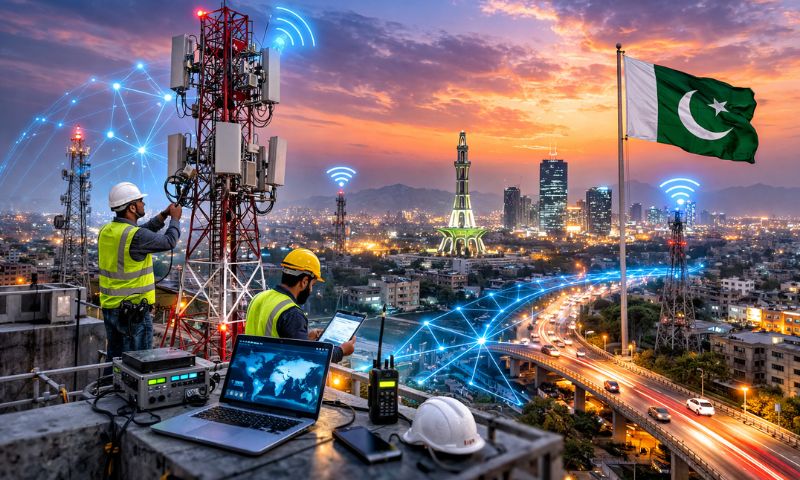
Pakistan is preparing to take a major step toward next generation mobile connectivity as the Pakistan Telecommunication Authority (PTA) moves ahead with the country’s long awaited 5G spectrum auction, scheduled to begin on March 10, 2026. The auction will determine which telecom companies will deploy 5G services across the country and how quickly Pakistan can transition to ultra fast mobile internet. The auction is expected to be one of the largest telecom spectrum sales in Pakistan’s history and could reshape the country’s digital infrastructure in the coming years. Three Major Telecom Operators to Compete PTA has confirmed that three major telecom operators have qualified to participate in the 5G spectrum auction. These include: Pakistan Mobile Communications Limited (Jazz) CMPak Limited (Zong) Pak Telecom Mobile Limited (Ufone) These companies completed the application process under the PTA’s Information Memorandum and will compete to secure spectrum needed to roll out 5G services. The telecom sector in Pakistan has recently seen consolidation after PTCL acquired Telenor Pakistan, meaning the Ufone-PTCL group now represents the merged telecom entity in the auction. Industry experts say this consolidation has effectively reduced the market to three main competitors, making the upcoming auction a high stakes contest among the country’s largest telecom providers. Spectrum on Offer for 5G Services Under the PTA’s plan, around 597 MHz of spectrum will be auctioned across multiple frequency bands. The spectrum will be used to enable both improved 4G services and the launch of 5G networks in Pakistan. The government has also confirmed that several of these bands are being offered for the first time in Pakistan, which will help operators deliver faster speeds and better coverage. Officials have described the upcoming auction as the largest spectrum sale in Pakistan’s history, with preparations underway to ensure strong participation from telecom operators. To qualify for the bidding process, companies were required to deposit around $15 million as earnest money, which will be adjusted against the final license fee for successful bidders. Read More: Pakistan Sets March 10 for 5G Spectrum Auction to Transform Connectivity Why the 5G Auction Matters Pakistan has been preparing for the transition to 5G for several years. Major telecom operators including Jazz, Zong, Ufone, and Telenor previously conducted trial runs of 5G technology to test the network capabilities. The introduction of 5G is expected to bring significant improvements in internet speeds, network reliability, and digital services. It could also support new technologies such as smart cities, autonomous systems, industrial automation, and advanced cloud services. According to officials, telecom operators have already begun ordering 5G equipment, while local production of 5G-enabled smartphones has also started, with hundreds of thousands of units already manufactured. Challenges Facing Telecom Operators Despite the excitement surrounding the auction, telecom companies have raised concerns about the financial viability of the new spectrum. Operators say they are facing pressure from high taxes, rising energy costs, and currency depreciation, which could make large investments in 5G infrastructure challenging. Pakistan’s telecom industry also has one of the lowest average revenues per user globally, which limits how much operators can spend on network upgrades. Even so, industry observers believe the 5G rollout will be a crucial step for Pakistan’s digital economy. Read More: Pakistan Sets 5G Auction Prices, Clearing Path for Faster Mobile Internet Pakistan’s Digital Future If the auction proceeds as planned, telecom operators could begin deploying commercial 5G services within months, marking the start of a new era in Pakistan’s telecom sector. Experts believe faster connectivity could support innovation in fintech, e commerce, artificial intelligence, and digital services while improving internet access across the country. The upcoming auction therefore represents not just a telecom milestone but also a major step toward Pakistan’s broader digital transformation.

Pakistan’s First Electric Car Could Cost Less Than 10 Lakh Rupees
Pakistan is preparing to introduce its first locally developed electric vehicle at a price that could reshape the country’s auto market. The upcoming EV is expected to cost less than 10 lakh rupees, making it one of the cheapest electric cars ever proposed in Pakistan. The vehicle is being developed as part of a push to make electric mobility accessible to ordinary Pakistanis. At a price of around 9 to 10 lakh rupees, the EV could become the most affordable electric car option for urban commuters. This initiative highlights Pakistan’s efforts to promote clean transportation while also strengthening local automotive manufacturing. A Game Changing Price for the EV Market The most striking feature of the new vehicle is its price. Electric vehicles currently available in Pakistan are far more expensive. Small electric vehicles and entry level options start from around 11 lakh rupees, while electric cars usually cost 40 lakh to more than 1 crore rupees, depending on the brand and features. Against this backdrop, a locally developed EV priced under 10 lakh rupees could dramatically expand the market. For many middle class families, electric cars have always been out of reach. This new model aims to change that by offering a practical and affordable alternative to petrol powered vehicles. Officials involved in the project say the vehicle has been designed specifically for short urban commutes, which make up a large share of daily travel in Pakistani cities. Read More Ferrari’s First Electric Supercar Gets Futuristic Cabin and 1,000+ HP Developed Locally With Export Potential Another major highlight of the project is that the EV is being developed locally in Pakistan. The country’s automotive sector has long relied on imported technology and foreign partnerships. The new EV project aims to boost local engineering and manufacturing capabilities. Industry officials have also indicated that the vehicle may not only be sold in Pakistan but could also be exported to other developing markets where demand for affordable electric transport is growing. If successful, the project could help position Pakistan as a producer of low cost electric vehicles for global markets. Pakistan’s Electric Mobility Ecosystem Is Expanding The planned launch comes at a time when Pakistan’s EV ecosystem is gradually developing. The government has introduced electric vehicle policies to encourage adoption and reduce dependence on imported fuel. International automakers are also showing interest in Pakistan’s EV market. Chinese EV giant BYD plans to assemble electric vehicles locally from 2026 through a partnership with Mega Motor Company. The planned facility will have the capacity to produce around 25,000 vehicles annually. At the same time, companies are expanding EV charging infrastructure in major cities including Karachi, Lahore, and Islamabad. Read More: Electric Rides & Hybrid Power: Pakistan’s 2026 Car Lineup Preview A Turning Point for Affordable Clean Transport Experts believe that a locally produced electric vehicle priced under 10 lakh rupees could become a turning point for Pakistan’s transition to cleaner transport. Rising petrol prices and growing environmental concerns have already increased interest in electric mobility. If the vehicle reaches the market at the expected price, it could make EV ownership possible for thousands of Pakistani households for the first time. More importantly, it would demonstrate that Pakistan has the capability to develop and manufacture its own affordable electric vehicles.

Rubio Invokes Emergency Powers to Fast-Track $151M Bomb Sale to Israel
The United States government has taken a significant step to bolster the military capabilities of Israel during the ongoing conflict with Iran. The Trump administration recently approved an emergency sale of precision guided munitions and bombs valued at 151.8 million dollars. This decision bypasses the traditional congressional review process. The Department of War cited an urgent need for these supplies to maintain regional stability and support a key ally. This move comes as Israel continues its intense aerial campaign known as Operation Epic Fury. Details of the Munitions Sale The emergency package includes a wide array of sophisticated weaponry. Key items in the sale are the GBU 39 Small Diameter Bombs and various Joint Direct Attack Munition tail kits. These kits transform standard unguided bombs into highly accurate smart weapons. According to the Defense Security Cooperation Agency, “The United States is committed to the security of Israel, and it is vital to U.S. national interests to assist Israel to develop and maintain a strong and ready self defense capability.” The sale also includes 1,000 units of the BLU 109 bunker buster bombs. These are designed to penetrate hardened targets deep underground. This specific hardware is critical for the current military operations targeting Iranian nuclear and command facilities. The administration argues that the rapid depletion of Israeli stockpiles necessitated this immediate intervention. Strategic Alignment and Global Impact This sale is part of a broader strategy by the Trump administration to increase the production and distribution of what the President calls Exquisite Class Weaponry. By using emergency authorities, the executive branch can skip the 30 day notification period usually required by Congress. Critics have raised concerns about the lack of oversight. However, Secretary of Defense Pete Hegseth defended the move. He stated, “We are acting with the greatest urgency to ensure our allies have what they need to win.” The regional context remains tense. The United States has already deployed additional carrier strike groups and fighter squadrons to the Middle East. This munitions sale ensures that the Israeli Air Force can continue high tempo operations without a pause in its supply chain. The deal also involves significant logistics and technical support from American defense contractors like Boeing and Lockheed Martin. Economic and Political Ramifications The 151.8 million dollar deal is expected to be funded through Foreign Military Financing. This means the American government provides the grants that Israel then uses to purchase the weapons from U.S. companies. This cycle supports the American defense industrial base. President Trump recently noted that he wants to quadruple the production of these high tech systems to meet global demand. As the conflict progresses, the international community is watching closely. The use of emergency powers signals that the United States is fully committed to a decisive outcome in the Iran war. This sale is likely just one of many upcoming transfers as the military footprint in the region expands.
Trump Secures Deal to Quadruple Production of High Tech Weapons
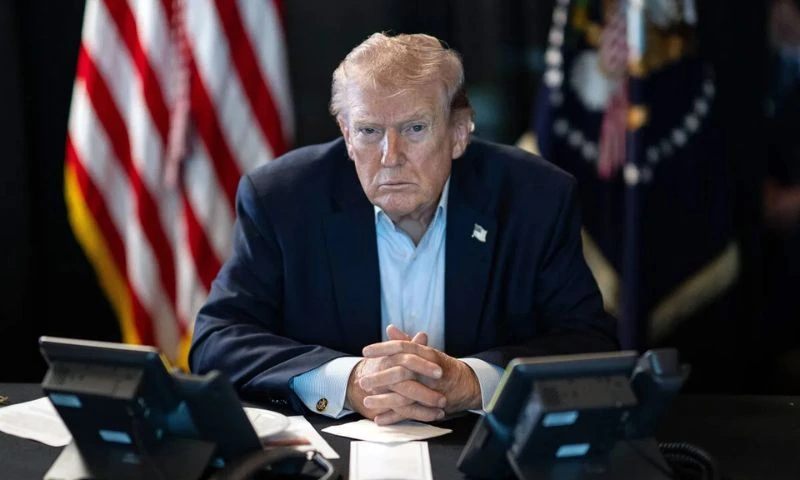
President Donald Trump hosted a high stakes meeting at the White House on Friday. He met with the top leaders of the American defense industry to discuss the future of national security. During this session, six major contractors agreed to a massive expansion of their manufacturing capabilities. They will quadruple the production of what the President calls Exquisite Class Weaponry. This move comes as the United States military continues its large scale operations in the Middle East. The meeting included the chief executives of RTX, Lockheed Martin, Boeing, and Northrop Grumman. Leaders from BAE Systems, L3Harris, and Honeywell Aerospace also attended the discussion. President Trump shared the news on social media shortly after the talks concluded. He stated, “We just concluded a very good meeting with the largest U.S. Defense Manufacturing Companies where we discussed Production and Production Schedules. They have agreed to quadruple Production of the ‘Exquisite Class’ Weaponry in that we want to reach, as rapidly as possible, the highest levels of quantity.” This aggressive schedule aims to replenish stockpiles and ensure long term readiness for the nation. High Tech Interceptors and Precision Missiles While the term exquisite is unique to the current administration, it refers to advanced and high precision systems. These include the PAC 3 Patriot missiles and THAAD interceptors produced by Lockheed Martin. It also covers the Tomahawk cruise missiles and Standard Missile 6 interceptors manufactured by RTX. These weapons are critical for modern air defense and long range strikes against sophisticated targets. A spokesperson for Lockheed Martin confirmed the company commitment to the new goals. The representative said, “As a result of President Trump’s leadership, we began this work months ago with Secretary of Defense Pete Hegseth and Deputy Secretary Stephen Feinberg, and are committed to working with our industry partners to further strengthen the American military’s unparalleled capability with the greatest urgency.” RTX also expressed pride in supporting the administration. They are accelerating the production of five key munitions to meet the historic frameworks. Strategic Context and Operation Epic Fury This production surge coincides with Operation Epic Fury. This is the code name for the ongoing military campaign currently taking place in Iran. Analysts have raised concerns about how quickly the military is using its most expensive missiles. In just the first week of the conflict, the United States and Israel struck over 3,000 targets. Despite these concerns, the President remains confident in current supplies. He noted, “We have a virtually unlimited supply of Medium and Upper Medium Grade Munitions, which we are using, as an example, in Iran, and recently used in Venezuela.” He added, “Regardless, however, we have also increased Orders at these levels.” A National Competition for Defense Plants The expansion of the defense industrial base is creating a new economic opportunity for many. President Trump revealed that plants and production lines are already being developed. He mentioned that states across the country are bidding to host these new manufacturing facilities. This competition could lead to thousands of new jobs in the aerospace and defense sectors. The administration plans to ask Congress for an additional 50 billion dollars in funding. This money will support the Department of War in its mission to boost total output. Another meeting between the White House and defense executives is scheduled in two months to review the progress. The goal remains clear: American manufacturing must move faster than ever before to maintain global dominance.
The Secret Map of Global Trade: Six Tiny Waterways That Could Crash the Global Economy
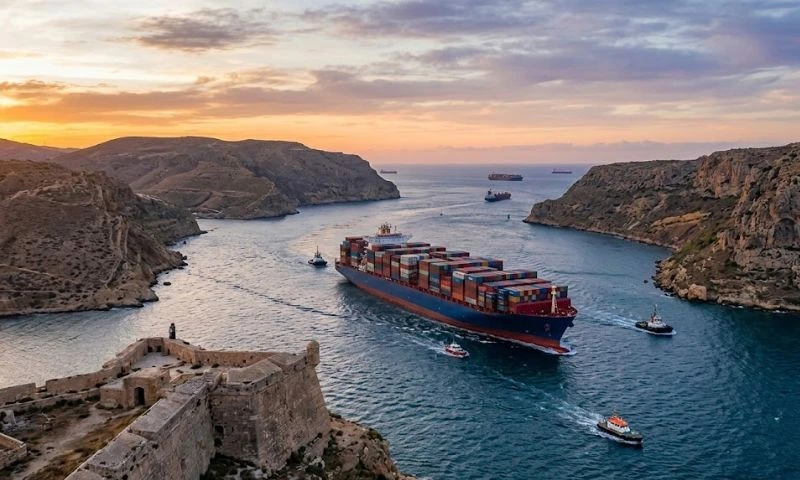
The global economy is not a static machine but a flowing river. Much of this flow happens on the open sea. Approximately 80 percent of global trade by volume moves across the oceans. This massive system depends on six critical shipping lanes. These narrow passages act as the primary arteries of international commerce. If one is blocked, the world feels the impact immediately through rising prices and empty shelves. The Strait of Hormuz: The Worlds Energy Tap The Strait of Hormuz is arguably the most vital chokepoint on the planet. Located between Oman and Iran, it connects the Persian Gulf with the Gulf of Oman and the Arabian Sea. According to the U.S. Energy Information Administration, “The Strait of Hormuz is the world’s most important oil transit chokepoint.” About 21 million barrels of oil pass through this narrow stretch daily. This represents 21 percent of global petroleum liquid consumption. Because there are few alternative routes for Gulf oil, any closure here could cause a global energy crisis. Read More: Strait of Hormuz Closure Sparks Global Shipping Crisis and Higher Costs The Malacca Strait: Asia’s Economic Gateway Further east lies the Malacca Strait. This narrow stretch between Indonesia and Malaysia is the primary gateway between the Indian and Pacific Oceans. It handles more than 90,000 vessels annually. It carries 25 percent of the world’s traded goods. This includes massive amounts of Chinese oil imports and manufactured products bound for Europe and the Americas. Its narrowest point is only 1.5 miles wide, creating a natural bottleneck for global shipping. The Suez Canal: The Essential Shortcut In the Middle East, the Suez Canal remains a legendary shortcut. Connecting the Mediterranean to the Red Sea, it allows ships to avoid the long journey around Africa. It handles roughly 12 percent of global trade. When the Ever Given ship got stuck in 2021, it halted nearly 10 billion dollars in trade every day. This event proved how much the modern world relies on this single canal. The Bab el Mandeb: The Gate of Tears The Bab el Mandeb sits between Yemen and Djibouti. It links the Red Sea to the Gulf of Aden. Security here is often tense due to regional conflicts and piracy. This passage is vital for European energy security because it carries millions of barrels of oil and liquefied natural gas daily. Without it, ships would have to navigate the Cape of Good Hope, adding weeks to their journeys. The Panama Canal and Turkish Straits Across the Atlantic, the Panama Canal serves as the bridge between the two great oceans. Unlike the others, this is a human made system of locks. It saves ships an 8,000 mile journey around South America. Recently, climate change and droughts have lowered water levels, forcing the canal authority to limit vessel weight. Finally, the Turkish Straits connect the Black Sea to the Aegean. These include the Bosphorus and the Dardanelles. They are essential for grain and oil exports from Russia and Central Asia. Read More: Strait of Hormuz Shutdown Sparks Fuel Shortage Fears: Five Ways Countries Can Reduce Fuel Use International trade is efficient but fragile. The United Nations Conference on Trade and Development notes that “disruptions to these maritime routes can lead to higher prices for consumers everywhere.” We must protect these lifelines to keep the world moving.

Pakistan Beat Japan 4–3 to Qualify for Hockey World Cup After Eight Years
Pakistan secured a dramatic 4–3 victory over Japan to qualify for the FIH Hockey World Cup 2026, ending an eight year absence from the sport’s biggest tournament. The crucial win came during the qualifiers, where Pakistan held their nerve in a tightly contested match against Japan. The result marks a major milestone for Pakistan hockey, which has struggled in recent years to regain its traditional strength in international competitions. The victory confirmed Pakistan’s return to the World Cup stage for the first time since the 2018 edition of the tournament. According to reports, the team displayed resilience and attacking intent throughout the match, eventually edging past Japan by a single goal to seal qualification. High Intensity Match Against Japan The qualifier between Pakistan and Japan turned into a thrilling contest. Both teams attacked aggressively and created several scoring opportunities during the match. Pakistan hockey team perform sajda and celebrate after qualifying for the FIH 2026 World Cup, dil khush kardia boys! 🇵🇰💚 pic.twitter.com/E1wRnJlu0F — Muneeb Farrukh (@Muneeb313_) March 6, 2026 Pakistan managed to maintain a slight advantage and eventually finished with four goals against Japan’s three, securing the narrow but decisive victory. The win highlighted Pakistan’s improved performance and determination to return to elite international hockey competitions. Observers described the match as one of the most exciting fixtures of the qualification stage. Return to the World Cup Stage Pakistan’s qualification is significant for a nation that once dominated world hockey. The country has won the Hockey World Cup four times, more than any other nation in the tournament’s history. However, in recent years Pakistan hockey has faced difficulties including administrative issues, financial constraints and declining international results. Missing recent global tournaments had raised concerns about the future of the sport in the country. The latest qualification therefore represents an important step toward rebuilding Pakistan’s presence in international hockey. Boost for Pakistan Hockey Officials and former players have welcomed the team’s return to the Hockey World Cup. The qualification is expected to boost morale among players and fans and encourage renewed investment in the sport. The upcoming FIH Hockey World Cup 2026 will bring together the world’s top hockey nations, offering Pakistan an opportunity to compete at the highest level again. Experts say the team will now focus on improving fitness, tactics and squad depth before the tournament begins. Fans Celebrate Historic Moment The victory has sparked excitement among hockey fans across Pakistan. Supporters hope the team’s return to the World Cup can mark the beginning of a revival for the country’s once dominant hockey program. Pakistan remains the most successful team in Hockey World Cup history, having lifted the trophy in 1971, 1978, 1982 and 1994. The latest qualification has revived hopes that the nation can once again compete with the world’s top teams. For now, Pakistan’s thrilling win over Japan stands as an important moment in the country’s hockey journey.

Fuel Bomb Hits Pakistan as Govt Raises Petrol, Diesel Prices by Rs55
The federal government has increased the prices of petrol and high speed diesel by Rs55 per litre, citing rising global oil prices triggered by escalating tensions in the Middle East. The announcement was made during a press conference in Islamabad by Petroleum Minister Ali Pervaiz Malik, alongside Deputy Prime Minister and Foreign Minister Ishaq Dar and Finance Minister Muhammad Aurangzeb. Following the increase, the ex depot price of petrol has risen to Rs321.17 per litre, while high speed diesel now costs Rs335.86 per litre. The revised rates took effect from midnight after the government finalized the decision. Officials said the move was necessary to maintain the supply of petroleum products in the country and to respond to the sharp rise in international oil prices. Middle East Conflict Pushes Global Oil Prices Higher Government officials linked the price hike directly to the ongoing conflict involving Iran, the United States and Israel, which has shaken global energy markets. Speaking at the press conference, Ishaq Dar said the war in the region had caused a dramatic increase in global fuel prices. “There has been an increase of 50 per cent to 70pc in various products,” he said while explaining the government’s decision. Dar added that petroleum prices in many countries had already risen automatically due to global market pressures. He said Pakistan had delayed the increase for several weeks while carefully reviewing the situation. Government Tried to Minimize Impact on Consumers Officials said the government had held multiple meetings over the past two to three weeks to assess the international situation and determine the best course of action. Dar explained that a committee headed by him and including the petroleum and finance ministers reviewed the developments and consulted relevant stakeholders before finalizing the decision. “Our objective was to pass the minimum effect to the end consumer,” he said. Finance Minister Muhammad Aurangzeb also noted that the government had been conducting daily meetings to monitor the impact of the Middle East crisis on Pakistan’s economy and energy supply. Concerns Over Energy Supply Routes Petroleum Minister Ali Pervaiz Malik warned that the conflict in the region had created unusual circumstances for Pakistan and other countries that rely heavily on imported oil. “The fire that ignited in our neighbourhood has engulfed the entire region,” he said. He highlighted concerns about disruptions in global shipping routes, particularly around the Strait of Hormuz, through which a large portion of the world’s oil supply passes. To ensure uninterrupted supply, the government has also begun exploring alternative energy routes and shipments. Malik said two Pakistan National Shipping Corporation vessels were heading toward Yanbu and Fujairah ports to secure fuel supplies for the country. Saudi Arabia has also assured Pakistan of continued support in maintaining oil supply through alternative arrangements. Prices to Be Reviewed Weekly The government has indicated that petroleum prices may now be reviewed on a weekly basis instead of the traditional fortnightly mechanism due to the rapidly changing global situation. Officials said the price increase was a difficult decision but necessary to avoid shortages and ensure the smooth availability of fuel in Pakistan. They also assured that if global prices stabilize or decline, domestic prices would be revised accordingly.
