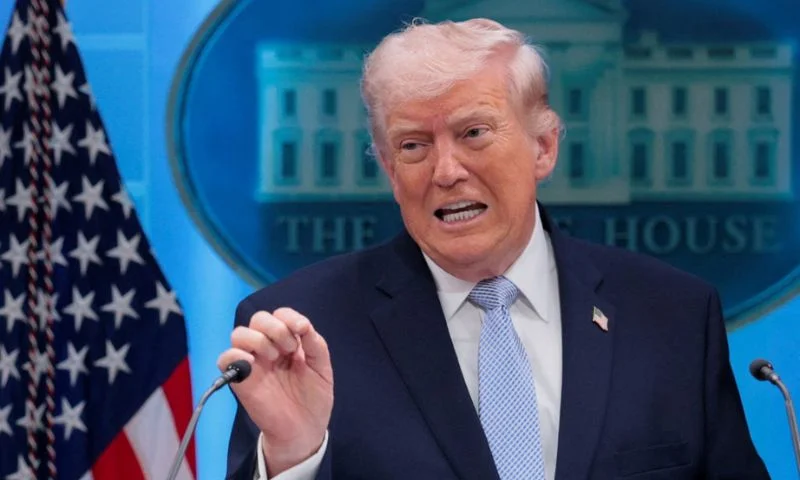
US President Donald Trump has indicated that he may travel to Pakistan as early as this weekend for a fresh round of negotiations with Iran, highlighting Islamabad’s growing role as a key diplomatic hub in efforts to de-escalate tensions in the Middle East.
Speaking to reporters, Trump said a second round of talks with Iranian officials “could be happening over the next two days,” adding that Washington is “more inclined” to hold the next phase of negotiations in Pakistan.
“It’s more likely, you know why? Because the Field Marshal is doing a great job. He’s fantastic, and therefore it’s more likely that we go back there,” Trump said, praising Pakistan’s Army Chief Field Marshal Asim Munir for facilitating dialogue.
JUST IN: President Trump said he could travel to Islamabad to seal a deal, praising Pakistan’s leadership and signaling he “might go” if an agreement is signed there:
“The field marshal has been great. The Prime Minister has been really great in Pakistan so I might go.”@pdoocy pic.twitter.com/W2CwvjutfC
— Fox News (@FoxNews) April 16, 2026
Islamabad emerges as diplomatic center
Pakistan has recently positioned itself at the center of mediation efforts between the United States and Iran, hosting a first round of direct talks earlier this month. The negotiations, held in Islamabad, marked a rare high-level engagement between the two sides but ended without a formal agreement after more than 20 hours of discussions.
Officials from Pakistan, Iran and the United States have suggested that delegations could reconvene in Islamabad over the weekend, although no final schedule has been confirmed.
The White House has also signaled that Pakistan remains a preferred venue for continued dialogue, citing its role in maintaining communication channels between both sides and helping sustain a fragile ceasefire.
Talks linked to fragile ceasefire
The renewed diplomatic push comes amid a delicate ceasefire between Washington and Tehran following weeks of heightened tensions. The ceasefire, which is set to expire later this month, has increased urgency for both sides to reach a negotiated understanding.
Trump struck an optimistic tone about the talks, saying “something could be happening over the next two days,” suggesting momentum is building toward another round of negotiations.
However, key issues remain unresolved, particularly disagreements over Iran’s nuclear program and broader regional security concerns. The previous round of talks in Islamabad ended without consensus, with both sides maintaining firm positions.
Pakistan’s expanding diplomatic role
Pakistan’s mediation efforts have drawn recognition from international actors, including the United Nations, which has encouraged continued dialogue.
UN Secretary-General Antonio Guterres described it as “highly probable” that talks would resume, emphasizing the need for sustained engagement to prevent further escalation.
Analysts say Islamabad’s role reflects a broader shift in regional diplomacy, with Pakistan acting as a neutral intermediary capable of engaging both Washington and Tehran.
The country has also undertaken wider diplomatic outreach, engaging Gulf states and other regional stakeholders to support a negotiated resolution.
Uncertainty remains despite momentum
While momentum appears to be building, uncertainty remains over the timing and outcome of the next round. Officials caution that even if talks resume soon, reaching a comprehensive agreement could take time given the complexity of the issues involved.
Still, Trump’s remarks about a possible visit to Pakistan underline the country’s growing importance in global diplomacy. As preparations continue, Islamabad is once again expected to host high-stakes negotiations that could shape the trajectory of one of the most closely watched geopolitical developments of the year.