

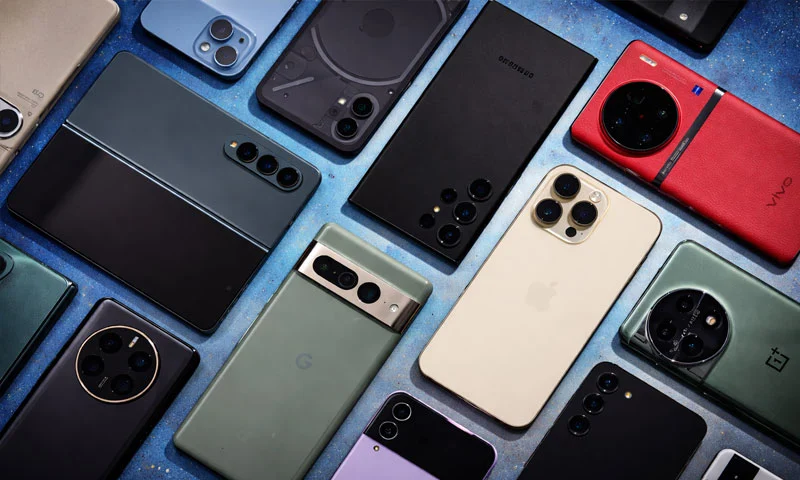
Pakistan has significantly increased duties on used imported mobile phones by revising customs valuation by up to 175%, a move expected to raise prices for dozens of popular smartphone models and impact consumers across the country. The Federal Board of Revenue issued a new valuation ruling under which taxes will now be calculated on higher benchmark prices, making at least 62 models from leading brands more expensive in the local market. Major Price Impact on Popular Devices Under the revised framework, customs values for widely used smartphones have been sharply increased, directly raising the tax burden on imports. For example, the valuation of a used iPhone 15 Pro Max has been raised from $460 to $505, while the iPhone 15 Pro increased from $390 to $472. Similar increases have been applied across multiple brands. Samsung Galaxy S23 Ultra’s valuation rose from $255 to $305, while Google Pixel and OnePlus devices also saw notable upward revisions. Officials said the new valuation system replaces the previous ruling and is based on updated import and market data. Duties and taxes will now be collected on these revised values, making used phones considerably more expensive for importers and ultimately consumers. New Rules Apply Regardless of Condition The updated policy applies uniformly to all used phones, regardless of their condition or grading, a change that is likely to affect the secondary smartphone market in Pakistan. The FBR clarified that imported used phones must have been activated at least six months prior to shipment. Importers will be required to provide activation details, which will be verified by customs authorities. Additionally, the ruling states that even if phones are imported without packaging or accessories, the same customs valuation will apply. If a model is not listed, its value will be determined under existing customs laws. Wider Market and Economic Impact Analysts say the move is likely to push up retail prices in Pakistan’s already expensive smartphone market, particularly affecting consumers who rely on used imported devices due to affordability constraints. Pakistan’s mobile market has a large share of second-hand devices, especially among students, freelancers and lower-income users who depend on affordable smartphones for work and connectivity. Experts note that while the government may aim to curb under-invoicing and improve tax collection, the increase could slow smartphone adoption and digital access if prices rise sharply. At the same time, some industry observers believe the policy could indirectly support local assembly and manufacturing by making imported used devices less competitive. With enforcement orders issued to customs authorities across the country, the new valuation ruling is expected to take immediate effect, reshaping pricing dynamics in Pakistan’s mobile phone market.
1950s Pakistani Banknote Returns From Bangladesh Rekindling Shared History
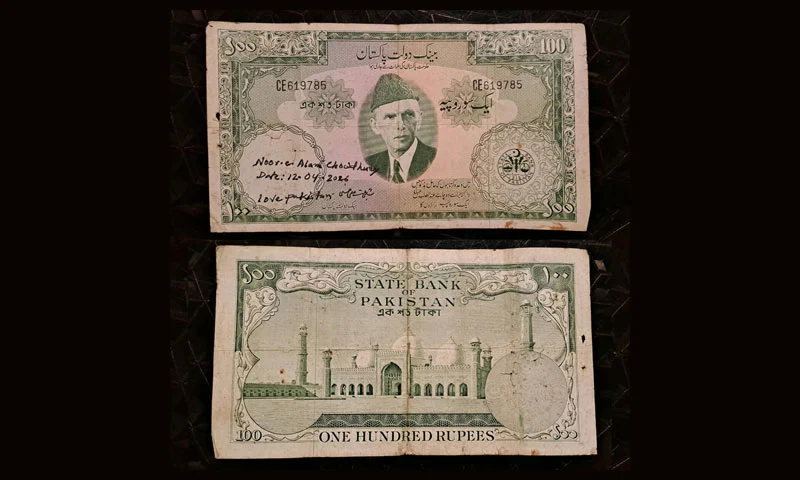
A decades-old Pakistani Rs100 banknote from the 1950s has made its way back to Pakistan from Bangladesh, offering a powerful reminder of shared history and human connection across borders once united under a single nation. The rare note surfaced during a chance meeting in Islamabad, where a Bangladeshi visitor handed it over to a Pakistani national, turning an ordinary encounter into a deeply symbolic moment. A Chance Encounter Brings History Alive The exchange took place at the Pakistan Tennis Federation complex, where Muhammad Ali Akbar, a former Davis Cup captain, met Noor-e-Alam Chowdhury, who had traveled from Bangladesh with his daughter for a junior tennis event. According to a report by Arab News, the interaction took a meaningful turn when Chowdhury revealed he was carrying a decades-old Pakistani currency note preserved within his family. “When I told him I had been to Bangladesh, he showed me this note,” Akbar recalled, describing the emotional significance of the moment. The note, featuring inscriptions in English, Urdu and Bengali, dates back to a time before 1971, when present-day Pakistan and Bangladesh were part of one country. Chowdhury explained that the note had been passed down through generations. His mother had received it during a visit to Pakistan in the 1960s, and it was later kept as a family keepsake before being brought back to Islamabad. A Symbol Beyond Currency The return of the banknote carries meaning far beyond its monetary value. It represents a shared past shaped by unity, separation and evolving relations between the two nations. The 1971 events that led to Bangladesh’s independence remain a defining chapter in South Asian history, but moments like this highlight how personal connections continue to bridge historical divides. In recent years, there have been signs of improving engagement between Pakistan and Bangladesh, with increased cultural exchanges and diplomatic contact. Observers say such gestures, though small, reflect a broader human narrative that transcends politics. The story of the banknote underscores how objects tied to history can evoke powerful emotions, reminding people of common roots and shared experiences. As the note returns to Pakistan after decades, it stands as a quiet symbol of connection, resilience and the enduring ties between people separated by borders but linked by history.

Doctors Are Secretly Turning to AI Chatbots, But Should Patients Worry?
Millions of Americans are using artificial intelligence chatbots for health questions, and doctors are increasingly doing the same, as the technology moves deeper into clinics, hospitals and medical training. According to CNN, specialized medical AI chatbots have become a regular reference tool for physicians and trainees, helping them review research, draft notes, write insurance letters and build lists of possible diagnoses. One medical chatbot company CEO recently claimed that more than 100 million Americans were treated last year by a doctor who used its platform. But doctors interviewed by CNN drew a clear distinction between medical AI platforms and general-purpose chatbots such as ChatGPT. OpenAI’s own usage policies say its services should not be used for “tailored advice” requiring a license, including medical advice, without appropriate involvement by a licensed professional. “ChatGPT is like your crazy uncle,” said Dr. Ida Sim, a University of California, San Francisco professor who studies health data and technology. She told CNN that medical chatbots are more likely to ground answers in peer-reviewed research and clinical guidelines. How doctors are using AI One of the biggest uses is keeping up with medical research. Millions of papers are published each year, making it difficult for doctors to stay current. Dr. Jared Dashevsky, a resident physician at the Icahn School of Medicine at Mount Sinai, told CNN: “You’d need like 18 hours a day to stay up to date.” Doctors are also using AI to summarize long hospital stays, draft clinical notes, prepare letters for insurance companies and support prior authorization requests. Dashevsky said AI-generated insurance letters have become a “game-changer,” helping physicians respond faster to patient needs. Another growing use is diagnosis support. Medical students and doctors use AI chatbots to generate possible explanations for a patient’s symptoms, lab results or imaging findings. Evan Patel, a fourth-year medical student at Rush University Medical College, told CNN that chatbots help trainees understand “what possibilities it could be.” Read More: Same Question, Different Answer: AI Chatbots Raise Medical Concerns The risks patients should know The rise of AI in medicine has also raised concerns about patient data. CNN reported that some doctors are using unauthorized “shadow AI” tools, including platforms that advertise HIPAA compliance features. Iliana Peters, a health care lawyer and former HHS HIPAA enforcement official, warned that “‘HIPAA compliance’ is not an accurate term to use by any company.” Dr. Carolyn Kaufman, a Stanford Medicine resident, said patient information may be entering unauthorized systems. “Data is money,” she said. Public use is also expanding rapidly. A KFF poll found that about one-third of US adults used AI chatbots for health information in the past year, while Gallup and West Health found that 59% of AI health users research questions before doctor visits and about 14 million adults skipped a provider visit after using AI. Researchers are warning that general chatbots can still produce inaccurate or unsafe responses. Two recent studies cited by The Washington Post found major reliability gaps, including potentially dangerous wrong answers and failures in early diagnostic reasoning. Experts say AI may reduce paperwork and improve access to medical knowledge, but it is not ready to replace human judgment. As Dr. Jonathan H. Chen of Stanford Medicine told CNN: “People treat AI like it’s magic.”

Pakistani Founder’s AI Startup Lands $60 Billion SpaceX Deal
SpaceX has entered into a major partnership with artificial intelligence startup Cursor, co-founded by Pakistan-born entrepreneur Sualeh Asif, in a move that could reshape the global AI and tech landscape. The Elon Musk-led company confirmed that the agreement includes an option to acquire Cursor for $60 billion later this year, highlighting the growing importance of AI-powered software tools in the global technology race. Cursor, based in San Francisco and founded in 2022, specialises in AI-driven code generation tools that help developers write, edit and optimise software more efficiently. Strategic partnership with acquisition option Under the agreement, SpaceX has secured the right to either purchase Cursor outright or pay $10 billion as part of an extended collaboration. “Cursor has also given SpaceX the right to acquire Cursor later this year for $60 billion or pay $10 billion for our work together,” the company said in a statement. The two companies are already working closely to advance AI capabilities. In a post on X, the firms said they aim to create “the world’s best coding and knowledge work AI,” signalling ambitions beyond traditional software development. Industry analysts say the partnership reflects SpaceX’s broader push into artificial intelligence, especially after integrating Musk’s AI venture xAI earlier this year. The collaboration is expected to strengthen SpaceX’s position in the competitive AI tools market, where companies like OpenAI and Anthropic are already dominant. Read More: This 26-Year-Old Pakistani Just Joined the World’s Richest List Pakistani founder in global spotlight The deal has brought renewed attention to Sualeh Asif, a Karachi-born entrepreneur who co-founded Cursor with fellow MIT students. He previously represented Pakistan at the International Mathematical Olympiad and has rapidly risen in the global tech ecosystem. At just 26, Asif has joined the ranks of tech billionaires as Cursor’s valuation surged to nearly $29.3 billion following major funding rounds. Cursor’s technology has attracted major clients and investors due to its ability to automate complex programming tasks using natural language and AI models, making it a key player in the emerging “AI coding assistant” space. AI race intensifies The partnership underscores a broader shift in the tech industry, where AI infrastructure, coding tools and computing power are becoming central battlegrounds. SpaceX’s access to vast computing resources, including advanced supercomputers, is expected to help Cursor scale its models significantly. If the acquisition proceeds, the $60 billion valuation would make it one of the largest deals in the history of artificial intelligence, signalling increasing consolidation in the sector. Read More: Meta Is Tracking Every Click and Keystroke to Train AI to Replace You Experts say the deal could position SpaceX as a full-stack AI powerhouse, combining hardware, data infrastructure and software development tools under one ecosystem.
Big Relief or Bigger Pressure? Pakistan Repays $2 Billion to UAE
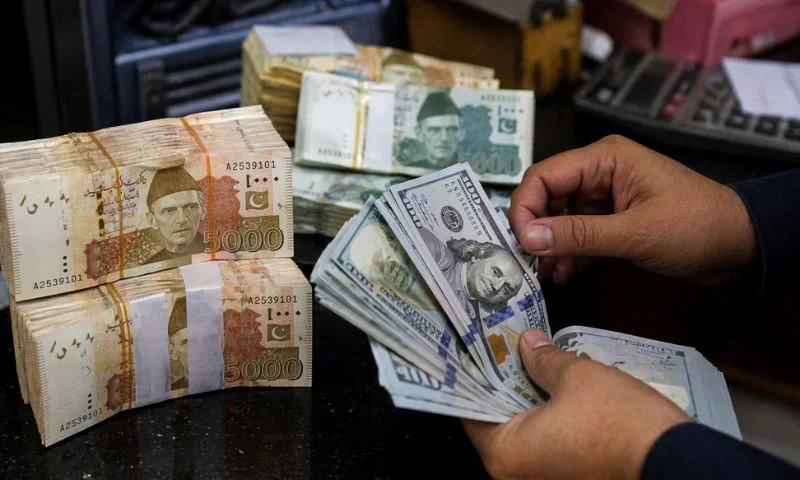
Pakistan has completed a major external debt repayment of approximately Rs345 billion to the United Arab Emirates, the State Bank of Pakistan confirmed, marking a significant step in the country’s ongoing efforts to meet its international financial obligations and stabilize its economy. A spokesperson for the central bank said the government had repaid $2 billion to the UAE, a deposit that had been held with the SBP and was due for maturity this month. “Pakistan has repaid $2 billion to the UAE,” the official confirmed, underscoring that the transaction was completed as part of routine debt servicing. The repayment forms part of a broader $3.5 billion obligation to Abu Dhabi, with Islamabad moving to clear the entire amount by late April. The loans had been extended to Pakistan over several years to support its balance of payments during periods of economic stress, particularly since 2018 when foreign exchange reserves came under pressure. Pressure on reserves and IMF targets The large outflow comes at a time when Pakistan is attempting to rebuild its foreign exchange reserves under a $7 billion International Monetary Fund programme. The IMF has set a target of pushing reserves above $18 billion by June, a goal that has become more challenging amid heavy repayments. Pakistan’s reserves have already been impacted by recent external payments, including a $1.43 billion Eurobond repayment earlier this month. The SBP reported reserves around $15 billion in mid-April, reflecting the strain caused by simultaneous debt obligations. Analysts note that the UAE repayment alone accounts for a sizable portion of Pakistan’s reserves, raising concerns about short-term liquidity. However, officials have maintained that the country is meeting its commitments on time to strengthen investor confidence and maintain credibility with international lenders. State Bank of Pakistan repaid deposit of US$ 1 billion to Abu Dhabi Fund for Development (ADFD) UAE on 23April2026. Deposits of $2.45 billion were repaid last week. This completes the repayment of total deposits of $3.45 billion to UAE. — SBP (@StateBank_Pak) April 24, 2026 Gulf support cushions impact To offset the financial pressure, Pakistan has relied on support from regional allies. Saudi Arabia recently pledged an additional $3 billion deposit and extended an existing $5 billion facility, providing a buffer to Pakistan’s reserves during the repayment cycle. In some cases, officials confirmed that part of the UAE repayment was facilitated through fresh financing arrangements, effectively replacing older liabilities with new funding lines to manage cash flow. The UAE deposits had previously been rolled over annually, and later on a monthly basis, before Pakistan opted to repay them in full. This shift signals a move toward reducing reliance on short-term rollovers and improving external debt management. While the repayment demonstrates fiscal discipline, economists warn that sustained inflows from multilateral and bilateral partners will remain critical in the coming months as Pakistan navigates tight external financing conditions and works toward economic stabilization.
