


Heatwaves are intensifying across many parts of South Asia, raising serious concerns about the health of children and infants, who remain among the most vulnerable groups during extreme temperatures. Rising temperatures have increased the risk of dehydration, heat exhaustion and heatstroke among children. Health experts warn that young bodies struggle to regulate heat efficiently and depend entirely on caregivers for hydration and protection. Read More: Heatwaves Trigger Rise in Domestic Violence Against Women “Identifying early warning signs and following strict safety protocols can prevent severe conditions like heat exhaustion or life-threatening heatstroke,” guidance shared with HT Lifestyle noted. Why children face greater risk Children face higher risk during heatwaves because their bodies cannot cool down as effectively as adults. They also rely on adults for timely hydration and appropriate care. Health authorities, including global agencies like the World Health Organization, have repeatedly warned that extreme heat events are becoming more frequent due to climate change, increasing health risks for vulnerable populations. Experts advise that hydration must remain the top priority. Children should drink water every 30 to 40 minutes, even if they do not feel thirsty. Infants under six months should receive additional breast milk. Sugary and caffeinated drinks should be avoided as they can worsen dehydration. Key precautions during extreme heat Limiting outdoor exposure remains critical. Children should stay indoors during peak heat hours between 11am and 4pm. Outdoor activities should be scheduled early in the morning or later in the evening. Read More: Doctors Say Heart Attacks Give Silent Warnings We Often Ignore Clothing also plays an important role. Lightweight, loose fitting and light coloured cotton garments help keep the body cool. When outdoors, children should wear wide brimmed hats and use sunscreen with SPF 30 or higher, reapplied every two hours. Maintaining a cool indoor environment can reduce risk. Curtains and blinds should remain closed during the day to block sunlight. Fans or air conditioning can help, though direct airflow on infants should be avoided in extreme heat above 35 degrees Celsius. Caregivers must also follow strict safety rules around vehicles. Temperatures inside parked cars can reach dangerous levels within minutes, even if windows are slightly open. Warning signs and emergency response Experts outline three stages of heat related illness in children, each requiring prompt attention. Mild dehydration often begins with thirst, dry mouth, fewer wet nappies and dark urine. Caregivers should offer small, frequent sips of water or oral rehydration solutions. Read More: Anxiety Isn’t Just Overthinking: The Symptoms People Miss and What Helps Heat exhaustion can develop quickly and includes symptoms such as heavy sweating, dizziness, nausea, muscle cramps and cool or clammy skin. Moving the child to a cool area, loosening clothing and applying damp cloths can help. Heatstroke remains a medical emergency. Symptoms include high fever above 104 degrees Fahrenheit, confusion, rapid pulse, absence of sweating or unconsciousness. Emergency services should be contacted immediately while cooling measures begin. As heatwaves continue to intensify, experts stress that awareness and early action remain key to protecting children from serious harm.

Zuckerberg Defends Massive AI Spending as Shares Fall
Chief executive Mark Zuckerberg has defended Meta’s aggressive investment in artificial intelligence after the company’s shares dropped more than 6 percent, even as it reported strong quarterly earnings. The social media giant raised its capital expenditure forecast to between 125 billion and 145 billion dollars for the year. The move unsettled investors who questioned how such spending would translate into future profits. Read More: Google Gemini Now Creates Word, Excel and LaTeX Files Instantly Meta posted a quarterly profit of 26.8 billion dollars on revenue of 56.3 billion dollars, beating market expectations. However, total expenses surged to 33.4 billion dollars as the company accelerated spending on AI infrastructure and talent. Betting big on AI future Zuckerberg told analysts the company is making long term bets on technology that could reshape digital interaction. “The way to think about the investment is that we’re making a bet on the individual things that people care about, and that people are going to be more important in the future,” he said during an earnings call. He highlighted the rise of “agentic” AI, where digital assistants can perform tasks independently on behalf of users. However, he acknowledged that quality remains a concern. “There are a lot of agents out there that people are building for different things, and there aren’t that many that I would want to give to my mother,” Zuckerberg said. “I think getting to that quality bar is something that I care about more than hitting a specific week for launching a new product.” Meta is developing new models through its Superintelligence Lab, including the Muse Spark system. The company plans to integrate this technology into products such as smart glasses and its advertising platform. Unlike rivals such as Amazon, Microsoft and Google, Meta does not yet generate direct revenue from AI through cloud services. This gap has added to investor concerns. Rising costs and regulatory pressure Meta’s heavy spending includes building data centres and hiring top AI researchers. The company aims to develop what it calls “superintelligence,” a concept that envisions AI systems surpassing human level reasoning in many tasks. Read More: US Youth Turn to Digital Detox to Improve Sleep and Reduce Anxiety Chief financial officer Susan Li warned that regulatory challenges could further impact financial performance. “We continue to see scrutiny on youth related issues and have additional trials scheduled for this year in the US, which may ultimately result in a material loss,” she said. Legal pressure has intensified after a Los Angeles jury found Meta and YouTube liable for harming a young woman through addictive platform design. The ruling ordered the companies to pay millions in damages. The verdict could influence more than a thousand similar cases, raising the stakes for social media companies facing scrutiny over mental health impacts. Market reaction and outlook Investors reacted cautiously to Meta’s strategy. The share price decline reflected uncertainty about returns on its AI investments. Read More: This New WhatsApp AI Feature Could Save You Hours Every Week Still, analysts note that Meta’s strong core business continues to generate significant revenue, largely driven by advertising on platforms such as Facebook and Instagram. Zuckerberg signalled that innovation will remain a priority. “We are trying novel things,” he said, emphasising the company’s focus on long term transformation rather than short term gains. The coming months will test whether Meta can balance rapid innovation with investor expectations, as it races to compete in the global AI arms race.

IPL Built for Entertainment Not Development, Muttiah Muralithan
Spin bowling coach of Sunrisers Hyderabad (SRH), Muttiah Muralitharan, has raised concerns about the direction of modern T20 cricket, saying the Indian Premier League has become more about entertainment and business than player development. The former Sri Lanka great said the structure of the tournament places bowlers under constant pressure, as teams prioritise aggressive batting to keep audiences engaged. His comments came after a string of high scoring matches in IPL 2026. Read More: Historic Century Puts Babar Azam at Top of PSL Records High scoring trend fuels debate Recent matches have highlighted the trend. Sunrisers Hyderabad chased down a target of 244 against Mumbai Indians with ease. Before that, Rajasthan Royals overhauled 223 against Punjab Kings. In another game, Punjab successfully chased 265 against Delhi Capitals. These results underline a broader pattern. Out of 42 matches so far this season, teams have crossed the 200 mark in 31 games. Nine of those totals have been chased successfully, showing how batting has dominated the tournament. Muralitharan pointed to pitch conditions as a key factor. “I think it is the wickets. We can give fair wickets but then the spectators will say it is boring,” he said. https://Twitter.com/Cricsam01/status/2050428982726897898 He added that modern audiences demand constant action. “The 2020 followers are very entertainment (oriented), so they want to see fours and sixes, so that’s why the tournament is built like that, and the extra player to come and bat, and teams not to go low on scores.” Business vs development The Sri Lankan legend argued that commercial considerations now shape how the game is played. “So making it an entertainment. This is not looking at like you are developing cricket or not. So it is a big business at the moment, right? Sponsors and everything.” Read More: No More Leniency: PCB Enforces Strict Hotel Rules in PSL He warned that maintaining viewer interest remains central to the league’s model. “If the game gets boring, you lose the sponsors and interest of the people,” he said. Muralitharan, who played a key role in Sri Lanka’s 1996 World Cup triumph and remains the highest wicket taker in international cricket, suggested that rules like the Impact Player system also encourage attacking play and inflate scores. IPL 2026 remains wide open Despite the debate, IPL 2026 continues to deliver competitive cricket. All 10 teams remain in contention for the four playoff spots after 42 matches. Read More: Pakistan Claims Three Medals in Asian Beach Games Analysts note that while high scoring games attract global audiences, they also raise questions about balance between bat and ball. Former players and coaches have increasingly called for more sporting pitches to ensure bowlers stay relevant in the format. For now, the numbers back Muralitharan’s concerns. Big totals, aggressive batting and frequent successful chases have become defining features of the season.
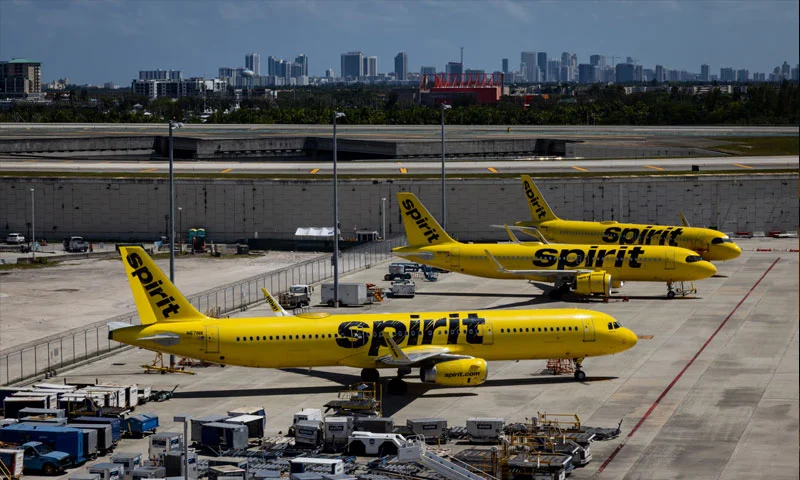
Spirit Airlines Prepares to Shut Down After Years of Losses
Spirit Airlines is preparing to cease operations after years of financial strain, failed merger attempts and mounting debt, according to media reports, marking a dramatic fall for one of the United States’ most prominent low cost carriers. The airline, which filed for bankruptcy twice in the past two years, now plans to sell its fleet and wind down operations after failing to secure a financial lifeline, the The Wall Street Journal reported. Spirit has not issued a formal statement confirming the shutdown. Read More: Airlines’ Busiest Summer Holiday Season Under Pressure as Fuel Costs Soar From disruptor to decline Founded on an ultra low fare model introduced in 2006, Spirit reshaped budget travel in the United States by offering cheap base fares while charging for add ons such as baggage, seat selection and even onboard refreshments. The strategy, inspired by Europe’s Ryanair, initially drew criticism but later gained wide acceptance among price sensitive travelers. Spirit expanded rapidly and remained profitable for years. However, rising competition and cost pressures eroded its advantage. Larger airlines introduced similar basic economy fares, reducing Spirit’s ability to undercut rivals. The airline’s troubles deepened after a failed takeover bid by JetBlue Airways. Spirit had agreed to a 3.8 billion dollar acquisition in 2022, but the deal collapsed after intervention by the United States Department of Justice. pic.twitter.com/Wz3ilRHD2z— Spirit Airlines (@SpiritAirlines) May 2, 2026 “Today’s ruling is a victory for tens of millions of travelers who would have faced higher fares and fewer choices had the proposed merger between JetBlue and Spirit been allowed to move forward,” former Attorney General Merrick Garland said at the time. “The Justice Department will continue to vigorously enforce the nation’s antitrust laws to protect American consumers.” Financial pressures intensify Following the blocked merger, Spirit struggled to stay afloat. It filed for Chapter 11 bankruptcy in November 2024 and again in August 2025. The airline attempted to stabilise its finances by cutting costs, selling aircraft and raising fares. Read More: Japan Airlines Tests Humanoid Robots to Take Over Cargo Jobs at Tokyo Airport More recently, Spirit held talks with the administration of Donald Trump over a potential 500 million dollar bailout. In exchange, the government could have taken up to a 90 percent stake. However, disagreements over the structure of the deal caused negotiations to collapse. External shocks further worsened the situation. The US Iran conflict pushed jet fuel prices sharply higher, placing additional strain on the airline’s balance sheet. In a client note cited by CNBC, Jamie Baker warned that if fuel prices reached 4.60 dollars per gallon, Spirit could face an additional 360 million dollars in costs this year. What passengers should know For travelers, the potential shutdown raises immediate concerns. Industry experts say passengers should begin preparing alternative travel plans, especially for flights scheduled in the coming months. Refunds remain uncertain in the event of a shutdown following bankruptcy proceedings. However, passengers who paid with credit cards may be able to recover funds through chargeback mechanisms. Read More: Global Airline Networks Strained by Delays and Cancellations Other airlines often step in during such disruptions by offering rescue fares. These discounted tickets help stranded passengers rebook travel at short notice. Spirit’s possible exit could also reshape the US aviation market. The airline has long played a key role in keeping fares low on competitive routes. Analysts warn that ticket prices may rise if the budget carrier disappears. For millions of cost conscious travelers, Spirit’s decline signals the loss of a major low fare option, with no clear replacement in sight.

Pakistan Inflation Back Above 10% After Nearly 2 Years
Pakistan’s consumer inflation jumped back into double digits in April after nearly two years, as rising transport fares and energy prices pushed up the cost of living across the country, official data showed. The Consumer Price Index rose by nearly 11 percent year on year in April, compared with 11.1 percent in July 2024, the last time inflation crossed the 10 percent mark. The latest figures reflect renewed pressure on households already struggling with high utility bills and volatile food prices. On a month on month basis, inflation increased by 2.48 percent in April, according to data released by the Pakistan Bureau of Statistics. Read More: Inflation May Hit 17% as Middle East Conflict Disrupts Pakistan Economy Transport, fuel and food drive surge The sharp rise in inflation was largely driven by transport costs, which surged 15.47 percent compared to the previous month. Perishable food items also recorded a steep increase of 15.25 percent, underlining continued volatility in essential commodities. Urban inflation stood at 11.11 percent annually, slightly higher than 10.56 percent in rural areas. Monthly inflation in cities rose by 2.75 percent, compared to 2.09 percent in rural regions. Food inflation increased by 6.9 percent in urban areas and 7.3 percent in rural areas. Meanwhile, non food inflation remained elevated at 13.8 percent in urban centres and 13.6 percent in rural areas. Among key food items, tomatoes rose by 57.10 percent, fresh vegetables by 40.67 percent, and eggs by 14.38 percent. Prices of onions, potatoes, milk products and meat also increased. Read More: Pakistan Fuel Prices Jump 56% While India Holds Steady Non food categories saw even sharper spikes. Motor liquified hydrocarbons jumped by 38.34 percent, transport services by 27.86 percent, and motor fuel by 18.22 percent. Housing, water, electricity, gas and fuels also rose by 2.43 percent, adding to household strain. Energy shock and policy response Analysts link the inflation surge to global energy disruptions, particularly the blockage of the Strait of Hormuz. The route handles a large share of Pakistan’s oil imports. Prime Minister Shehbaz Sharif said the country’s weekly oil import bill had risen sharply. He stated that it jumped to 800 million dollars from 300 million dollars before the US Israel war began on Feb 28. The State Bank of Pakistan responded by raising its policy rate to 11.50 percent from 10.50 percent. The central bank had kept rates unchanged since December 2025. However, former economic adviser Dr Ashfaq H. Khan criticised the move. He said, “the United States triggered the global energy crisis through war in the Middle East, followed by Iran blocking the Strait of Hormuz, pushing up energy prices and fuelling global inflation.” He added that “interest rates are a demand-side tool, effective when demand exceeds supply.” He warned that tightening policy in a supply driven inflation environment could lead to stagflation. Dr Ashfaq termed the rate hike a wrong decision, saying it was taken to meet commitments made to the International Monetary Fund. Inflation outlook and pressures ahead Inflation between July and April reached 6.19 percent in fiscal year 2025-26, up from 4.73 percent in the same period last year. This rise comes despite a high base effect. Read More: Pakistan Becomes South Asia’s Most Expensive Country for Petrol Core inflation, which excludes food and energy, stood at 8 percent in urban areas and 8.5 percent in rural regions. This indicates persistent underlying price pressures. The government has set an inflation target of 7 percent for the current fiscal year. However, rising fuel costs, supply shocks and currency pressures may make that target difficult to achieve. For consumers, the latest spike signals continued erosion of purchasing power. While some relief has emerged from lower wheat and flour prices, rising transport and utility costs continue to outweigh those gains.
