


Heavy reliance on AI tools could weaken critical thinking, creativity and memory, researchers say, as concerns grow about how digital systems reshape human cognition. New research and expert analysis suggest that tools such as ChatGPT may reduce the mental effort people invest in problem solving. Scientists warn this shift could lead to long term cognitive decline if users consistently outsource thinking tasks. “On a high level, yes,” said Adam Green, a professor at Georgetown University. “There’s plenty of evidence that if you are not doing as much of the actual thinking, then your capability to do that kind of thinking is going to atrophy.” The debate comes as AI systems become harder to avoid. Major technology platforms now integrate AI responses into search engines and mobile devices, increasing exposure even for those who do not actively seek them out. From GPS to AI: a pattern of cognitive outsourcing Researchers compare the current moment to earlier technological shifts. Studies have shown that reliance on GPS reduces spatial memory, while search engines weaken recall of information, a phenomenon known as the Google Effect. Experts argue AI represents a more powerful form of cognitive outsourcing. “What’s happening with AI is that it’s giving us, for the first time, an easy way to trade process for product,” Green said. “It’s like you’re at the gym and a robot lifts the barbell for you. You get nothing.” Read More: When AI Goes Wrong: Robot Scares Diners Mid-Performance At the same time, evidence remains mixed. A large meta analysis co authored by Jared Benge examined 57 studies covering more than 411,000 adults. It found no proof that technology causes “digital dementia,” and suggested tech use may even lower the risk of cognitive decline. “Why do we think AI is going to be that different from other things that our brain has already adapted to?” Benge said. “It’s not inherent to the tool to be good or bad.” Risks to creativity and critical thinking Recent studies indicate that heavy AI users may perform worse on critical thinking tests. Researchers attribute this to “cognitive surrender,” where users trust AI outputs over their own reasoning, even when the system makes errors. The risk increases when users lack subject knowledge. “If the user doesn’t have the expertise to judge whether the output is great or not,” said Hank Lee of Carnegie Mellon University, “that’s the danger.” Creativity may also suffer. Early research suggests people who rely on AI for idea generation produce more predictable outcomes. Experts say creative thinking depends on struggle, experimentation and unexpected connections, processes that AI can bypass. How to use AI without losing mental sharpness Experts stress that AI itself is not harmful but misuse can be. They recommend practical steps to maintain cognitive engagement. Users should form their own opinions before consulting AI and use it to challenge rather than replace their thinking. Writing notes, solving problems manually and delaying AI assistance can improve memory retention. Barbara Oakley, a learning expert, said engaging actively with information helps move it into long term memory. Slowing down and adding “friction” in the learning process can strengthen understanding. Read More: The Reality of Home Robots: From Folding Laundry to Watering Plants Experts also advise spending more time developing original ideas before turning to AI tools. This allows the brain to build creative capacity rather than outsource it. Despite concerns, researchers remain cautiously optimistic. Human cognition continues to adapt to technological change, and the ability to think independently remains a key advantage. “The distinctness and diversity of human ideas is going to be the great value add in the coming years,” Green said.
Pakistan Says It Downed Eight Indian Jets During Conflict
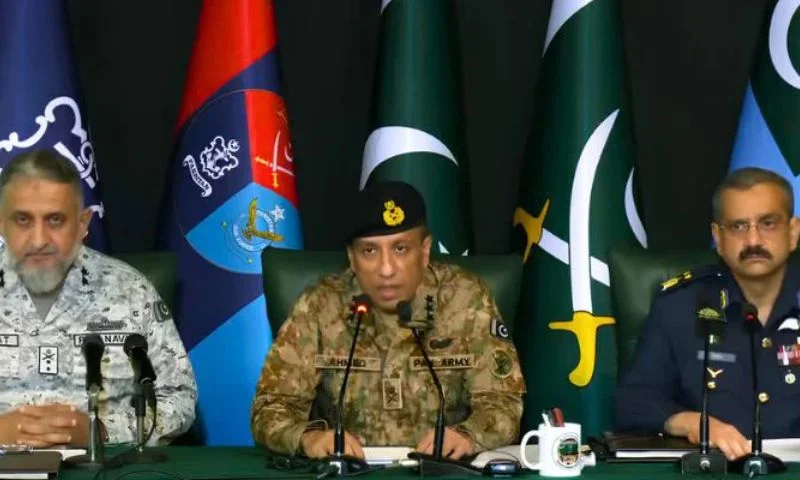
Pakistan’s military said there is “no space for war” between nuclear neighbours as it marked the first anniversary of Marka-e-Haq, highlighting lessons from last year’s conflict with India and outlining its strategic consequences. The remarks came during a joint press conference led by Ahmed Sharif Chaudhry, alongside senior officials from the navy and air force. The military reaffirmed its commitment to regional stability while stressing readiness to defend national sovereignty. “Anyone who thinks there is space for war between two nuclear neighbours is crazy. That is madness. Only a madman can think about,” Lt Gen Chaudhry said. The anniversary refers to the brief but intense confrontation that followed India’s strikes on May 6 last year. The conflict lasted around 87 hours and ended on May 10 after a ceasefire facilitated by the United States. Pakistan said its forces downed eight Indian aircraft during Operation Bunyan-um-Marsoos, including Rafale, Su-30, MiG-29 and Mirage 2000 jets, along with a multi-role unmanned system. Strategic consequences and regional narrative Lt Gen Chaudhry said the conflict reshaped global perceptions and produced “10 strategic consequences.” He argued that India’s narrative of linking Pakistan to terrorism “stood buried forever.” “International community… now fully understand that Pakistan… is not a perpetrator but a victim of Indian sponsored terrorism,” he said. He questioned India’s claims regarding the Pahalgam incident, asking, “Where is the evidence?” He added, “The whole world… is asking who is behind the attack. Nobody buys this… You are the biggest terrorist.” The ISPR chief also pointed to what he described as the politicisation of India’s military and the militarisation of its politics. He called the trend “dangerous” and criticised statements by Indian officials as misleading. He said the conflict established Pakistan as a “net security stabiliser” in the region and demonstrated its ability to control escalation responsibly. Multi-domain warfare and defence posture Lt Gen Chaudhry said the conflict highlighted a shift in modern warfare. He described it as multi-domain, spanning land, sea, air, cyberspace and information. “By God blessing, Pakistan’s armed forces were prepared… We were prepared back then, and we are prepared today as well,” he said. Tariq Ghazi said the Pakistan Air Force maintained continuous surveillance and defensive readiness during the conflict. “We adopted a strong air defence posture… with combat air patrols, scrambles, and eyes on the sky all the time,” he said. Rear Admiral Shifaat Ali Khan said the navy ensured uninterrupted maritime operations despite Indian deployments in the Arabian Sea. He added that Pakistan remained ready to target key naval assets if required. The ISPR chief said the conflict reinforced deterrence and national unity. He described the alignment between citizens, government and armed forces as the “Bunyan-um-Marsoos effect.” Broader security outlook and diplomacy Lt Gen Chaudhry also highlighted Pakistan’s global role, calling it a “geopolitically significant and responsible middle power.” He said the country continues to support regional peace efforts, including diplomatic facilitation in international conflicts. On relations with Saudi Arabia, he said ties remain “deep and multidimensional.” “Any threat to Saudi Arabia is also a threat to us,” he added, referring to a recent defence agreement between the two countries. The military also reiterated that political dialogue within Pakistan remains the responsibility of political parties. “We are not a stakeholder in the politics of Pakistan,” Chaudhry said.

Man Pulls 21,000-Pound Bus With Neck to Break Guinness Record
A 49-year-old strongman from Aruba has earned his 10th Guinness World Records title after pulling a bus weighing more than 21,000 pounds using only his neck. Egmond Molina completed the feat on January 9 by pulling a 21,737-pound bus for more than 65 feet while attached to a rope secured around his neck, Guinness World Records confirmed this week. The achievement officially gave Molina the record for the “heaviest vehicle pulled by the neck,” surpassing the previous mark of 17,769.26 pounds set by Ukrainian athlete Dmytro Hrunskyi in 2024. Guinness World Records said Molina completed the challenge under strict supervision and measurement standards required for official certification. ‘A psychological battle’ Molina described the attempt as physically painful and mentally exhausting because the rope compressed his airway throughout the challenge. “With the rope compressing my airway, I must generate force while carefully controlling my breathing under intense strain,” Molina told Guinness World Records. “It becomes a psychological battle to remain composed while the body is under severe stress,” he added. Video released by Guinness showed Molina leaning forward while slowly dragging the large vehicle across the marked distance. Spectators and officials watched closely as he completed the attempt. Strongman competitions often involve extreme pulling challenges using trucks, buses, planes and trains. However, neck-pulling records remain among the rarest because of the high physical risk involved. Sports experts say such stunts require years of conditioning focused on neck strength, breathing control and body stability. Athletes also train extensively to avoid spinal and muscular injuries. Molina now holds 10 Guinness titles The latest achievement marks Molina’s 10th Guinness World Records title and further strengthens his reputation as one of Aruba’s most unusual sporting figures. His previous records include the fastest 20-meter bus pull with one finger in 33.32 seconds and the fastest 20-meter tram pull with teeth in 39.9 seconds. He also holds records for the fastest hot water bottle burst at 2.87 seconds and the most crown cap bottles opened with both hands in 30 seconds with six bottles. Molina said he dedicates his achievements to his family and the younger generation in Aruba. “My records are a tribute to my people and my family’s enduring legacy,” he said. He also named his children, Nigel, Egmond Junior, Benjamin and Adelinda, while speaking about the inspiration behind his record attempts. Aruba, a small Dutch Caribbean island known mainly for tourism, has produced several athletes in baseball, martial arts and endurance sports. Molina’s Guinness achievements have drawn international attention to the island in recent years. Guinness World Records regularly features extreme strength and endurance challenges, though officials stress that such attempts should only occur under professional supervision and safety protocols.
UN Says Gaza Population Confined To Less Than Half Of Territory
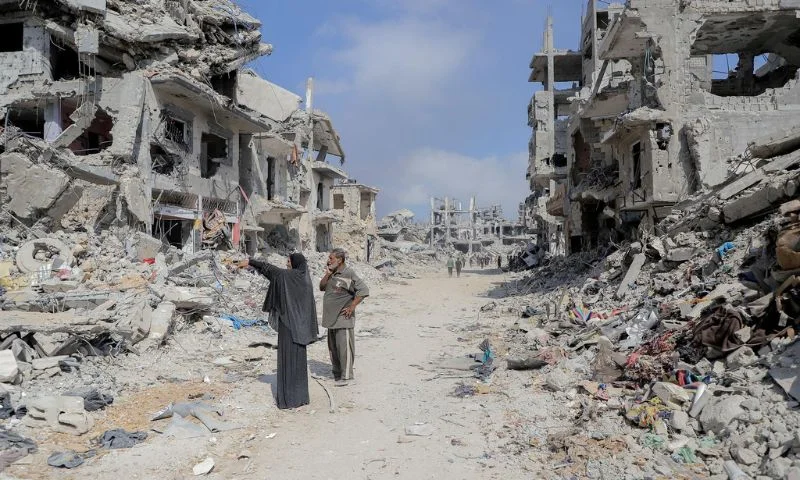
The United Nations says the entire population of Gaza remains restricted to less than half of the territory, limiting access to essential services, land resources and humanitarian support. According to the UN Office for the Coordination of Humanitarian Affairs, about 2.1 million people continue to face severe movement constraints despite months having passed since a ceasefire declaration. Humanitarian officials say large areas of Gaza remain inaccessible, including locations where critical facilities and land reserves are situated. Residents cannot travel abroad or reach the West Bank, where specialised healthcare services are available. “People who are allowed to exit as part of medical evacuations represent a tiny fraction of those who need services that are unavailable locally,” the agency said. Aid efforts continue amid severe shortages Despite restrictions, humanitarian groups continue to provide basic relief. OCHA reported that partners distributed nearly 5,000 bedding items, 600 bedding kits, more than 1,500 sealing kits and around 550 tents to over 4,400 families last week. Food assistance remains critical for survival. Aid organisations serve about 1.1 million meals daily through more than 120 community kitchens across the territory. However, the World Food Programme warns that hunger persists even after six months of relative calm. Families still depend heavily on food assistance, as fresh food prices remain out of reach for many. “One in five families eats only one meal every day,” OCHA said, citing WFP data. Fuel shortages have further worsened conditions. OCHA reported that nearly seven out of ten families now burn waste or use unsafe materials for cooking due to a lack of gas. This marks a 13 percent increase compared with the previous month. Aid agencies say restrictions on the entry of essential supplies continue to hinder recovery efforts. Limits on humanitarian operations have also slowed the restoration of local services, including healthcare and infrastructure. Displacement and violence extend beyond Gaza The humanitarian situation remains fragile in the West Bank as well. OCHA reported that settler violence continues to drive displacement in several areas. Over the past week, more than 30 Palestinians were displaced following repeated threats and attacks in communities around Hebron and Ramallah. Since 2023, violence has forced more than 5,900 Palestinians to leave their homes. Around 2,000 people have been displaced this year alone, according to UN data. Humanitarian agencies warn that prolonged restrictions, economic hardship and insecurity are deepening the crisis across Palestinian territories. Aid groups continue to call for improved access, increased humanitarian funding and stronger protection measures for civilians. They stress that without sustained international intervention, living conditions are likely to deteriorate further.

Meet The Robot Hand That Acts Like A Human Brain In Real Time
A French robotics startup has launched a new artificial intelligence model designed to make robots more adaptable across industries, alongside a human like robotic hand capable of performing complex tasks. Genesis AI, backed by former Eric Schmidt and telecom investor Xavier Niel, said its GENE 26.5 model can operate a range of robots, including machines built by other manufacturers. The company, co founded by former Mistral researcher Theophile Gervet, is in advanced talks with potential customers in France, Germany and Italy, according to Reuters. Europe at the centre of AI robotics push Genesis AI launched its platform at a time when Europe seeks to rebuild its industrial base and reduce dependence on Asian manufacturing hubs. The company said it is prioritising European markets for both talent and demand. “There were two big reasons. The first one was the talent base,” Gervet told Reuters. “The second reason was the industrial base as a market for us.” The startup targets sectors such as automotive, electronics, pharmaceuticals and logistics. These industries increasingly require robots capable of handling delicate or variable tasks that traditional machines struggle to perform. Read More: Japan Airlines Tests Humanoid Robots to Take Over Cargo Jobs at Tokyo Airport Genesis said its AI model allows robots to adapt to different environments and workflows, reducing the need for extensive reprogramming. The company is also building large scale robotics datasets by collecting real world motion data from industrial workers using sensor equipped gloves. Founded in early 2025, Genesis AI raised $105 million in its first funding round, matching one of the largest seed investments in France. Backers include Bpifrance. Industry demand continues to rise. German firm Schaeffler recently said it expects its robotics order book to reach hundreds of millions of euros by 2030, reflecting strong growth in automation. Human like robotic hand targets complex tasks Alongside its AI model, Genesis unveiled a robotic hand designed to replicate human anatomy more closely than standard industrial grippers. In demonstrations shared with Reuters, the hand performed tasks such as chopping tomatoes, cracking eggs, solving a Rubik’s Cube and even playing the piano. The design enables more direct transfer of human motion to machines, improving precision and flexibility. The launch places Genesis in direct competition with China’s Linkerbot, which is targeting a multi billion dollar valuation as demand grows for advanced robotic manipulation systems. Both companies focus on improving dexterity in machines, a key limitation in current industrial robotics. Analysts say breakthroughs in this area could transform manufacturing, logistics and healthcare operations. Read More: When AI Goes Wrong: Robot Scares Diners Mid-Performance Genesis expects to raise additional funding as it scales operations but said a public listing remains premature. Executives indicated that commercial partnerships will likely run between three and five years, depending on client needs, as companies integrate AI driven robotics into existing production systems. The company declined to disclose specific customers but confirmed it is already signing agreements with industrial partners.

Suzuki Fronx Price Revealed: Offers Hybrid Power At A Surprising Price
Pak Suzuki has announced pricing for the new Suzuki Fronx, positioning its top variant as a strong contender in Pakistan’s growing crossover market. The company unveiled four variants with prices ranging from Rs 59,99,999 to Rs 63,74,999. The entry level GL manual starts at Rs 59,99,999, while the GL automatic is priced at Rs 60,99,999. The top tier GLX variant with a mild hybrid system costs Rs 62,99,999 for the single tone version and Rs 63,74,999 for the dual tone option. GLX variant stands out in competitive segment The GLX variant has emerged as the most attractive option. It is Pakistan’s only locally assembled mild hybrid crossover priced below Rs 65 lacs. This pricing gives it a clear advantage in a segment where hybrid options often cost significantly more. Analysts say the value proposition becomes clearer when compared with rivals. The Jaecoo J5 starts at Rs 67 lacs, making the Fronx GLX cheaper than even the base variant of its closest competitor. Other options in the market also fall short on features at similar prices. The Kia Stonic is priced around Rs 60 lacs but lacks a mild hybrid system. Meanwhile, models like the Honda HR-V, Toyota Corolla Cross and Peugeot 2008 sit above Rs 70 lacs, placing them in a higher price bracket. On price alone, the GLX “makes a reasonable case for itself as a value-for-money option for buyers in the Rs 60 lacs bracket looking for an entry-level hybrid crossover.” GL variants struggle to justify pricing While the top variant strengthens Suzuki’s position, the lower trims face criticism. The GL automatic, priced at Rs 61 lacs, offers a conventional petrol engine paired with a 4 speed transmission. Industry observers say this setup feels outdated for its price point in 2026. The pricing gap further complicates the decision. The GLX mild hybrid costs only Rs 3.7 lacs more than the GL automatic. For that difference, buyers gain a more advanced powertrain and a 6 speed automatic gearbox. This pricing structure has shifted buyer focus toward the top trim. “The GLX is the only variant that makes sense because it offers a 6-speed automatic transmission, a mild-hybrid setup, improved safety equipment, and several features reserved for the top-spec model.” The manual GL variant remains relevant for a niche audience. Buyers who prefer manual transmission may still find it appealing due to its lower entry price. Market strategy and buyer outlook Suzuki appears to have priced the Fronx aggressively at the top while leaving gaps in the lower variants. This approach reflects a broader trend in Pakistan’s auto market, where buyers increasingly prioritise features and fuel efficiency over base pricing. The introduction of a locally assembled mild hybrid crossover below Rs 65 lacs could reshape competition in this segment. Rising fuel costs and demand for better efficiency continue to push interest toward hybrid technologies. For now, the GLX variant stands out as the model to watch. Buyers evaluating options in the Rs 60 to 65 lacs range may find it difficult to ignore the added value it brings.

iPhone 18 Pro Leak Reveals Game Changing Upgrades
New leaks suggest that the iPhone 18 Pro could bring notable upgrades in camera, display and artificial intelligence as Apple refines its flagship strategy for 2026. Reports from industry sources such as MacRumors and 9to5Mac indicate that Apple plans to improve battery life, boost efficiency and enhance real world performance. Analysts say Apple is focusing on meaningful upgrades instead of a full redesign. Display and camera lead the changes The display remains a key focus. Apple may reduce the size of the Dynamic Island to about 14.98mm. That would make it roughly 25 percent smaller than the current version. Apple could achieve this by placing more Face ID components under the display. The infrared camera may still stay visible, so a fully seamless screen may not arrive yet. The camera system could see a major shift. Leaks point to a variable aperture on the main sensor. This feature is common in professional cameras. Users would gain control over how much light enters the lens. This change could improve low light shots and depth effects. A wider telephoto aperture may also enhance zoom performance. Faster chip and smarter AI Apple is expected to introduce the A20 Pro chip. It will likely use a 2nm process to improve speed and reduce power use. This could help the phone handle complex AI tasks more smoothly. Software will also play a major role. Reports suggest iOS 27 may include deeper AI features. A new Siri camera mode could analyse objects and scenes in real time. There are also signs of tighter integration with Google’s Gemini AI. This could make Siri more conversational and capable. Apple may also refine its design. Reports suggest a more unified finish that blends glass and aluminium. A new Deep Red colour could become a highlight of the lineup. The company may simplify camera controls as well. Pressure based inputs could replace touch gestures to reduce accidental actions. Broader strategy and future plans The iPhone 18 Pro will likely headline Apple’s September event. Reports also hint at a foldable iPhone appearing at the same launch. Such a move would expand Apple’s hardware lineup and place it in direct competition with rivals in the foldable segment. Industry experts say these upgrades reflect a clear strategy. Apple aims to improve performance, design and AI without changing its core identity.

Emirates Profit Hits Record $5.4 Billion Despite Regional Tensions
Emirates Airline reported a record annual profit on Thursday as strong global travel demand helped the Dubai carrier overcome disruptions caused by military activity in the Gulf during the final month of its fiscal year. The airline said profit for the year ending March 2026 climbed more than 3 per cent to Dh19.7 billion ($5.4 billion), marking the strongest financial performance in its history. Revenue rose 2 per cent to Dh130.9 billion as the airline increased capacity across key international routes to meet surging passenger demand. Read More: Airlines’ Busiest Summer Holiday Season Under Pressure as Fuel Costs Soar “This is the best profit performance in the airline’s history,” Emirates said in a statement, adding that it retained its position as the “world’s most profitable airline”. The wider Emirates Group, which includes airport services company dnata, also reported strong growth. Group profits after tax increased 3 per cent to Dh21 billion during 2025-26, while revenue reached Dh150.5 billion. Gulf conflict disrupted operations in final month Emirates chairman and chief executive Sheikh Ahmed bin Saeed Al Maktoum said the airline experienced strong business conditions for most of the fiscal year before regional conflict disrupted air traffic in late February. “For the first 11 months of 2025-26, the picture across the group was very positive. Strong demand for our products and services was driving revenue,” Sheikh Ahmed said. “On 28 February, military activity massively disrupted global commercial air traffic in the Gulf region, including in the UAE.” The disruption followed heightened military tensions around the Gulf region that forced airlines to reroute flights and temporarily suspend some operations. Several carriers adjusted schedules because of airspace restrictions and safety concerns. Sheikh Ahmed credited Dubai’s aviation infrastructure and crisis response systems for helping Emirates maintain operations during the disruption. Read More: Spirit Airlines Prepares to Shut Down After Years of Losses “We are fortunate to be based in Dubai, where years of infrastructure investments and a cohesive aviation ecosystem has enabled the government to quickly secure safe corridors for commercial flights,” he said. He added that Emirates and dnata had “gradually restored operations” at Dubai International Airport, commonly known as DXB. “Although we are still operating at a lower passenger capacity than pre-disruption, cargo operations have ramped up to support the movement of essential goods into and through the UAE,” Sheikh Ahmed said. Strong demand boosts airline industry recovery Emirates benefited from continued growth in long-haul international travel, especially across Asia, Europe and the Middle East. Industry analysts say major Gulf carriers have continued to outperform many global rivals because of strong transit traffic through Dubai, Doha and Abu Dhabi. The airline also expanded operations during the year by adding more flights and restoring routes that had faced limitations during previous global disruptions. Read More: World’s Safest Airlines 2026: Full List of Top 25 Full-Service and Budget Carriers Dubai International Airport remained among the world’s busiest hubs for international passengers, reinforcing the emirate’s position as a global aviation and tourism centre. Analysts expect Emirates to continue investing heavily in fleet expansion and premium travel services as competition intensifies among Gulf carriers.

PCB Confirms Australia’s Return for Three Match ODI Series
The Pakistan Cricket Board (PCB) on Thursday confirmed that Australia men’s national cricket team will tour Pakistan later this month for a three-match One Day International series, continuing the growing cricket ties between the two countries. According to the PCB, the Australian squad will arrive in Islamabad on May 23 ahead of the opening ODI at the Rawalpindi Cricket Stadium on May 30. The second and third matches will take place at Gaddafi Stadium in Lahore on June 2 and June 4. The board said all three ODIs will begin at 4:30pm local time, while the toss will take place at 4pm. The upcoming series marks Australia’s first ODI tour of Pakistan since March and April 2022, when the visitors played a full bilateral series across formats after a gap of nearly 24 years. Pakistan to host Australia for three-match ODI seriesDetails here ➡️ https://t.co/bPD0LgRkAF#PAKvAUS pic.twitter.com/aAsGK4xxCS— PCB Media (@TheRealPCBMedia) May 7, 2026 That historic 2022 tour included Tests, ODIs and T20Is and played a major role in restoring Pakistan’s image as a safe destination for international cricket following years of security concerns. Pakistan eye another strong home performance The latest ODI series comes months after Australia toured Pakistan for a three-match T20I series in January and February this year. Pakistan swept that series 3-0 in Lahore, giving the hosts confidence ahead of another high-profile contest. Australia also featured prominently during the ICC Champions Trophy 2025 hosted in Pakistan earlier this year. The Australians defeated England cricket team by five wickets at Gaddafi Stadium on February 22 during the tournament. The match drew large crowds and highlighted Pakistan’s successful hosting of major ICC fixtures. Cricket analysts expect the ODI series to attract strong fan interest because both teams feature several experienced white-ball players and emerging talents ahead of future ICC events. Pakistan and Australia share a long ODI rivalry dating back to 1975. Australia historically dominated the format, but Pakistan has improved its home performances in recent years, especially in Lahore and Rawalpindi conditions. Busy international calendar for Pakistan The series also forms part of Pakistan’s packed international calendar as the PCB continues efforts to bring major cricket nations back for regular bilateral tours. In recent years, Pakistan has hosted teams including England cricket team, New Zealand national cricket team and South Africa national cricket team for full series across formats. Officials view these tours as crucial for strengthening Pakistan’s cricket economy, boosting tourism and maintaining momentum after the successful ICC Champions Trophy 2025. Series schedule: May 30: 1st ODI at Rawalpindi Cricket Stadium June 2: 2nd ODI at Gaddafi Stadium, Lahore June 4: 3rd ODI at Gaddafi Stadium, Lahore

Pakistan to End 200-Unit Power Subsidy Under IMF Deal
Pakistan has given written assurances to the International Monetary Fund (IMF) that it will replace the existing electricity subsidy system for low-consumption users with a targeted mechanism linked to the Benazir Income Support Programme (BISP) from January 2027, officials familiar with the discussions said. The move forms part of broader reform commitments under the IMF’s Resilience and Sustainability Facility programme aimed at reducing power sector distortions, improving subsidy targeting and strengthening climate-related financial reforms. Read More: IMF Imposes New Conditions on Pakistan for $1.2bn Loan Currently, households consuming up to 200 electricity units receive subsidised tariffs. However, officials said the existing system has led to misuse, with some consumers reportedly installing multiple electricity meters to keep individual consumption below the subsidy threshold. “The targeted subsidy will help curb the misuse of this subsidy,” a senior official told local media. Under the new framework, the government plans to replace the existing tariff differential subsidy and cross-subsidy structure with a targeted support system for low-income consumers through BISP data and the National Socio-Economic Registry database. “This will replace the budgeted tariff differential subsidy and cross-subsidy system with a targeted budgeted subsidy framework for low-income consumers via BISP,” the official said. IMF board to review Pakistan tranche Officials said Pakistan is expected to secure the second tranche of $200 million under the IMF’s Resilience and Sustainability Facility after the IMF Executive Board meeting scheduled for May 8 in Washington. The government is working with the World Bank to connect electricity consumers with the National Socio-Economic Registry system. Authorities will conduct validity checks before implementing the subsidy model in January 2027. Read More: IMF Sets Tough Budget Priorities for Pakistan Ahead of FY26 Plan Officials also said the government plans to hire an external firm by the end of the current month to develop a payment mechanism for the targeted subsidy programme. Pakistan’s power sector has long faced criticism for high transmission losses, circular debt and untargeted subsidies that place heavy pressure on public finances. The IMF has repeatedly urged Islamabad to improve energy pricing reforms and narrow fiscal leakages. Analysts say the proposed subsidy overhaul could become politically sensitive because millions of households currently benefit from subsidised electricity rates under the 200-unit slab system. Water charges and climate reforms also expanded The government has also committed to expanding the digital e-Abiana irrigation service charge system to Sindh, Khyber Pakhtunkhwa and Balochistan after introducing it in Punjab. Authorities plan to roll out the system by August 2027. Officials are also working with the World Bank on irrigation water tariff adjustment mechanisms linked to operations and maintenance cost recovery in Punjab and Sindh by February 2027. Pakistan further informed the IMF that it had implemented several agreed reform measures under the first review of the Resilience and Sustainability Facility programme. Read More: IMF Demands Fuel Reforms: What It Means for Millions of Pakistanis According to officials, the State Bank of Pakistan issued climate-related financial risk management guidelines in December 2025. The Securities and Exchange Commission of Pakistan also introduced disclosure guidelines for listed companies regarding climate-related risks and opportunities. Officials added that the government is developing a framework to coordinate federal and provincial disaster risk financing needs under the National Disaster Risk Financing Strategy by August 2026 with IMF support.
