
Pakistan’s military said there is “no space for war” between nuclear neighbours as it marked the first anniversary of Marka-e-Haq, highlighting lessons from last year’s conflict with India and outlining its strategic consequences.
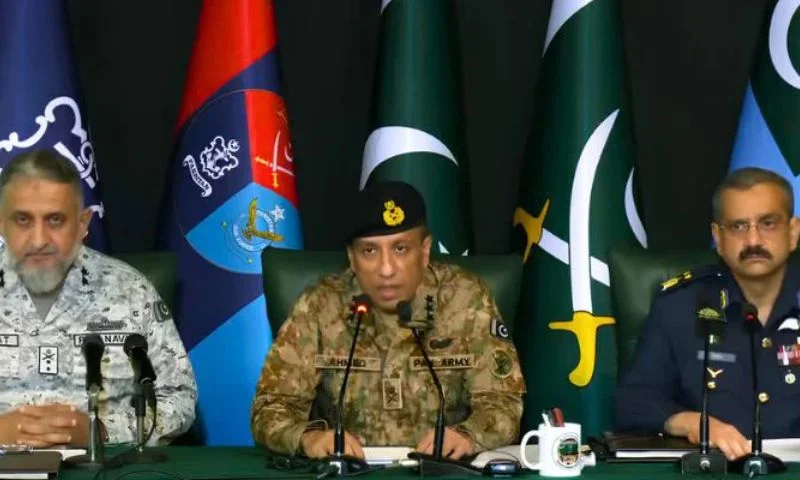
The remarks came during a joint press conference led by Ahmed Sharif Chaudhry, alongside senior officials from the navy and air force. The military reaffirmed its commitment to regional stability while stressing readiness to defend national sovereignty.
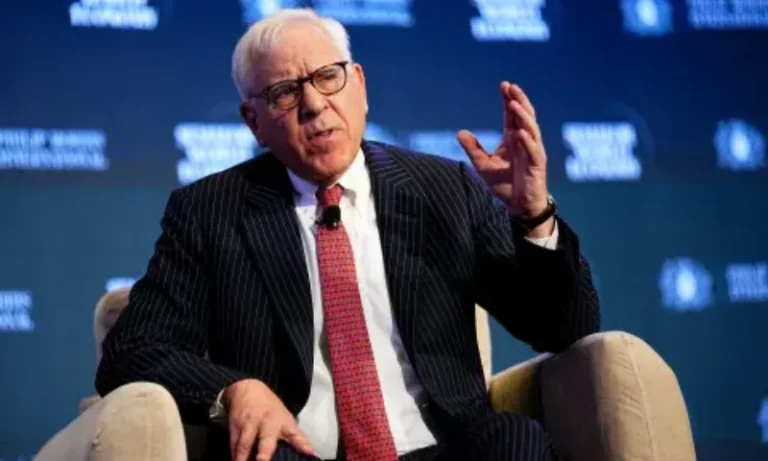
“Anyone who thinks there is space for war between two nuclear neighbours is crazy. That is madness. Only a madman can think about,” Lt Gen Chaudhry said.
The anniversary refers to the brief but intense confrontation that followed India’s strikes on May 6 last year. The conflict lasted around 87 hours and ended on May 10 after a ceasefire facilitated by the United States.
Pakistan said its forces downed eight Indian aircraft during Operation Bunyan-um-Marsoos, including Rafale, Su-30, MiG-29 and Mirage 2000 jets, along with a multi-role unmanned system.
Strategic consequences and regional narrative
Lt Gen Chaudhry said the conflict reshaped global perceptions and produced “10 strategic consequences.” He argued that India’s narrative of linking Pakistan to terrorism “stood buried forever.”
“International community… now fully understand that Pakistan… is not a perpetrator but a victim of Indian sponsored terrorism,” he said.
He questioned India’s claims regarding the Pahalgam incident, asking, “Where is the evidence?” He added, “The whole world… is asking who is behind the attack. Nobody buys this… You are the biggest terrorist.”
The ISPR chief also pointed to what he described as the politicisation of India’s military and the militarisation of its politics. He called the trend “dangerous” and criticised statements by Indian officials as misleading.
He said the conflict established Pakistan as a “net security stabiliser” in the region and demonstrated its ability to control escalation responsibly.
Multi-domain warfare and defence posture
Lt Gen Chaudhry said the conflict highlighted a shift in modern warfare. He described it as multi-domain, spanning land, sea, air, cyberspace and information.
“By God blessing, Pakistan’s armed forces were prepared… We were prepared back then, and we are prepared today as well,” he said.
Tariq Ghazi said the Pakistan Air Force maintained continuous surveillance and defensive readiness during the conflict. “We adopted a strong air defence posture… with combat air patrols, scrambles, and eyes on the sky all the time,” he said.
Rear Admiral Shifaat Ali Khan said the navy ensured uninterrupted maritime operations despite Indian deployments in the Arabian Sea. He added that Pakistan remained ready to target key naval assets if required.
The ISPR chief said the conflict reinforced deterrence and national unity. He described the alignment between citizens, government and armed forces as the “Bunyan-um-Marsoos effect.”
Broader security outlook and diplomacy
Lt Gen Chaudhry also highlighted Pakistan’s global role, calling it a “geopolitically significant and responsible middle power.” He said the country continues to support regional peace efforts, including diplomatic facilitation in international conflicts.
On relations with Saudi Arabia, he said ties remain “deep and multidimensional.” “Any threat to Saudi Arabia is also a threat to us,” he added, referring to a recent defence agreement between the two countries.
The military also reiterated that political dialogue within Pakistan remains the responsibility of political parties. “We are not a stakeholder in the politics of Pakistan,” Chaudhry said.