


Meta CEO Mark Zuckerberg delivered a stark message to employees during an internal town hall meeting, confirming another major round of layoffs while refusing to rule out deeper cuts in the future. The company plans to lay off around 8,000 employees starting May 20, according to details shared during the meeting. The reductions represent nearly 10 percent of Meta’s global workforce. Meta also plans to eliminate roughly 6,000 open positions before filling them, further signaling the company’s aggressive cost-cutting strategy as it shifts resources toward artificial intelligence. Read More: Meta Is Tracking Every Click and Keystroke to Train AI to Replace You Since 2022, Zuckerberg has overseen the elimination of nearly 25,000 jobs across the company. During the town hall, Zuckerberg acknowledged uncertainty surrounding Meta’s future workforce size. “I wish that I could tell you that I have a crystal ball plan for the next three years,” he told employees. “I don’t. I don’t think anyone does.” The remarks marked Zuckerberg’s first direct address to employees since March 2026. AI Investments Drive Restructuring Zuckerberg linked the layoffs to Meta’s growing investment in AI infrastructure and computing power. Explaining the company’s spending priorities, he said Meta has “two major cost centres: compute infrastructure and people-oriented things.” “As the company prioritises investing more in AI, we do need to take down the size of the company somewhat,” he added. Meta has spent billions of dollars expanding its AI capabilities as competition intensifies with rivals such as OpenAI, Google and Microsoft. The company recently accelerated investments in AI chips, large language models and data center infrastructure. Analysts say those projects require enormous long-term spending. Meta’s Chief Financial Officer Susan Li also acknowledged uncertainty over the company’s ideal workforce size. She said Meta still does not know its “optimal” long-term growth level because AI technology continues to evolve rapidly. Employees Question Layoffs Despite Strong Profits The latest cuts have increased anxiety among employees, especially after Meta reported strong financial results in recent quarters. Workers reportedly criticized management on internal message boards and questioned why the company continues to cut jobs despite record-breaking profits. Several employees also raised concerns about Meta’s growing workplace monitoring systems. According to reports, Meta is now tracking employee keystrokes and mouse movements to help train AI systems. One employee reportedly described the practice as “dystopian” during internal discussions. The layoffs continue a broader restructuring trend across the global technology sector. Companies including Amazon, Google and Microsoft have also reduced staff while redirecting billions toward AI development. Industry analysts say major technology firms now face pressure to balance profitability with the enormous costs of building next-generation AI systems. For Meta employees, however, Zuckerberg’s comments reinforced growing fears that further cuts may still lie ahead.
Pakistan Continues Fuel Cuts and 4 Day Workweek Until June 13
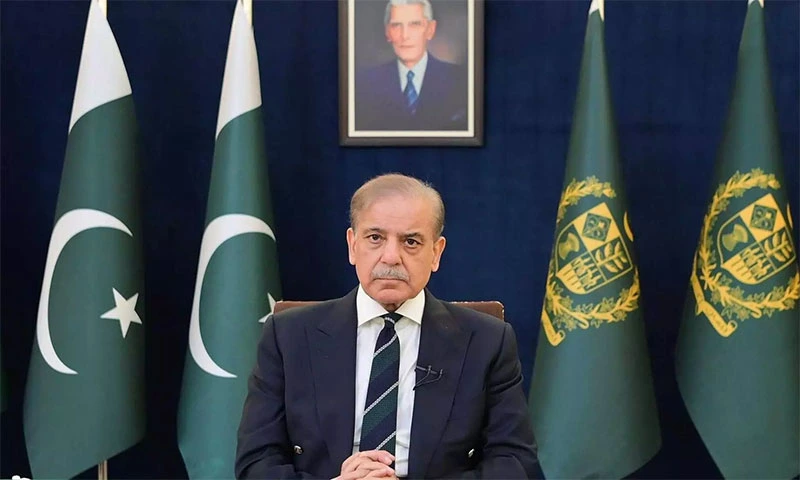
Pakistan on Monday extended its nationwide austerity drive and fuel conservation measures until June 13 as uncertainty surrounding the Middle East conflict continues to pressure global oil markets. The Cabinet Division issued a formal notification after Shehbaz Sharif approved the extension on the recommendations of the implementation committee. According to the notification, the government will continue a 50% reduction in fuel supply for official vehicles during the extended period. In addition, authorities decided to keep 60% of official government vehicles off the roads under the ongoing austerity plan. The federal government first introduced the emergency measures on March 9 after petrol and diesel prices rose sharply across the country. At the time, Pakistan faced mounting pressure from disruptions in global oil supplies linked to tensions in the Middle East. Fuel prices surged after Iran closed the Strait of Hormuz in response to joint attacks launched by the United States and Israel on February 28. The conflict later ended on April 8 following a Pakistan-mediated ceasefire. However, diplomatic efforts to reach a permanent settlement remain stalled. Four-day workweek and travel restrictions continue During his March 9 televised address, Prime Minister Shehbaz said the wider region had become deeply affected by the Middle East conflict. He stressed that Pakistan was also pursuing diplomatic efforts to help ease tensions and stabilise the situation. The austerity measures apply to federal ministries, government departments, autonomous institutions, state-owned enterprises, the legislature, defence organisations and the judiciary. Apart from fuel reductions, the government also introduced a four-day workweek for public offices. However, essential services and the banking sector remained exempt. Authorities further instructed federal and provincial departments to reduce non-essential expenditure by 20% during the final quarter of the fiscal year. Meanwhile, the government maintained restrictions on official foreign visits by ministers, parliamentarians and government officials except for mandatory trips. The plan also requires up to 50% of government employees to work from home on alternate days, excluding workers involved in essential services. Officials must continue travelling in economy class, while departments are encouraged to hold virtual meetings instead of physical gatherings to reduce costs. Oil market uncertainty keeps pressure on Pakistan Pakistan imports a significant portion of its oil and liquefied natural gas requirements, making the country highly vulnerable to supply disruptions and rising global energy prices. Although the ceasefire between Iran and Israel remains in place, tensions continue over proposals concerning the future status of the Strait of Hormuz. The waterway handles a major share of global oil shipments and remains one of the world’s most strategically important energy routes. Energy analysts say prolonged uncertainty in the Gulf region could continue affecting fuel prices and inflation across oil-importing countries, including Pakistan. The government hopes the austerity measures will reduce fuel consumption, limit public spending and ease pressure on foreign exchange reserves during the ongoing uncertainty. Officials have not indicated whether the measures could continue beyond June 13 if tensions in the Middle East remain unresolved.
