

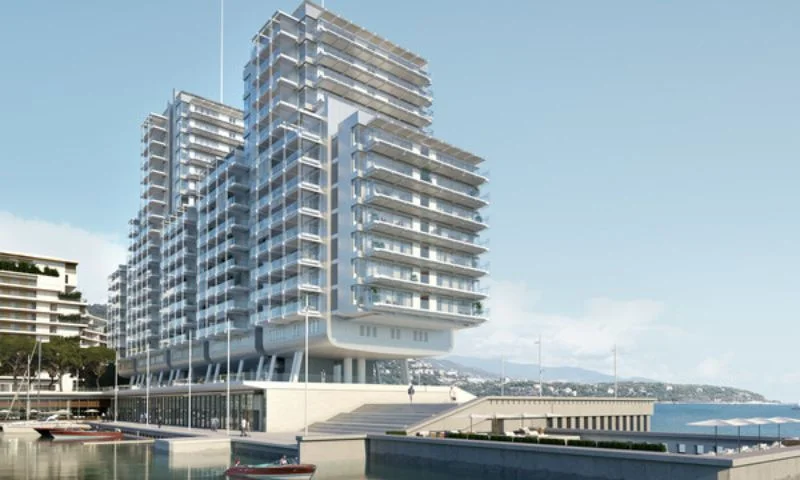
A luxury penthouse in Monaco has shattered global real estate records after selling for more than $500 million, highlighting the growing demand for ultra-premium properties among the world’s wealthiest buyers. The property sits atop the exclusive Le Renzo development on Monaco’s waterfront. The apartment reportedly sold for €471 million, or roughly $554 million, making it the most expensive residential property transaction ever recorded. The buyer is System Capital Management, a holding company owned by Ukrainian billionaire Rinat Akhmetov, according to reports. The massive penthouse stretches across five floors and spans more than 26,900 square feet. The residence includes 21 rooms, private terraces overlooking the Mediterranean Sea, a swimming pool, jacuzzi and eight dedicated parking spaces. Reports also say the apartment features luxury furnishings and advanced home automation systems. Monaco Continues to Dominate Luxury Real Estate The sale reinforces Monaco’s reputation as one of the world’s most expensive property markets. The tiny Mediterranean principality has long attracted billionaires because of its tax policies, security and limited supply of land. Property prices in Monaco crossed €70,000 per square meter last year, among the highest levels globally. Le Renzo also holds special significance in Monaco’s real estate market. The development became one of the first major projects in decades to reshape Monaco’s skyline. Architects designed the penthouse to resemble a five-story mansion positioned above a luxury residential tower. Real estate analysts say the combination of rarity, location and exclusivity pushed the property’s value to record levels. The deal comfortably surpassed previous records for luxury residential sales. One earlier benchmark involved the sale of a London mansion owned by property developer Nick Candy for more than $350 million. Another major record came when hedge fund billionaire Ken Griffin purchased a New York penthouse for around $240 million. Billionaires Continue Fueling Ultra-Luxury Property Boom Analysts say the Monaco transaction reflects continued growth in the global ultra-luxury real estate market. Despite economic uncertainty in many regions, demand for trophy properties among billionaires remains strong. Luxury buyers increasingly seek homes that offer privacy, security, premium amenities and exclusive waterfront locations. Monaco continues to attract wealthy investors from Europe, the Middle East, Russia and Asia because of its political stability and luxury lifestyle. Experts also note that supply constraints in Monaco make large properties exceptionally rare. The principality covers less than one square mile, limiting opportunities for new developments and driving prices even higher. Industry observers say deals of this size underline how wealth concentration continues reshaping the top end of the global property market. While spending more than half a billion dollars on a penthouse may seem extraordinary, analysts say ultra-wealthy buyers increasingly view such properties as both status symbols and long-term investments.
What Muslims Want the World to Understand About Qurbani
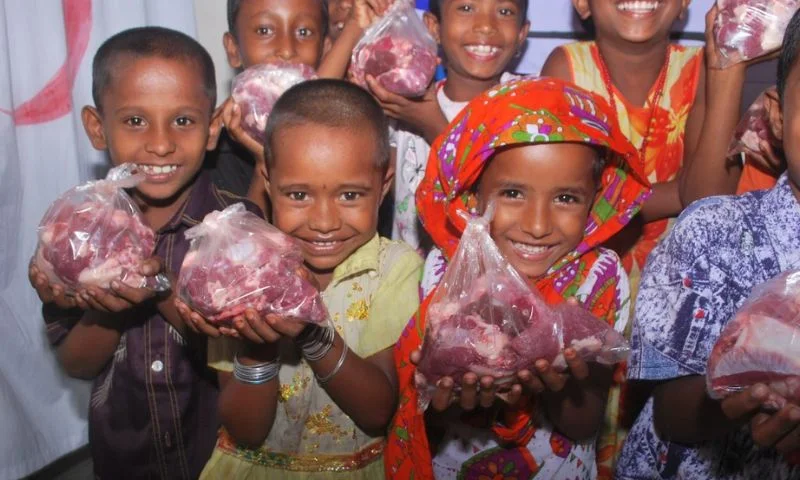
Every year, millions of Muslims across the world celebrate Eid al-Adha with prayers, family gatherings and the sacrifice of animals such as sheep, goats, cows and camels. For many non-Muslims, and even some younger Muslims, the ritual often raises questions. Why does Islam require animal sacrifice? Is it simply tradition, or does it hold a deeper spiritual meaning? Islamic scholars say the answer begins with one of the most powerful stories in Islamic tradition: the story of Prophet Ibrahim and his son Prophet Ismail. Muslims believe Prophet Ibrahim, peace be upon him, saw in a dream that Allah commanded him to sacrifice his beloved son Ismail. In Islam, prophets’ dreams carry divine instruction. Despite the emotional weight of the command, Ibrahim obeyed without hesitation. When he informed Ismail, the son also accepted Allah’s command with patience and faith. The Qur’an quotes Ismail as saying: “Father, do as you are commanded. You will find me, if Allah wills, among the patient.” As Ibrahim prepared to carry out the sacrifice, Allah replaced Ismail with a ram. Islamic scholars say the event was never about bloodshed. Instead, it symbolized faith, obedience and willingness to surrender personal attachment for the sake of God. That tradition continues today through Qurbani, the ritual sacrifice Muslims perform during Eid Al Adha. More Than Sacrifice The Qur’an emphasizes that the spiritual meaning behind Qurbani matters more than the act itself. Allah says in the Qur’an: “Their meat and blood do not reach Allah. What reaches Him is your piety and consciousness of Him.” Scholars explain that Muslims sacrifice valuable animals to demonstrate gratitude, generosity and devotion. The ritual also carries a strong social purpose because families distribute meat among relatives, neighbors and poor communities. The Prophet Muhammad, peace be upon him, encouraged Muslims to divide the meat into three portions: one for the family, one for relatives and friends, and one for the poor. In many countries, Eid Al Adha becomes a time when underprivileged families gain access to fresh meat that they rarely afford during the rest of the year. Religious scholars say the tradition strengthens compassion and social solidarity within Muslim societies. Islam also sets clear rules regarding the sacrifice. Only livestock animals qualify for Qurbani, including sheep, goats, cows and camels. The animals must meet minimum age requirements and remain healthy without visible illness or defects. The sacrifice begins after the Eid prayer on the 10th of Dhul Hijjah and continues until sunset on the 13th. “If someone sacrifices before the Eid prayer, it does not count as Qurbani. It is simply meat for the family,” scholars often explain based on prophetic teachings. A Lesson in Letting Go Islamic scholars describe Qurbani as a spiritual lesson in detachment and generosity. Muslims give away a significant portion of meat from an animal that could otherwise provide personal financial benefit. They say the ritual trains believers to release attachment to wealth, comfort and material possessions. Islam also exempts people who cannot financially afford the sacrifice. Children, the mentally incapacitated and financially struggling individuals are not required to perform Qurbani. Religious scholars stress that Eid Al Adha remains a celebration of faith, gratitude and community, even for those unable to sacrifice an animal. For millions of Muslims, the ritual ultimately serves as a reminder that true devotion lies not in the animal itself, but in the sincerity of the heart behind the sacrifice.

Palestinian-Chilean Star Elyanna Takes Center Stage at FIFA World Cup 2026
Palestinian-Chilean Star Elyanna has joined the official soundtrack lineup for the FIFA World Cup 2026 with her new single Illuminate, a collaboration with Canadian singer-songwriter Jessie Reyez. The release marks another major international milestone for the 24-year-old artist, who has become one of the most recognizable Arab voices in global pop music. Illuminate arrives shortly after FIFA confirmed Elyanna as one of the performers for the ceremony before Canada hosts its opening tournament match on June 12 at Toronto’s BMO Field. Read More: FIFA’s Massive World Cup 2026 Twist Changes Opening Ceremony Tradition Forever The lineup for the event also includes Alanis Morissette, Michael Buble and Alessia Cara. The song becomes the fourth release from The Official FIFA World Cup 2026 Album. Earlier tracks included Lighter by Jelly Roll and Carin Leon, Por Ella by Los Angeles Azules and Belinda, and Echo by Daddy Yankee and Shenseea. FIFA Expands Global Music Identity for 2026 Tournament Produced by Canadian hitmaker Cirkut, Illuminate follows FIFA’s long tradition of pairing major international tournaments with cross-cultural pop collaborations. Cirkut previously worked on global hits including Katy Perry’s Roar and Miley Cyrus’s Wrecking Ball. The 2026 World Cup marks the first time the tournament will take place across three host nations: the United States, Mexico and Canada. Organizers have increasingly positioned music as a key cultural element of the tournament experience. “I am deeply proud to represent my culture, my country, and the Middle East, North Africa, and the Arab world on such a global stage … through this song Illuminate,” Elyanna said in a statement. She added that the World Cup “brings people from all over the world together to celebrate culture and humanity”. Illuminate was co-written by Elyanna alongside longtime collaborators including her mother Abeer Sbiat Marjieh, brother Feras Margieh and Lebanese-Canadian artist Massari. The music video features montages of iconic World Cup moments and appearances from football legends including Diego Maradona and Ronaldo Nazario. Arab Artists Gain Bigger Role in FIFA Music The release also reflects the growing influence of Arab and North African artists in FIFA’s entertainment strategy during recent tournaments. For the 2022 World Cup in Qatar, Qatari singer Aisha joined Davido and Trinidad Cardona on Hayya Hayya (Better Together). Artists including Balqees, Rahma Riad, Manal and Nora Fatehi also contributed to the Qatar soundtrack. FIFA’s current entertainment direction has been strongly shaped by Moroccan-Swedish producer RedOne, who serves as the organization’s creative entertainment executive. The soundtrack will continue expanding in the coming weeks. Shakira is expected to release a new World Cup anthem titled Dai Dai alongside Nigerian star Burna Boy later this week.
Motorway Users Warned as Old M-Tags Face Blocking From July 1
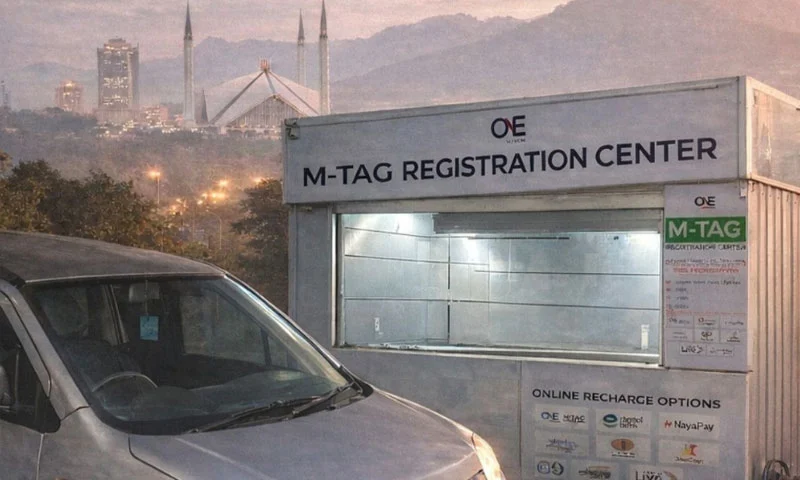
One Network Smart Transport and Security Solutions has announced a nationwide advisory urging motorists to replace outdated M-Tags before new charges and stricter enforcement measures begin later this year. According to the advisory, vehicle owners using M-Tags older than five years can replace them free of cost until May 31, 2026. However, authorities will begin charging replacement fees from June 1 as part of efforts to modernise Pakistan’s motorway tolling infrastructure. Read More: NHA Raises Motorway Tolls Again, Travel Costs Surge The company said motorists who fail to replace old tags before July 1, 2026, risk having their M-Tags blocked from use on major road networks. Under the updated fee structure, replacing an old M-Tag will cost Rs150 from June 1. Meanwhile, motorists seeking replacement tags after the free replacement period expires may have to pay Rs300 for new issuance and processing. Officials urged users to update their tags before existing devices become inoperative. What is an M-Tag and why does it matter? M-Tag is a prepaid RFID transponder system used on Pakistan’s motorways and key highways to enable cashless toll collection and vehicle identification. The system allows vehicles to pass through toll plazas electronically without stopping for manual payments, helping improve traffic flow and reduce congestion. Authorities also use M-Tag systems for security monitoring and digital vehicle tracking across motorway networks. Motorists travelling without valid M-Tags often face additional toll charges, delays and restricted access at certain checkpoints. As digital tolling systems expand nationwide, authorities are increasingly pushing motorists to comply with updated electronic tagging requirements. Read More: Pakistan Builds EV Charging Network Across Motorways Pakistan has gradually modernised its motorway infrastructure over recent years through digital payment systems, smart monitoring tools and automated traffic management technology. Industry experts say replacing outdated tags will improve system reliability and reduce technical disruptions on busy motorway corridors. Enforcement to tighten from July One Network advised motorists with M-Tags older than five years to immediately visit designated replacement centres or use official channels to update their tags. The company also said its 24-hour helpline, 1313, remains available for motorists seeking information regarding replacement procedures and verification. Authorities stressed that early replacement would help ensure uninterrupted motorway access, especially for commuters and frequent long-distance travellers relying heavily on cashless toll systems. The advisory forms part of broader efforts to strengthen Pakistan’s digital transport and road security infrastructure. Transport analysts believe stricter enforcement could encourage faster adoption of modern RFID systems while improving efficiency at motorway toll plazas. Read More: Pakistan Enforces New Speed Limits on Motorways and Highways as Part of Fuel Management Plan Officials have not specified how many active M-Tags currently fall into the outdated category. However, industry observers expect a large number of motorists to seek replacements before the July enforcement deadline. The latest move also reflects increasing efforts by transport authorities to integrate smart mobility technologies into Pakistan’s expanding motorway network. Motorists have now been advised to check the age of their M-Tags and complete replacements before fees increase and outdated tags stop functioning on motorway systems.

Pakistan Collapse as Bangladesh Take 1-0 Lead in Test Series
Bangladesh defeated Pakistanby 104 runs in the opening Test of the two-match series at Sher-e-Bangla National Cricket Stadium on Tuesday. Chasing 268 for victory, Pakistan resumed the fifth day hoping to build on their resistance shown earlier in the match. However, Bangladesh’s bowlers struck regularly to dismiss the visitors for 163 in 52.5 overs. Pakistan lost opener Imam-ul-Haq in the opening over of the day, increasing pressure on the middle order. Read More: Australia Picks Young Guns For Pakistan and Bangladesh Tours Debutant Abdullah Fazal once again impressed with the bat and played the most significant innings of Pakistan’s chase. The left-hander scored 66 from 113 balls and struck 11 boundaries during a composed knock. Fazal had also scored 60 in the first innings, becoming only the sixth Pakistan batter to score fifty-plus runs in both innings on Test debut. Meanwhile, first-innings centurion Azan Awais contributed 15 before spinner Mehidy Hasan Miraz dismissed him. Salman Ali Agha added 26 runs to keep Pakistan within touching distance of the target during the middle session. At 119 for three, Pakistan still appeared capable of mounting a serious challenge. However, Bangladesh quickly regained control through disciplined bowling. Nahid Rana destroys Pakistan batting lineup Fast bowler Nahid Rana produced the decisive spell of the match and finished with five wickets for 40 runs. Rana removed Shan Masood, Saud Shakeel, Mohammad Rizwan, Noman Ali and Shaheen Shah Afridi during a devastating spell. Spinner Taijul Islam and pacer Taskin Ahmed supported Rana with two wickets each. Read More: Pakistan Reshuffles Coaching Setup as Sarfaraz Takes Charge for Bangladesh Tests Earlier, Bangladesh resumed their second innings at 152 for three before declaring on 240 for nine in 70.3 overs. Bangladesh captain Najmul Hossain Shanto top-scored with 87 after also making 101 in the first innings. For Pakistan, Hasan Ali and Noman Ali claimed three wickets each in the second innings. Noman Ali reaches milestone despite defeat Pakistan spinner Noman Ali reached an important personal milestone during the match. The left-arm spinner completed his 100th Test wicket after dismissing Mehidy Hasan Miraz in the 70th over of Bangladesh’s second innings. Noman achieved the feat in just 22 Tests and became the third-fastest Pakistani spinner to reach the landmark. Read More: England Could Host Pakistan for Five Tests After Decades Bangladesh eventually secured a commanding victory and took a 1-0 lead in the series. Najmul Hossain Shanto received the player of the match award for his two vital innings. The second and final Test will begin on May 16 at Sylhet International Cricket Stadium.
Millat Tractors Signs Major EV Bike Deal in Pakistan
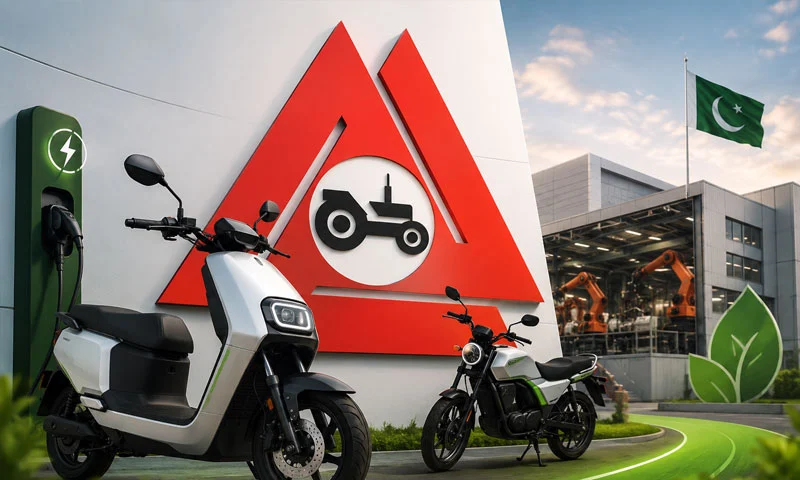
Millat Tractors Limited has signed a Memorandum of Understanding with a leading Chinese electric bike manufacturer to begin local production of electric bikes in Pakistan. The agreement marks a major development in Pakistan’s growing electric vehicle sector as the company moves from feasibility studies to commercial manufacturing. Under the partnership, Millat Tractors will assemble, manufacture and distribute electric bikes locally. The company aims to tap into rising demand for eco-friendly and fuel-efficient transport options across Pakistan. Read More: Pakistan Plans EV Battery Policy as Chinese Investors Eye Market The latest move also signals Millat Tractors’ formal entry into Pakistan’s rapidly expanding electric mobility market. The company previously conducted feasibility studies to evaluate the commercial viability of electric bike manufacturing before deciding to proceed with production. Industry experts say the decision aligns closely with Pakistan’s National Electric Vehicle Policy 2025-30, which seeks to accelerate EV adoption and reduce dependence on imported fuel. Pakistan has recently increased efforts to attract investment into electric mobility as rising fuel prices continue to pressure consumers and businesses. Rising demand boosts electric bike sector Electric two-wheelers have gained increasing attention in Pakistan due to their lower operating costs and reduced maintenance requirements compared with petrol-powered motorcycles. Urban commuters are also showing greater interest in electric bikes as traffic congestion and fuel expenses continue to rise in major cities. Analysts believe Millat Tractors’ entry into the sector could improve public confidence in electric mobility because of the company’s established manufacturing experience and nationwide distribution network. Experts further expect local assembly and manufacturing to lower vehicle costs and improve accessibility for consumers. The partnership with the Chinese manufacturer will also allow Millat Tractors to benefit from advanced battery technology, supply chain expertise and EV production knowledge. Read More: Pakistan’s Electric Revolution Gains Momentum as Bold Shift Targets Fuel Import Reduction Pakistan’s electric vehicle market remains at an early stage compared with regional competitors. However, industry observers say government incentives and growing consumer awareness are gradually improving market conditions. The federal government’s EV policy targets a major increase in electric vehicle adoption over the coming years to reduce fuel imports and carbon emissions. Production plans expected in coming months Millat Tractors has not yet announced production timelines, pricing details or specific electric bike models planned for Pakistan. However, the company is expected to begin work on assembly infrastructure, supply chain arrangements and production planning in the coming months. Industry analysts believe the project could encourage additional investment into Pakistan’s EV ecosystem as more local and international companies explore opportunities in electric mobility. The development also comes at a time when Pakistan’s automotive industry faces pressure from slowing sales of conventional vehicles due to inflation and high fuel costs. Read More: Suzuki Fronx Price Revealed: Offers Hybrid Power At A Surprising Price Experts say affordable electric bikes could become an attractive alternative for daily commuters if manufacturers successfully address concerns related to charging infrastructure and battery reliability. Millat Tractors’ move into electric bike production highlights how traditional automotive and engineering firms in Pakistan are increasingly shifting toward sustainable transportation technologies. The agreement could also strengthen local manufacturing capacity and create new opportunities in Pakistan’s evolving clean energy and mobility sectors.
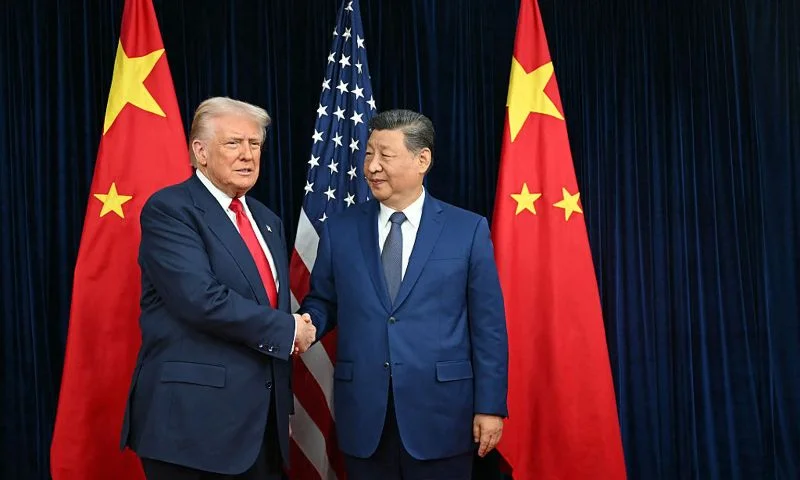
Elon Musk and Tim Cook to Join Trump on High-Stakes China Visit
US President Donald Trump will travel to China this week alongside some of America’s most powerful business leaders. Executives expected to join the delegation include Elon Musk, Tim Cook and Larry Fink. A White House official familiar with the plans told the BBC that 17 US executives will accompany Trump during the Beijing visit. The trip marks Trump’s first official visit to China in nearly a decade. The visit comes at a sensitive moment for relations between the world’s two largest economies. Trump is expected to meet Chinese President Xi Jinping as both countries continue navigating tensions linked to trade, semiconductors and artificial intelligence. Tech and Finance Leaders Join Delegation The delegation includes leaders from technology, banking, manufacturing and consumer industries. Executives expected to travel include Kelly Ortberg, Ryan McInerney, Stephen Schwarzman, Jane Fraser and David Solomon. Representatives from Meta, Mastercard, GE Aerospace and Cargill will also participate. The absence of Jensen Huang has drawn attention. Nvidia remains central to the US-China competition over AI chips and semiconductor technology. Last week, Huang told CNBC that it would be a “privilege” to represent the United States in China if invited. Another notable participant is Sanjay Mehrotra. China restricted the use of some Micron chips in critical infrastructure projects in 2023 over national security concerns. Micron later said the restrictions negatively affected its China business. Semiconductors remain one of the most sensitive issues in US-China relations. Washington continues tightening export controls on advanced chips and AI technologies. Trade and Iran War Add Pressure to Talks Trump and Xi last met in South Korea during late 2025. Both countries paused tariffs after that meeting following a prolonged trade confrontation that pushed duties above 100 percent. The upcoming discussions are expected to focus on trade access, supply chains and AI competition. The ongoing US-Israel war with Iran will also shape the talks. Trump reportedly wants China to help facilitate a broader diplomatic arrangement involving Tehran and Washington. China also wants the conflict to end because it relies heavily on Iranian oil imports. Beijing has worked to manage disruptions in energy markets and global supply chains since the conflict began. Analysts say the presence of top executives highlights the deep economic ties between US corporations and China despite years of geopolitical tension.
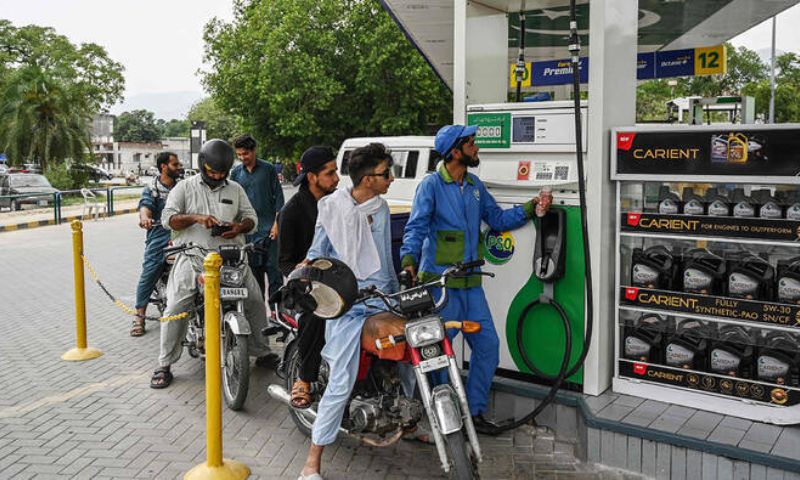
Pakistan Sees World’s Second-Highest Fuel Price Surge Since Iran War
Pakistan has recorded the world’s second-highest increase in fuel prices since the start of the Iran war, with petrol and diesel prices surging 56 percent amid global energy market disruption and IMF-linked fiscal measures. Data shared by Pakistan’s energy ministry showed the increase trails only Myanmar, where fuel prices rose by 90 percent during the same period. The sharp rise has intensified pressure on households, transport operators and businesses already struggling with inflation and slowing economic growth. According to official figures, petrol in Pakistan sold at Rs266.17 per liter before the disruption in the Strait of Hormuz. High-speed diesel stood at Rs280.86 per liter. Read More: Petrol Crosses Rs414 as Pakistan Announces Massive Fuel Hike Petrol now costs Rs414.78 per liter, while diesel has climbed to Rs414.58 per liter. The government last Friday raised fuel prices by another Rs15 per liter, citing volatility in international oil markets after the outbreak of the United States-Israel conflict with Iran on February 28. The war disrupted shipping routes and energy supplies through the Strait of Hormuz, a critical global oil transit route. IMF Commitments Limited Government Options Pakistan’s Energy Minister Ali Pervaiz Malik said the government had little flexibility because of commitments linked to the country’s $7 billion IMF programme. “When this budget was made, there was no war at that time. Eighty rupees per liter [levy on petrol] was settled with the IMF that we would collect,” Malik told a Senate committee. The minister explained that authorities initially kept zero petroleum levy on diesel because of its importance for agriculture and public transport. “For this reason, 80 and 80, meaning 160 rupees had gone onto petrol, which, when the Prime Minister took up with the IMF, they gave an 80-rupee relaxation [on petrol levy] for one month,” he said. Malik added that the temporary concession later expired after the government restored the original levy structure to secure IMF approval for a loan tranche exceeding $1 billion. The minister said the government continued providing targeted support to vulnerable groups despite the price hikes. “Even today, subsidies of several hundred billion rupees will still go to motorcyclists and those people, the weak classes, whom we can protect directly, through e-wallets,” he said. Pakistan recently announced a Rs100 per liter fuel subsidy for motorcyclists, limited to 20 liters monthly. The government also introduced monthly subsidies for transport vehicles and freight trucks to reduce pressure on transport costs. Government Defends Oil Companies and Inventory Strategy Malik defended the role of private oil marketing companies during the Senate briefing. He argued that authorities needed to maintain enough liquidity in the market to ensure uninterrupted fuel imports during extreme volatility. “This is how you end up with dead stock,” Malik said while explaining why the government avoided tighter controls on oil companies. “The companies importing oil had to be ensured that they would not run dry. They needed to be provided with enough liquidity so they could continue purchasing the product.” The minister warned that forcing companies to absorb losses could trigger shortages across the country. Official data showed Pakistan increased fuel inventories despite regional instability. Crude oil stocks rose to 515 kilotons by May 7 from 436 kilotons recorded on March 1. Petrol inventories climbed to 662 kilotons, equivalent to nearly 30 days of cover, while diesel stocks reached 597 kilotons. Malik also signaled that Pakistan could move toward broader deregulation of petroleum pricing after the crisis eases.
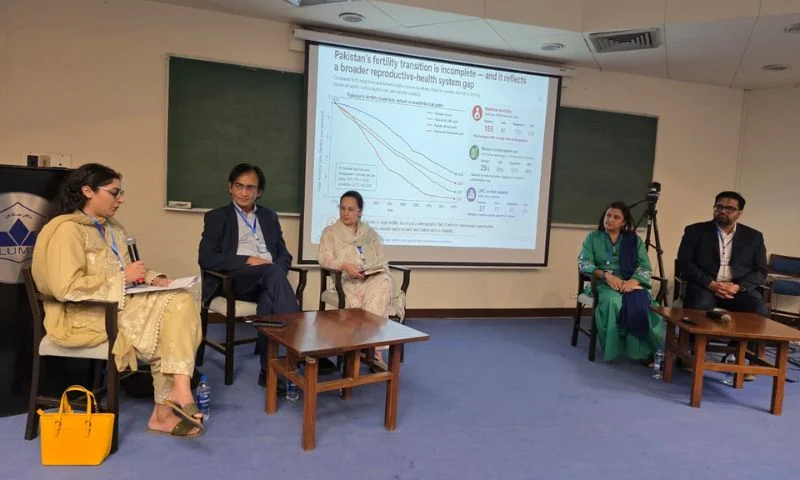
Experts Warn AI Could Deepen Gender Inequality in Pakistan
Experts at a gender and economy conference in Lahore warned that artificial intelligence could either unlock major economic opportunities for women or deepen existing inequalities if Pakistan fails to expand digital education and skills training. The discussion took place during a panel on “Health & Gender” moderated by Warda Riaz at LUMS. Panelists included Fyeza Jehan, Usman Ali, Adnan Khan and M. Farhan Majid. Speakers stressed that women’s economic empowerment depends heavily on education, access to information and bargaining power within society. One panelist said affordable learning opportunities and digital skills programmes could help women overcome structural barriers that continue to limit workforce participation and entrepreneurship. “There is a risk that communities with lower skills will be unable to benefit from new technologies,” the panel noted during the discussion. The experts warned that countries failing to invest in digital capacity-building may fall further behind in productivity and global competitiveness. AI Could Transform Women-Led Businesses The panel highlighted how digital tools and AI systems are rapidly reshaping business operations around the world. Referring to survey findings conducted with the Asher Blair Foundation, speakers said women entrepreneurs from nearly 80 countries showed strong interest in adopting generative AI tools. According to the findings, many women business owners wanted to use AI for accounting, payroll management and routine administrative work. Experts said AI could help women-led enterprises reduce time-consuming manual tasks while improving efficiency and productivity. The panel also referenced estimates suggesting Pakistan’s women-focused digital economy could represent a market worth nearly $500 million. That estimate is linked to Pakistan’s female population of around 73 million, highlighting the scale of untapped economic potential. Pakistan has one of the lowest female labor force participation rates in South Asia. The World Bank estimates female participation remains below 25 percent, despite rising smartphone and internet usage. Digital access for women also remains uneven, particularly in rural areas where internet access, digital literacy and educational opportunities remain limited. Digital Divide Could Hurt Long-Term Growth Experts warned that Pakistan’s weak education indicators and low literacy rates could limit the country’s ability to benefit from AI-driven economic transformation. They argued that unequal access to technology may create broader macroeconomic problems in the future. According to the discussion, economies with lower digital adoption could face slower productivity growth and greater dependence on imports. Meanwhile, digitally advanced economies may continue scaling faster through automation and AI integration. The panelists urged policymakers, educational institutions and private companies to invest urgently in women’s digital education and technology-focused training. They said inclusive access to AI skills would play a critical role in ensuring equitable economic growth across Pakistan. Analysts worldwide have increasingly warned that AI may widen social and economic inequality if governments fail to invest in education and workforce adaptation. For Pakistan, experts said the challenge now lies in ensuring women are not excluded from the next phase of technological and economic change.

BBC Rejected This Gaza Documentary and It Just Won a BAFTA
A Gaza war documentary that BBC refused to air over “impartiality concerns” won a major prize at the BAFTA TV Awards 2026 on Sunday. The documentary, Gaza: Doctors Under Attack, secured the Current Affairs award during the ceremony in London. Basement Films produced the documentary while journalist Ramita Navai fronted the project. The film examined allegations surrounding attacks on hospitals and medical workers during Israel’s military operation in Gaza. It included testimonies from Palestinian doctors, healthcare workers and witnesses inside Gaza hospitals. Although the BBC commissioned the documentary, the broadcaster later decided not to air it. Rival broadcaster Channel 4 eventually screened the programme. The BBC had originally planned to broadcast the film in February last year. However, the broadcaster delayed the project while reviewing another Gaza documentary, Gaza: How to Survive a Warzone. That programme breached editorial rules after producers failed to disclose that its narrator was the son of a Hamas official. In June, the BBC officially confirmed it would not broadcast Gaza: Doctors Under Attack. “We have come to the conclusion that broadcasting this material risked creating a perception of partiality that would not meet the high standards that the public rightly expect of the BBC,” the broadcaster said. Critics Accused BBC of Suppressing the Documentary The BBC’s decision triggered criticism from journalists, activists and public figures across the UK media industry. More than 600 media and entertainment figures signed an open letter urging former BBC Director-General Tim Davie to release the documentary. Oscar-winning actress Susan Sarandon also supported the campaign. “Every day this film is delayed, the BBC fails in its commitment to inform the public, fails in its journalistic responsibility to report the truth, and fails in its duty of care to these brave contributors,” the letter stated. “No news organisation should quietly decide behind closed doors whose stories are worth telling. This important film should be seen by the public, and its contributors’ bravery honoured.” The controversy added pressure on the BBC during a period marked by several editorial disputes and public criticism. Davie resigned in November following multiple controversies linked to editorial decisions and political pressure. BAFTA Victory Sparks Fresh Debate While accepting the award, Navai criticized the BBC for refusing to broadcast the film. “We refused to be silenced and censored,” she told the audience. She also thanked Channel 4 for airing the documentary. Navai added that the programme contained “the findings of our investigation that the BBC paid for but refused to show”. Executive producer Ben de Pear also criticized the broadcaster during the acceptance speech. He questioned whether the BBC would mention the documentary’s BAFTA victory during its delayed awards coverage. The dispute surrounding Gaza coverage has intensified scrutiny on major Western broadcasters. Critics continue to debate editorial independence and censorship concerns in wartime reporting.
