

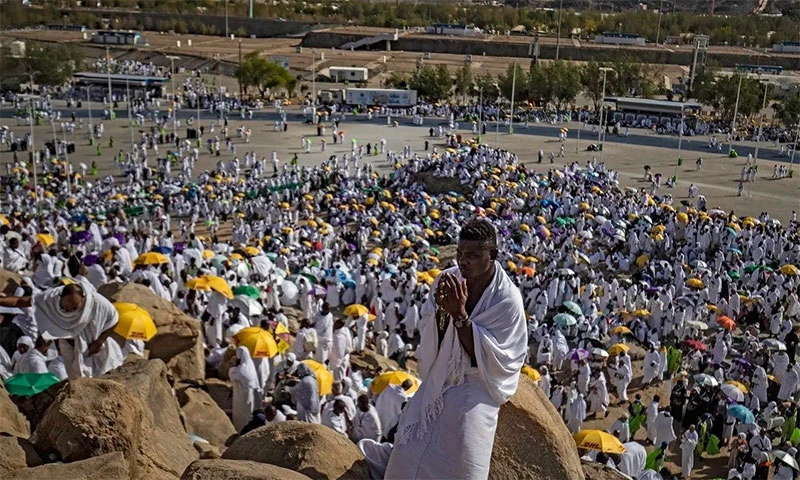
Saudi Ministry of Interior has issued a detailed guide for Hajj 2026 aimed at improving safety, crowd management and movement of pilgrims during the annual Islamic pilgrimage in Makkah. Saudi authorities said the new guidelines seek to provide “a safe, organized, and calm environment for the guests of the Most Gracious” so pilgrims can perform Hajj rituals smoothly and without difficulty. The guide outlines designated entry and exit routes for the Masjid al-Haram, detailed movement plans around Tawaf-e-Kaaba, assigned tracks for Sa’i and instructions regarding major pilgrimage sites. Read More: Saudi Arabia Launches Massive Digital Upgrade for Hajj 2026 Officials said the measures form part of broader preparations to manage millions of pilgrims expected to gather in Saudi Arabia during Hajj season. The ministry also introduced separate movement routes for pilgrims using wheelchairs and electric wheelchairs to improve accessibility and reduce congestion. Authorities clarified that the Sa’i corridor between Safa and Marwah remains reserved only for pilgrims performing Sa’i rituals. The ministry instructed pilgrims not to sit in the corridor or block pathways. Saudi authorities tighten crowd management and safety rules The Interior Ministry additionally urged pilgrims to wear face masks during rush hours and comply fully with safety instructions issued by authorities. Officials stressed that discipline and cooperation from pilgrims would help ensure smoother operations and better services during the pilgrimage. Saudi Arabia has significantly expanded crowd-control measures in recent years after past incidents involving overcrowding during Hajj seasons. The kingdom increasingly relies on digital monitoring systems, surveillance networks and smart crowd management technologies to regulate pilgrim movement around holy sites. Read More: What Pilgrims Must Know Before Hajj 2026 Begins Saudi officials also warned that entering Makkah or the holy sites without an official Hajj permit would constitute a legal violation. “Strict action will be taken against those who enter the holy sites without a Hajj permit,” authorities said. The ministry added that violators would face penalties under relevant Saudi laws. In recent years, Saudi Arabia has tightened enforcement against unauthorized pilgrims as part of efforts to reduce overcrowding and improve safety standards. The government has repeatedly emphasized that official permits remain essential for better management of accommodation, transport and emergency services during Hajj. Millions expected as Saudi Arabia mobilises Hajj operations Saudi authorities say all state institutions have mobilized resources to ensure smooth Hajj arrangements this year. Government agencies continue coordinating transport, healthcare, security and logistical operations across Makkah, Mina, Muzdalifah and Arafat. The kingdom has also expanded heat protection measures as temperatures during Hajj seasons continue rising. Officials recently increased shaded areas, cooling stations and water distribution points around pilgrimage sites to reduce risks linked to extreme summer heat. Read More: Under-15 Ban Scrapped: What It Means for Hajj 2026 Pilgrims Saudi Arabia hosts one of the world’s largest annual religious gatherings during Hajj, attracting millions of Muslims from across the globe. Authorities urged pilgrims to carefully follow official instructions and avoid violations to help maintain order during the pilgrimage. The ministry said cooperation from pilgrims remains critical to ensuring a safe and spiritually fulfilling Hajj experience for everyone attending the annual gathering.
Restaurant Charges Customers Extra for Vomiting After Overeating
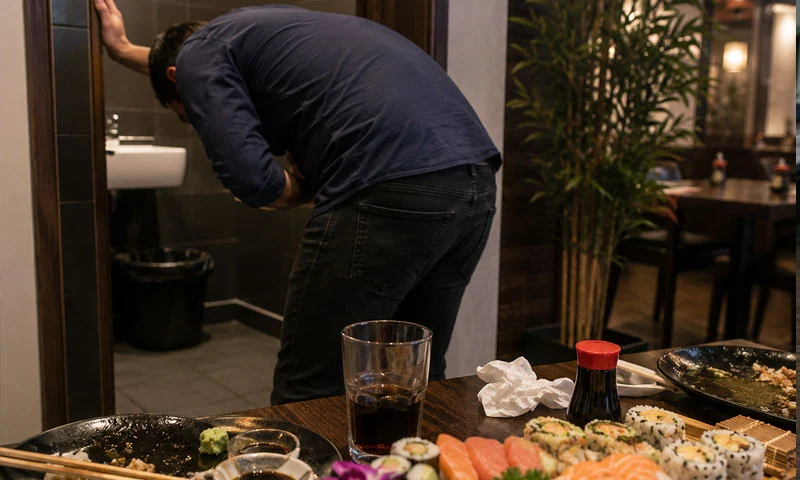
Sushi Toro, a buffet restaurant in Spain’s Sevilla region, has sparked widespread debate after introducing a policy that allows the restaurant to charge customers extra if they vomit after overeating. The restaurant, located in the town of Gelves near Sevilla, said repeated incidents involving customers eating beyond their limits forced management to introduce the unusual measure. A sign displayed inside the restaurant warns diners about the new policy. “If a client throws up as a result of having eaten too much, the restaurant reserves the right to charge them an extra fee to cover damages,” the notice states. Photos of the warning quickly spread across social media platforms in Spain, triggering mixed reactions from users. Some defended the restaurant’s decision and argued that buffet customers should behave responsibly. Others criticised the policy and questioned how the restaurant would determine whether vomiting resulted directly from overeating. Restaurant says hygiene and customer experience suffered According to management, vomiting incidents had increased in recent months and started affecting hygiene standards, customer comfort and restaurant operations. “We work hard to get orders out on time and maintain good hygiene,” Sushi Toro management said. “And therefore we ask for collaboration as this is also affecting other clients eating in the restaurant.” The restaurant did not publicly specify the exact amount customers would have to pay if they triggered the extra charge. However, Sushi Toro’s buffet prices currently range between €16.90 and €23.90 depending on the day and time. Spain has seen strong growth in buffet-style dining in recent years, especially at sushi and Asian fusion restaurants offering unlimited meal options. Industry analysts say all-you-can-eat restaurants often face challenges related to food waste, excessive consumption and customer behaviour. Some restaurants in Asia and Europe already impose penalties for leftover food to discourage waste and reduce operational costs. However, policies linked specifically to vomiting remain extremely rare and have generated significant public attention online. Debate grows over buffet culture and overeating Health experts frequently warn about the risks associated with excessive eating, particularly at buffet restaurants where unlimited food promotions encourage larger portions. Medical specialists say overeating can cause digestive stress, nausea and vomiting, especially when customers consume food rapidly. Social media users in Spain continued debating whether the restaurant’s decision represented responsible management or excessive regulation of customer behaviour. Several users also pointed out that cleaning and sanitation incidents can temporarily disrupt service for other diners and increase workload for restaurant staff. Despite the criticism, some customers praised the restaurant for openly addressing a problem many buffet operators rarely discuss publicly. The controversy has additionally drawn attention to changing consumer habits and the pressures facing restaurants trying to balance customer experience, hygiene and profitability. Sushi Toro has not announced whether the policy will remain permanent, but the restaurant said the measure became necessary because of the growing number of incidents inside the establishment.

Woman’s Netflix-Style Leave Request for Bali Vacation Goes Viral
A woman’s creative attempt to request annual leave from her bosses has gone viral on social media after she produced a dramatic Netflix-style trailer asking for 10 days off to travel to Bali. The video, shared on Instagram by a woman identified as Talia, has attracted more than seven million views and sparked widespread praise for its humour and originality. Instead of sending a traditional email or approaching her managers directly, Talia created a cinematic mock documentary filled with suspense music, emotional interviews and dramatic dialogue. The clip opens with an interviewer asking Talia why she has appeared nervous in recent days. “Do you want to confess why you’ve been on so edge lately?” the interviewer asks. Looking anxious, Talia responds, “I need to ask Frank and Jack a question.” As the dramatic trailer unfolds, the interviewer presses further. “Is that why you’re being so strange?” the voice asks. Talia then replies, “I just can’t bring myself to do it. I can’t do it, I haven’t found the right time to do it.” Dramatic Bali leave request captures millions online The trailer continues building tension before the interviewer encourages her to finally speak. “Talia, the right time is now,” the interviewer says. View this post on Instagram A post shared by Francois Greeff (@frankgreeff_) Moments later, Talia delivers the reveal that has now entertained millions of viewers online. “I need 10 days of leave to go to Bali and have heaps of fun,” she says. The video ends with a cliffhanger asking viewers, “So was it a yes or no?” The clip additionally captures the reactions of her bosses, Frank and Jack, who appear amused and slightly confused by the elaborate presentation. “You have been on edge lately,” they tell Talia after watching the trailer. The managers then jokingly ask whether they are expected to respond in the same style. “Do we have to send our response in a video format?” they ask. Talia quickly responds, “In a documentary trailer format.” Still processing the unusual request, one of the bosses asks, “Yes or no or is there like a third option?” The final outcome of the leave request has not yet been revealed. Social media users praise creativity and humour The video has generated thousands of reactions across Instagram and other platforms. Many users praised Talia’s creativity and said the clip reflected growing trends in workplace humour and digital storytelling. Others joked that employers may now expect increasingly elaborate leave applications from staff members. Social media experts say short-form cinematic content continues dominating platforms such as Instagram and TikTok because audiences respond strongly to humour, storytelling and relatable workplace experiences. Travel-related content also remains among the most viewed categories online, particularly posts linked to destinations such as Bali, which continues attracting millions of international tourists each year. Several viewers additionally commented that the video highlighted changing workplace cultures where younger employees increasingly use humour and creativity in professional communication. Despite the uncertainty surrounding the leave approval, the video has already succeeded in turning a simple holiday request into a viral internet moment.

Fatima Sana Destroys Zimbabwe Attack With Historic 15-Ball Fifty
Fatima Sana produced one of the most explosive innings in women’s cricket history on Saturday, smashing the fastest half-century ever recorded in women’s T20 internationals during Pakistan’s third T20I against Zimbabwe in Karachi. The Pakistan captain reached her fifty in just 15 balls, breaking the previous women’s T20I record jointly held by Sophie Devine, Phoebe Litchfield and Richa Ghosh, who had all completed half-centuries in 18 deliveries. Fatima’s innings also equalled the fastest fifty ever recorded in women’s T20 cricket overall. The record-breaking knock immediately triggered comparisons with former Pakistan captain Shahid Afridi, famous for his aggressive batting and rapid scoring. Pakistan had already built a strong platform after reaching 152 for 4 in 16.2 overs when Fatima walked to the crease. She launched her innings with a boundary and quickly dismantled Zimbabwe’s bowling attack with fearless strokeplay. Pakistan captain tears apart Zimbabwe attack Fatima hammered boundaries across the ground and raced to 48 from just 14 balls after a brutal 24-run 19th over. She completed her record-breaking fifty early in the final over with a quick two runs. The Pakistan skipper eventually remained unbeaten on 62 from only 19 deliveries. Her breathtaking innings included 10 fours and two sixes. Saira Jabeen also impressed with an unbeaten 50 from 32 balls as Pakistan finished on 223 for 4. The total became Pakistan’s second-highest score in women’s T20 internationals. Zimbabwe never threatened during the chase and collapsed for 90 runs. Pakistan sealed a dominant victory while Fatima further contributed with the ball, finishing with figures of 1 for 28. The performance highlighted her growing stature as one of Pakistan’s most influential T20 players. Fatima Sana emerging as Pakistan’s T20 star The innings capped a remarkable run of form for the 23-year-old all-rounder. Fatima is now Pakistan’s leading run-scorer in women’s T20 internationals this year. She has scored 229 runs in five innings at a remarkable strike rate of 206.30. Her knock also underlined the rapid improvement in Pakistan women’s cricket following recent investments in domestic and international development programmes. Pakistan’s aggressive approach throughout the series has drawn praise from former players and commentators, who believe the side is evolving into a more fearless T20 unit. Fatima’s innings additionally placed her among an elite group of women’s cricketers known for power-hitting in the shortest format. The Pakistan captain’s fearless assault in Karachi now stands as one of the defining moments in women’s T20I history.

Kuwait Introduces Six-Hour Workday Amid Power Demand Surge
Kuwait has officially reduced working hours across government institutions during the summer season as authorities move to ease pressure on the national electricity grid amid soaring temperatures and rising energy demand. The decision came after Kuwait’s Civil Service Council approved a proposal to reduce official working hours in government entities from seven hours to six hours daily during the summer months. According to local officials, the measure forms part of a broader national strategy aimed at lowering electricity consumption during peak demand hours, particularly between 11am and 5pm. Read More: Oman Slashes Electricity Tariffs Ahead of Scorching Summer 2026 Government sources said the reduced schedule would remain in place for three months. The Civil Service Commission is expected to announce detailed implementation procedures and operational guidelines in the coming days. Under the plan, the flexible morning attendance window will narrow to one hour, from 7am to 8am, while evening shifts will begin at 5pm. Officials say the move aims to reduce pressure on Kuwait’s electricity network during periods of extreme summer heat, when cooling systems sharply increase energy consumption across the Gulf state. Factories also cut operations during peak hours Sources familiar with the policy said factories have already started reducing production activities during peak periods to support grid stability. The Ministry of Electricity, Water and Renewable Energy said it continues implementing multiple measures to rationalise electricity and water consumption. The ministry also urged citizens and businesses to adopt responsible consumption habits during the summer season. Read More: Kuwait Freezes Food Delivery Fees for Three Years in Major Market Reform Authorities warned that rising temperatures and increasing demand for utilities could place additional stress on national infrastructure if conservation efforts fail. Kuwait regularly records some of the world’s highest summer temperatures, with daytime heat often crossing 50 degrees Celsius during peak months. Like several Gulf countries, Kuwait relies heavily on air conditioning systems that consume large amounts of electricity during the summer. Analysts say the latest measures reflect growing regional concerns over energy sustainability and power grid resilience as climate conditions intensify. Gulf countries face growing energy pressures Several Gulf nations have recently introduced energy-saving initiatives to manage electricity demand during extreme weather conditions. Countries across the region have accelerated investments in renewable energy projects, smart grids and water conservation systems to reduce pressure on public utilities. Kuwait has also expanded renewable energy projects under its long-term sustainability plans, including the development of solar power facilities designed to diversify the country’s energy mix. Energy experts say temporary reductions in office hours can help lower cooling demand in government buildings and reduce strain on national grids during critical periods. Read More: Most Pakistan Holidays in 2026 Likely to Fall on Working Days The latest announcement also comes as Gulf countries face rising electricity consumption due to population growth, urban expansion and prolonged heatwaves linked to climate change. Officials in Kuwait say maintaining grid stability remains a top priority during the summer months. The government expects the reduced working hours and conservation measures to help prevent major electricity disruptions while supporting more efficient energy use nationwide.

Pakistan Tightens Digital Rules for Civil Servants After 62 Years
Pakistan has introduced sweeping new conduct rules for civil servants, replacing a 62-year-old framework with stricter regulations on asset declarations, conflicts of interest, social media activity and financial transparency. According to a report published on Saturday, the Civil Servants (Conduct) Rules 2026 represent the most significant overhaul of Pakistan’s civil service ethics framework in decades. The new rules replace the long-standing 1964 code, which mainly focused on political neutrality, misuse of office and confidentiality. Officials said the revised framework responds to growing demands for transparency, digital accountability and financial scrutiny in public service. The updated rules retain older restrictions on political activity, nepotism, misuse of authority and unauthorised disclosure of official information. However, the 2026 framework introduces far stricter monitoring mechanisms. Public asset declarations and crypto disclosure now mandatory The most significant change requires annual asset declarations of officers in BPS-17 and above to become public after confidential personal information is removed. Previously, civil servants submitted declarations internally and authorities kept them confidential. Senior officers must now file declarations digitally by October 30 each year. The Federal Board of Revenue will conduct risk-based verification of the submitted information. Authorities may also question officers over omissions, unexplained wealth increases or inaccurate disclosures. For the first time, civil servants must disclose virtual assets, including cryptocurrencies. The rules additionally require disclosure of bank accounts, shares, securities, insurance policies and jewellery worth Rs5 million or more. Another major addition introduces a formal conflict-of-interest regime. Civil servants must now declare personal or family interests that may affect official duties. They must also recuse themselves from procurement, hiring and other decision-making processes where conflicts arise. New social media and lifestyle restrictions introduced The government also imposed extensive restrictions on online activity. Civil servants may not own or manage websites, blogs, podcasts or YouTube channels without prior approval. They are also barred from using personal social media accounts to showcase official facilities, government work or entitlements for publicity purposes. Cadre administrators may additionally require officers to disclose all social media accounts. The rules further tighten gift and hospitality regulations. Civil servants and family members cannot accept gifts from individuals, companies, diplomats or foreign governments except under provisions allowed through the Toshakhana Act 2024. The code also states that officers “should not live beyond their declared means.” Authorities may ask officers to explain lavish spending on weddings or social events if expenditures appear inconsistent with declared income. Under another new provision, officers taking private-sector jobs during Extraordinary Leave must seek prior approval. After returning to government service, they cannot participate for three years in official matters involving former employers. The framework additionally permits approved consultancy, teaching and professional work, provided it does not create conflicts of interest. Officials must deposit one-twenty-fifth of such earnings into the national treasury. Any violation of the Civil Servants (Conduct) Rules 2026 will qualify as misconduct under the Civil Servants (Efficiency and Discipline) Rules 2020 and may trigger disciplinary action. Officials say the reforms mark a major shift from traditional conduct standards toward a system focused on transparency, accountability and digital governance.

IMF Imposes Rs1.73 Trillion Fuel Levy Target on Pakistan
International Monetary Fund (IMF) has set a petroleum levy target of Rs1.73 trillion for Pakistan in the next fiscal year, tightening revenue conditions and imposing stricter monitoring measures to ensure tax collection targets are met under the country’s bailout programme. According to the IMF staff-level report released on Friday, the levy target for fiscal year 2026-27 stands at Rs1.727 trillion. The figure is Rs259 billion higher than the current fiscal year’s target. The report warned that Pakistan’s heavy dependence on fuel taxation leaves revenues vulnerable to economic shocks and declining demand. “Petroleum products carry an effective tax rate of 166%, leaving revenues heavily reliant on fuel taxation and vulnerable to shocks,” the IMF said. Read More: Pakistan Gets $1.3 Billion IMF Boost as SBP Reserves Rise Pakistan currently charges a levy of Rs117.4 per litre on petrol and nearly Rs43 per litre on diesel. The IMF report showed that the federal and provincial governments would together undertake additional revenue measures worth Rs860 billion next year. The federal government will generate Rs430 billion through new tax measures and enforcement actions. Provinces will contribute another Rs430 billion by expanding sales tax collection on services and implementing agricultural income taxes. Pakistan has also accepted IMF conditions to impose Rs215 billion in additional taxes and raise another Rs215 billion through audit measures, production monitoring and tax enforcement initiatives. IMF hardens conditions after FBR misses targets The IMF has tightened oversight after the Federal Board of Revenue missed revenue targets for two consecutive years. Unlike previous reviews, the IMF has now imposed a formal quantitative performance criterion for tax collection. If the FBR misses agreed targets, Pakistan will require a waiver from the IMF Executive Board. “With these measures, we expect to achieve revenues of Rs7.022 trillion by end-December 2026, which will be set as a new quantitative performance criterion,” according to Pakistan’s written assurance to the IMF. The IMF has set Pakistan’s overall tax collection target at Rs15.27 trillion for the next fiscal year, requiring nearly 14% growth from expected collections this year. Read More: Pakistan Raises $250 Million Through Historic Panda Bond Launch The report also revealed that the federal budget size for FY27 may exceed Rs17.1 trillion, around 9% higher than the revised budget for the current year. Meanwhile, the defence budget could rise to Rs2.665 trillion, an increase of Rs101 billion. The IMF additionally warned that Pakistan’s narrow tax base remains a major structural weakness. Despite contributing 24.6% of economic value added, the agricultural sector faces an effective tax rate of just 0.3%, the lender noted. Middle East conflict poses new economic risks The IMF also warned that prolonged instability in the Middle East could damage Pakistan’s economic outlook. The lender said higher oil prices, weaker remittance inflows and disruptions in Gulf financing could intensify pressure on the economy. Pakistan imports nearly 81% of its fuel supplies from Gulf countries. Read More: IMF Sets Tough Budget Priorities for Pakistan Ahead of FY26 Plan The IMF warned that sustained disruption to oil and gas supplies could significantly hurt economic activity. The report also highlighted risks to remittances, noting that around 55% of Pakistan’s foreign remittances come from Gulf states. Under an adverse scenario, Pakistan’s economic growth could slow to 2.6% next fiscal year, while inflation may climb close to 10%. The IMF also ruled out fuel subsidies and linked continued loan disbursements to full recovery of fuel prices and taxes.
