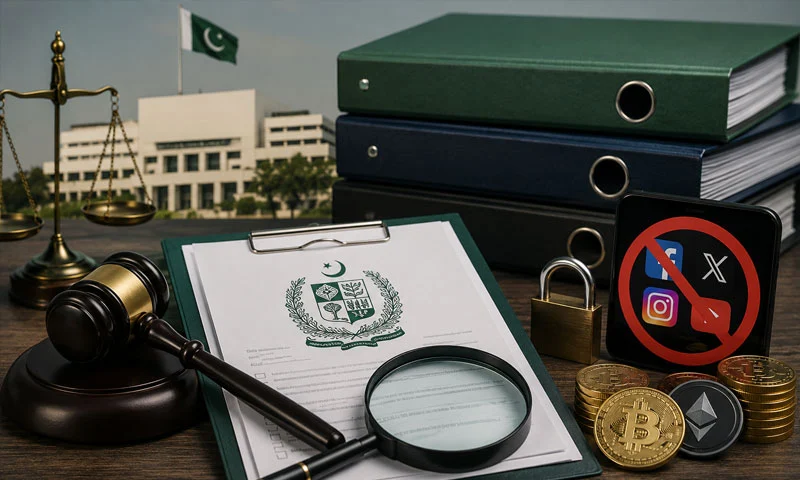
Pakistan has introduced sweeping new conduct rules for civil servants, replacing a 62-year-old framework with stricter regulations on asset declarations, conflicts of interest, social media activity and financial transparency.
According to a report published on Saturday, the Civil Servants (Conduct) Rules 2026 represent the most significant overhaul of Pakistan’s civil service ethics framework in decades.
The new rules replace the long-standing 1964 code, which mainly focused on political neutrality, misuse of office and confidentiality.
Officials said the revised framework responds to growing demands for transparency, digital accountability and financial scrutiny in public service.
The updated rules retain older restrictions on political activity, nepotism, misuse of authority and unauthorised disclosure of official information.
However, the 2026 framework introduces far stricter monitoring mechanisms.
Public asset declarations and crypto disclosure now mandatory
The most significant change requires annual asset declarations of officers in BPS-17 and above to become public after confidential personal information is removed.
Previously, civil servants submitted declarations internally and authorities kept them confidential.
Senior officers must now file declarations digitally by October 30 each year.
The Federal Board of Revenue will conduct risk-based verification of the submitted information. Authorities may also question officers over omissions, unexplained wealth increases or inaccurate disclosures.
For the first time, civil servants must disclose virtual assets, including cryptocurrencies.
The rules additionally require disclosure of bank accounts, shares, securities, insurance policies and jewellery worth Rs5 million or more. Another major addition introduces a formal conflict-of-interest regime.
Civil servants must now declare personal or family interests that may affect official duties. They must also recuse themselves from procurement, hiring and other decision-making processes where conflicts arise.
New social media and lifestyle restrictions introduced
The government also imposed extensive restrictions on online activity.
Civil servants may not own or manage websites, blogs, podcasts or YouTube channels without prior approval.
They are also barred from using personal social media accounts to showcase official facilities, government work or entitlements for publicity purposes.
Cadre administrators may additionally require officers to disclose all social media accounts.
The rules further tighten gift and hospitality regulations.
Civil servants and family members cannot accept gifts from individuals, companies, diplomats or foreign governments except under provisions allowed through the Toshakhana Act 2024.
The code also states that officers “should not live beyond their declared means.”
Authorities may ask officers to explain lavish spending on weddings or social events if expenditures appear inconsistent with declared income.
Under another new provision, officers taking private-sector jobs during Extraordinary Leave must seek prior approval.
After returning to government service, they cannot participate for three years in official matters involving former employers.
The framework additionally permits approved consultancy, teaching and professional work, provided it does not create conflicts of interest.
Officials must deposit one-twenty-fifth of such earnings into the national treasury.
Any violation of the Civil Servants (Conduct) Rules 2026 will qualify as misconduct under the Civil Servants (Efficiency and Discipline) Rules 2020 and may trigger disciplinary action.
Officials say the reforms mark a major shift from traditional conduct standards toward a system focused on transparency, accountability and digital governance.