


Canada has kicked off its FIFA World Cup celebrations in record-breaking fashion after hosting the world’s largest game of human foosball, bringing together hundreds of participants in a unique football-themed event near Toronto. The Ontario Lottery and Gaming Corporation (OLG) organised the event on May 23 at Humber Polytechnic’s Lakeshore Campus West in Etobicoke, a district in Toronto. The initiative formed part of celebrations leading up to the 2026 FIFA World Cup, which Canada will co-host alongside the United States and Mexico. Guinness World Records has officially confirmed the attempt as the largest human foosball match ever held. The event attracted 254 participants who took positions on giant horizontal poles designed to replicate the layout of a traditional tabletop foosball game. Players remained attached to the poles while attempting to manoeuvre a football and score goals against the opposing side. Organisers transformed a large outdoor field into an oversized version of the popular table game, creating a spectacle that drew spectators, football fans and community members. World Cup Excitement Builds in Canada The record-breaking event comes as Canada prepares to host matches at the 2026 FIFA World Cup, the first tournament to feature 48 teams and 104 matches. Toronto and Vancouver will serve as Canada’s host cities. Toronto is scheduled to stage six World Cup matches, including Canada’s opening game of the tournament. Officials said the human foosball challenge aimed to generate excitement ahead of the competition while encouraging community participation through sport. Neil Lumsden, Ontario’s Minister of Sport, highlighted the symbolic value of the event. “Soccer is about teamwork, energy and shared experience, and a human foosball Guinness World Records attempt brings those elements to life in a fun and unforgettable way,” he told Guinness World Records. Football has experienced rapid growth across Canada in recent years. Increased participation at youth and community levels, combined with Canada’s qualification for recent World Cups, has helped boost the sport’s popularity nationwide. The country also hopes the 2026 tournament will leave a lasting legacy through improved sporting infrastructure, tourism growth and greater community engagement. Guinness Confirms Historic Achievement Representatives from Guinness World Records reviewed the attempt and later confirmed that organisers had successfully broken the previous mark. The official recognition adds another milestone to the growing list of World Cup-related activities taking place across North America before the tournament begins. Human foosball events have gained popularity worldwide as entertainment attractions and team-building activities. However, organisers say no previous event matched the scale of the Ontario attempt. Participants described the challenge as physically demanding but highly entertaining because players had to coordinate movements while remaining attached to fixed poles, similar to figures in a foosball table. For organisers, the successful record attempt served as both a celebration of football culture and a preview of the enthusiasm expected when the FIFA World Cup arrives in Canada next year. With the countdown to the tournament underway, officials hope similar community-focused events will continue building momentum and inspiring new generations of football fans across the country.
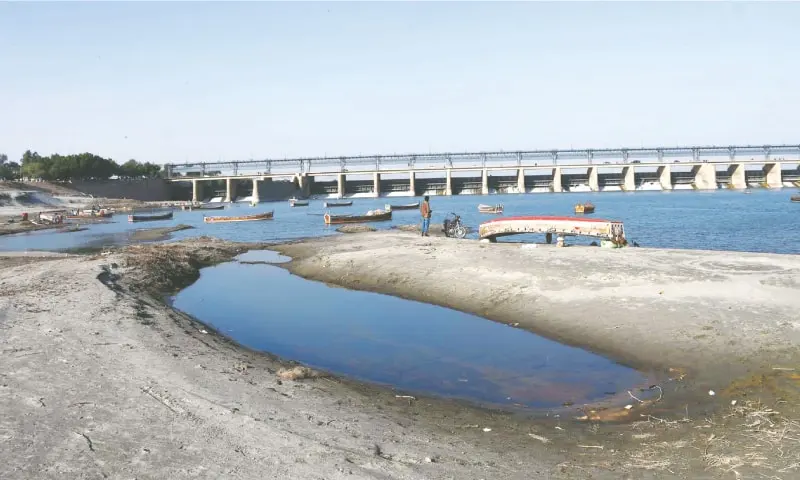
Sindh’s Water Crisis Deepens as Sukkur Barrage Canals Run Dry
A worsening irrigation water shortage in Sindh’s Right Bank Canal System has raised alarm among farmers, irrigation officials and political leaders, with critical canal networks linked to Sukkur Barrage reporting sharp deficits during the peak Kharif cultivation season. The crisis has affected agricultural lands in Larkana, Qambar-Shahdadkot, Dadu, Shikarpur and Sukkur districts, as well as areas of Balochistan that receive water through the North West Canal (NWC). Official irrigation data reviewed by stakeholders shows severe shortages across key canals. The North West Canal is operating with a shortfall of 64.1%, the Rice Canal faces a deficit of 38%, while Dadu Canal has recorded an alarming shortage of 82%. The shortages come at a critical stage for paddy cultivation, with farmers warning that delays in water availability could damage crop production and rural livelihoods. According to sources in Sindh’s irrigation department, Punjab is currently drawing 53,394 cusecs of water against its allocated share of 44,000 cusecs. The figures indicate an excess withdrawal of approximately 21.35%. Data further shows that Taunsa Barrage is lifting 25,694 cusecs against its entitlement of 24,000 cusecs, representing an over-withdrawal of around 9.3%. Concerns Grow Over Water Distribution Officials have also expressed concern over rising water levels at Chashma Barrage. According to available records, the pond level increased from 644.9 feet on Friday to 646.4 feet on Saturday, suggesting water accumulation upstream while shortages continue downstream. Sindh submitted an indent of 130,000 cusecs but received only 100,000 cusecs, leaving the province to absorb a substantial deficit. Irrigation experts have particularly questioned the continued operation of the Chashma-Jhelum Link Canal. Sources said the canal is drawing around 16,500 cusecs of water, a volume they argue exceeds the combined flow available to several tail-end canal systems serving major agricultural areas. Officials and farmers contend that the situation conflicts with the principles outlined in the 1991 Water Apportionment Accord, which governs water sharing among provinces. Farmers Warn of Crop Losses Pakistan Peoples Party Sindh President Nisar Ahmed Khuhro has repeatedly raised concerns about the issue. “Sindh produces 67% of the country’s agricultural output, yet it is being deprived of its rightful water share,” he said. Khuhro also noted that Sindh produces around 5.5 million tonnes of rice annually and generates approximately $1.4 billion through rice exports. He warned that reducing water supplies during the Kharif season amounts to an “economic massacre” of the lower riparian province. Former Sindh Abadgar Board leader Ishaq Mugheri said farmers in Shahdadkot, Qubo Saeed Khan and surrounding areas continue to wait for water supplies through the Saifullah Magsi branch. “We are still waiting water to reach the tail-end to start preparing paddy nurseries,” he said. Mugheri said Dadu Canal receives only 860 cusecs against its allocation of 4,995 cusecs. The North West Canal receives 2,100 cusecs against an allocation of 6,260 cusecs, while the Rice Canal gets 5,300 cusecs against its allocated 8,700 cusecs. Stakeholders have urged federal authorities to intervene immediately, regulate excess withdrawals and ensure equitable distribution before the shortages inflict long-term damage on agriculture and rural communities.

Saudi-Backed Mega Development Plan Could Reshape Karachi
Saudi Arabia is exploring the establishment of a crypto and blockchain zone in Karachi as part of a broader investment initiative that could reshape Pakistan’s commercial, financial and maritime landscape. The proposal forms part of a wider cooperation framework discussed during a visit by a Saudi delegation to Pakistan. Officials from both countries are also examining opportunities in energy, port infrastructure, digital finance and real estate development. The move comes as Pakistan accelerates efforts to regulate cryptocurrency trading and digital assets. The government has recently signalled support for a formal regulatory framework aimed at attracting foreign investment and promoting financial innovation. At the centre of the proposed collaboration is a Memorandum of Understanding signed between the Karachi Port Trust (KPT), Saudi Business Council-Najd Gateway Holding Company, Arif Habib Dolmen REIT Management Limited and the Pakistan Corporate Consortium. According to officials, the project will transform a 140-acre KPT site on MT Khan Road into a modern maritime and commercial district. Crypto, Banking and Digital Finance in Focus Sources familiar with the proposal said Pakistan has presented several flagship projects to Saudi investors. Among them is a dedicated crypto and blockchain zone designed to support digital asset businesses, blockchain innovation and emerging financial technologies. Officials have also proposed a digital banking park, Islamic finance centre and modern banking units as part of the development. The initiative aligns with Pakistan’s broader push to modernise its financial sector and attract technology-driven investment. Policymakers have increasingly highlighted blockchain technology, fintech and digital banking as potential drivers of economic growth. The project could also strengthen Pakistan’s position as a regional technology and financial hub if it secures regulatory approvals and investment commitments. At the same time, Saudi Arabia continues to expand its footprint in emerging technologies under its Vision 2030 diversification strategy, which seeks to reduce reliance on oil revenues and invest in innovation-driven sectors. Maritime Hub Planned for Karachi Waterfront The proposed development extends beyond financial technology. Pakistan has also suggested creating a marine technology and logistics zone, smart port integration facilities and digital customs and shipping services. Officials are additionally considering research and development initiatives focused on maritime software solutions. In healthcare and education, the proposal includes international hospitals, a medical university and a maritime and trade law school. Developers have also outlined plans for skyscrapers, luxury hotels, corporate headquarters and a convention centre. Minister for Maritime Affairs Muhammad Junaid Anwar Chaudhry described the project as a significant opportunity for economic transformation. “This strategic collaboration is a transformative opportunity to unlock the full potential of Karachi Port’s waterfront assets and position Pakistan as a regional hub for maritime commerce and investment,” he said. The minister added that authorities would fulfil all legal and regulatory requirements before moving forward. Officials said Saudi investors also expressed interest in wider maritime cooperation, including port infrastructure projects. The discussions come as Pakistan seeks greater foreign investment in strategic sectors. Saudi Arabia has already considered investments in mining, energy and infrastructure projects, while Islamabad has proposed an oil refinery and strategic oil reserves at Gwadar. If realised, the Karachi waterfront initiative could become one of the largest Saudi-backed urban development projects in Pakistan in recent years.
