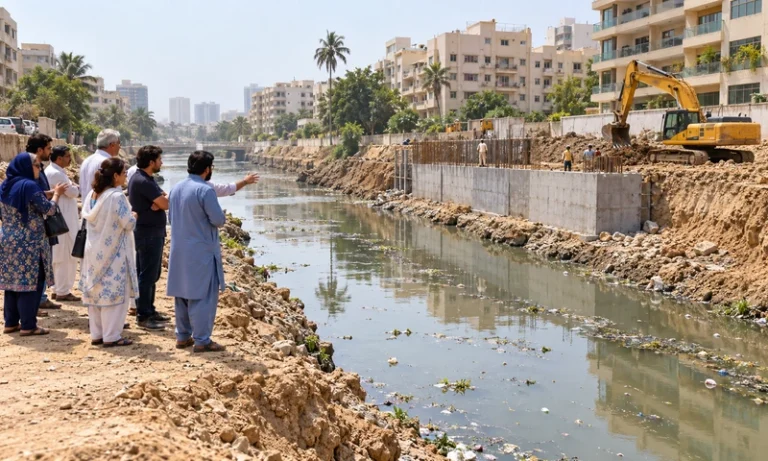
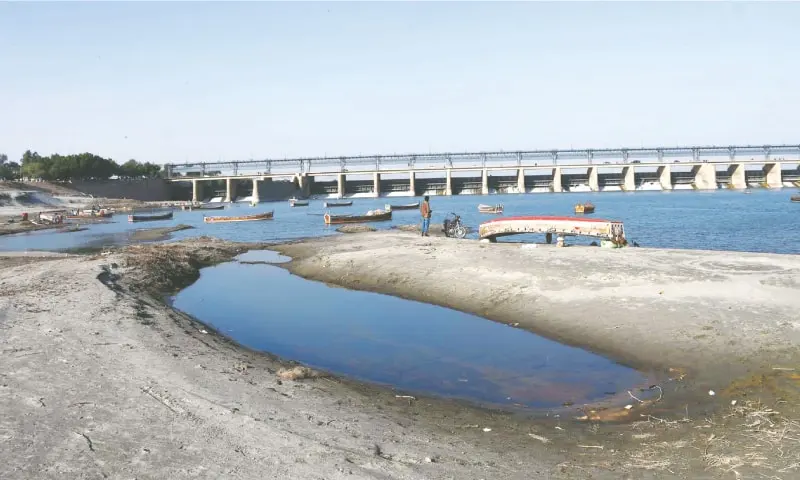
A worsening irrigation water shortage in Sindh’s Right Bank Canal System has raised alarm among farmers, irrigation officials and political leaders, with critical canal networks linked to Sukkur Barrage reporting sharp deficits during the peak Kharif cultivation season.
The crisis has affected agricultural lands in Larkana, Qambar-Shahdadkot, Dadu, Shikarpur and Sukkur districts, as well as areas of Balochistan that receive water through the North West Canal (NWC).
Official irrigation data reviewed by stakeholders shows severe shortages across key canals. The North West Canal is operating with a shortfall of 64.1%, the Rice Canal faces a deficit of 38%, while Dadu Canal has recorded an alarming shortage of 82%.
The shortages come at a critical stage for paddy cultivation, with farmers warning that delays in water availability could damage crop production and rural livelihoods.
According to sources in Sindh’s irrigation department, Punjab is currently drawing 53,394 cusecs of water against its allocated share of 44,000 cusecs. The figures indicate an excess withdrawal of approximately 21.35%.
Data further shows that Taunsa Barrage is lifting 25,694 cusecs against its entitlement of 24,000 cusecs, representing an over-withdrawal of around 9.3%.
Concerns Grow Over Water Distribution
Officials have also expressed concern over rising water levels at Chashma Barrage.
According to available records, the pond level increased from 644.9 feet on Friday to 646.4 feet on Saturday, suggesting water accumulation upstream while shortages continue downstream.
Sindh submitted an indent of 130,000 cusecs but received only 100,000 cusecs, leaving the province to absorb a substantial deficit.
Irrigation experts have particularly questioned the continued operation of the Chashma-Jhelum Link Canal.
Sources said the canal is drawing around 16,500 cusecs of water, a volume they argue exceeds the combined flow available to several tail-end canal systems serving major agricultural areas.
Officials and farmers contend that the situation conflicts with the principles outlined in the 1991 Water Apportionment Accord, which governs water sharing among provinces.
Farmers Warn of Crop Losses
Pakistan Peoples Party Sindh President Nisar Ahmed Khuhro has repeatedly raised concerns about the issue.
“Sindh produces 67% of the country’s agricultural output, yet it is being deprived of its rightful water share,” he said.
Khuhro also noted that Sindh produces around 5.5 million tonnes of rice annually and generates approximately $1.4 billion through rice exports.
He warned that reducing water supplies during the Kharif season amounts to an “economic massacre” of the lower riparian province.
Former Sindh Abadgar Board leader Ishaq Mugheri said farmers in Shahdadkot, Qubo Saeed Khan and surrounding areas continue to wait for water supplies through the Saifullah Magsi branch.
“We are still waiting water to reach the tail-end to start preparing paddy nurseries,” he said.
Mugheri said Dadu Canal receives only 860 cusecs against its allocation of 4,995 cusecs. The North West Canal receives 2,100 cusecs against an allocation of 6,260 cusecs, while the Rice Canal gets 5,300 cusecs against its allocated 8,700 cusecs.
Stakeholders have urged federal authorities to intervene immediately, regulate excess withdrawals and ensure equitable distribution before the shortages inflict long-term damage on agriculture and rural communities.