


Many people have experienced the same frustrating scenario. A group spends time outdoors together, but only one or two people return home covered in mosquito bites. Scientists say this is not simply a matter of bad luck. A growing body of research suggests mosquitoes carefully select their targets. They use a combination of smell, body chemistry, heat and visual signals to identify potential hosts. Recent findings highlighted in the journal Nature show that mosquitoes first locate people by detecting carbon dioxide released through breathing. Once they move closer, a person’s natural body odour becomes one of the most important factors in determining whether they get bitten. Researchers identified dozens of skin-related compounds that influence mosquito behaviour. Among the strongest attractants is a chemical called 1-octen-3-ol, which forms as skin oils naturally break down. The findings add to earlier research showing that mosquitoes rely heavily on chemical signals rather than chance when choosing whom to bite. For years, many people believed blood type was the main reason some individuals attracted more mosquitoes. While some studies suggest people with Type O blood may receive more bites, scientists increasingly view body scent as the more important factor. Research from Rockefeller University found that people with higher levels of naturally occurring carboxylic acids on their skin attracted significantly more mosquitoes than others. Scientists believe genetics partly influences how these compounds develop on the skin. Carbon dioxide and body heat help mosquitoes find targets Mosquitoes do not rely on scent alone. Every person exhales carbon dioxide, which female mosquitoes can detect from considerable distances. The insects use the gas as an early signal that a potential host is nearby. As a result, people who produce larger amounts of carbon dioxide often attract more mosquitoes. This includes larger adults, pregnant women and people who have recently exercised. After detecting carbon dioxide, mosquitoes use body heat and moisture to pinpoint their target. Scientists say this process helps explain why people often notice more mosquito activity after physical exercise or during hot, humid weather. Research has also shown that clothing colour can influence mosquito behaviour. Studies indicate that mosquitoes more easily identify people wearing darker colours such as black, navy blue and red. In contrast, lighter shades such as white, beige and light green appear less attractive. Proven ways to reduce mosquito bites Health experts recommend focusing on prevention methods supported by scientific evidence. These include using insect repellents containing DEET, picaridin or oil of lemon eucalyptus. Experts also advise wearing long sleeves and trousers, especially during dawn and dusk when mosquito activity often peaks. In addition, removing standing water around homes can reduce breeding sites. Window screens and outdoor fans can also help because mosquitoes struggle to fly in strong airflow. Scientists say understanding mosquito attraction could lead to more effective repellents and disease prevention strategies in the future. This research may prove increasingly important as mosquito-borne illnesses such as dengue, malaria, Zika virus and West Nile virus continue to affect millions of people worldwide each year.
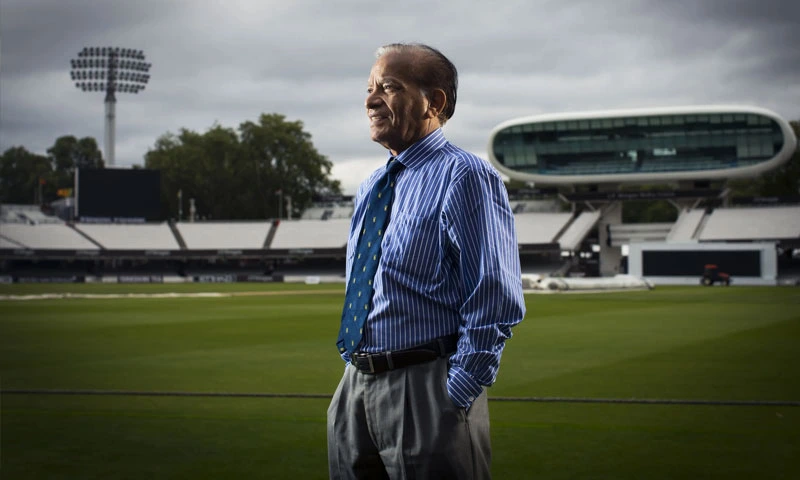
Qamar Ahmed, Who Covered 450+ Test Matches, Dies at 88
Veteran sports journalist, commentator and former first-class cricketer Qamar Ahmed has passed away in Karachi at the age of 88, bringing an end to one of the most remarkable careers in cricket journalism. His family confirmed his death on Thursday and said he had suffered a heart attack two weeks ago. Ahmed spent more than seven decades chronicling the sport and earned global recognition for his reporting, analysis and commentary. Widely respected across cricketing circles, Ahmed covered some of the game’s biggest moments and personalities while travelling extensively across major cricket-playing nations. His work made him one of Pakistan’s most recognised sports journalists and a familiar figure in press boxes around the world. A Life Dedicated to Cricket Before becoming a journalist, Ahmed played first-class cricket for Hyderabad and Sindh. Records show he featured in 17 first-class matches as a slow left-arm spinner and represented Hyderabad during Pakistan’s domestic cricket circuit in the late 1950s and early 1960s. After studying English Literature at the University of Sindh, he began his journalism career in Hyderabad and later worked as a freelance cricket writer, broadcaster and commentator. His reporting career took off in the 1960s and eventually led him to the BBC Urdu Service in London. Our Dear friend and legend of cricket journalism Qamar Ahmed passed away in Karachi. He was former cricketer from Hyderabad pic.twitter.com/zNnui00l5u— Abdul Majid Bhatti (@bhattimajid) June 18, 2026 Ahmed went on to become one of the most travelled cricket journalists in history. In January 2014, he became only the third journalist after John Woodcock and Richie Benaud to cover 400 Test matches. By the later stages of his career, that figure had crossed 450 Tests, a milestone few journalists have approached. Speaking after reaching the 400-Test milestone, Ahmed said: “It’s a great honour to complete 400 Test matches as a journalist and I am proud at the distinction.” His reporting career also included more than 730 One Day Internationals and multiple ICC Cricket World Cups, making him one of the most experienced cricket correspondents of his generation. Author, Historian and Mentor Ahmed authored the autobiography Far More Than A Game, in which he chronicled his journey from student life in Hyderabad, Sindh, to his years as a journalist in London and his experiences covering cricket across the globe. The book also documented important moments in Pakistan’s cricket history and offered a personal account of the sport’s evolution over several decades. Colleagues often described him as a custodian of cricket history. He contributed to Pakistani and international publications, including Dawn, BBC Urdu and leading cricket magazines, while also mentoring younger generations of sports reporters. The Sports Journalists Association Sindh (SJAS) expressed profound grief over his death. In a joint condolence statement, SJAS President Mahmood Riaz, Secretary Mujahid Solangi and members of the governing body said that Qamar Ahmed’s contributions to sports journalism were invaluable and unforgettable. They said his remarkable services to cricket journalism would always be remembered and would continue to inspire future generations of journalists. The association prayed for the elevation of his ranks, forgiveness and strength for his family. It added that with his passing, “a bright and significant chapter in sports journalism has come to an end.” Ahmed leaves behind a legacy that stretches from the cricket fields of Hyderabad to some of the most iconic venues in world cricket. His reporting preserved countless moments of the game’s history and helped shape cricket journalism in Pakistan for generations.
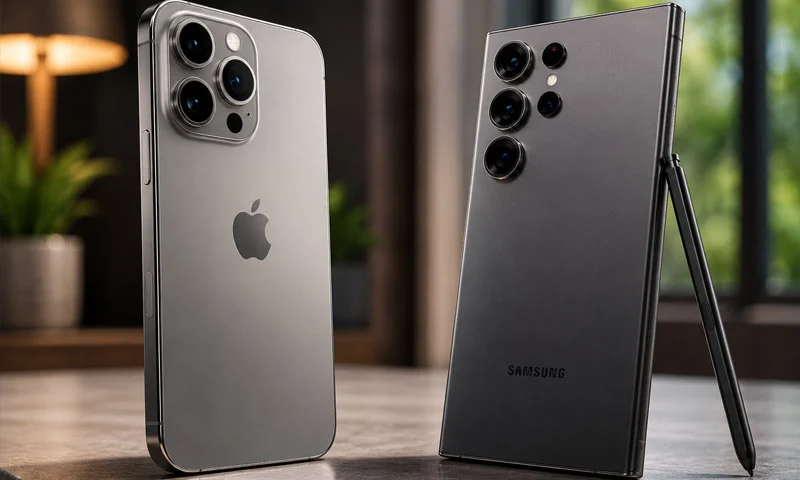
Galaxy S26 Ultra vs iPhone: What Buyers Need to Know
The battle between Apple’s flagship iPhone and Samsung’s premium Galaxy Ultra series has intensified in 2026, with both companies introducing powerful new technologies, advanced artificial intelligence features, upgraded cameras, and improved battery performance. The latest models, the iPhone 17 Pro Max and the Samsung Galaxy S26 Ultra, represent the best each company has to offer. However, they target users with different priorities. Display and Design Both smartphones feature large 6.9-inch premium OLED displays with adaptive 120Hz refresh rates. Samsung offers a Dynamic AMOLED 2X panel, while Apple uses its Super Retina XDR OLED display. According to published specifications, Samsung’s display delivers higher sharpness and includes a built-in Privacy Display feature that can hide on-screen content from nearby viewers. Samsung has also focused on a slimmer and lighter design, while Apple continues to emphasize premium materials and seamless integration within its ecosystem. Performance and AI Features The iPhone 17 Pro Max is powered by Apple’s A19 Pro processor, while Samsung’s Galaxy S26 Ultra uses the Snapdragon 8 Elite Gen 5 for Galaxy chipset. Both devices are designed to handle demanding tasks, gaming, AI-assisted workflows, and advanced photography. Samsung has placed a strong emphasis on Galaxy AI features, including AI-powered photo editing, productivity tools, and contextual assistance. Apple, meanwhile, continues to focus on deep integration between hardware, software, and its broader ecosystem. Camera Comparison The camera system remains one of the biggest differences between the two devices. Apple equips the iPhone 17 Pro Max with three 48-megapixel rear cameras covering wide, ultra-wide, and telephoto photography. It also introduces an upgraded 18-megapixel front camera with Center Stage functionality and improved subject tracking. Samsung takes a different approach. The Galaxy S26 Ultra features a 200-megapixel main camera, a 50-megapixel ultra-wide camera, a 50-megapixel telephoto lens with 5x optical zoom, and an additional 10-megapixel telephoto lens. The device supports up to 100x Space Zoom and enhanced low-light photography through its upgraded ProVisual Engine. Industry comparisons suggest that Samsung offers greater flexibility for zoom photography, long-distance shooting, and high-resolution images. Apple, however, continues to receive praise for consistent image processing, natural colors, and professional-grade video recording. Battery and Charging Samsung equips the Galaxy S26 Ultra with a 5,000mAh battery and supports up to 60W wired charging, allowing the device to reach approximately 75% charge in around 30 minutes. Samsung claims up to 31 hours of video playback. Apple has not traditionally disclosed battery capacity in the same manner as Samsung, but independent comparisons indicate that both devices offer all-day battery life. Samsung currently holds an advantage in charging speed. Which Phone Is Better? The answer depends on user priorities. The iPhone 17 Pro Max may be a better choice for users who want: Seamless integration with Apple devices Industry-leading video recording Long-term software support A simple and polished user experience The Galaxy S26 Ultra may be a better choice for users who want: More versatile camera hardware Superior zoom capabilities Faster charging Greater customization and multitasking features S Pen support and advanced AI tools Both smartphones rank among the most advanced consumer devices available in 2026. The iPhone 17 Pro Max excels in ecosystem integration, software optimization, and video performance, while the Galaxy S26 Ultra stands out for its camera versatility, zoom capabilities, AI features, and faster charging. For users already invested in Apple’s ecosystem, the iPhone remains a compelling choice. For power users seeking maximum hardware flexibility and advanced photography options, Samsung’s Galaxy S26 Ultra offers several notable advantages.
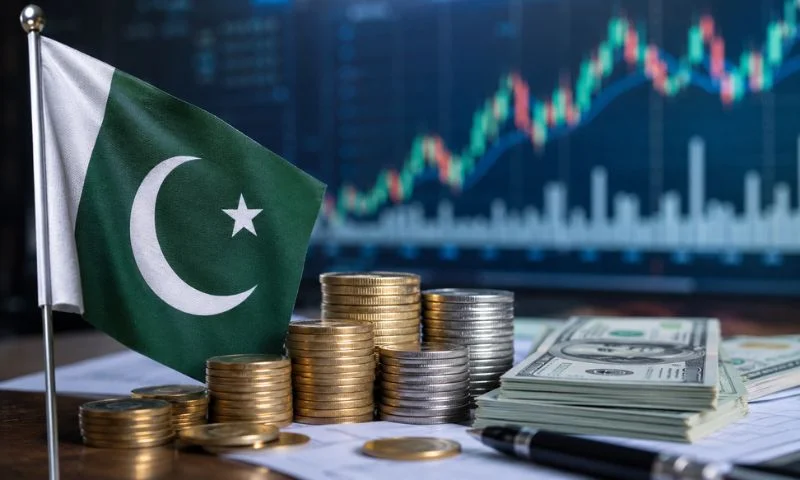
Pakistan Turns to International Bonds as Saudi Oil Facility Expires
Pakistan plans to raise $2 billion through Eurobonds, Sukuk and Panda bonds in fiscal year 2026-27. However, the government has made no provision for financing under the Saudi Oil Facility in the new budget. Budget documents show that Pakistan expects to secure $23.378 billion in external financing next year. The funding will come from multilateral lenders, bilateral partners, commercial banks, international bond markets and other foreign inflows. The financing strategy comes as Pakistan works to strengthen its external accounts. It also seeks to maintain foreign exchange reserves under an IMF-backed reform programme. A major feature of the budget is the absence of expected inflows from the Saudi Oil Facility. “The government has estimated no receipts from the Saudi Oil Facility for the coming fiscal year, compared with the revised estimate of $1 billion for 2025-26.” Saudi Arabia’s oil financing arrangement expired in April 2026. Pakistan has requested an extension. However, officials did not include any expected inflows in the budget. The facility has supported Pakistan’s balance of payments for years. It allowed the country to import oil on deferred payment terms. Saudi and Chinese deposits remain key support The government has listed $12 billion in bilateral deposits held by the State Bank of Pakistan. The budget documents do not provide a country-wise breakdown. However, official sources said Saudi Arabia accounts for $8 billion, while China provides the remaining $4 billion. Pakistan also expects to receive $4.866 billion from multilateral lenders during 2026-27. The Asian Development Bank is expected to provide $1.68 billion. Meanwhile, the Asian Infrastructure Investment Bank could contribute $86.337 million. The government has projected another $17.669 million from the European Investment Bank. Pakistan expects to receive $412 million from the World Bank’s International Bank for Reconstruction and Development. It also expects $1.43 billion from the International Development Association. Other multilateral inflows include $186.64 million from the Islamic Development Bank. The institution may also provide $1 billion in short-term financing. Additional support includes $39.75 million from the International Fund for Agricultural Development and $8.76 million from the OPEC Fund for International Development. Bond markets and IMF financing Pakistan has projected bilateral loans of $400.42 million for the next fiscal year. China is expected to provide $97.64 million. France may contribute $94 million, while Saudi Arabia could provide $47.18 million. The government also expects financing from Denmark, South Korea, the United States, Kuwait, Japan, Germany, Oman and Italy. Foreign commercial borrowing is projected at $2.35 billion. Inflows through Naya Pakistan Certificates are estimated at $1.122 billion. The budget also includes $530 million under the IMF’s Resilience and Sustainability Facility. The programme supports climate-related reforms and investments. However, the government does not record disbursements under the IMF’s $7 billion Extended Fund Facility in the federal budget. The State Bank of Pakistan records those funds separately because they support the country’s balance of payments. The financing plan highlights Pakistan’s continued reliance on international lenders, friendly countries and global capital markets. The government hopes these inflows will help meet external funding needs during the next fiscal year.
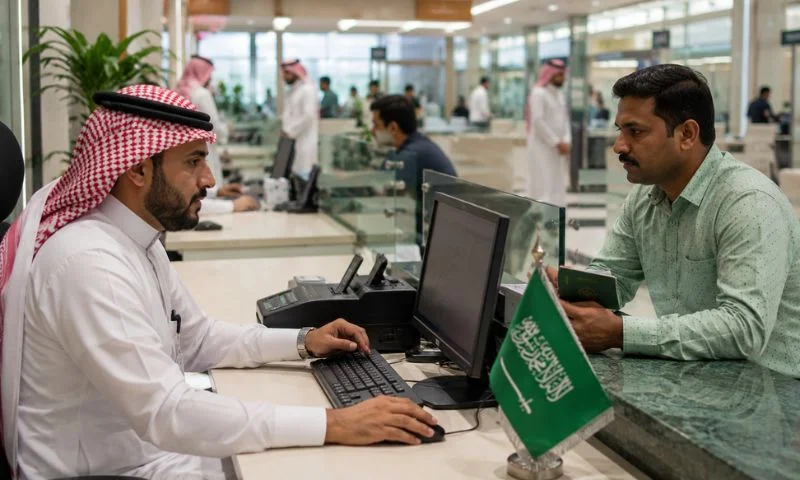
Saudi Arabia Cuts Instant Work Visas for Young Businesses to Just Five
Saudi Arabia has reduced the number of instant work visas available to newly established businesses, introducing stricter limits as authorities continue efforts to regulate recruitment and strengthen labour market compliance. The Ministry of Human Resources and Social Development announced the change through its Qiwa platform, which manages labour market services and employment-related procedures across the Kingdom. According to Qiwa, businesses that have operated for less than two years can now obtain a maximum of five instant work visas. “Businesses that have been operating for less than two years will be eligible for a maximum of five instant visas.” The platform said companies that have operated for more than two years can receive up to 50 instant visas. “For companies older than two years, the limit rises to 50 visas in a single application or multiple applications submitted within the same week at the entity level.” The move forms part of Saudi Arabia’s broader labour market reforms under Vision 2030. Authorities continue to encourage private-sector growth while increasing compliance with employment regulations and Saudisation targets. Saudisation performance linked to visa allocations Qiwa also outlined special provisions for businesses enrolled in the Establishment Programme. The platform said eligible businesses will initially receive two visas. Additional allocations will depend on improvements in Saudisation performance. “The platform said businesses enrolled in the Establishment Programme and meeting the required criteria would initially receive two visas, with additional visa allocations available after increasing their Saudisation rates.” Saudi Arabia’s Saudisation programme, known as Nitaqat, aims to increase the participation of Saudi nationals in the private sector. Companies receive classifications based on their employment of Saudi citizens, ranging from red and yellow categories to green and platinum levels. Under the latest rules, employers must maintain at least a medium green classification or higher to qualify for overseas recruitment through instant visas. The Kingdom has expanded labour market reforms in recent years. These reforms seek to balance foreign workforce requirements with opportunities for Saudi citizens. Ten conditions for recruiting foreign workers Qiwa also detailed 10 requirements that companies must meet before recruiting non-Saudi workers from abroad. The conditions include maintaining active business status and holding valid commercial registration documents. Employers must also maintain valid work permits for existing employees and comply with Saudisation requirements. Additional conditions require compliance with the Wage Protection System and sufficient balances on government platforms such as Absher and Muqeem. Companies employing 10 or more workers must complete annual self-assessment requirements. Businesses must also register employee work locations through the Qiwa platform. Furthermore, employers must be at least 18 years old and maintain sufficient recruitment quota balances based on the visa category requested. The latest measures highlight Saudi Arabia’s continued focus on regulating labour market practices while supporting sustainable business growth and workforce development.
US and Iran Agree to End Hostilities? Full 14-Point Text Revealed
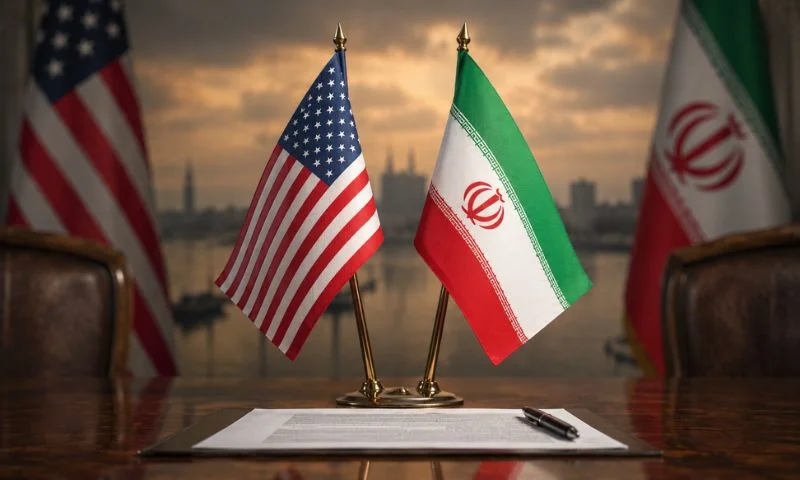
A senior US official has disclosed what the official described as the full text of a draft agreement between the United States and Iran. The proposed agreement aims to end hostilities, reopen key maritime routes and launch a new round of nuclear negotiations. The official read the text during a conference call with reporters. According to the official, the document outlines a 14-point Memorandum of Understanding between Washington and Tehran. The draft would serve as the foundation for a broader final agreement. Both sides would aim to complete that agreement within 60 days. The proposal comes after months of military tensions that raised concerns about regional security, energy markets and Iran’s nuclear programme. At its core, the draft calls for an immediate ceasefire. It also outlines steps on sanctions relief, economic cooperation and future nuclear talks. Ceasefire, Hormuz Reopening and Economic Measures Under the proposed agreement, the United States and Iran, along with their allies, would immediately stop military operations. Both sides would also commit not to launch future military action against one another. The draft places significant focus on the Strait of Hormuz. The waterway handles a large share of global oil shipments. The United States would begin removing its naval blockade and related restrictions immediately after signing the MOU. It would complete the process within 30 days. Meanwhile, Iran would facilitate the safe passage of commercial vessels through the Strait of Hormuz and nearby waters. The agreement also calls for discussions with Oman and other Gulf states. Those talks would focus on future administration and maritime services in the strategic waterway. The draft includes a major economic component as well. The United States would work with regional partners on a reconstruction and development plan worth at least $300 billion for Iran. In addition, the agreement outlines a pathway for lifting sanctions. The proposed framework covers US primary and secondary sanctions. It also includes restrictions linked to the United Nations Security Council and the International Atomic Energy Agency. Furthermore, Washington would issue waivers for exports of Iranian crude oil, petroleum products and related services. Nuclear Commitments and Final Agreement Nuclear issues remain central to the proposed framework. Iran reaffirms that it will not seek or develop nuclear weapons. Both sides would negotiate the future handling of enriched nuclear material. The International Atomic Energy Agency would supervise the process. Until a final agreement is reached, Iran would maintain the current status of its nuclear programme. Likewise, the United States would avoid imposing new sanctions. It would also refrain from deploying additional forces in the region. The draft further provides for the release of frozen Iranian assets. In addition, both sides would establish a mechanism to monitor implementation and future compliance. According to the text, negotiations on a final agreement would begin after key provisions enter into force. These provisions include ceasefire measures, maritime access, sanctions waivers and asset releases. Finally, the draft states that a binding United Nations Security Council resolution would endorse the final agreement if both sides reach a deal. Full Text of the 14 Points 1. The United States of America and the Islamic Republic of Iran and their allies in the current war by signing this MOU declare the immediate and permanent termination of military operations on all fronts, including in Lebanon, and undertake from now on not to initiate any war or any military operation against each other, and to refrain [from] the threat or use of force against each other and ensuring the territorial integrity and sovereignty of Lebanon. The final deal will confirm the permanent termination of the war on all fronts, including in Lebanon and other provisions of this paragraph. 2. The United States of America and the Islamic Republic of Iran undertake to respect each other’s sovereignty and territorial integrity, and to refrain from interfering in each other’s internal affairs. 3. The United States of America and the Islamic Republic of Iran commit to negotiating and achieving the final deal in maximum 60 days extendable with mutual consent. 4. Immediately upon the signing of this MOU, the United States of America will begin the removal of its naval blockade and any disturbances or impediments against the Islamic Republic of Iran, and will fully end the naval blockade within 30 days. During this period, the traffic of vessels will be in proportion to the numbers of prewar traffic being restored by the Islamic Republic of Iran. The United States of America further undertakes to remove its forces from the proximity of the Islamic Republic of Iran within 30 days after the final deal. 5. Upon the signing of this MOU, the Islamic Republic of Iran will make arrangements using its best efforts for the safe passage of commercial vessels with no charge for 60 days only from the [Arabian] Gulf to the Sea of Oman, and vice versa. The traffic of commercial vessels will immediately start, and considering the need for removing the technical and military obstacles and demining by the Islamic Republic of Iran, will be instated within 30 days. The Islamic Republic of Iran will conduct dialogue with the Sultanate of Oman to define the future administration and maritime services in the Strait of Hormuz, in discussion with other [Arabian] Gulf littoral states in line with the applicable international law and the sovereign rights of coastal states of the Strait of Hormuz. 6. The United States of America undertakes with regional partners to develop a definitive, mutually agreed plan with at least $300 billion for the reconstruction and economic development of the Islamic Republic of Iran. The mechanism for the implementation of this plan will be finalized as part of a final deal within 60 days. All required licenses, waivers and permissions needed for the relevant financial transactions will be granted by the United States of America. 7. The United States of America undertakes to terminate all types of sanctions against the Islamic Republic of Iran, including the United Nations Security Council resolutions, IAEA Board of Governors resolutions, and
FIFA Hydration Breaks Spark Debate Over Player Safety
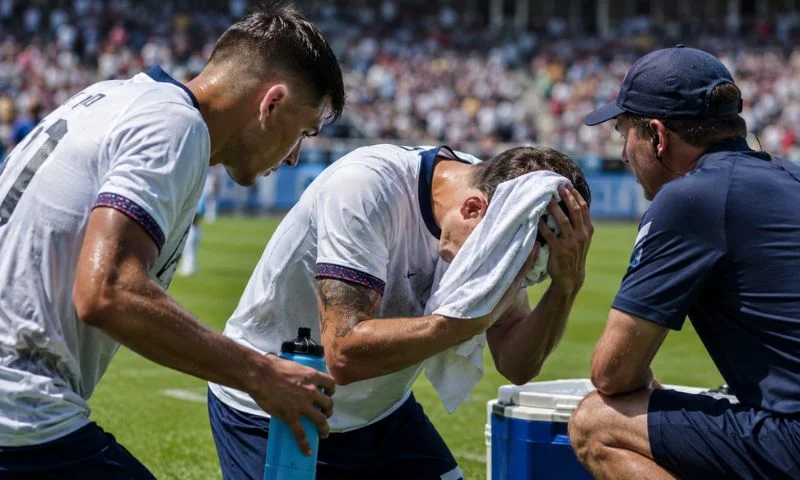
FIFA has introduced mandatory hydration breaks at the 2026 World Cup for the first time in tournament history. The move aims to protect players from extreme heat as experts warn that this year’s competition could become one of the hottest World Cups on record. The governing body now requires a three-minute hydration break midway through each half of every match. The rule applies regardless of weather conditions or whether a stadium is enclosed or air-conditioned. FIFA said the measure seeks to “ensure equal conditions for all teams, in all matches.” The decision follows concerns raised during recent tournaments. Last year’s FIFA Club World Cup in the United States saw temperatures climb into the mid-30s Celsius in several host cities. However, the policy has divided opinion. Some coaches argue that mandatory breaks disrupt the rhythm of matches. Others believe the pauses give managers an opportunity to alter tactics and influence momentum. At the same time, sports scientists say the breaks may not last long enough to effectively cool players during extreme conditions. “When we look at the three minute hydration breaks, we’re really looking at this as a way to mitigate anything that could potentially lead to an incident or an emergency,” said Joshua L. DeVincenzo, assistant director of applied research services at Columbia University’s National Center for Disaster Preparedness. Scientists warn elite athletes remain vulnerable Experts say even the world’s best athletes remain susceptible to exertional heat illness when they compete in hot and humid environments. The condition occurs when body temperature rises to dangerous levels and places significant stress on the heart, muscles and nervous system. Common symptoms include cramps, fatigue, dizziness, headaches and dehydration. In severe cases, athletes may suffer exertional heat stroke. “When internal body temperature exceeds 105 F (40.5 C), athletes might feel confused, aggressive or lose consciousness,” said Yuri Hosokawa, associate professor at Waseda University in Japan. Hosokawa recently joined other experts in urging FIFA to adopt stricter heat protocols. In May, a group of scientists sent a letter recommending cooling breaks of at least six minutes. Research shows that athletes can lose one to two litres of fluid per hour during intense exercise in hot conditions. Furthermore, losing just 2% of body weight through dehydration can reduce physical performance. Ryan Calsbeek, a professor of biological sciences at Dartmouth College, said athletes eventually reach a point where the body struggles to regulate temperature. “Your body starts to really fall apart, you lose the ability to cool off fast enough,” he said. Calls grow for longer cooling breaks Experts agree that hydration breaks help reduce risk. However, many argue that three minutes provides limited time for meaningful cooling and rehydration. Douglas Casa, chief executive of the University of Connecticut’s Korey Stringer Institute, said cold towels and aggressive cooling strategies can lower body temperature. Nevertheless, he believes longer breaks would produce far better results. “That’s why we’re suggesting doing something like five or six minutes, because it just makes such a big impact when you’re dealing with a change of that magnitude,” he said. Meanwhile, climate experts expect heat-related challenges to become more common across global sport. Bharat Venkat, director of the Heat Lab at the University of California, Los Angeles, said sporting organisations will need to adapt. “No matter what sport you play, there’s going to be adjustments that have to be made in the face of climate change,” he said. As temperatures continue to rise worldwide, the debate over player safety is likely to remain a major issue long after the final whistle of World Cup 2026.
10 Games Without A Goal: Ronaldo Faces Growing Questions
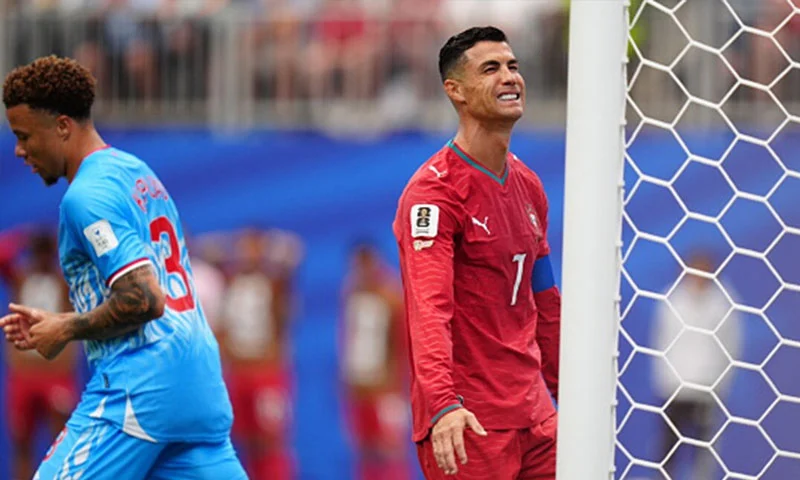
Cristiano Ronaldo’s goal drought at major tournaments stretched to 10 consecutive matches on Wednesday as Portugal were held to a 1-1 draw by DR Congo in their opening FIFA World Cup 2026 fixture. Despite the 41-year-old failing to register a shot on target, Portugal coach Roberto Martinez strongly defended his captain and insisted removing the team’s all-time leading scorer was never an option. Ronaldo played the full 90 minutes at Houston Stadium but failed to register a shot on target. The result extended his goal drought to five consecutive World Cup matches and 10 straight appearances across the World Cup and European Championship. Despite growing scrutiny over the 41-year-old’s performances at major tournaments, Martinez insisted that substituting Portugal’s all-time leading scorer was never under consideration while the team searched for a winning goal. “It makes no sense to get the best goal scorer in world football out in a game that you need goals,” Martinez said after the match. Ronaldo attempted three shots against DR Congo, but none troubled goalkeeper Lionel Mpasi. It marked the sixth World Cup match in which the Portugal captain failed to record a shot on target. However, Martinez pointed to Ronaldo’s remarkable international record. The Al Nassr striker has scored 143 goals for Portugal and remains the highest-scoring men’s international player in football history. The match also saw Ronaldo achieve another milestone. He became only the second male player to appear at six FIFA World Cups, joining Argentina captain Lionel Messi, who reached the same landmark a day earlier. Ronaldo entered the tournament aiming to become the first player to score in six separate World Cups. Messi remains in contention for the same record after scoring a hat-trick against Algeria in Argentina’s opening game. Early Lead Slips Away Portugal appeared in control after João Neves scored in the sixth minute. However, Martinez said the early goal unexpectedly changed his team’s approach. “We started very, very well,” Martinez said. “Scoring the goal, which is normally a moment when the emotion of scoring helps you keep control of the match and try to score a second goal, had the opposite effect.” According to Martinez, Portugal became overly focused on possession instead of attacking spaces behind DR Congo’s defensive line. As a result, the African side gradually settled into the contest and began creating opportunities through quick transitions. Portugal managed only six further attempts after Neves’ opener and finished the match with just one shot on target. DR Congo equalised before halftime through Yoane Wissa and successfully defended the scoreline during the second half. The draw earned DR Congo their first World Cup point since returning to the tournament after a 52-year absence. Martinez Urges Improvement Ahead of Uzbekistan Clash Despite the disappointing result, Martinez dismissed suggestions that Portugal’s World Cup campaign had suffered a major setback. “What we’re talking about here is the first match of a World Cup,” he said. “We stopped taking risks, we stopped looking for space, we stopped reaching the final third.” The Spanish coach compared Portugal’s situation to previous tournaments where eventual champions endured difficult starts. He referenced Argentina’s defeat to Saudi Arabia in 2022 and Spain’s loss to Switzerland in 2010 before both nations went on to lift the World Cup trophy. Portugal now turn their attention to a crucial Group K encounter against Uzbekistan next Tuesday in Houston. They will conclude the group stage against Colombia. For Ronaldo, the match presents another opportunity to end a scoring drought that has become one of the most closely watched storylines of the tournament.
US Lifts Blockade, Iran Reopens Hormuz After Landmark Deal
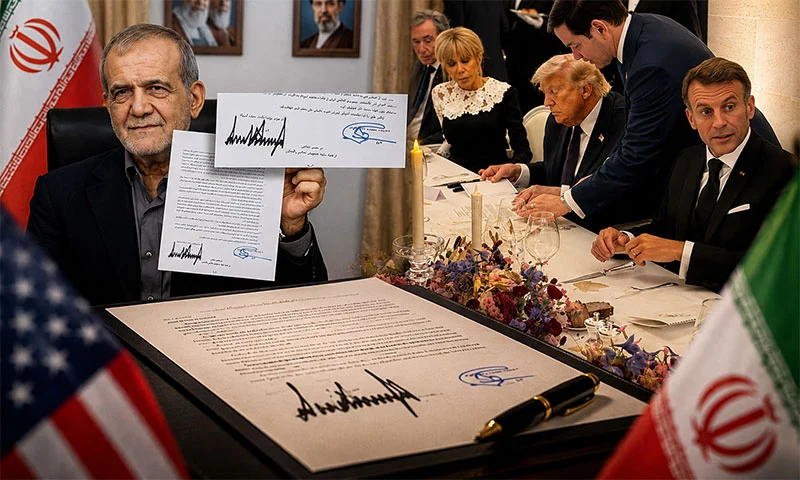
Prime Minister Shehbaz Sharif announced early Thursday that the Islamabad Memorandum of Understanding (MoU) between the United States and Iran had officially entered into force after both countries signed the agreement electronically. In a post on X, the prime minister said the accord had received the signatures of US President Donald Trump and Iranian President Masoud Pezeshkian. He added that he had endorsed the agreement in his role as mediator. “The memorandum has been signed by honourable presidents of both the countries and also endorsed by me as the mediator. The signing of this agreement at the highest level of the respective governments demonstrates the commitment of both sides to a diplomatic resolution of the conflict,” Shehbaz wrote. I am honoured to announce that the historic ‘Islamabad Memorandum of Understanding’ has been electronically signed today between the United States of America and the Islamic Republic of Iran. The Memorandum has been signed by honourable Presidents of both the countries and also…— Shehbaz Sharif (@CMShehbaz) June 18, 2026 The announcement marks the most significant diplomatic breakthrough since the conflict erupted on February 28, when the United States and Israel launched military strikes against Iran. Tehran later responded with missile and drone attacks across the region, escalating tensions and disrupting global energy markets. Shehbaz said the agreement would take effect immediately. “The MoU shall enter into force with immediate effect and as a first step, Islamic Republic of Iran will instantly reopen the Strait of Hormuz and the United States of America will immediately lift the naval blockade,” he said. Strait of Hormuz to Reopen as Sanctions Relief Begins The reopening of the Strait of Hormuz is expected to restore one of the world’s most important energy corridors. The strategic waterway carries a significant share of global oil shipments and has remained heavily disrupted during the conflict. As Iran confirms that they have signed the U.S.-Iran MOU the White House has released footage of the moment when U.S. President Donald J. Trump signed the MOU during a dinner with his French counterpart, President Emmanuel Macron, in Versailles, France. pic.twitter.com/8Rn5DJINq6— OSINTdefender (@sentdefender) June 17, 2026 Trump confirmed the signing after attending a candlelit dinner at the Palace of Versailles following the G7 summit in France. “Just signed it,” Trump told reporters as he left the palace. Meanwhile, Iranian Foreign Ministry spokesman Esmaeil Baqaei confirmed the agreement through state news agency IRNA. “The document was finalised with the signatures of the presidents,” he said. https://Twitter.com/RT_com/status/2067405175153643984 Earlier, Shehbaz stated that Pakistan, with support from Qatar, would host an official signing ceremony in Switzerland on June 19. However, Iranian officials later clarified that no ceremony would take place because both presidents had already completed the signing process digitally. According to Iranian foreign ministry spokesperson Esmaeil Baghaei, “No signing ceremony will be held in Switzerland”. Nuclear Talks and Reconstruction Fund Remain Key Priorities The agreement also outlines major economic and diplomatic commitments. According to details released by US officials, Washington will immediately waive oil sanctions that have severely affected Iran’s economy. Furthermore, once both sides reach a final agreement on Iran’s nuclear programme, the United States will facilitate a $300 billion reconstruction fund backed by regional countries. Trump: "It's signed. I signed it in Versailles. I just signed it." pic.twitter.com/QsG8ZTq6P6— Aaron Rupar (@atrupar) June 17, 2026 The deal also requires Iran to reduce its enriched uranium stockpile. Officials said Tehran could achieve this through “down-blending on site under the supervision of the IAEA”. Shehbaz congratulated Trump for helping secure the agreement. “Your steadfast commitment to diplomacy and preference for peaceful resolution have once again helped end a conflict that could have led to devastating consequences for the region and beyond,” he wrote. The prime minister also praised Iran’s leadership, Qatar, Saudi Arabia, Turkiye, Egypt and Pakistan’s Chief of Defence Forces, Field Marshal Asim Munir, for supporting efforts that led to the breakthrough. Analysts say the agreement offers a pathway toward regional stability. However, negotiators must still resolve key issues surrounding Iran’s nuclear activities before a permanent settlement can emerge.
