


Global trust in news has fallen to its lowest level in a decade as audiences increasingly turn to social media, video platforms and artificial intelligence chatbots for information, according to the Digital News Report 2026 published by the Reuters Institute for the Study of Journalism. The annual report, one of the world’s most comprehensive studies on media consumption, surveyed nearly 100,000 people across 48 markets. Researchers Jim Egan, Craig T. Robertson, Amy Ross Arguedas, Nic Newman, Rasmus Kleis Nielsen, Mitali Mukherjee and Richard Fletcher authored the report. The study found that only 37 percent of respondents trust “most news most of the time,” marking the lowest level since the Reuters Institute began tracking trust in 2015. The sharpest declines came in the Philippines, where trust dropped 10 percentage points. Ireland followed with a nine-point decline, while Thailand, Peru and Poland each recorded an eight-point fall. The United States also recorded a significant decline. Only 25 percent of Americans said they trust most news most of the time, down five percentage points from 2025. Trust was even lower among right-leaning Americans, where only 15 percent expressed confidence in most news. Several major US news organizations also recorded notable declines. Trust in CBS News and Fox News each fell by 10 percentage points, while CNN lost six points compared with the previous year. AI and Social Platforms Become Major News Sources The report found that audiences are increasingly discovering news through digital platforms instead of traditional media outlets. For the first time globally, more people now access news through social media platforms and video networks than through television broadcasts or news organizations’ own websites. Researchers said this shift extends well beyond younger audiences. The report found that every age group, except adults aged 55 and older, now relies less on television and news websites than they did in 2021. Artificial intelligence is also beginning to reshape news consumption. Weekly use of AI chatbots for news increased from 7 percent to 10 percent worldwide over the past year. Among people younger than 35, weekly AI chatbot use reached 16 percent, making the technology an increasingly important source of news discovery and explanation. The report also found that 77 percent of respondents watch online news videos every week. Most users consume that content through platforms such as YouTube, Instagram, TikTok and Facebook rather than through dedicated news websites or mobile applications. Traditional News Organizations Face New Challenges Researchers said the findings reflect a rapidly changing digital landscape where audiences increasingly prefer convenient, personalized and mobile-first news experiences. Publishers continue to face pressure from changing consumer habits, growing competition from technology platforms and declining public confidence. The report also highlights the growing influence of video-based news, creator-driven journalism and AI-powered information services in shaping how people consume news around the world. Despite the rapid rise of digital platforms, researchers stressed that questions surrounding trust, accuracy and transparency remain central to the future of journalism. As audiences embrace new technologies, news organizations face increasing pressure to rebuild credibility while adapting to changing viewing habits and evolving digital platforms.

Europe’s Record Heat Is Making Asian Air Conditioner Makers Richer
Europe’s record-breaking heatwave is driving a sharp rise in demand for air conditioners, giving leading Asian manufacturers a major sales boost as households and businesses rush to cope with soaring temperatures. Companies including South Korea’s Samsung Electronics and LG Electronics, China’s Midea, and Japan’s Mitsubishi Electric have reported strong demand from European markets as the continent experiences one of its hottest summers on record. Much of Europe traditionally relies on natural ventilation rather than air conditioning. However, increasingly frequent heatwaves linked to climate change are changing consumer habits and pushing more people to invest in cooling systems. The latest heatwave has brought temperatures above 40 degrees Celsius in several countries, disrupted electricity supplies, forced schools to close and raised health concerns, particularly for elderly people and those with chronic illnesses. Samsung Electronics said demand is likely to remain strong throughout the summer. “With temperatures expected to rise further from June onward, we expect sustained demand through the peak cooling season,” the company said. Samsung added that key European markets, including Italy, Spain and France, delivered double-digit sales growth during the first half of 2026. LG Electronics also reported exceptionally strong demand. The company said production lines at one of its South Korean manufacturing facilities have operated at full capacity since April to meet rising global demand. LG attributed the increase to “seasonal summer demand across Korea and global markets.” Asian Manufacturers Benefit From Europe’s Changing Climate Chinese appliance giant Midea also reported soaring demand for its PortaSplit portable air conditioner. The company said customer demand became so strong that second-hand units sold for more than brand-new models in some cases. “A heatwave in the final two weeks of May significantly boosted sales, particularly for the PortaSplit air conditioner, which sold out in some channels,” According to the company, sales through German online retail platforms rose about 37 percent in May compared with the same period last year. Shipments to Spain and France increased by 108 percent over the same period. Midea said installing traditional air conditioning systems in Europe often proves expensive because many older buildings require complex installation work. The company estimated installation costs can exceed $1,137, making portable air conditioners a more attractive option for many consumers. According to the International Energy Agency, only about 20 percent of European households own air conditioning systems, far below ownership rates across much of Asia and North America. Heatwaves Reshape Consumer Behavior Japan’s Mitsubishi Electric also reported stronger European sales. “In Europe, sales of air conditioners have been strong, particularly in France, Spain, the UK, and Germany, which were hit by heatwaves,” said the company. The World Meteorological Organization says Europe is warming more than twice as fast as the global average, increasing the frequency and intensity of extreme heat events. The changing climate has prompted businesses across Europe to adopt new measures to protect employees from dangerous temperatures. Several companies now provide cooling towels, reusable wrist coolers, insulated containers and UV-protective neck guards for outdoor workers. Analysts say the latest surge in demand highlights how climate change is reshaping consumer behavior and creating new opportunities for manufacturers that have long specialized in cooling technology. As Europe faces increasingly hotter summers, air conditioning is shifting from a luxury purchase to an essential household appliance for many families.

Rising Hotel Prices Push Indian Traveler to Book Sri Lanka Instead
A social media post comparing the cost of traveling to Rishikesh with a holiday in Sri Lanka has sparked fresh debate over the rising cost of domestic tourism in India. The discussion began after Indian content creator Paritsh Sharrma shared an experience involving a friend who changed his travel plans after comparing hotel and flight prices. According to Sharrma, his friend initially planned to visit Rishikesh in Uttarakhand but reconsidered after discovering that hotel prices had climbed significantly. “A friend was going to Rishikesh for a trip. Checked decent hotels, ₹9K–15K per night. Flights from Mumbai to Delhi were ₹7K–8K one way,” Sharrma wrote on X. He said the overall travel cost prompted his friend to look at international destinations instead. After comparing options, the traveler reportedly booked a holiday in Sri Lanka, where he found luxury accommodation at a lower price. “On the same budget, he booked Sri Lanka instead. Got a 5-star sea-facing hotel for ₹3K–5K, better value for money, cleaner air, more peaceful and tourism friendly,” Sharrma wrote. He concluded his post by questioning the affordability of domestic tourism. “Indian tourism is getting too expensive for what it offers. If this continues, the country will lose appeal as people find better value elsewhere.” The claims in the post reflect one traveler’s experience and have not been independently verified. Travelers Share Mixed Reactions The post quickly gained traction, with many users sharing similar experiences while others defended India’s tourism industry. One user argued that domestic tourism has become more expensive because demand surged after the Covid-19 pandemic. “Domestic Tourism has skyrocketed post Covid. That is what is causing higher prices. But demand still keeps growing despite rising prices. But Sri Lanka would be a good option for those looking for a good experience on a far more affordable budget,” wrote X user Aviraj Banerjee. Another traveler claimed he spent nearly ₹1.5 lakh on a last-minute trip to Rishikesh for three people. Read More: Viral Video Reveals Disgusting Indian Hotel Practices “I spent 1.5 lakhs for 3 people from Mumbai to Rishikesh round trip. I booked last minute and went for my yoga teacher training so didn’t have much choice. But dad did mention that we could have gone anywhere in Asia in that price,” the user wrote. Others challenged the comparison. “Rishikesh is not Sri Lanka. Cost of hotel room in Mumbai is not same as cost of hotel room in Kolkata. So that comparison is wrong. If he wanted to save money then better stay at home,” one user commented. Another questioned the hotel prices mentioned in the viral post. “Which 5 star sea facing at ₹3000??? I had to pay ₹15000 per night for the cheapest room at ITC Ratnadipa this month,” the user wrote. Tourism Industry Faces Growing Price Sensitivity The debate comes as India’s tourism sector continues to recover strongly after the pandemic. Domestic travel has reached record levels, pushing demand and accommodation prices higher in many popular destinations, especially during peak seasons. Meanwhile, destinations such as Sri Lanka have aggressively promoted international tourism through competitive hotel rates, simplified visa policies and attractive travel packages aimed at visitors from neighboring countries. Travel experts say travelers increasingly compare domestic and overseas vacations before making bookings. Lower airfares, online travel platforms and promotional hotel deals have made short international holidays more accessible than ever. Although one viral post does not reflect the entire tourism market, it has reignited discussion about affordability, value for money and the future competitiveness of India’s domestic travel industry.

Pelicans’ Eyes Stitched Shut in Shocking Wildlife Smuggling Case
A Sindh Wildlife Department investigation has uncovered a disturbing case of animal cruelty after officials found smugglers had stitched the eyes of migratory pelicans shut with needle and thread to stop them from resisting during transport. Wildlife officials intercepted 16 pelicans during a raid on a vehicle travelling from Dadu to Karachi. They immediately rescued the birds and arrested the suspects. Authorities later produced the accused before a court and opened a formal investigation. During questioning, investigators discovered that the suspects had sewn the birds’ eyelids shut to keep them calm throughout the journey. Officials also found that the smugglers had hidden the pelicans beneath goats to avoid detection at checkpoints. Veterinarians transferred the rescued birds to a rehabilitation centre. They carefully removed the stitches, examined each pelican and started treatment. The birds also received a fish-based recovery diet. Wildlife officials said the pelicans responded well to treatment. Their health improved steadily during rehabilitation. The case has raised fresh concerns about illegal wildlife trafficking in Pakistan. Conservationists say migratory birds remain frequent targets because of illegal hunting and smuggling. Court Clears Birds for Release After Treatment The investigating officer told the court that prolonged captivity during the current heat could threaten the pelicans’ survival. He requested permission to release the birds once veterinarians completed their treatment. The court approved the request under the Sindh Wildlife Rules 2022. It directed the department to release the pelicans after veterinarians confirmed they were healthy enough to survive in the wild. The court also ordered the accused to pay all expenses related to the birds’ treatment, rehabilitation and care. Pakistan lies along the Central Asian Flyway, one of the world’s major migratory bird routes. Every year, thousands of pelicans, cranes, ducks, flamingos and other migratory birds arrive in Sindh’s wetlands, lakes and coastal areas. Wildlife experts say illegal trapping and smuggling continue to threaten these species despite existing conservation laws. Wildlife Department Intensifies Anti-Smuggling Operations The Sindh Wildlife Department has expanded enforcement operations against wildlife trafficking in recent years. Officials regularly conduct raids, rescue protected species and prosecute wildlife smugglers under provincial laws. Conservationists welcomed the successful rescue and rehabilitation of the pelicans. They stressed that quick treatment and timely release improve survival rates for migratory birds. The latest case has shocked wildlife advocates across Pakistan. Many described the alleged stitching of the birds’ eyes as one of the most disturbing acts of cruelty seen in recent years. Officials will continue monitoring the pelicans until veterinarians declare them fully fit. The department will then release the birds into their natural habitat in line with the court’s order.

Were the Venezuela, Japan and California Earthquakes Connected
A series of powerful earthquakes reported across Venezuela, Japan and the United States within a span of hours has prompted questions about whether the events were connected. However, according to seismologists and reports citing earthquake experts, there is no scientific evidence linking the tremors. According to multiple media reports, the strongest activity occurred between June 24 and June 25, when major earthquakes struck parts of Venezuela, Japan and northern California. Earthquakes worldwide today times M5.6 California – 8:10 AMM7.2 Venezuela – 3:04 PMM7.5 Venezuela – 3:05 PM M6.9 Japan – 3:30 PM What is happening?— Ethan Levins ✝️ (@EthanLevins2) June 25, 2026 The close timing of the events fueled speculation on social media that they might have been part of a wider global geological phenomenon. Experts, however, say the earthquakes occurred independently in different tectonic settings separated by thousands of kilometres. Major Earthquakes Reported Across Three Continents According to reports, the first major earthquake struck near Moron in Venezuela’s Yaracuy state at around 3:34am IST on June 25. The quake measured magnitude 7.2. Reports said a stronger magnitude 7.5 earthquake struck the same region only minutes later. Several news outlets described the earthquakes as among the strongest to hit Venezuela in more than a century. They reported collapsed buildings, widespread panic and rescue operations across affected areas. FUERTE SISMO EN CARACAS VENEZUELA#Sismo #Terremoto #Temblor #Venezuela #earthquake pic.twitter.com/Nxl0EYoBBR — Tendencia en X HOY (@TendenciaenXHoy) June 24, 2026 Reports also said the earthquakes killed at least 32 people and injured dozens more. Authorities continued rescue operations, and officials warned the death toll could increase. Roughly 30 to 40 minutes later, according to reports, a magnitude 7.2 earthquake struck off Japan’s Iwate Prefecture in the country’s northeast. Some reports later revised the magnitude to 6.9 based on updated seismic assessments. Authorities reported strong shaking but no major damage or fatalities. Earlier on June 24, at about 8:40pm IST, a magnitude 5.6 earthquake reportedly struck near Redwood Valley in Mendocino County, northern California. According to reports, the California earthquake caused minor injuries and localized power outages but no deaths. Experts Say Timing Was Coincidental According to seismologists cited in multiple reports, the earthquakes were not connected despite occurring within hours of each other. Experts explained that Venezuela sits along the boundary between the Caribbean and South American tectonic plates, where the plates slide past one another. Japan lies on the Pacific Ring of Fire, one of the world’s most active seismic zones, where the Pacific Plate subducts beneath surrounding plates. California’s earthquake, meanwhile, originated within the San Andreas Fault system. https://Twitter.com/RapidReport2025/status/2069922796856078595 Scientists said a major earthquake can produce extremely small stress changes on distant faults around the world. However, those changes are generally far too weak to trigger another earthquake thousands of kilometres away. Experts also noted that earthquakes measuring magnitude 6 or higher occasionally occur on the same day without sharing a common cause. According to researchers quoted in the reports, Earth experiences thousands of earthquakes every day. Most are too small for people to notice. They added that there is no credible scientific evidence of a global triggering mechanism connecting these reported earthquakes. Instead, experts described the near simultaneous timing as a coincidence rather than a coordinated geological event. Scientists are expected to continue studying the reported earthquakes, particularly the Venezuela sequence, to better understand their characteristics and long-term implications. However, based on current scientific understanding, experts say the events do not indicate a linked worldwide seismic phenomenon.

Why Sooryavanshi Won’t Share India’s Changing Room in England
India’s 15-year-old cricketer Vaibhav Sooryavanshi will use a separate changing room during the upcoming T20 series in England under International Cricket Council safeguarding regulations. Sooryavanshi could become India’s youngest international cricketer when India face Ireland in the first T20 International in Belfast on Friday. India will then travel to England for a five-match T20 series starting in Durham next Wednesday. The England series falls under ICC jurisdiction. Therefore, both ICC and England and Wales Cricket Board safeguarding policies will apply. Those rules prevent players under 16 from using adult changing rooms. As a result, Sooryavanshi will use separate changing facilities at every venue during the England series. ICC Safeguarding Rules Trigger Special Arrangements The restriction applies only before and after matches while players change. Sooryavanshi can still enter India’s dressing room during matches. He will also attend team meetings and tactical discussions. The ECB said it has worked closely with the Board of Control for Cricket in India, India’s team management and host venues to implement the required arrangements. “This is an ICC event, with their safeguarding procedures active as they have jurisdiction,” the ECB said. “A safeguarding concern occurring during the event may (in some circumstances) be managed by the ICC. In addition to this, the ECB Safe Hands policy applies at all times.” The ECB said the Cricket Regulator remains in contact with India’s team liaison officer. Officials have also carried out safeguarding risk assessments at every venue. “Each county safeguarding officer for the relevant cricket venue is also working closely with the team liaison officer to ensure venue protocols and arrangements (specifically changing room environments) are understood and adhered to.” The ECB also confirmed that Sooryavanshi’s parents will accompany him throughout the tour. “It is our understanding that the player’s parents will be travelling with him at all times.” “They are staying in the same hotel, which is outside of usual protocol, but agreed on this occasion due to his age.” “This additional measure provides us with further confidence that he has family members that can provide the additional level of support and care.” The safeguarding rules will not apply during India’s two T20 matches against Ireland because Cricket Ireland governs those fixtures. Youngest India Debut Could Follow If selected on Friday, Sooryavanshi will become India’s youngest international cricketer. He will surpass Sachin Tendulkar, who made his Test debut at 16 years and 205 days in 1989. He will also become the youngest player to represent a full ICC member nation since Pakistan selected 14-year-old Hasan Raza for a One-Day International against Bangladesh in 1996. Sooryavanshi has already played two seasons for Rajasthan Royals in the Indian Premier League. He shared dressing-room facilities with senior teammates during the IPL because those safeguarding rules do not apply to the tournament. He finished this year’s IPL as the leading run-scorer with 776 runs. He also broke Chris Gayle’s record for the most sixes in a single IPL season after hitting 65. Before this tour, Sooryavanshi represented India A. On Sunday, he scored 94 from 29 balls against Sri Lanka A. His innings included a half-century from just 11 deliveries, the fastest fifty recorded in List A cricket. The ECB said it will continue working with the BCCI and venue officials throughout the series to ensure all safeguarding measures remain in place.

South Korea Eliminated as South Africa Makes World Cup History
South Africa produced one of the biggest surprises of the 2026 FIFA World Cup on Tuesday, defeating South Korea 1-0 in Monterrey to reach the knockout stage for the first time in the nation’s history. Thapelo Maseko scored the decisive goal in the second half as Bafana Bafana completed a remarkable turnaround after opening their campaign with a disappointing defeat. The victory secured second place in Group A and set up a last 32 clash against co-hosts Canada in Los Angeles on June 28. South Africa entered the tournament for the first time since hosting the 2010 FIFA World Cup. Many observers wrote off their chances after a 2-0 defeat to group winners Mexico in the opening match. However, a hard-fought draw against the Czech Republic kept their hopes alive before Tuesday’s winner-takes-all encounter with South Korea. Maseko Delivers Historic Victory South Korea coach Myung-Bo Hong made a surprise decision by leaving captain Son Heungmin out of the starting lineup. The move shocked fans, with Son widely regarded as one of Asia’s greatest footballers. South Korea started brightly and nearly took the lead early in the match. Stand-in captain Kim Minjae powered a header toward goal, but Aubrey Modiba cleared the effort off the line. Lee Kangin also came close after firing narrowly wide. South Africa gradually settled into the contest and began creating chances of their own. Evidence Makgopa missed a golden opportunity in the 30th minute after goalkeeper Kim Seunggyu parried Thalente Mbatha’s shot into his path. The striker could only direct his close-range effort straight at the goalkeeper. Coach Hong introduced Son Heungmin at the start of the second half as part of a triple substitution. The Tottenham forward immediately injected urgency into South Korea’s attack. Maseko initially wasted another promising chance, while South Korea striker Oh Hyeongyu forced a save from goalkeeper Ronwen Williams. As news arrived that Mexico had taken the lead against the Czech Republic in the other Group A match, both teams knew only victory would guarantee progression. South Africa Makes History South Africa seized the decisive moment in the 63rd minute. Tshepang Moremi delivered a low cross into the penalty area, where Maseko kept his composure and fired inside the near post to spark celebrations among the South African supporters. South Korea pushed forward desperately during the closing stages. Despite sustained pressure, they failed to find an equaliser as South Africa defended resolutely to secure a famous victory. The result sends Bafana Bafana into the knockout rounds for the first time since making their World Cup debut. Mexico finished top of Group A with nine points after winning all three matches, including victory over the Czech Republic. South Africa will now face tournament co-host Canada in Los Angeles, while South Korea exits the competition despite entering the tournament as one of Asia’s leading contenders. For South Africa, the historic win marks another milestone in the country’s football journey and offers renewed hope of extending their memorable World Cup campaign.
135 Pakistanis Leave for Saudi Arabia Jobs Under Parwaaz Card
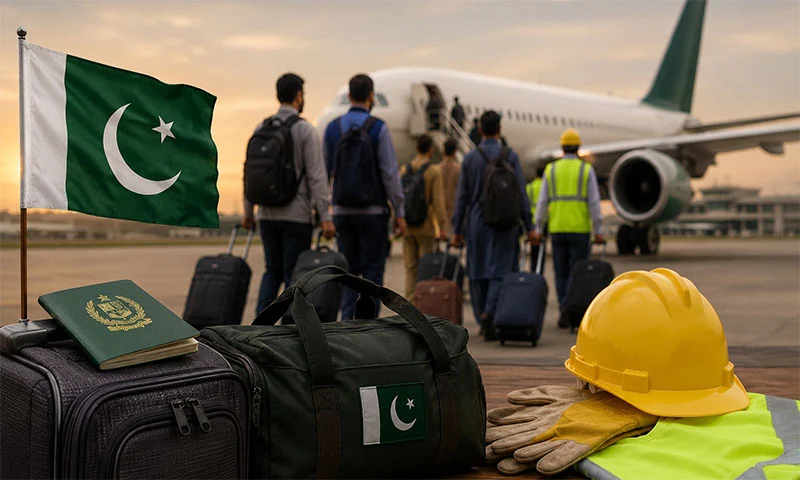
The Punjab government has dispatched the first batch of 135 skilled young workers to Saudi Arabia under its Parwaaz Card initiative, a programme designed to support overseas employment through vocational training and interest-free financing. Chief Minister Maryam Nawaz Sharif addressed the departure ceremony on Wednesday and said the selected candidates would serve as ambassadors of Pakistan while working abroad. The initiative forms part of Punjab’s broader strategy to enhance workforce skills, increase overseas employment and strengthen remittance inflows by preparing young people for international job markets. Punjab Skills Development Fund (PSDF) is implementing the programme under the supervision of the Skills Development and Entrepreneurship Department (SD&ED). Punjab Task Force on Skill Development Chairman Adnan Afzal Chattha, SD&ED Secretary Nadir Chattha, PSDF Chief Executive Officer Ahmed Khan, recruitment partners, representatives of the Bank of Punjab, overseas employment promoters and Parwaaz Card beneficiaries attended the ceremony. Maryam Nawaz Urges Youth to Represent Pakistan Proudly Speaking to the departing workers, Maryam Nawaz said overseas employment carried responsibilities beyond securing jobs. “When you travel abroad under this programme, you will represent Pakistan. The country that has empowered you deserves to be portrayed positively in front of the world.” She said providing high-quality vocational training to Punjab’s youth had long been her vision. She added that the dream was becoming reality through the Punjab Skills Development Fund. The chief minister said her vision was not limited to Punjab alone. She expressed the desire to expand vocational training opportunities across Pakistan wherever skilled workforce development was needed. “I want to see you off as a mother would bid farewell to her children. Just as you feel safe in Pakistan, I hope you remain safe in the countries where you have secured jobs and continue to make your country proud,” she said. Officials informed the chief minister that all 135 candidates had secured employment in Saudi Arabia. The placements cover hospitality, healthcare, construction and other industries. According to Adnan Afzal Chattha, the department continues to equip young people with market-driven vocational and professional skills that improve employment opportunities both inside Pakistan and overseas. Interest-Free Financing Supports Overseas Employment The first batch includes 105 workers selected for hospitality jobs, particularly in Quick Service Restaurants, while another 30 candidates will work in the construction sector. Officials said departures to Saudi Arabia will begin on June 28. The Parwaaz Card programme provides beneficiaries with interest-free pre-departure financing and workplace-readiness training. The objective is to promote safe, legal and dignified overseas employment for Punjab’s youth. At the ceremony, Maryam Nawaz distributed Parwaaz Cards and interest-free loan cheques among successful candidates. Under the programme, 45,000 deserving individuals will receive interest-free financing worth Rs6.867 billion. Individual loans range from Rs300,000 to Rs1 million. The financing helps workers cover visa fees, air tickets, medical examinations, protector fees and other travel-related expenses before leaving Pakistan. Pakistan has long relied on overseas employment as an important source of foreign exchange through workers’ remittances. Saudi Arabia remains the largest destination for Pakistani workers, employing hundreds of thousands of skilled and semi-skilled professionals across multiple sectors. Officials believe programmes such as Parwaaz Card can improve workforce quality, reduce financial barriers for overseas employment and create better opportunities for young Pakistanis seeking international careers.
