

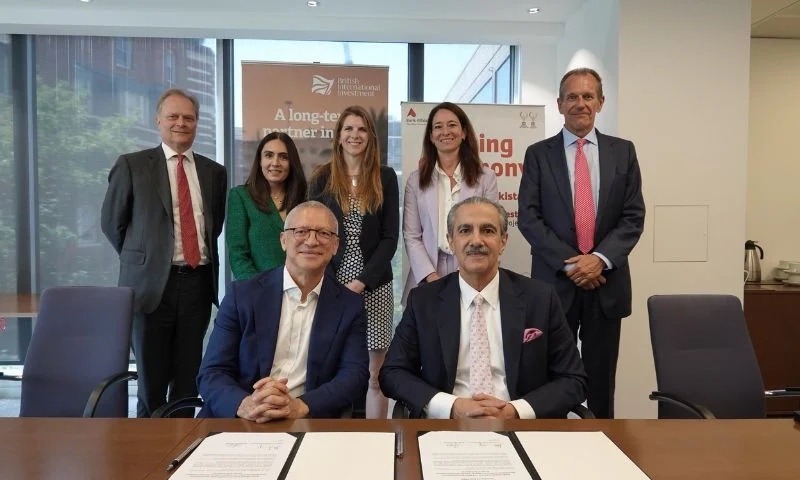
Bank Alfalah Limited has signed a $50 million senior term loan facility with British International Investment (BII), the United Kingdom’s development finance institution and impact investor, to expand climate finance in Pakistan and support businesses investing in sustainable and climate resilient projects. The agreement was signed at BII headquarters in London during London Climate Action Week, held from June 20 to June 28. Atif Bajwa, President and Chief Executive Officer of Bank Alfalah, and Leslie Maasdorp, Chief Executive Officer of BII, signed the agreement in the presence of British High Commissioner to Pakistan Jane Marriott. The partnership comes as Pakistan continues to face growing climate challenges, including devastating floods, rising temperatures, prolonged droughts and increasingly frequent extreme weather events. According to the World Bank and the Asian Development Bank, Pakistan remains one of the countries most vulnerable to climate change despite contributing less than one percent of global greenhouse gas emissions. The country requires billions of dollars in climate related investment over the coming years to strengthen resilience and protect economic growth. Funding will support agriculture, water management and climate projects Under the agreement, Bank Alfalah will use the $50 million facility to finance eligible climate projects across Pakistan. The investment will help businesses adopt cleaner technologies, improve climate resilience and expand sustainable operations. The funding will support projects such as climate smart agriculture, modern water irrigation systems and other initiatives that reduce climate risks while improving productivity. Agriculture remains one of Pakistan’s largest economic sectors and employs a significant share of the country’s workforce. However, it also faces some of the greatest risks from climate change through water shortages, flooding and changing weather patterns. Alongside the financing, British International Investment will provide technical assistance to Bank Alfalah to help identify and develop a stronger pipeline of climate eligible projects. The support aims to strengthen the bank’s ability to evaluate, originate and finance investments that address both climate adaptation and mitigation. Atif Bajwa, President and Chief Executive Officer of Bank Alfalah, said, “We are pleased to partner with British International Investment which reinforces Bank Alfalah’s commitment to supporting climate finance in Pakistan and raising international capital towards sectors and businesses that are critical for the country’s sustainable and resilient growth. This partnership also reflects the confidence of a leading global development finance institution in Bank Alfalah’s platform, governance, and ability to deploy capital towards high impact opportunities.” UK backs Pakistan’s transition to a greener economy Leslie Maasdorp, Chief Executive Officer of British International Investment, highlighted Pakistan’s growing need for climate investment. “Pakistan is on the frontline of climate change, and increasing access to climate finance is critical to building long term resilience and supporting sustainable growth. Our investment in Bank Alfalah will help channel much needed capital to climate mitigation and adaptation projects, as well as the agricultural sector, a vital pillar of the country’s economy. It also reflects our commitment under our new five year strategy to scale climate finance, including our target of at least 40 per cent of new investments in climate related opportunities.” British High Commissioner to Pakistan Jane Marriott also welcomed the agreement. “Pakistan is highly vulnerable to climate change, but there is also a real opportunity to attract investment that supports a greener and more resilient future. This partnership between British International Investment and Bank Alfalah shows how the UK and Pakistan can work together to tackle the climate crisis.” British International Investment has steadily increased its investments in Pakistan across financial services, renewable energy, infrastructure and sustainable development. The latest partnership reflects growing international efforts to mobilise private sector capital for climate action while helping Pakistan strengthen economic resilience against future environmental challenges.
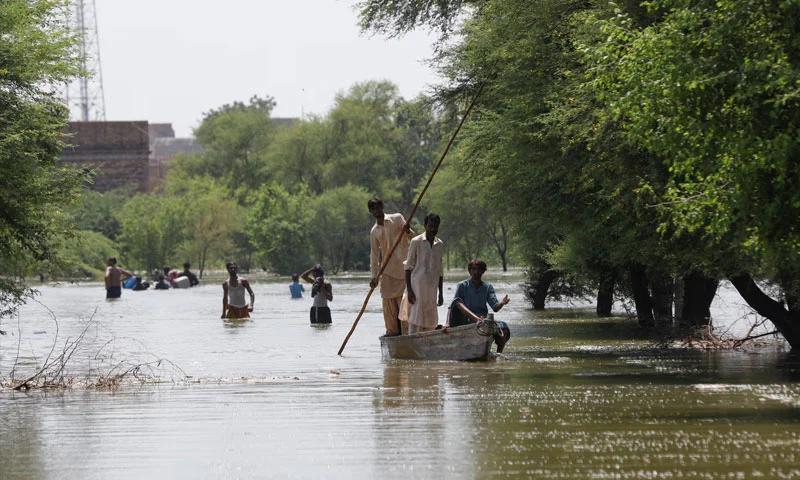
Pakistan Needs $331 Billion to Fight Climate Change by 2030: SBP
Pakistan will require an estimated $331 billion in climate financing between 2024 and 2030 to strengthen climate resilience and avoid severe economic losses from increasingly frequent climate disasters, according to the State Bank of Pakistan (SBP). The estimate, based on data from the Climate Policy Initiative (CPI), equals nearly 10 percent of Pakistan’s cumulative GDP, or about $47 billion annually during the seven-year period. The findings appear in the SBP’s latest report on climate finance, which highlights the urgent need for greater investment in climate adaptation, mitigation and resilient infrastructure. CPI, an internationally recognized climate finance research and advisory organization, estimates that the world requires $8.6 trillion in climate finance every year to keep global warming within the 1.5°C target set under the Paris Agreement. The report also notes that Pakistan ranked as the 15th most climate-affected country worldwide between 1995 and 2024, despite contributing only about 1 percent of global greenhouse gas emissions. Economic losses continue to mount The SBP said the Government of Pakistan estimates climate financing needs between $200 billion and $348 billion by 2030 to support climate-resilient development and implement its Nationally Determined Contributions (NDCs). Meanwhile, the government’s Pakistan Climate Prosperity Plan estimates that the country will require $1.6 trillion by 2050 for phased investments, technology access and sustainable development. Climate-related disasters have already inflicted enormous damage on Pakistan’s economy. According to the report, climate events caused economic losses of $58.8 billion by 2025. Of this amount, $29.3 billion occurred between 1992 and 2021. The catastrophic 2022 floods alone caused nearly $28 billion in damage, while floods in 2025 added another $1.5 billion in losses. SBP analysis shows floods have directly reduced economic growth by damaging infrastructure, agriculture and businesses. Rising input costs also created indirect pressure on GDP, although post-flood agricultural recovery and reconstruction partly offset the overall impact. The report also cites World Bank projections showing Pakistan’s GDP could decline by 4.5 to 6.5 percent by 2050 under an optimistic climate scenario. Under a pessimistic scenario, losses could reach 7 to 9 percent, with agriculture and industry facing the greatest risks. Funding remains far below requirements Despite its growing vulnerability, Pakistan receives only a fraction of the climate finance it needs. The SBP said the country attracted only $1.4 billion to $2 billion annually in climate finance over the past decade. Funding peaked at around $4 billion in 2021, but remains well below national requirements. The report says Pakistan also receives significantly less climate finance per person than comparable countries, including Bangladesh, India, Kenya and the Philippines. SBP identified several reasons for the financing gap. Globally, investors prefer mitigation projects because they generate stronger financial returns than adaptation projects. Pakistan, however, requires greater investment in adaptation due to its high exposure to floods, droughts and extreme weather. The report also points to recurring macroeconomic instability, exchange rate volatility, political uncertainty, sovereign risk and weak financial markets as factors reducing investor confidence. Another major challenge is the country’s limited ability to develop bankable climate projects. The report notes that stronger project pipelines help attract financing from Multilateral Development Banks and private investors. However, bureaucratic delays and institutional weaknesses continue to slow implementation. It cited the World Bank’s Pakistan Hydromet and Climate Services Project, which concluded in 2025 after key components, including weather radars and automatic weather stations, were dropped because of procurement delays and institutional frictions. The SBP stressed that improving project preparation, strengthening monitoring systems and accelerating reforms will be essential if Pakistan is to secure the climate finance needed to protect its economy from future climate shocks.

This Simple Wi Fi Router Feature Can Help Protect Your Children Online
Parents often focus on monitoring their children’s smartphones, tablets and apps, but technology experts say the most powerful tool for online safety may already be sitting quietly in the corner of the house. Rather than relying only on parental control settings installed on individual devices, experts recommend configuring security features built into home Wi Fi routers. These controls work across every device connected to the household network, including gaming consoles, smart TVs, laptops and tablets. “An often overlooked layer of protection is the family’s Wi Fi router,” said Georgey Bijumon, Executive Director of Seeken International FZE. He explained that router level parental controls allow parents to block adult content, schedule internet free hours and identify devices attempting to bypass household rules. “Configuring these settings is one of the most effective ways to create a safer online environment,” he said. Cybersecurity experts have increasingly encouraged families to adopt network wide protections as children spend more time online for education, entertainment and social interaction. According to UNICEF, children now begin using internet connected devices at much younger ages, making household level safeguards more important than ever. Router controls cover every connected device in the home Kevin Sebastian, Creative Director at Audire Media and technology columnist, said many parents wrongly assume that online safety starts and ends with the child’s phone. Instead, he said routers create a central layer of protection that applies to the entire home network. “Routers add another layer of protection because they manage every connected device rather than relying on settings on individual phones or tablets.” “This is particularly useful because it also covers devices like gaming consoles, smart TVs, tablets, and laptops.” Sebastian explained that modern routers now include easy to use mobile apps that simplify parental controls. Read Parents can pause internet access for selected devices, create bedtime schedules, block websites or categories of harmful content, restrict gaming during homework hours and monitor every connected device. “Parents can pause internet access for specific devices, create bedtime schedules, block specific websites, and restrict gaming or streaming during homework.” He added that these automated controls help families establish healthier digital habits without requiring parents to supervise children constantly. Popular routers now include built in family safety features Manufacturers have expanded parental control tools in recent years. ASUS routers, including the ROG Rapture GT AX11000, allow parents to create child profiles, group multiple devices, schedule online and offline hours, block inappropriate content and monitor internet activity through the ASUS Router app. TP Link routers offer similar functions through the TP Link Tether app. Parents can assign devices to child profiles, block websites, schedule internet access and apply bedtime restrictions. Some advanced usage limits require premium features. Technology experts say router level controls also protect devices that traditional parental control apps often miss. These include smart TVs, gaming consoles, shared family tablets, school laptops and visitors’ devices connected to home Wi Fi. The United Kingdom’s Internet Matters organisation also recommends combining router based controls with open conversations and age appropriate digital education rather than relying on technology alone. Experts say no filtering system is perfect, but using multiple layers of protection significantly reduces children’s exposure to harmful online content.

Fans Think Taylor Swift’s Wedding Could Be Heading to Disney+. Here’s Why
Taylor Swift and Travis Kelce’s highly private wedding may soon live on in documentary form after reports claimed the couple hired professional camera crews to film every stage of their lavish celebration at New York’s Madison Square Garden. According to a report by The Sun US, the newlyweds documented everything from the final wedding preparations to the ceremony itself. The footage will reportedly become a private documentary that the couple plans to include in thank you gift packages for wedding guests. The report has not been independently confirmed, and neither Swift nor Kelce has commented publicly on the claims. The wedding took place on July 3 during the Fourth of July weekend. Around 1,000 family members, friends and celebrity guests attended the event, which transformed Madison Square Garden into an elaborate indoor garden. Guests followed a strict no phones and no photography policy throughout the ceremony. Despite those restrictions, The Sun US reported that professional production crews filmed the celebrations throughout the day. Film shoot clues fuel documentary speculation Speculation about a documentary began before the ceremony. “No parking” signs mentioning a “film shoot” appeared around Madison Square Garden several days before the wedding. Entertainment outlets later reported that city permits authorised production vehicles, trailers and camera equipment near the venue, leading fans to believe filming formed part of the event. The guest list also strengthened the rumours. Among those attending were senior entertainment executives including Disney Chief Executive Bob Iger, Disney Entertainment Co Chairman Dana Walden and Disney film executive David Greenbaum. Swift has worked closely with Disney in recent years through projects including Taylor Swift: The End of an Era. AMC Theatres Chief Executive Adam Aron, who partnered with Swift on the hugely successful Taylor Swift: The Eras Tour concert film, also attended the wedding. Entertainment observers say those industry connections have encouraged speculation that professionally filmed wedding footage could eventually receive a wider release. However, no studio or streaming platform has announced any project. No official confirmation of public release Reports indicate the documentary is currently intended only for wedding guests. According to entertainment reports, attendees signed non disclosure agreements but did not sign film release forms, suggesting the footage may remain private rather than becoming an immediate commercial release. Any future public release would likely require additional permissions from guests. Since the wedding, very few official images have emerged because of the strict security arrangements and phone restrictions. The secrecy has only increased public curiosity surrounding the celebration. Neither Swift nor Kelce has addressed the documentary reports or confirmed whether any professionally filmed footage will ever become available. For now, the documentary remains unconfirmed. Fans continue to wait for an official announcement while speculation grows about whether one of the year’s biggest celebrity weddings could eventually appear on a streaming platform or remain an exclusive keepsake for those who attended.
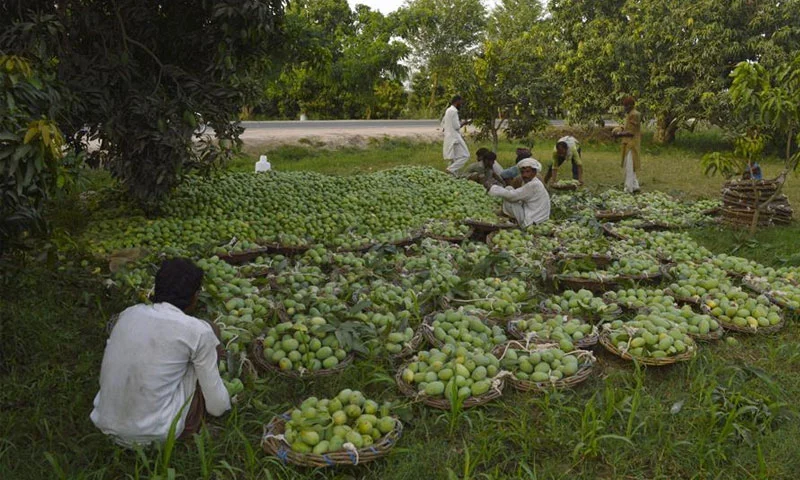
Pakistani Mangoes See Higher Demand in UAE Despite Price Hike
Pakistani mangoes are costing more in the UAE this summer. However, retailers say demand remains strong despite tighter supplies and rising freight costs. Retailers estimate prices are about 20 percent higher than last year. Premium varieties imported by air have become even more expensive. They attribute the increase to lower crop volumes, delayed harvesting and higher transport costs. Gul Raiz Yaseen, Director of Pakistan Supermarket LLC, said demand continues to rise every year. “Every year, demand increases a lot,” he said. “Earlier, Pakistani customers would buy them regularly, but now people from other nationalities also come to us because they want Pakistani mangoes.” A 3kg to 3.5kg box of Sindhri mangoes previously sold for Dh40 to Dh45. This year, it costs about Dh50. Premium Chaunsa and Anwar Ratol varieties have increased from Dh60 to Dh65 per box last year to nearly Dh70 this season. Yaseen said air freight charges rose from around PKR350 per kilogram to nearly PKR500. “That is why freight charges have increased,” he said. “At the start of the season, flights were also limited, but now the situation has gone back to normal. The freight charges, however, remain higher.” Delayed season and shipping issues tighten supply Brian Ballinger, Head of Commercial at Choithrams, said Pakistan’s mango season began later than usual. It started during the first week of June. “While overall crop volumes are down by around 20-30%, mangoes are reaching the UAE through sea shipments, and premium-quality produce is being brought in by air,” he said. He added, “Shoppers may notice tighter availability this season. Overall supply is down by around 20-30%, and prices are also approximately 20% higher compared to previous years.” Importers also faced serious shipping disruptions. Ali Akram, Managing Partner at Nahel Vegetables & Fruits Trading LLC, said, “There has been a gap of around 10 to 15 days, which is huge in our business.” He explained that vessels followed longer routes because of disruptions at Jebel Ali Port. Some shipments first arrived at Fujairah or Khor Fakkan before reaching Dubai. Delivery times increased sharply. Trips that once took three to five days sometimes stretched to 15 or even 20 days. This also affected fruit quality because mangoes spoil quickly. At the beginning of the season, a 5kg box of Sindhri mangoes sold for Dh70 to Dh75. Last year, the same box cost only Dh35 to Dh36. Prices have eased since sea freight resumed. Even so, they remain above last year’s levels. Strong demand keeps sales moving Despite higher prices, retailers say shoppers continue buying Pakistani mangoes. Home deliveries, office gifts and family purchases remain strong. Pakistan’s best-known varieties include Sindhri, Chaunsa and Anwar Ratol. Each offers a distinct taste, aroma and texture. Retailers say Sindhri remains the most popular variety in the UAE, followed by Chaunsa. Choithrams said its long-term supplier network helped maintain steady supplies. Careem Quik also credited early planning and diversified sourcing for keeping shelves stocked with premium Pakistani mangoes. Akram said demand has remained remarkably resilient. “I have not seen a reduction in demand,” he said. “Mangoes have a very strong pull in this market because the season is very short, around two to two and a half months. There is strong demand from Pakistani and Indian customers, and also from other nationalities.” Yaseen hopes transport costs ease before next season. “I hope prices do not go much higher next year,” he said. “It will depend on freight and other costs.”
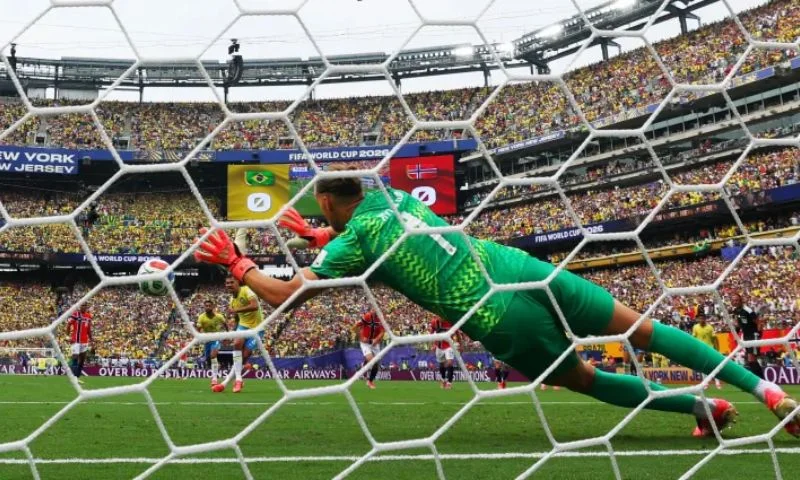
Brazil Knocked Out Early After Haaland’s Heroics Shock the Football World
Erling Haaland scored twice in the closing stages to fire Norway into their first ever FIFA World Cup quarterfinal with a stunning 2 to 1 victory over Brazil on Sunday, ending the South American giants’ campaign at the round of 16 stage for the first time since 1990. Playing at New York New Jersey Stadium in East Rutherford, Norway survived relentless Brazilian pressure before Haaland struck in the 79th and 90th minutes to complete one of the biggest upsets of the tournament. Neymar scored a penalty deep into stoppage time, but Brazil ran out of time to complete a comeback. The result also extended Brazil’s painful record against Norway. The five time world champions have still never beaten the Scandinavian side in a World Cup match. Norway will now face either co hosts Mexico or England in the quarterfinals in Miami on July 11. Haaland’s brace lifted his tournament tally to seven goals, drawing level with Lionel Messi in the race for the Golden Boot. Nyland’s heroics keep Brazil at bay before Haaland delivers Brazil dominated much of the opening hour but repeatedly found Norway goalkeeper Orjan Nyland standing in their way. The biggest moment of the first half came when referee Ismail Elfath awarded Brazil a penalty after a VAR review overturned his original decision. Bruno Guimaraes stepped up, but Nyland guessed correctly and pushed away the spot kick with a superb diving save. Nyland continued his outstanding performance by denying Gabriel Martinelli, Vinicius Junior and Bruno Guimaraes on several occasions. Brazil coach Carlo Ancelotti handed Gabriel Martinelli a starting place after his winning goal against Japan in the previous round. Norway, meanwhile, welcomed back defender Julian Ryerson after he recovered from a thigh injury. Norway coach Stale Solbakken changed the match after halftime by introducing Oscar Bobb and Andreas Schjelderup. The tactical switch gave Norway greater attacking width and helped create both decisive goals. Brazil’s World Cup dream ends as Norway celebrates history Schjelderup delivered a precise cross in the 79th minute, allowing Haaland to power a header beyond Alisson and give Norway the lead. Brazil pushed forward in search of an equaliser, but Haaland struck again in the 90th minute. The Manchester City striker drilled a powerful low shot into the corner from outside the penalty area to double Norway’s advantage. Neymar entered the match in the 67th minute to a huge ovation and converted Brazil’s second penalty in the 10th minute of stoppage time after Casemiro suffered an elbow inside the box. The goal arrived too late to rescue the Selecao. The defeat marked Brazil’s sixth consecutive World Cup elimination by European opposition despite appointing Ancelotti in a bid to end a 24 year wait for another world title. Norway’s victory sparked huge celebrations back home, where more than 90,000 supporters filled central Oslo to celebrate the country’s greatest football achievement. Haaland described it as “one of the sickest days ever in Norwegian history.”
