


Meta has withdrawn a controversial Instagram AI feature just days after launching it. The company acted after widespread criticism over how the tool used public Instagram content for AI image generation. The feature formed part of the rollout of Meta’s new Muse Image model. It allowed users to generate AI images inspired by public Instagram accounts by simply tagging a username. Meta designed the tool to make AI image creation more personal and interactive. Users could ask Meta AI to create images using publicly visible Instagram photos as creative references. Meta said existing privacy settings gave people control over whether others could use their public content. Those assurances failed to calm many users. Screenshots of the feature quickly spread across Instagram, Threads and X. Users questioned whether they had knowingly agreed to participate. Many also worried that strangers could use their photos without permission or notification. Privacy advocates argued the real issue was not the availability of controls but whether users clearly understood them. As criticism intensified, Meta quietly removed the feature. The company confirmed to TechCrunch that it had paused the rollout after listening to feedback. Meta said it wanted more time to refine the experience before deciding whether to launch it again. It did not provide a timeline for any possible return. Privacy concerns overshadow Meta’s AI ambitions The controversy emerged just days after Meta introduced Muse Image and Muse Spark 1.1. Muse Image serves as the company’s latest AI image generation model, while Muse Spark 1.1 focuses on coding tasks for developers. Together, they reflect Meta’s broader strategy to integrate specialised AI tools across its products instead of relying on a single chatbot. Critics said the Instagram feature created unnecessary privacy risks because public account holders joined by default instead of giving explicit permission. They also warned that users received no notification when someone used their content for AI image generation. Entertainment groups and privacy organisations echoed those concerns. SAG-AFTRA urged stronger protections for creators, while talent agencies called for an opt-in system rather than an opt-out model. Meta acknowledged the criticism and admitted the feature “missed the mark.” The company said its goal was to provide a useful creative tool while giving users control over their public content. AI companies face growing scrutiny over user data The reversal comes as technology companies race to add generative AI features to consumer apps. At the same time, regulators in Europe and privacy campaigners continue to question how companies collect and use public posts, personal data and user-generated content to train AI systems. Meta is not alone in changing direction after launching AI products. Google has paused AI Search features following accuracy concerns. OpenAI has also modified or withdrawn several ChatGPT capabilities after receiving feedback from users and safety researchers. The latest episode highlights a growing trend across the AI industry. Companies increasingly release products quickly, study public reaction and then revise features after launch instead of waiting for lengthy development cycles. Meta’s decision to remove the Instagram feature shows how privacy concerns continue to shape the future of consumer AI.

Taylor Swift Paid Over $160,000 for New York Wedding Security
Taylor Swift paid more than $160,000 to New York City for permits and security linked to her wedding celebrations at Madison Square Garden, Mayor Zohran Mamdani has confirmed. The mayor disclosed the amount during a Friday press conference. He answered questions about whether taxpayers would bear the cost of policing the high profile event. His remarks ended speculation that the city had funded the security operation. “Taylor Swift has paid already the cost of the permit that was lodged, which was over $160,000 for that event and for the response to that event,” Mamdani said in remarks shared by C-SPAN. He said city officials approved the permit only days before the celebrations. Reporters asked whether Swift would also cover police overtime costs. Mamdani replied that the permit fee covered the required expenses. Swift, 36, married Kansas City Chiefs star Travis Kelce, 36, at Madison Square Garden last week. The wedding attracted global media attention. Reuters previously reported that city permits allowed street closures around the venue before the ceremony. Heavy security surrounded the celebration The permit covered police deployment, traffic management, street closures and other city services. New York normally charges organisers when private events require additional public resources. Media reports said about 100 guests attended a private gathering before a larger reception welcomed nearly 1,000 family members, friends and associates. Police secured the area around Madison Square Garden throughout the celebrations. Private security teams also helped control crowds. Reports said about 130 officers worked each day during the wedding weekend because of the extraordinary security demands. Swift has faced several stalking incidents and security threats in recent years. Those concerns prompted organisers to implement strict security measures throughout the event. Total wedding cost remains unknown The city confirmed the security payment. However, neither Swift nor Kelce has revealed the total cost of the wedding. Several US media outlets estimate the celebrations cost about $15 million. The estimate includes the venue, decorations, catering, logistics, entertainment and security. Those figures remain unofficial. Mamdani’s announcement settled the debate over who paid for the public safety operation. It confirmed that Swift covered the city’s permit and security costs herself. Before the ceremony, Mamdani said New York was preparing for several major events. They included FIFA World Cup activities, Independence Day celebrations and the Swift Kelce wedding. He said the city had experience managing events of that scale.
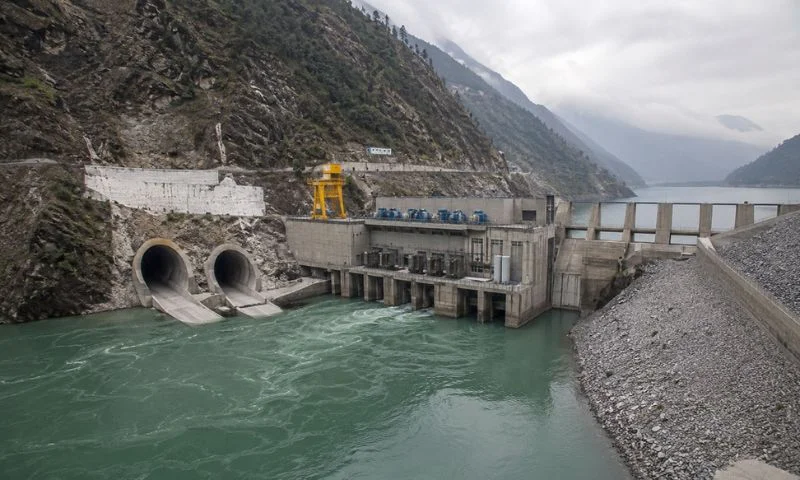
$5bn Neelum-Jhelum hydropower project to stay offline until 2028
Pakistan’s nearly $5 billion Neelum-Jhelum Hydropower Project will remain out of service until at least March 2028, extending its shutdown to almost four years and keeping one of the country’s cheapest electricity sources off the national grid. The disclosure came during a meeting of the Senate Standing Committee on Water Resources. Wapda Chairman Lt Gen (retd) Muhammad Saeed told lawmakers that repair work on the 969-megawatt project was progressing and expressed confidence that electricity generation would resume by March 2028. The project stopped operating in May 2024 after a severe rock burst damaged its headrace tunnel. Since then, consumers have continued paying the Neelum-Jhelum surcharge through electricity bills despite receiving no power from the plant. Saeed said geological studies carried out before construction had already identified the project area as a seismic zone. He added that authorities were still investigating the tunnel failure to determine its exact cause. The prolonged closure has deprived the national grid of low-cost hydropower. It has also increased dependence on more expensive thermal power generation, adding further pressure on Pakistan’s growing circular debt. Commissioned in August 2018 after nearly a decade of construction, the project cost around Rs500 billion, or about $4.7 billion at the exchange rate prevailing at the time. It was originally awarded in July 2007 and was designed to generate 969MW of electricity from the Neelum River in Azad Jammu and Kashmir. Senators seek accountability over tunnel collapse The committee meeting, chaired by Senator Jam Saifullah Khan, saw lawmakers demand a transparent investigation into the failure of one of Pakistan’s most expensive public infrastructure projects. Senators questioned whether geological conditions alone caused the tunnel collapse. They also asked investigators to examine possible design flaws, construction defects or operational failures. Lawmakers insisted that authorities should identify any negligence and hold those responsible accountable. The committee also reviewed Pakistan’s broader water security challenges. Saeed warned that the country urgently needs to expand its water storage capacity. Members noted that Pakistan has not constructed a major dam since Tarbela and Mangla, while India has built around 5,000 dams over the same period. Lawmakers also criticised a presentation by Suparco on satellite monitoring of river encroachments. They said the briefing lacked clarity and failed to answer the committee’s questions. Dam safety law advances as Nai Gaj project remains stalled The committee also received an update on efforts to strengthen dam safety across Pakistan. Officials informed lawmakers that a draft Dam Safety Council Bill, prepared with technical assistance from the Asian Development Bank, has now been finalised. The proposed law aims to establish a comprehensive legal framework for monitoring and regulating dam safety nationwide. Wapda also briefed the committee on the stalled Nai Gaj Dam project in Sindh. Officials said litigation continues after the original contractor allegedly submitted a fake bank guarantee, causing estimated losses of about Rs23 billion. Once completed, the Nai Gaj Dam will help protect Dadu and Sehwan from flooding and irrigate nearly 28,000 acres of farmland. Officials further told the committee that Wapda currently supplies electricity to the national grid at an average cost of Rs3.83 per unit. The authority also generates around 32 billion units of electricity every year.

US Sanctions Iran’s Financial Network After Strait of Hormuz Attacks
The United States has imposed fresh Iran-related sanctions on a financier linked to Iran’s new Supreme Leader and 13 other individuals and entities. The move follows renewed attacks on commercial tankers in the Strait of Hormuz. The US Treasury Department announced the measures on Friday. The sanctions target Ali Ansari, a Dubai-based Iranian banker and businessman. Officials accuse him of managing a financial network that benefited Iran’s ruling elite and the IRGC. The announcement came after fresh military exchanges between Washington and Tehran threatened a diplomatic understanding reached last month. The Treasury said Ansari diverted publicly funded wealth into overseas real estate and commercial assets. Officials said he used the network “to enrich himself, government elites and the Islamic Revolutionary Guard Corps.” The department also said Ansari previously owned and directed the now-bankrupt Ayandeh Bank. Iranian authorities shut the bank in October 2025. Treasury officials said Ansari built millions of dollars in overseas assets through shell companies and bank accounts. They said he controlled those investments through Saint Kitts and Nevis-based Smart Global Limited, a holding company established in 2011. Treasury added, “Although held in Ansari’s name, many of these financial interests are ultimately held for the financial benefit of Mojtaba Khamenei, his family, and other Iranian elites in the regime and the IRGC who have protected Ansari from facing punishment despite his blatant corruption and the significant damage he has caused to the Iranian economy and people.” US expands pressure on Iran’s financial network The Treasury’s Office of Foreign Assets Control also sanctioned three Iran-based exchange houses. It targeted several Iranian nationals linked to those firms. Hong Kong-based CDM Trading Limited and UAE-based Naba Alzaki Raw Materials Trading LLC also appeared on the sanctions list. US officials said the network moved billions of dollars each year for sanctioned Iranian banks. They alleged the companies relied on shell firms to hide the origin of the transactions. “The United States is taking decisive action to cut off the financial lifelines sustaining Iran’s ruling elite,” State Department spokesman Tommy Pigott said. “By targeting these networks, the United States is directly disrupting the government’s ability to access foreign currency and conduct international financial activity.” Treasury Secretary Scott Bessent said the department would “continue using every tool at its disposal” to isolate Khamenei and other senior Iranian officials from the global financial system. The latest action also fits into Washington’s broader sanctions campaign against Iran. The US has increased pressure on Tehran’s oil exports, financial channels and procurement networks in recent months. (US Treasury) Iran says sanctions breach memorandum The sanctions came after a week of renewed fighting. Three commercial tankers from Qatar and Saudi Arabia came under Iranian fire in the Strait of Hormuz. The US responded with strikes on Iranian sites. Iran later launched attacks on US military facilities in Gulf states. President Donald Trump said on Friday that the ceasefire with Iran had ended. However, he also said Washington had agreed to continue talks at Tehran’s request. Iran rejected the new sanctions. Foreign Minister Abbas Araghchi said Treasury Secretary Scott Bessent had violated Article 9 of the memorandum of understanding signed last month. “Reality check: There can only be mutual compliance,” Araghchi wrote on X. He added that Iran has “so far kept its word.” Article 9 states that Washington “will not impose any new sanctions and will not deploy additional forces in the region.” Iran has warned it is ready for “all-out defence” if the US breaks the agreement. Top negotiator Mohammad Baqer Ghalibaf also vowed on Telegram that the war would never end with Tehran’s surrender. Brett Erickson, managing principal at Obsidian Risk Advisors, said the sanctions marked a turning point. “Washington is no longer trying to salvage the existing framework. It’s preparing to replace it entirely,” he said.
