
The United States has imposed fresh Iran-related sanctions on a financier linked to Iran’s new Supreme Leader and 13 other individuals and entities. The move follows renewed attacks on commercial tankers in the Strait of Hormuz.
The US Treasury Department announced the measures on Friday. The sanctions target Ali Ansari, a Dubai-based Iranian banker and businessman. Officials accuse him of managing a financial network that benefited Iran’s ruling elite and the IRGC. The announcement came after fresh military exchanges between Washington and Tehran threatened a diplomatic understanding reached last month.
The Treasury said Ansari diverted publicly funded wealth into overseas real estate and commercial assets. Officials said he used the network “to enrich himself, government elites and the Islamic Revolutionary Guard Corps.”
The department also said Ansari previously owned and directed the now-bankrupt Ayandeh Bank. Iranian authorities shut the bank in October 2025. Treasury officials said Ansari built millions of dollars in overseas assets through shell companies and bank accounts. They said he controlled those investments through Saint Kitts and Nevis-based Smart Global Limited, a holding company established in 2011.
Treasury added, “Although held in Ansari’s name, many of these financial interests are ultimately held for the financial benefit of Mojtaba Khamenei, his family, and other Iranian elites in the regime and the IRGC who have protected Ansari from facing punishment despite his blatant corruption and the significant damage he has caused to the Iranian economy and people.”
US expands pressure on Iran’s financial network
The Treasury’s Office of Foreign Assets Control also sanctioned three Iran-based exchange houses. It targeted several Iranian nationals linked to those firms. Hong Kong-based CDM Trading Limited and UAE-based Naba Alzaki Raw Materials Trading LLC also appeared on the sanctions list.
US officials said the network moved billions of dollars each year for sanctioned Iranian banks. They alleged the companies relied on shell firms to hide the origin of the transactions.
“The United States is taking decisive action to cut off the financial lifelines sustaining Iran’s ruling elite,” State Department spokesman Tommy Pigott said. “By targeting these networks, the United States is directly disrupting the government’s ability to access foreign currency and conduct international financial activity.”
Treasury Secretary Scott Bessent said the department would “continue using every tool at its disposal” to isolate Khamenei and other senior Iranian officials from the global financial system.
The latest action also fits into Washington’s broader sanctions campaign against Iran. The US has increased pressure on Tehran’s oil exports, financial channels and procurement networks in recent months. (US Treasury)
Iran says sanctions breach memorandum
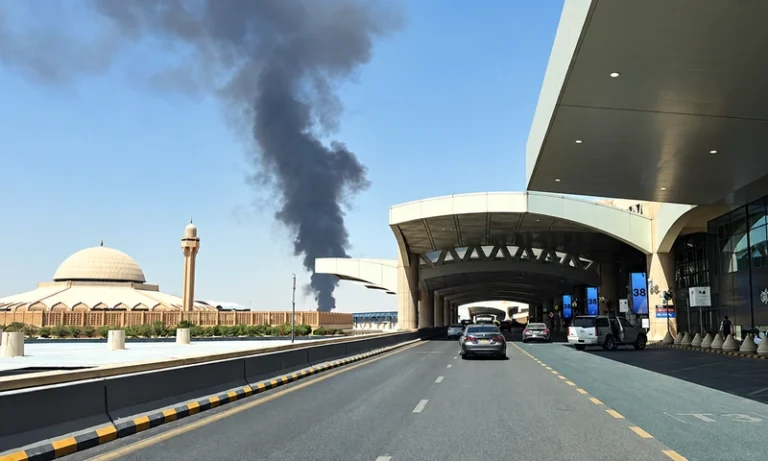
The sanctions came after a week of renewed fighting. Three commercial tankers from Qatar and Saudi Arabia came under Iranian fire in the Strait of Hormuz. The US responded with strikes on Iranian sites. Iran later launched attacks on US military facilities in Gulf states.
President Donald Trump said on Friday that the ceasefire with Iran had ended. However, he also said Washington had agreed to continue talks at Tehran’s request.
Iran rejected the new sanctions. Foreign Minister Abbas Araghchi said Treasury Secretary Scott Bessent had violated Article 9 of the memorandum of understanding signed last month.
“Reality check: There can only be mutual compliance,” Araghchi wrote on X. He added that Iran has “so far kept its word.”
Article 9 states that Washington “will not impose any new sanctions and will not deploy additional forces in the region.”
Iran has warned it is ready for “all-out defence” if the US breaks the agreement. Top negotiator Mohammad Baqer Ghalibaf also vowed on Telegram that the war would never end with Tehran’s surrender.
Brett Erickson, managing principal at Obsidian Risk Advisors, said the sanctions marked a turning point.
“Washington is no longer trying to salvage the existing framework. It’s preparing to replace it entirely,” he said.