

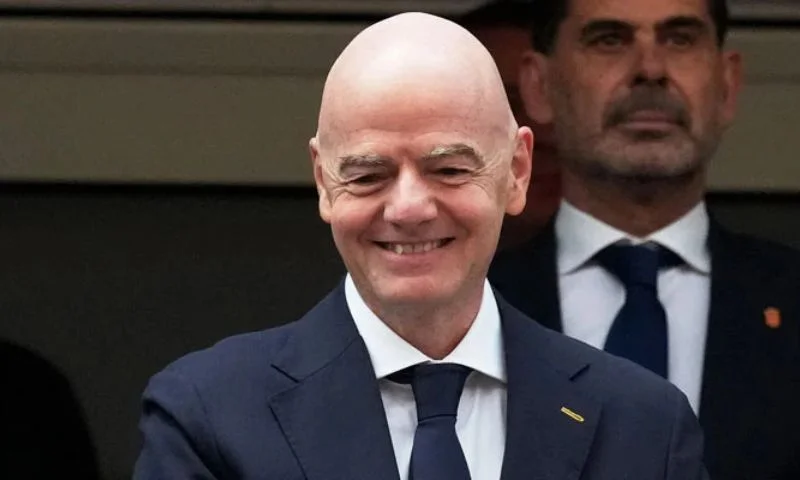
FIFA will examine the possibility of expanding the 2030 FIFA World Cup to 64 teams after the conclusion of the 2026 tournament, President Gianni Infantino has said, arguing that every nation should have the opportunity to dream of playing on football’s biggest stage. Speaking in an interview with Swiss media outlet Bluewin, Infantino said FIFA’s relevant committees will discuss whether increasing the number of participating teams from 48 to 64 is the right next step after what he described as the successful debut of the expanded 48 team format. “That’s definitely an issue that will be examined and discussed in the relevant committees after this World Cup,” Infantino said. The FIFA chief defended the idea by stressing that the World Cup should represent every continent rather than only traditional football powers. “When organising a World Cup, it’s important to organise it for the whole world, not just Europe and South America, but effectively the entire world. Every nation should be allowed to dream of participating in the World Cup. You can see that the quality of the teams is extremely high and it’s getting higher and higher, all over the world. If you don’t give smaller countries a chance to participate in the World Cup, they’ll lack the incentive to keep improving.” FIFA praises 48 team format after strong global performances The 2026 World Cup marked the tournament’s first expansion from 32 to 48 teams, increasing the schedule to 104 matches across the United States, Canada and Mexico. Infantino described the new format as a “huge success” and pointed to the improved performances of teams from outside Europe’s and South America’s traditional football strongholds. “Every team played at a high level. Teams from every continent scored goals and earned at least one point,” he said. “Nine out of 10 African teams reached the knockout stage. At the last World Cup, there were only five teams from Africa. That just goes to show how important it is to include all teams, to give them this opportunity to participate.” Only four teams remain in the current tournament. Argentina, England, France and Spain have reached the semi finals after a month of competition that began with 48 nations. Expansion could reshape the centenary World Cup The 2030 World Cup will celebrate the tournament’s 100th anniversary and will become the first edition staged across multiple continents. Uruguay, Argentina and Paraguay will each host one opening match to commemorate the inaugural 1930 World Cup in Uruguay. Morocco, Portugal and Spain will then stage the remainder of the tournament. If FIFA approves a 64 team format, the three South American hosts could each stage an entire four team group instead of a single opening fixture. A further expansion would add 16 more national teams only four years after the move to 48 participants. Supporters believe it would create more opportunities for developing football nations and accelerate the sport’s global growth. Critics, however, argue that a larger tournament could stretch the calendar, increase travel demands and dilute the quality of qualification. FIFA has not set a timeline for making a final decision. The proposal will first go through the organisation’s committees before any recommendation reaches the FIFA Council for approval.
Think Your Fitness Tracker Knows Best? Experts Say Think Again
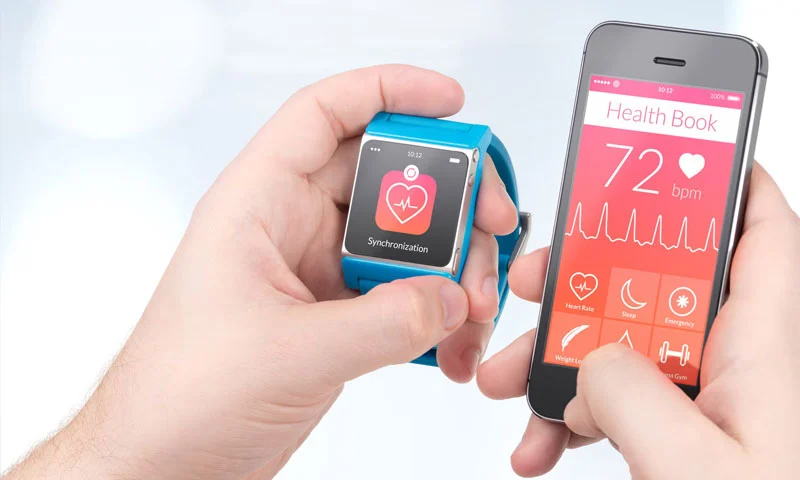
Wearable health devices have become part of daily life for millions of people, helping users monitor steps, heart rate, sleep, stress levels and even blood sugar. While these gadgets can encourage healthier habits, health experts say people should use them as supportive tools rather than substitutes for medical advice or their body’s own signals. Speaking to India Today, integrative longevity coach Luke Coutinho said wearable technology works best because it increases awareness and encourages positive lifestyle changes. Read More: WHO Reveals the Best Ways to Stay Safe During a Heatwave “A wearable can be a perfect wake-up call. It gives us data about how many steps we’ve walked, how much we’ve slept or how long we’ve been inactive. That awareness helps people set realistic goals and make better lifestyle choices,” he said. The popularity of smartwatches and fitness bands has grown rapidly in recent years. According to market research firm IDC, global shipments of wearable devices continue to rise as consumers increasingly seek tools that support fitness and preventive healthcare. Research has also found measurable benefits. Studies published in leading medical journals have shown that people using fitness trackers walk an average of 1,800 additional steps each day, equivalent to roughly 40 extra minutes of walking, compared with those who do not use wearable devices. Devices provide valuable health insights Modern wearables now monitor much more than physical activity. Continuous Glucose Monitors (CGMs) allow people with diabetes to check blood sugar levels without repeated finger-prick tests. Many smartwatches can also measure heart rate, blood oxygen levels, irregular heart rhythms and blood pressure trends. Coutinho said these insights help users understand how their daily choices affect their health. “If a meal causes a large spike in blood sugar, you can make healthier choices next time. You can see how your sleep or workout affects your glucose levels and use that information to improve your lifestyle,” he said. Read More: Could This Simple Morning Routine Lower Dementia Risk? A Doctor Explains However, he stressed that wearable devices cannot replace professional medical care. “A wearable can never replace your doctor,” Coutinho said. “In fact, sometimes the data tells us that someone needs medical attention, and we immediately refer them to a physician. The best approach is to integrate wearable data with professional medical care.” Medical experts also note that wearable devices may occasionally produce inaccurate readings. Sleep trackers, for example, sometimes confuse quiet wakefulness with sleep, while heart rate and oxygen measurements can vary depending on movement, skin contact and device quality. Experts warn against becoming obsessed with numbers Health specialists also caution against relying too heavily on wearable data. Many users develop “health anxiety” by checking sleep scores, calorie counts and heart rate repeatedly throughout the day. Instead of encouraging healthier habits, constant monitoring can create unnecessary stress. Some people even feel their exercise has little value unless their smartwatch records it. Read More: Could Your Sweat Score Reveal a Hidden Health Risk? Coutinho believes wearable devices should remain supportive tools instead of controlling daily decisions. “It’s always a guide. It can never be the boss,” he said. “Sometimes the device may say you’re exhausted, but you feel perfectly fine. At that point, you should also listen to your body.” Healthcare professionals say wearable technology offers its greatest value when users combine its data with regular medical checkups, healthy eating, physical activity and adequate sleep. As wearable devices continue evolving with artificial intelligence and advanced sensors, experts expect them to play a growing role in preventive healthcare. They also agree that no device can replace professional diagnosis, medical expertise or a person’s own understanding of how they feel.
China Lands Reusable Rocket for First Time. Here’s What It Means
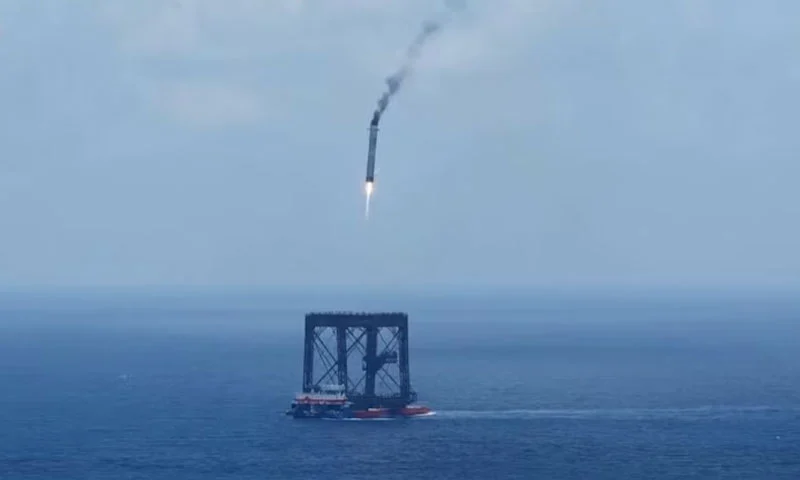
China has successfully landed a reusable rocket for the first time, marking a major breakthrough in its space programme and positioning itself as a stronger competitor to American aerospace companies such as SpaceX and Blue Origin. The Long March 10B rocket lifted off from the Wenchang Commercial Space Launch Site in Hainan Province on Friday around noon local time. The rocket can carry up to 16 metric tonnes of payload into low Earth orbit, a region located between 160 kilometres and 2,000 kilometres above Earth. About six minutes after launch, the rocket’s first stage booster separated from the upper stage, which continued its journey into space. Instead of falling into the ocean, the booster performed a controlled descent toward a floating recovery platform. China used a unique net based capture system to recover the booster successfully, making it only the third country to demonstrate reusable rocket landing technology after SpaceX and Blue Origin. New recovery system sets Long March apart Reusable rockets reduce launch costs by allowing expensive boosters to fly multiple missions instead of being destroyed after every launch. Most reusable rockets follow a similar return sequence. After separation, the booster flips itself using pressurised nitrogen, reorients its engines and uses aerodynamic fins to control its descent through the atmosphere. It then fires its engines in the opposite direction to slow down before landing. SpaceX and Blue Origin rely on hydraulic landing legs to touch down either on land or floating drone ships. Last year, SpaceX also demonstrated its mechanical “chopstick” arms to catch the returning Starship booster. China adopted a different approach. The Long March 10B uses onboard computers that communicate with a maritime recovery vessel. The vessel positions a suspended wire net beneath the descending rocket. Landing hooks attached to the booster catch the net as the engines shut down. Automated locking systems then secure the booster and prevent dangerous movement. By removing traditional landing legs, Chinese engineers reduced the rocket’s overall weight and increased its payload capacity. Anushka Saxena, Research Analyst at the Takshashila Institution’s Geostrategy programme, said: “The technological and commercial base in China is faring very well despite having been shaken up by internal wrangling and corruption in the past.” Success strengthens China’s lunar ambitions The successful test carries significant strategic importance as China accelerates plans to land astronauts on the Moon by 2030. The Long March 10 family will serve as the backbone of China’s future lunar missions, placing the country in direct competition with NASA’s Artemis programme. The reusable system also supports China’s plan to deploy thousands of communication satellites into low Earth orbit. Lower launch costs make these large constellations financially viable and strengthen China’s position against commercial rivals such as SpaceX. “SpaceX and the Chinese are competing on two fronts the frequency of launches and the capacity to fill up the lower-earth orbit. The Chinese have demonstrated that they can do whatever the Americans can and are actively bridging the gap that SpaceX had created a decade ago,” Saxena said. “For other spacefaring nations like India, it might take a long time before they can conclusively enter this current circle,” she added. Analysts also say the achievement supports China’s broader Military Civil Fusion strategy, which integrates commercial innovation with national defence capabilities. Xi Jinping elevated the strategy to a national priority in 2015, encouraging closer cooperation between civilian aerospace companies and military research institutions. Saxena said: “In 2015, Xi Jinping elevated the MCF as part of the National Development Strategy, which mandates whole-of-nation mobilisation.” The successful recovery of the Long March 10B demonstrates that China is rapidly narrowing the technological gap with the United States as competition intensifies over commercial launches, satellite deployment and future lunar exploration.
How Prince Harry Makes Sure Princess Diana Is Never Forgotten
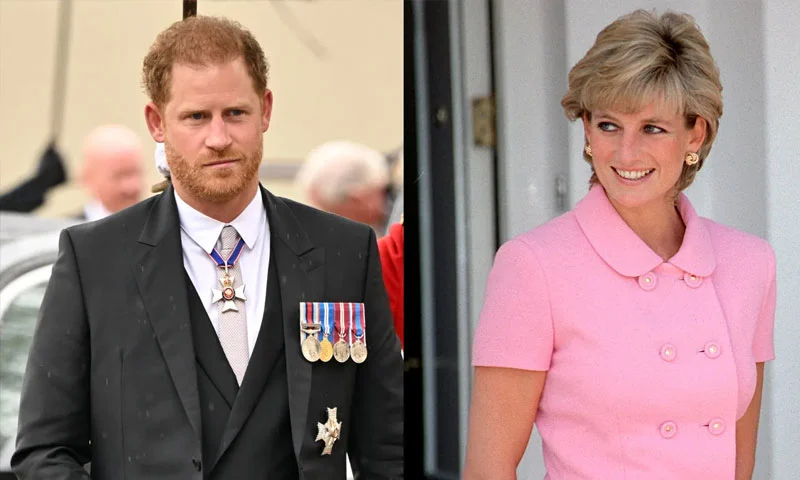
Prince Harry has shared a simple family tradition that helps keep the memory of his late mother, Princess Diana, alive. Speaking during a question and answer session at Scotty’s Summer Festival at Maxstoke Castle in Warwickshire, England, the Duke of Sussex said his family marks Diana’s birthday on July 1 and the anniversary of her death on August 31 with one of her favorite desserts. “Yes, we do lemon drizzle cake,” Harry said. “I think traditions are really, really important. Especially when they’re sweet.” Read More: Royal Controversy Grows as Prince Harry Steps Into Meghan’s Business Spotlight The event was organized by Scotty’s Little Soldiers, a charity that supports children who have lost a parent in the British Armed Forces. Harry serves as the charity’s Global Ambassador and regularly attends its events. Princess Diana died in a car crash in Paris on August 31, 1997, while being chased by paparazzi. Harry was only 12 years old when she died. Harry reflects on grief and healing Harry has often spoken about the emotional impact of losing his mother. In his 2021 children’s book Hospital by the Hill, he described the loss as something he struggled to accept. He wrote that Diana’s death “left a huge hole inside of me.” Over time, he said, love and support from family and friends helped fill that emptiness. During the festival, Harry encouraged bereaved children to express their emotions instead of hiding them. Read More: Prince William’s Bold Plan for Change Wins Hearts Across the UK According to People magazine, he explained that grief never completely disappears, but talking about loved ones makes the journey easier. His message reflected years of work supporting mental health, military families and children coping with loss. UK visit includes reunion with King Charles Harry’s appearance at the festival came during his first visit to Britain in four years. Earlier in the trip, he, Meghan, Prince Archie, 7, and Princess Lilibet, 5, reunited privately with King Charles III and Queen Camilla at Highgrove House in Gloucestershire. Buckingham Palace confirmed the meeting but released no photographs because it was a private family gathering. The reunion marked the first time King Charles had seen his California-based grandchildren in several years. It also represented an important family moment after Harry and Meghan stepped back from royal duties and moved to California in 2020. Read More: New Epstein Revelations Draw Rare Royal Response From Prince William, Kate Alongside the festival, Harry visited children at a local hospital and joined activities, including goat yoga and family games. His comments about Princess Diana drew widespread attention because they highlighted how small family traditions continue to preserve her legacy almost three decades after her death. Nearly 28 years after losing his mother, Harry continues to speak openly about grief. He hopes his experiences encourage other families to remember loved ones through meaningful traditions while finding comfort in shared memories.
Saudi Arabia Introduces One-Stop Tourist Visa for Seven Countries
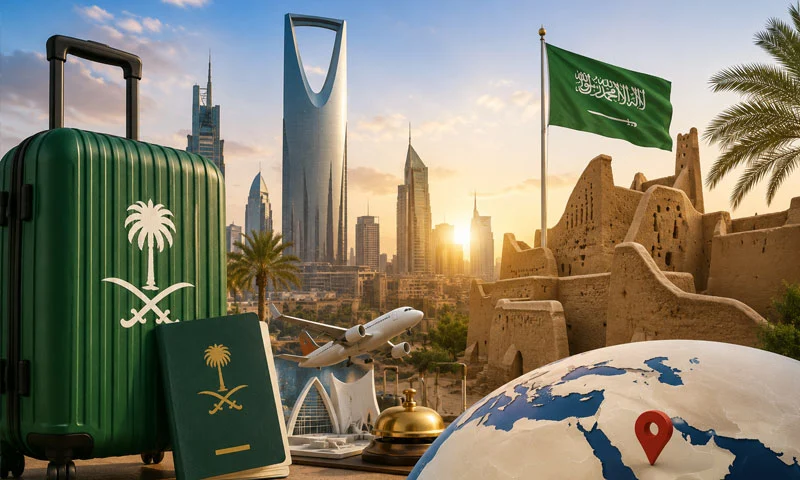
Saudi Arabia has introduced a new Package Visa initiative that allows eligible travelers to obtain a tourist visa through a single integrated travel package, marking another step in the Kingdom’s effort to simplify international travel under Vision 2030. The pilot programme combines flight bookings, hotel reservations and electronic tourist visa processing into one digital transaction. Travelers no longer need to submit a separate tourist visa application after purchasing an approved travel package. Read More: Saudi Arabia’s Vision 2030 Gains Global Attention at the UN According to the Saudi Ministry of Tourism, the service is currently available to visitors from Pakistan, Jordan, Egypt, India, Bangladesh, Indonesia and Mexico. Authorities said they will gradually expand the programme to additional nationalities in future phases. The initiative forms part of Saudi Arabia’s broader tourism strategy to attract more international visitors and diversify the economy beyond oil. Visa issued within 48 hours Under the new system, travelers must purchase an approved package through an authorized travel provider. After completing the booking and payment, they receive their tourist visa, travel insurance and other travel documents electronically. The Ministry of Tourism said the electronic visa is issued within 48 hours, removing the need to visit a Saudi embassy or complete a standalone visa application. Currently, the government has accredited Reserval and Almosafer as the first providers authorized to offer the Package Visa service. Only licensed travel companies with digital booking platforms and round the clock customer support qualify to participate in the programme. Each travel package must include a confirmed return flight, accommodation at a Ministry of Tourism licensed hotel with a minimum four star rating and electronic tourist visa processing. Read More: Saudi Arabia, Pakistan Sign Deal to Build Cricket Stadium in Jeddah Packages start from SR4,000 per adult for the first two days. Travelers pay an additional SR1,000 for every extra day. They can also add optional services such as event tickets, guided tours and tourism experiences. The Package Visa is valid for three months and allows a single entry into Saudi Arabia. Visitors can stay for a minimum of two days and a maximum of 88 days. Part of Saudi Arabia’s tourism expansion The Ministry of Tourism clarified that the Package Visa does not include Umrah arrangements or services in Makkah and Madinah. However, visitors may travel throughout Saudi Arabia after arrival, including both holy cities, provided they comply with tourism regulations. If travelers cancel the package after visa issuance, the associated visa is automatically revoked. The programme supports Saudi Vision 2030, which seeks to make tourism one of the Kingdom’s leading economic sectors. Read More: Saudi Arabia Uses 19,300-Ton Cooling System at Prophet’s Mosque The Ministry of Tourism developed the initiative in partnership with the Ministries of Foreign Affairs and Interior, together with the Insurance Authority. It complements existing entry options, including the tourist eVisa, visa on arrival and the Stopover Transit Visa. Saudi Arabia welcomed more than 29 million inbound visitors in 2025, reflecting rapid growth in its tourism sector as the Kingdom continues investing in infrastructure, entertainment, heritage sites and large scale projects designed to attract global travelers. Officials believe the new Package Visa will further simplify travel planning while encouraging longer stays and higher visitor spending.
For the First Time, the FIFA World Cup Gets a Perfect Final Four
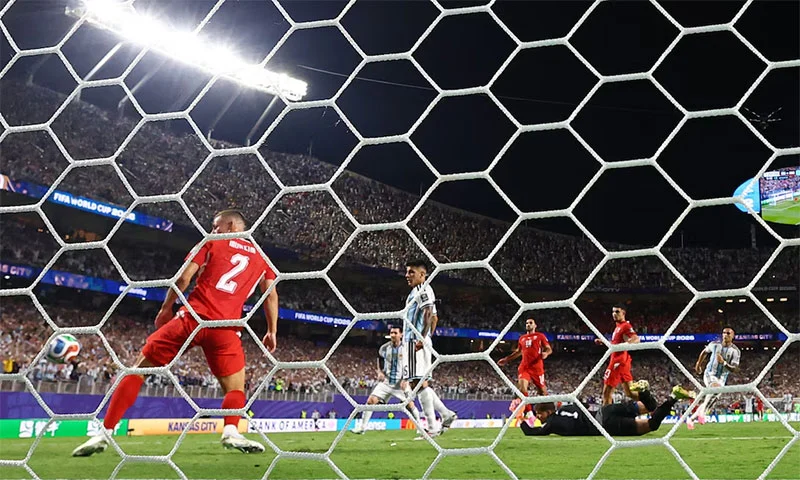
For the first time in FIFA World Cup history, the top four teams in the FIFA world rankings have all reached the semi-finals, with Spain, Argentina, France and England advancing after a tournament format change designed to keep the highest-ranked nations apart until the final stages. Spain, ranked first in the world, will face third-ranked France in Tuesday’s semi-final. Second-ranked Argentina will meet fourth-ranked England on Wednesday. The historic lineup follows a major change introduced by FIFA for the expanded 48-team 2026 World Cup. Before the tournament, FIFA announced that the four highest-ranked teams would be placed in separate pathways of the knockout bracket. The governing body said the move would ensure “competitive balance” by creating “two separate pathways to the semi-finals.” Read More:‘They Wanted Messi’: Egypt Coach Questions Argentina Victory The system meant Spain and Argentina could not meet before the final, while France and England were also separated until at least the semi-finals. However, each team first had to win its group to benefit from the protected pathway. All four successfully topped their groups before progressing through the knockout rounds. Expanded tournament prompted FIFA rethink The adjustment became necessary because the 2026 World Cup expanded from 32 to 48 teams, adding an extra knockout round. Under the previous 32-team format, group winners automatically avoided each other in the Round of 16. Early meetings between top-ranked nations were already uncommon. The new tournament structure created a greater chance that leading teams could meet much earlier in the knockout stage. FIFA responded by introducing a tennis-style seeding system similar to those used at Wimbledon and the UEFA Champions League, where the highest seeds remain separated until the later rounds. Read More: Experts Say the World Cup Is Being Played in Dangerous Heat FIFA explained that the new draw procedure aimed to maintain competitive balance while preserving the possibility of blockbuster matches in the closing stages of the tournament. The governing body had already tested a similar approach during the FIFA Club World Cup, although not every top seed reached the semi-finals. History made after decades of surprises The achievement is particularly notable because several highly ranked teams have suffered early exits in previous World Cups. Belgium entered the 2022 tournament among the world’s top four but failed to reach the knockout stage. Germany exited in the group phase in 2018 despite being one of the highest-ranked teams. Spain suffered the same fate in 2014, Italy in 2010 and France in 2002. Since FIFA introduced its men’s world rankings in 1994, no World Cup has previously produced a semi-final lineup featuring all four highest-ranked teams. Read More: Lionel Messi Makes World Cup History, Scores in 7 Straight Games This year, however, FIFA’s revised draw system combined with strong performances from the tournament favorites to produce exactly the outcome the governing body envisioned. Spain, Argentina, France and England now stand one victory away from the final, guaranteeing that the 2026 World Cup will conclude with one of the world’s top-ranked teams lifting football’s biggest prize.
