

Finance Minister Muhammad Aurangzeb said on Saturday that the government was accelerating reforms to modernise the Federal Board of Revenue. The overhaul will use artificial intelligence, digital systems and integrated databases to strengthen Pakistan’s tax regime. Aurangzeb spoke at the closing ceremony of the FBR’s Postgraduate Diploma Programme at Lahore University of Management Sciences. He urged tax officers to embrace AI and keep upgrading their skills. Modern tax administration now depends on technology, data sharing and stronger institutional capacity, he said. Read More: FBR’s New Taftan Decision Could Unlock Billions in Pakistan-Iran Trade “The government aims to create convenience for the public, restore the confidence of taxpayers, and establish a transparent system that can become the basis for Pakistan’s sustainable economic development,” Aurangzeb said. Digital Systems and Cashless Economy The government is introducing a new operating model for the FBR to improve institutional transparency and efficiency. It will link digital systems and databases across public institutions. Authorities can then identify evasion more effectively and make better policy decisions. “The government is working with various national institutions to develop databases on modern lines so that information exchange can be made effective, tax evasion can be prevented and policy making can be done in a better way,” he said. Aurangzeb added: “Modern digital systems and integrated data are the basis of effective tax administration.” He also told officers: “Today is the era of artificial intelligence (AI).” The finance minister said the government had already uncovered major sales tax evasion cases. Those actions increased collections and benefited the national exchequer, he added. Read More: Budget 2026-27: FBR Preparing New Tax Scheme for Shopkeepers and Small Traders Prime Minister Shehbaz Sharif has placed special emphasis on FBR reforms and the shift toward a cashless economy, Aurangzeb said. The drive seeks to document economic activity, widen the tax net and improve financial transparency. The reform campaign began with the sugar sector. The government later introduced monitoring and enforcement measures in the cement industry. Aurangzeb said no country could develop while widespread tax evasion continued. LUMS Training Programme Marks Reform Milestone Aurangzeb told the graduates that they now carry responsibility for helping transform the FBR. He urged them to build a modern, effective and people-friendly institution through professionalism and integrity. “I am confident that these officers will play an important role in making the FBR a modern, effective and people-friendly institution,” he said. Pakistan will mark 100 years of independence in 2047. Aurangzeb predicted that officials would remember the programme launched in 2026 as a milestone in the country’s institutional reform journey. Read More: FBR Targets Social Media Income as New Tax Rules Emerge in Pakistan FBR Chairman Muhammad Rashid Langrial said continuous professional training remained essential for modern and transparent tax administration. Such programmes equip officers with skills needed to improve institutional performance and strengthen Pakistan’s tax system, he added. FBR and LUMS signed the programme agreement in September 2025. The first cohort included 51 probationary officers. Its curriculum covered data analytics, digitalisation, advanced accounting, e-commerce, trade analytics, supply chain management and international taxation. Officials distributed awards and certificates among officers who performed exceptionally during the programme.
Nepra Grants DHA City Historic Electricity Licences for 21 Years
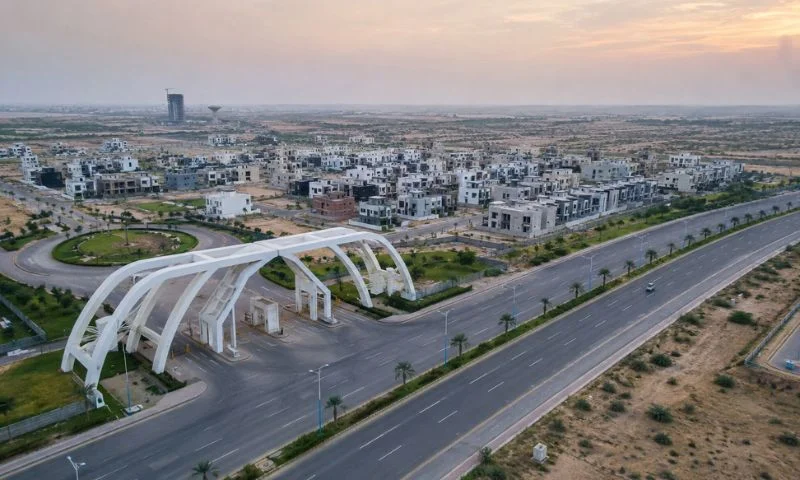
Karachi’s DHA City has become Pakistan’s first privately owned housing project authorised to distribute electricity and act as a Supplier of Last Resort. The National Electric Power Regulatory Authority granted two parallel licences to DHA Energy Supply Company, known as Desco. The move places Desco alongside former Wapda distribution companies and K-Electric, which traditionally handled both functions. Dawn reported 21 years, while licence dates show a 20-year term from October 1, 2026, to September 30, 2046. Private Power Network for DHA City Desco’s initial service territory will remain limited to DHA City Karachi, or DHACK. The development lies on the M-9 motorway in Malir district, about 56 kilometres from central Karachi. Desco told Nepra that DHACK had no infrastructure directly linking it with the national grid or K-Electric network. It therefore reached an understanding with Lucky Cement Limited to procure six megawatts of electricity. The supply will serve residential, commercial and other consumers inside the project through K-Electric’s system. The distribution licence is non-exclusive. As Supplier of Last Resort, Desco must provide power to eligible consumers who lack another competitive supplier. Desco cannot determine charges independently. It may recover only Nepra-approved tariffs, including use-of-system and connection charges. The company must also follow consumer service, technical and solvency standards. Nepra Rejects Objections From KE, CPPA and Gepco K-Electric, the Central Power Purchasing Agency and Gujranwala Electric Power Company opposed Desco’s applications. They questioned its finances, technical capability and lack of a proven operating record. Nepra rejected the objections and confined both licences to Desco’s facilities within DHACK. The regulator said amendments to the Nepra Act seek to liberalise Pakistan’s electricity supply chain. The reforms include de-licensing generation, permitting provincial grid companies and separating electricity supply from the distribution network business. They also remove the exclusivity once enjoyed by established distributors. K-Electric’s distribution and Supplier of Last Resort licences remain non-exclusive after its monopoly ended in 2023. DHA Karachi to Back New Energy Company Nepra acknowledged that Desco had not started commercial operations. The regulator said Desco “is not fulfilling this requirement at this moment however, at the same time its parent company, DHA Karachi, has strong financial credentials and shall bail out its special purpose vehicle whenever required”. It also cited the common practice of incorporating companies with the minimum capital required by the Securities and Exchange Commission of Pakistan. Firms often increase paid-up capital after operations begin. Nepra expects Desco’s financial position to strengthen after it launches the business. The licences now place the company under a legal obligation to meet all regulatory and performance standards. The decision represents an early test of Pakistan’s Competitive Trading Bilateral Contract Market reforms. It may encourage other housing projects and industrial zones to seek regulated electricity distribution arrangements.
From Viral Meme to Political Victory: Inside India’s Cockroach Janta Party
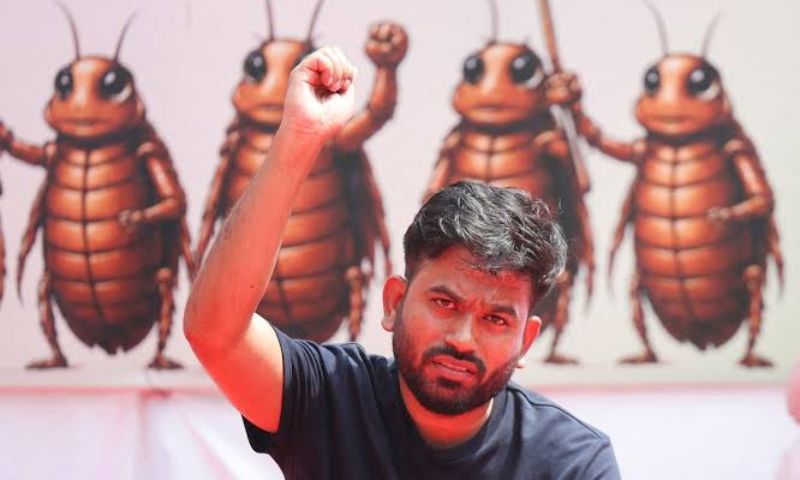
India’s Cockroach Janta Party turned an internet joke into one of the country’s most powerful youth protest movements. Its campaign forced Union Education Minister Dharmendra Pradhan to resign after weeks of demonstrations over alleged examination leaks and failures in the education system. Pradhan announced his resignation on July 25, 2026. Protesters had made his removal their central demand. The decision marked a rare concession by Prime Minister Narendra Modi’s government during a nationwide agitation led largely by students and young professionals. The immediate crisis began after allegations of a paper leak in the May 3 NEET undergraduate medical entrance examination. About two million students took the test before authorities cancelled the results and arranged a retest. Investigators later handed the case to the Central Bureau of Investigation. Officials also discussed computer-based testing for future examinations. The controversy deepened anger over competitive tests, student distress, unemployment and limited opportunities for young Indians. From a Courtroom Remark to a National Movement The movement’s unusual name came from comments by Chief Justice of India Surya Kant during a Supreme Court hearing in May. Reports said he compared some unemployed young people entering media, social activism and other fields to “cockroaches.” He later said media outlets had misrepresented him. He explained that his criticism targeted people who entered professions with fake qualifications. Political communications strategist Abhijeet Dipke responded on May 16 with six words: “What if all cockroaches come together?” The post went viral and inspired the Cockroach Janta Party, or CJP. The group used humour as a political weapon and adopted the cockroach as a symbol of resilience. It described itself as the “voice of the lazy and unemployed.” The phrase turned an insult into a shared identity for frustrated young people. Dipke, 30, had worked with the Aam Aadmi Party’s social media team. He later moved to Boston to study public relations. As the campaign gathered pace, he returned to India and became its most recognisable organiser at Delhi’s Jantar Mantar. Reuters reported that the CJP’s Instagram following reached 25 million. Organisers used memes, AI-generated images, short videos, livestreams and satire to mobilise supporters. Their strategy transformed digital anger into major gatherings across Delhi, Mumbai, Kolkata and other cities. Memes, Hunger Strikes and Street Pressure The CJP held its first major physical demonstration at Jantar Mantar on June 6. Protesters wore cockroach masks and demanded exam reforms, accountability for alleged paper leaks and Pradhan’s resignation. Education reformer Sonam Wangchuk joined the campaign on June 28 and began an indefinite hunger strike. Wangchuk founded the Students’ Educational and Cultural Movement of Ladakh and received the Ramon Magsaysay Award in 2018. Many people also know him as an inspiration for the character Rancho in the Bollywood film 3 Idiots. His fast lasted 26 days and brought wider attention to the movement. He survived on salt and water before his health deteriorated. Doctors admitted him to hospital on July 18. Wangchuk ended the strike on July 23 after government representatives offered assurances on education accountability and relief for affected families. Read More: Viral Video Reveals Disgusting Indian Hotel Practices The demonstrations intensified during a July 20 march towards Parliament. Police used tear gas and batons to disperse protesters, leaving several students injured. The crackdown increased public anger and strengthened demands for action against officers accused of excessive force. CJP continued nationwide demonstrations on July 24. Talks remained stuck because its leaders called Pradhan’s resignation “non-negotiable.” The movement also demanded ₹1 crore for each family of students who allegedly died after examination-related distress. It sought the withdrawal of cases against protesters and action over police violence. Resignation Ends Protest After Government Accepts Demands Pradhan resigned before the next decisive round of negotiations. In his statement, he said: “Considering the situation that has arisen at Jantar Mantar and across the country, so that anti-national forces do not take advantage of this situation … I have sent my resignation letter to the Prime Minister.” Celebrations erupted at Jantar Mantar after the announcement. CJP supporters danced, distributed sweets and raised patriotic slogans. The movement called the resignation a “victory of democracy.” Before the final agreement, Dipke told protesters: “This is democracy. He has resigned. We have two more demands. We won’t go like this.” Later talks changed the situation. Health Minister J.P. Nadda said the government had accepted all demands. These included examination reforms, compensation for affected families and withdrawal of police cases against protesters. Authorities also restored mobile internet around the protest area and reopened nearby metro stations. “The Cockroach Janta Party declares that we withdraw the agitation in good faith,” CJP spokesperson Saurav Das said. Another spokesperson, Ashutosh Ranka, asked supporters to leave peacefully after the agreement. The CJP episode showed how quickly online humour can become organised political pressure. A sarcastic post created a decentralised youth movement, brought thousands onto the streets and delivered a major political setback to the Modi government.
Forbes 30 Under 30 2027 Deadline Announced: Are You Eligible?
Forbes has opened nominations for its 2027 Under 30 U.S. list, giving young entrepreneurs, creators and innovators a chance to present their work for editorial consideration. The nomination window will close on September 1, 2026. Applicants may nominate themselves or recommend a business partner, founder, artist, executive or another candidate. Forbes’ nomination page confirms that nominees must be 29 or younger on December 31, 2026. Who Can Apply for the 2027 List? Candidates should select the category that most closely matches their work. The previous U.S. edition recognized 600 people across 20 industries, including artificial intelligence, education, healthcare, media, finance, sports, social impact, venture capital and manufacturing. Forbes generally excludes people who have already appeared on its main U.S., Asia or Europe Under 30 lists. This rule prevents repeat appearances across the flagship regional editions. Read More: Musk Becomes Richest Person Ever With $839 Billion Fortune A self-nomination does not place an applicant at a disadvantage. Forbes says each submission receives equal consideration, regardless of who completes the form. It also warns candidates against sending repeated applications. “The number of nominations does not matter, but quality does,” Forbes states. What Applicants Should Include The nomination form asks for information about the candidate, company, project or career. Applicants should explain what they have built, why it stands out and how it has produced measurable results. Strong submissions should include clear figures wherever possible. These may cover annual revenue, funding secured, customer growth, major investors, partnerships, jobs created, awards or social impact. Candidates should also explain their future plans and how they intend to expand their work. Forbes does not use one fixed formula for every category. Its editors consider scale, innovation, disruption, creativity, impact and future potential. The publication advises candidates to focus on evidence instead of broad claims. “What matters is what the nomination tells us about you,” Forbes says. Read More: How MrBeast Can Be ‘Broke’ While Owning a $5B Content Company There is no application fee. Nominees also cannot pay Forbes to secure a place on the final list. Submission only places a candidate in the consideration process and does not guarantee selection. Forbes says its lists do not require payment for nomination, participation or selection. What Pakistani Candidates Need to Know Pakistan-based entrepreneurs, creators and professionals should normally seek consideration for Forbes 30 Under 30 Asia. That list covers people living in the Asia-Pacific region whose businesses or main impact are based there, regardless of citizenship. However, the September 1 deadline applies only to the 2027 U.S. cycle. Forbes says its 2026 Asia and Europe nomination rounds have already closed. Pakistani candidates should watch for the next Asia nomination announcement and review its separate age cutoff, categories and deadline. Forbes Asia editors review public submissions and also seek recommendations from investors, academics, alumni and industry insiders. Shortlisted candidates then face further editorial review, checks and assessment by independent expert judges. The final honorees learn the result when Forbes publishes the list.
