

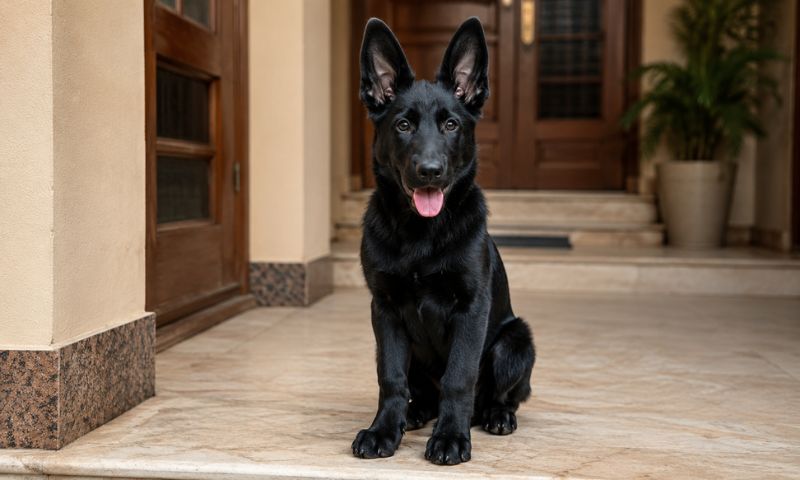
Former Pakistan cricket captain Wasim Akram’s missing German Shepherd puppy, Duke, has returned safely after a public search in Karachi. Two individuals received the announced Rs250,000 reward for helping recover the dog, according to MM News. The report did not name the recipients or explain how they located Duke. It also did not say whether they divided the reward. However, the recovery ended a widely shared search effort that began after Duke disappeared from DHA Phase 8. Public Appeal Triggers Search Across DHA Akram and his wife, Shaniera Akram, turned to social media after their five-month-old puppy went missing on Sunday. They posted an urgent notice through their official Instagram accounts and asked Karachi residents to help bring him home. The family described Duke as a black, long-coated German Shepherd with no visible markings. Their notice said, “Duke was last seen in DHA Phase 8,” and offered Rs250,000 for reliable information leading to his safe return. Read More: Former England Captain Warns ECB Over Pakistani Players’ Fate in The Hundred The couple asked people in Phase 8 and nearby neighbourhoods to search streets, parks, gardens, rooftops and garages. They also requested support from security guards and other residents familiar with the area. The family asked social media users to “share only verified information and avoid spreading unconfirmed reports.” The warning sought to keep the search focused and prevent false sightings. Police Join Effort to Locate Puppy The family also lodged a formal missing complaint, according to reports published before Duke’s recovery. Local police then began search efforts while residents circulated the notice online. Shaniera expressed concern that the puppy might feel frightened and distressed while away from home. She urged people to check quiet or enclosed places where a young dog could hide. Read More: Which Teams Will Play Cricket at LA28? ICC Reveals the Full Plan The search gained attention because of Akram’s public profile, but the family kept its appeal centred on practical local help. Posts carrying Duke’s description and the reward amount spread across Pakistani news pages and social media accounts. Before the recovery report emerged, several outlets said the family had not confirmed Duke’s whereabouts. MM News later reported on Thursday that Duke had been found and two people received the promised reward. Recovery Details Remain Limited The report provided no information about where Duke was found, how long he remained missing or what condition he was in. It also did not identify the police station handling the complaint. No public statement from Akram or Shaniera had explained the circumstances of the recovery at the time of reporting. The available report only confirmed Duke’s return and payment of Rs250,000. Duke’s recovery closed an anxious episode for the family. It also highlighted how community alerts can mobilise residents when a pet disappears in a densely populated city.

Bank Alfalah Posts Major Profit Growth in First Half of 2026
Bank Alfalah Limited reported a 39.6% increase in profit after tax for the first half of 2026. Profit reached Rs21.32 billion, compared with Rs15.27 billion in the same period last year. The board approved the results for the six months ended June 30 at a meeting on Thursday. Earnings per share rose to Rs6.76 from a restated Rs4.84 in the corresponding period of 2025. The board also declared a second interim cash dividend of Rs1.50 per share, equal to 30%. This took the total half-year payout to Rs3 per share, or 60%. Bank Alfalah distributed Rs2.50 per share during the same period last year. Capital Gains and Interest Income Lift Earnings The bank linked the profit increase mainly to capital gains from active portfolio management. Improved net interest income and controlled operating costs also supported earnings. Net interest income increased 5% as spreads improved and average current account deposits continued to grow. Financial statements showed net interest income of Rs70.80 billion, up from Rs67.43 billion a year earlier. Non-funded income climbed 46% to Rs35.34 billion. Capital gains, foreign exchange earnings and fee income drove the increase. The bank also earned more from remittances, cards, trade business, government-to-person schemes and alternate delivery channels. “Bank Alfalah remains committed to sustainable growth,” the lender said while outlining its plans for the coming period. Deposits Reach Rs2.66 Trillion Total deposits increased to Rs2.66 trillion by the end of June. Current deposits reached Rs1.15 trillion, supporting the bank’s strategy to strengthen its low-cost, non-remunerative deposit mix. Gross advances reached Rs1.16 trillion. The bank recorded broad-based financing growth across consumer banking, small and medium enterprises, and agriculture. Its unconsolidated balance sheet showed total assets of about Rs4.02 trillion on June 30. Investments stood at Rs2.34 trillion, while net advances reached Rs1.11 trillion. The capital adequacy ratio remained strong at 17.4%. This level kept the bank comfortably above the State Bank of Pakistan’s regulatory requirements. Bank Expands Network and Capital Base Bank Alfalah recently opened its 1,200th branch. The lender said the milestone reflected customer confidence and its strategy of combining physical branches with advanced digital services. The bank is also issuing a Rs20 billion subordinated Tier II term finance certificate. PACRA assigned the proposed instrument a preliminary AAA rating. Bank Alfalah had received Rs18.045 billion as advance subscription money by June 30. It collected the remaining Rs1.955 billion after the reporting period. The bank plans to expand consumer and SME lending while advancing its environmental, social and governance agenda. It will also continue investing in digital transformation and operational efficiency to improve customer experience and long-term shareholder value.
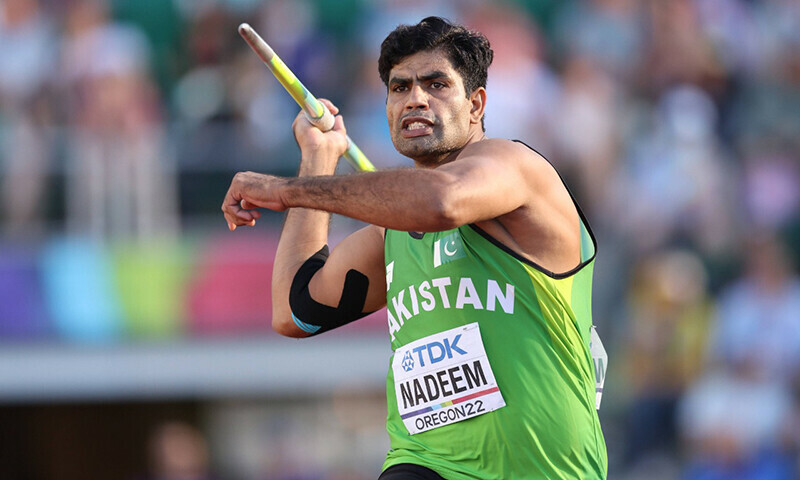
Arshad Nadeem Qualifies for Glasgow 2026 Javelin Final
Pakistan’s Olympic champion Arshad Nadeem qualified for the men’s javelin final at the 2026 Commonwealth Games after finishing seventh in Thursday’s demanding qualification round. Strong headwinds disrupted the field at Scotstoun Stadium. None of the 18 competitors reached the automatic qualifying mark of 84 metres. Arshad opened with 78.63 metres, his season’s best, which secured his place among the top 12 finalists. He fouled his second attempt before recording 75.65 metres with his final throw. Pathirage Leads Strong Qualification Field Sri Lanka’s Rumesh Pathirage topped the standings with 82.84 metres. Grenada’s world champion Anderson Peters followed with 81.29 metres. South Africa’s Douw Smit reached 80.64 metres, while England’s Benjamin East threw 80.38 metres. They were the only other athletes to cross the 80-metre line. India’s Neeraj Chopra also progressed after opening with 76.28 metres. He improved to 79.61 metres on his second attempt, setting up another major contest with Arshad. India will have three representatives in the final. Rohit Yadav qualified with 78.37 metres, while Yashveer Singh steadily improved to 78.36 metres. Yasir Sultan Misses Top 12 Pakistan’s Muhammad Yasir Sultan failed to reach the medal round. He fouled his opening attempt, then registered throws of 71.42 metres and 74.36 metres. The top 12 athletes advanced after the full field missed the automatic standard. Arshad’s opening effort therefore proved decisive. Read More: Arshad Nadeem Eyes Commonwealth Gold After Olympic Glory The throw also improved on his 78.47-metre performance at the Spitzen Leichtathletik Luzern meeting in Switzerland on July 16. He finished ninth at that World Athletics Continental Tour Silver competition. Before Glasgow, Arshad acknowledged the challenge of defending his crown. “I strongly feel that the competition in Glasgow will be tough this time too but I am prepared for it,” he said. Arshad Targets Second Commonwealth Gold Arshad won the 2022 Commonwealth title in Birmingham with a Games-record throw of 90.18 metres. That victory gave Pakistan its first Commonwealth athletics gold medal since 1962. Pakistan sent 68 athletes across 12 sports to Birmingham. The contingent finished 18th with eight medals, including two gold, three silver and three bronze. Pakistan entered Glasgow 2026 with 82 Commonwealth Games medals: 27 gold, 27 silver and 28 bronze. The country made its Games debut in 1954. Arshad’s personal best remains the 92.97-metre Olympic record he set while winning gold at Paris 2024. That performance also established a new Asian record. Read More: FIFA President Acknowledges Arshad Nadeem’s Olympic Feat in Dubai The Glasgow 2026 evening session will start at 6:30pm local time on Friday, July 31. Organisers list the men’s javelin final for 8:15pm, which converts to 12:15am Pakistan time on Saturday, August 1. Arshad will defend his title against Pathirage, Peters, Chopra and a deep field of qualifiers. The final promises one of the Games’ most anticipated athletics contests.

MG Launches Three ZS Variants, Prices Start at Rs6.59 Million
MG Motor Pakistan has launched the second-generation ZS crossover in three variants, bringing hybrid power to the nameplate for the first time locally. The lineup includes the petrol ZS Vibe, Hybrid+ Excite and range-topping Hybrid+ Essence. Prices range from Rs6.599 million to Rs7.499 million. MG has opened bookings at Rs1.2 million for every variant. The launch followed a week of social media teasers. The new model has a longer, wider body, redesigned exterior and more technology inside. The previous ZS used a 1.5-litre petrol engine, while MG later introduced the ZS EV in Pakistan. Three Variants and Hybrid Power The entry-level Vibe retains a naturally aspirated 1.5-litre petrol engine. The Excite and Essence use MG’s Hybrid+ system, combining a petrol engine, electric motor and 1.83 kWh battery. Read More: Five New Chinese EVs in The Price of One Car in US: The Price Gap Shaking the Auto Industry The top-specification Essence produces a combined 212 horsepower and 465 Nm of torque. It uses a three-speed hybrid transmission. The crossover measures 4,430 mm long, 1,818 mm wide and 1,635 mm high. Its wheelbase stands at 2,610 mm. MG says the hybrid system switches between petrol and electric power to improve efficiency and provide smoother performance. However, the company has not announced an official local fuel consumption figure. Technology, Comfort and Safety The Hybrid+ Essence gets 18-inch alloy wheels and a panoramic sunroof. Other features include heated and ventilated front seats, an electric tailgate, heated side mirrors and intelligent headlight control. Its cabin carries a 12.3-inch infotainment display with wireless Apple CarPlay and Android Auto. MG also provides a digital instrument cluster and iSMART connected functions. Safety equipment includes six airbags, a 360-degree camera and MG Pilot driver-assistance technology. The package offers adaptive cruise control, autonomous emergency braking, blind-spot detection and lane-keep assistance. MG’s Pakistan website says the petrol model holds a five-star ANCAP safety rating. Price, Booking and Delivery Details The ZS Vibe carries an ex-factory price of Rs6.599 million. MG has priced the Hybrid+ Excite at Rs7.099 million. The Hybrid+ Essence costs Rs7.499 million. The company has set a Rs1.2 million booking amount across the range. It expects deliveries to start in September. “This is limited-time pricing and will not be affected by any future tax changes,” the company announced at the launch event. Read More: Local Auto Parts Production Gets Major Boost in Pakistan The hybrids will compete with the Jaecoo J5, Haval Jolion, Honda HR-V e, Suzuki Fronx Mild Hybrid and Toyota Corolla Cross HEV. The petrol Vibe will face models such as the Peugeot 2008 and non-hybrid Honda HR-V. MG now offers buyers three price points and two powertrain choices. The launch also adds another hybrid option to Pakistan’s expanding crossover market.

Abhi Bank to Sell 14% Stake in Major Pakistan IPO
Abhi Microfinance Bank plans to raise between Rs2 billion and Rs3 billion through an initial public offering at the Pakistan Stock Exchange, as Pakistan’s fintech sector turns to public markets. The lender aims to offer about 14% of its shares, Omair Ansari, sponsor and director of the bank, told Bloomberg. The transaction could launch before the end of July. Abhi will use the proceeds to strengthen the bank’s capital base. Management expects its capital buffer to exceed the State Bank of Pakistan’s minimum regulatory requirement by next year. IPO Targets Local and International Investors Abhi appointed Arif Habib Limited, Topline Securities and Growth Securities as financial advisers. The company also held a roadshow in London to attract domestic, frontier and emerging market investors. The listing comes during Pakistan’s busiest IPO year. Ten listings have raised about Rs19.8 billion so far, supported by a market rally and retail participation. The Securities and Exchange Commission of Pakistan separately said 10 companies raised more than Rs20 billion in the first half of 2026. Read More: DIB Pakistan Reveals New Look and Big Plans for Digital Banking Abhi Pvt. owns close to 75% of the bank, while TPL Corp holds the remaining stake. The two companies completed their acquisition of FINCA Microfinance Bank in January 2025 after securing regulatory approvals. Digital Turnaround Lifts Bank Into Profit The new owners shifted the lender toward digital services and closed loss-making branches. Ansari said the bank had recorded annual losses of up to $5 million before the acquisition. Under the new ownership, the lender generated more than $3.5 million in profit during its first year. Ansari expects profit to approach $10 million in 2026. “At ABHI, our mission has always been to create accessible financial solutions for everyone,” Ansari said when the acquisition closed. Recent results show the scale of the turnaround. Abhi Microfinance Bank reported first-quarter revenue of Rs4.874 billion, compared with Rs2.6 billion in the same period last year. The bank has expanded digital infrastructure. Its strategy focuses on using technology to serve individuals, small businesses and customers outside traditional banking channels. Gold Lending and Crypto Corridor Under Review Abhi Microfinance Bank plans to expand gold-backed lending. The bank already offers financing against gold ornaments or bullion, with loans ranging from Rs100,000 to Rs5 million. Management is also exploring a licence to tokenize gold. The project could allow the bank to represent gold ownership through regulated digital tokens, although it would require regulatory approval. Read More: PM Shehbaz Wants 100% Digital Remittances. Why It Matters The lender is separately evaluating a crypto payments corridor between Pakistan and the Middle East. Abhi has not disclosed a launch date or technical structure for the proposed service. The IPO would provide fresh capital for expansion and open the bank’s ownership to public investors. It would also mark a major milestone for Abhi, which began as an earned wage access fintech in 2021 before acquiring a regulated microfinance institution.
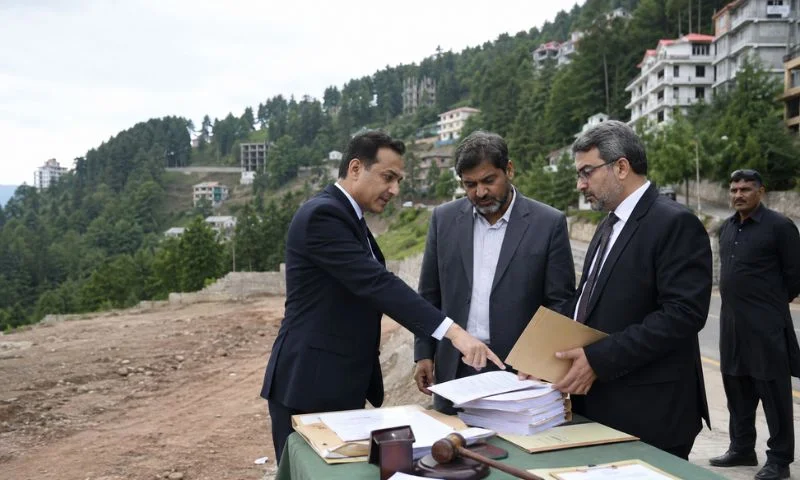
Bahria Town Loses 527-Kanal Murree Property in FBR Auction
The Federal Board of Revenue has auctioned Bahria Town’s entire 527-kanal and 10-marla property in Murree District to recover unpaid income tax, according to people familiar with the transaction. The land sits at Mauza Kathar Sharqi on Angori Road in Tehsil Murree, District Rawalpindi. FBR conducted the latest public auction under the Income Tax Ordinance, 2001, and the Income Tax Rules, 2002. Sources said the sale relates to an outstanding tax demand of Rs 26.47 billion. The successful buyer must pay about Rs 825 million, including applicable taxes. Officials have not disclosed the buyer’s identity but described him as a Pakistani businessman. Fresh Buyer Replaces Earlier Bidder FBR re-advertised the property after an earlier auction failed to reach completion. Businessman Musawar Abbasi had submitted the highest bid in the previous process, but the transaction did not close. A different bidder offered the highest amount in the latest auction. The notice said FBR “reserved the right to reject or accept any bid without assigning any reason.” Read More: Pakistan Turns to AI to Transform FBR and Catch Tax Evasion The authority had made several attempts to sell the property before securing the latest bid. Earlier notices also identified the same parcel and linked its sale to the recovery of billions of rupees in unpaid taxes. Business Recorder reported in February that FBR had rescheduled an auction from February 16 to March 5. The planned sale was to take place at the Large Taxpayer Office in Islamabad. Court Clears Recovery Proceedings The auction also faced a legal challenge linked to the property’s attachment. Earlier this month, an accountability court dismissed Bahria Town Karachi’s contempt application against FBR and the National Accountability Bureau. Judge Muhammad Mehboob Awan ruled that FBR could continue recovery proceedings under the relevant tax laws. The court heard that NAB had provisionally attached the property before later withdrawing that attachment. Read More: FBR’s New Taftan Decision Could Unlock Billions in Pakistan-Iran Trade FBR told the court it had sought permission once it learned about the provisional attachment. NAB also argued that no official had wilfully disobeyed or obstructed a court order. “The contempt plea of the learned counsel for BTK is hopelessly misconceived and is found to be meritless,” the judge ruled. He dismissed the contempt case and related applications. Auction Supports FBR Recovery Drive The completed sale marks a significant step in FBR’s enforcement action against large tax defaults. However, the roughly Rs 825 million purchase amount covers only a small portion of the reported Rs 26.47 billion liability. The auction does not by itself settle the entire tax demand. FBR may therefore continue other recovery measures allowed under tax law to collect the remaining amount. The property had remained under the tax authority’s recovery process since at least 2025. Reports said FBR attached it in September that year before issuing repeated auction notices. The latest transaction now moves the land to a new private buyer, subject to payment and completion requirements. FBR has not publicly released the final bidder’s name or a detailed completion timetable.

BMW Plans 8,000 Job Cuts by End of 2027 as Costs Rise
BMW plans to cut about 8,000 jobs by the end of 2027 through a voluntary redundancy programme. The German premium carmaker wants to lower costs as US tariffs, shrinking margins and fierce Chinese competition pressure earnings. A company source told AFP that BMW would offer voluntary exit packages to around 40,000 of its roughly 85,000 permanent German employees from October. The programme will target desk-based roles, including administration and development. Production-line workers will remain exempt. “The workforce will ultimately be reduced by around 8,000 people by the end of 2027,” the source said. “We’re planning on the basis of that.” Voluntary exits to focus on German offices BMW employs about 154,000 people worldwide. Its management and works council negotiated the redundancy plan for around six weeks, according to the source. Most departures will come next year. BMW expects the programme to deliver meaningful cost savings from 2028. However, restructuring expenses could reach hundreds of millions of euros during the second half of 2026. The final bill will depend on how many employees accept the offer. Read More: New Spider-Man Movie Gives BMW iX3 and 5 Series Key Roles BMW confirmed that it had agreed on a voluntary programme with employee representatives. The plan covers administrative and development divisions but excludes production operations. It will run from October 2026 until the end of 2027. China slump squeezes BMW margins BMW issued a surprise profit warning in June after business conditions in China deteriorated faster than expected. The company now expects its automotive operating margin to fall between 1% and 3% in 2026. It had previously forecast a range of 4% to 6%. BMW reported on Thursday that second-quarter pre-tax profit fell by more than one-third to 1.7 billion euros. Its automotive operating margin dropped to 2.3% from 5.4% a year earlier. Vehicle deliveries in China fell 30.2% year-on-year during the three months to June. BMW’s annual deliveries in the country had already fallen to their lowest level since 2017 last year. Read More: BMW iX5 Hydrogen Set to Deliver 500km Range on a Single Tank BMW has continued offering petrol, diesel, hybrid and electric models instead of making an abrupt battery-only shift. This strategy helped it avoid some costly changes faced by rivals. Meanwhile, its global electric vehicle deliveries increased during the second quarter. German auto sector faces ‘immense’ pressure BMW’s plan adds to a broader restructuring wave across Germany’s automotive industry. Volkswagen is weighing up to 100,000 cuts across its brands, while Mercedes-Benz operates its own voluntary redundancy programme. German industrial companies cut about 124,000 jobs in 2025, according to consultancy EY. The automotive industry accounted for roughly 50,000 of those losses. Carmakers have also expanded production in lower-cost European locations. BMW opened its Debrecen plant in Hungary in September 2025. Mercedes-Benz recently more than doubled its Kecskemet facility, making it the company’s largest European production site. “The whole sector could benefit from improved productivity, no two ways about it,” Mercedes-Benz CEO Ola Kaellenius said. “The pressure is immense.”
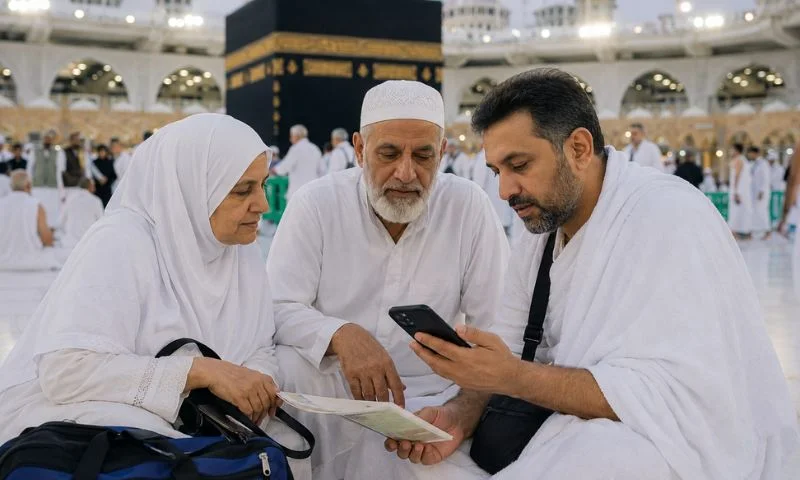
Pakistan Launches New Hajj Reforms Under New Four-Year Policy
Pakistan has unveiled its first four-year Hajj policy for 2027 to 2030, introducing advance registration, digital oversight and long-term contracts. The reforms aim to improve services, control costs and give intending pilgrims greater certainty. Federal Minister for Religious Affairs Sardar Muhammad Yousuf announced the framework at a press conference on Wednesday. “This is not only a policy but the beginning of fundamental and lasting reforms in Hajj arrangements,” he said. Advance registration and digital waiting list Under the new system, intending pilgrims can select their preferred Hajj year in advance. They will deposit an estimated 10% of expected Hajj expenses when registering. Authorities will select applicants on a “first come, first served” basis through a transparent digital waiting list. The government and private schemes will retain 60% and 40% of Pakistan’s quota, respectively, until 2030, unless the federal cabinet revises the division. Government packages will offer different durations, allowing pilgrims to choose according to their needs. The cabinet has also backed a Shariah-compliant savings scheme for prospective pilgrims. Read More: New Hajj Policy Brings Major Changes for Pakistani Pilgrims The minister said three to four-year contracts may cover accommodation, transport, catering, flights and cargo. Officials expect longer agreements to improve service quality and reduce costs. Any surplus from collected Hajj dues will return to pilgrims after operations conclude. Private operators face performance-based oversight Pakistan will gradually shift the government’s role from direct manager to regulator, monitor and quality assurer, while expanding private-sector participation. Independent third parties will impartially review both government and private arrangements. Private Hajj companies will earn registration and monitoring status through performance and compliance with service standards, rather than quota allocation alone. Every operator must use the Private Hajj Management Portal for bookings, payments, monitoring and audits. Read More: Hajj 2027 Registration Opens in Pakistan Through Pak Hajj App The notified private policy requires digital verification through government systems and routes transactions through designated banking channels. It bars manual bookings and cash handling. Performance dashboards will track service quality, compliance and complaint resolution. Licensed private operators must also secure at least 2,000 bookings. Those who miss the threshold face pilgrim reallocation and financial penalties. Transparent contracts, complaints and emergency support The government will award procurement contracts transparently under applicable rules in Pakistan and Saudi Arabia. The policy moves every stage, from registration and payments to complaint handling and post-Hajj review, onto a fully digital system. A modern complaint mechanism, formal appeals process and stronger monitoring will support prompt grievance resolution. A cabinet committee will also develop merit-based criteria to appoint the most qualified Hajj assistants. Pilgrim training will cover rituals, mobile applications, health precautions, emergency management and Saudi laws. The Hajj Protector Scheme will continue providing financial support in cases of death, accidents or emergency evacuation. Authorities will also establish an emergency management system and a dedicated response team. Yousuf said the policy aligns Pakistan’s arrangements with Saudi Vision 2030 and international standards. The cabinet approved the framework earlier in July and allowed changes when Saudi regulations require them. Pakistan received a quota of 179,210 pilgrims for Hajj 2026, while about 250,000 people registered for Hajj 2027 within 15 days.
