


Papa Johns Pakistan has triggered speculation about its future after publishing a cryptic goodbye message around Pakistan’s 79th Independence Day. The pizza chain shared the message on its official social media accounts on August 13. It directly addressed Pakistani customers and said the company was sad to say goodbye. “Dear Pakistan, it has been an honour to serve you” and “but on your 79th birthday, we’re sad to say goodbye,” the announcement read. The company signed off with “Apka Apna Papa Johns Pakistan.” However, it did not explain what the goodbye actually means. Read More: End of an Era: Yum Brands Sells Pizza Hut in $2.7 Billion Deal It also did not announce restaurant closures or confirm an exit from Pakistan. Similarly, the company gave no indication of whether a rebrand or another major business change was coming. No Confirmation of Papa Johns Pakistan Shutdown For now, there is no public confirmation that Papa Johns is shutting down across Pakistan. Its Pakistan website remained operational on August 14. The site still displayed its menu, online ordering, Papa Rewards programme and restaurant-finding service. View this post on Instagram A post shared by Papa Johns Pizza (@papajohnspk) Moreover, Papa Johns International continues to list Pakistan among its Asian markets. Therefore, the farewell message alone does not confirm that the company has decided to leave Pakistan. The company’s latest annual report provides further context. Papa Johns International reported 30 franchised restaurants in Pakistan at the end of its 2025 fiscal year. Read More: KFC and McDonald’s Make Unhealthiest Fast-Food Ranking Papa Johns entered Pakistan in January 2019 with its first restaurant in Lahore. At that time, the company announced a 45-store development agreement with PJ Crescent Limited. It also planned a second Lahore restaurant within weeks of the first opening. Meanwhile, Papa Johns Pakistan’s LinkedIn page currently identifies Lahore as its headquarters and says the local business was founded in 2019. Cryptic Goodbye Leaves Customers Guessing The Independence Day timing has added to the mystery surrounding the announcement. Papa Johns linked its farewell message to Pakistan’s 79th birthday but offered no further explanation. Consequently, customers have been left wondering whether the company plans to close, restructure or announce something entirely different. However, there is currently no evidence confirming any of those possibilities. The clearest public indicators still point to ongoing operations. The local website continues to feature products, rewards information and online ordering. Papa Johns International also continues to recognise Pakistan as one of its markets. Read More: Big Twist in Monal Demolition Case as Constitutional Court Steps In When Papa Johns entered Pakistan seven years ago, the company presented the move as part of its international expansion strategy. Its franchise partner said the goal was to establish and expand the brand throughout the country. Now, the cryptic goodbye has created uncertainty around that expansion story. Until Papa Johns Pakistan provides a formal explanation, the message remains a farewell without a confirmed meaning. For customers, the key question is whether it signals the end of Papa Johns in Pakistan or simply the beginning of something new.
NBP Marks August 14 With Focus on Digital Transformation
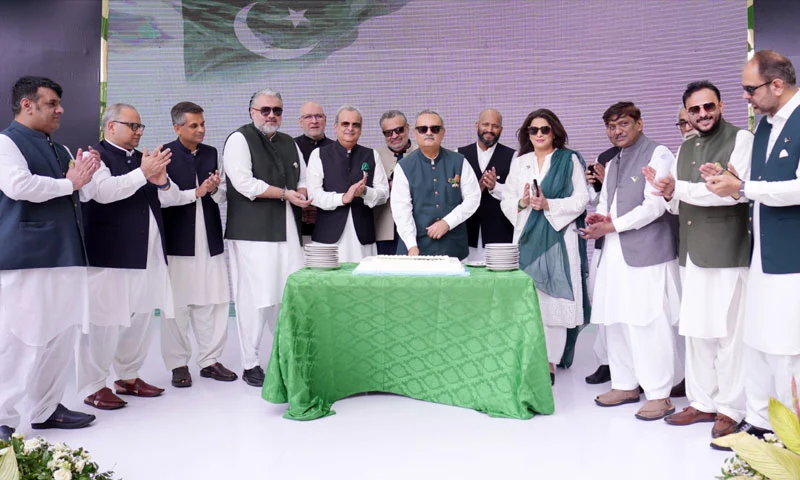
National Bank of Pakistan (NBP) celebrated Pakistan’s 79th Independence Day at its Head Office in Karachi on Friday, highlighting economic empowerment, financial inclusion and digital transformation. President and CEO Rehmat Ali Hasnie attended the ceremony alongside senior management and staff members from across the bank. The event began with Hasnie hoisting the national flag, followed by the national anthem and a cake-cutting ceremony. Read More: Pakistan Turns 79: From the Pakistan Movement to Independence During the gathering, Hasnie paid tribute to Pakistan’s founders and the Armed Forces. He also stressed that independence should create greater economic opportunities for citizens. “Real freedom means economic empowerment and financial inclusion for every Pakistani,” he said. He added: “This year has been a landmark one for the Bank, and that strength allows us to do even more for the people of Pakistan including our farmers, our shopkeepers, our students, and our women entrepreneurs.” In addition to celebrating Independence Day, NBP used the occasion to underline its role in expanding financial access across Pakistan. The bank serves a wide range of customers, including farmers, small businesses, students and women entrepreneurs. Moreover, it provides banking services to pensioners, remittance senders and government beneficiaries. Hasnie said the bank wants to use its growing strength to reach more Pakistanis. Therefore, financial inclusion remains a central part of its strategy. NBP has also continued efforts to support government-linked banking and public-sector services. At the same time, the bank has expanded its focus on digital payments and financial access. Read More: Pakistan at 79: Have We Lived Up to Jinnah’s Vision? Recently, NBP onboarded the Bureau of Emigration and Overseas Employment to digitise its payment collection process. The initiative forms part of broader efforts to promote cashless payments and improve convenience. Furthermore, the bank has worked on social protection accounts and other digital financial services. These initiatives aim to make banking more accessible to people across different parts of the country. Hasnie also highlighted NBP’s ongoing digital transformation during his Independence Day address. The bank believes technology can help improve services while making financial products easier to access. Consequently, NBP has continued investing in its digital infrastructure and customer-facing services. The bank has also strengthened its technology systems as part of its wider modernisation programme. Meanwhile, its product portfolio continues to serve agriculture, retail customers, businesses and government-linked segments. Hasnie reiterated NBP’s commitment to pensioners, overseas remittance customers and government beneficiaries. He also referred to the institution’s identity as “The People’s Bank.” Read More: Airblue Launches Airflix Inflight Entertainment for Passengers Therefore, the Independence Day ceremony carried both a patriotic and economic message. NBP said greater financial access can help more Pakistanis participate in economic activity. At the same time, stronger digital services can make banking more convenient for customers across the country. Through its Independence Day message, the bank linked national progress with financial empowerment. It also reaffirmed its commitment to using technology and financial inclusion to serve more Pakistanis.
Airblue Launches Airflix Inflight Entertainment for Passengers
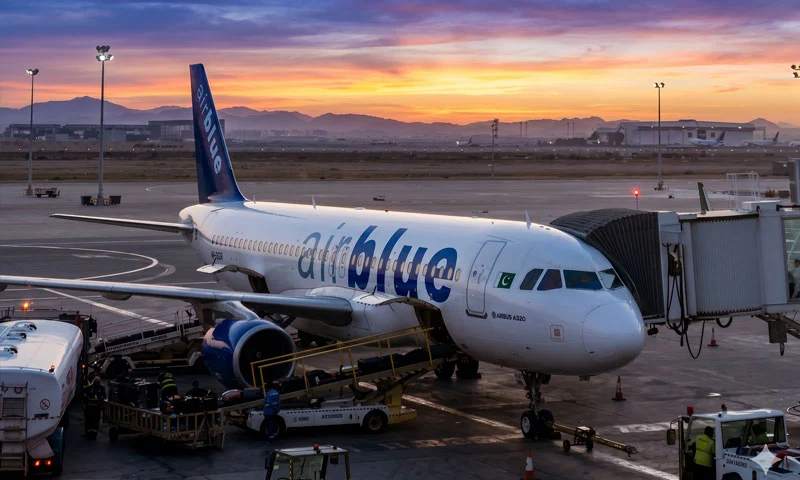
Airblue has launched Airflix, a new inflight entertainment system that allows passengers to watch movies, listen to music and play games using their personal devices. The Pakistani airline introduced the service on August 14, linking the launch with Pakistan’s Independence Day celebrations. Airblue said the system forms part of its push to improve the passenger experience through technology and digital services. Read More: From Caviar to Private Suites: Emirates Wins World’s Top Airline Honor Passengers can connect smartphones, tablets and other compatible devices to Airblue’s dedicated onboard entertainment network. They can then access movies, TV shows, music, games and a moving flight map during the journey. Airblue promoted the service ahead of the launch as a “new kind of Azaadi in the skies”. Its official social media posts highlighted entertainment, music, games and live flight tracking among Airflix’s features. Passengers Can Use Their Own Devices Airflix uses a bring-your-own-device approach, allowing travellers to access entertainment without relying on traditional seatback screens. The system gives passengers more control over what they watch or use during a flight. It also allows them to access the entertainment service through devices they already carry. View this post on Instagram A post shared by Airblue Airline (@airblue_official) Commenting on the launch, an Airblue official said: “Launching Airflix on Independence Day makes this milestone even more special. As we celebrate the spirit of Azaadi, we are also introducing a more convenient entertainment system for our passengers to enjoy their journey. Airblue remains committed to using technology and innovation to make air travel more convenient and enjoyable.” The airline has positioned Airflix as another part of its wider digital transformation. Airblue’s official website says the company is moving towards a “fully digital journey” in 2026. Its plans include cashless payments, inflight entertainment and newer aircraft. Read More: Japan Airlines Tests Humanoid Robots to Take Over Cargo Jobs at Tokyo Airport The carrier has previously introduced technology-led services such as e-ticketing and self check-in kiosks. It says these initiatives aim to make booking and airport processes more convenient for passengers. Airblue Expands Digital Passenger Experience Airblue currently operates domestic services connecting cities including Islamabad, Lahore, Karachi, Multan and Skardu. Its international network includes destinations in the UAE, Saudi Arabia and Azerbaijan. The airline also operates Blue Miles, its frequent flyer programme, as part of its passenger services. Airblue describes itself as Pakistan’s second-largest private airline and says technology remains central to its growth strategy. Read More: World’s Safest Airlines 2026: Full List of Top 25 Full-Service and Budget Carriers Airflix adds another digital layer to that strategy by focusing specifically on the onboard experience. The launch also comes as airlines increasingly look for ways to offer passengers greater control over inflight entertainment through personal devices. For Airblue, the Independence Day introduction gives the new service a distinctly local identity while expanding its digital offering.
Pakistan at 79: Have We Lived Up to Jinnah’s Vision?
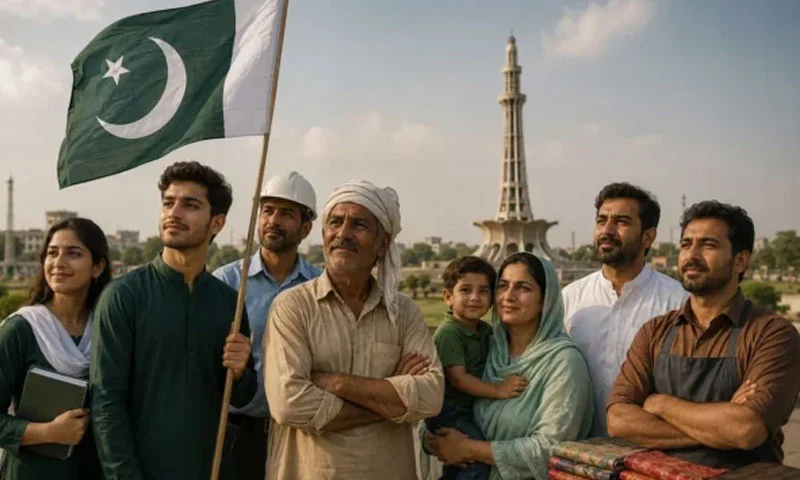
By – Sardar Nadir Akmal Khan Leghari As we celebrate Pakistan’s Independence Day, it is worth taking a moment to remember how this country came into being. Pakistan was achieved through an extraordinary struggle under the leadership of Quaid-e-Azam Muhammad Ali Jinnah. His determination, integrity and belief in constitutional and democratic principles gave the Muslims of the subcontinent a homeland of their own. We owe it to that struggle to ask ourselves, honestly, how far we have come and where we still need to do better. Our journey since 1947 has not been perfect. We have had our successes and we have had our failures. There are many things we can be proud of, and there are also mistakes from which we must learn. That is part of the journey of every nation. Throughout our history, our Armed Forces have stood in defence of the integrity, sovereignty and borders of our motherland, often in the most difficult circumstances. At the same time, our Armed Forces, law-enforcement agencies and ordinary Pakistanis have paid a very heavy price in the fight against terrorism. Thousands have laid down their lives so that the rest of us can live in peace and security. Their courage and sacrifice, and the sacrifices of their families, must never be forgotten. In recent times, Pakistan has also conducted its foreign policy with considerable confidence and effectiveness, strengthening our position and relationships internationally. We should build on this progress. But ultimately, the real strength of Pakistan will be determined by what we achieve at home. We need a country where the rule of law is respected and applies equally to everyone. We need to invest far more seriously in education, healthcare and, above all, our young people. Pakistan has tremendous human potential, but unless we educate, train and create opportunities for our youth, that potential will remain just that—potential. We also need to make it easier for people to do business, invest, produce and create jobs. Pakistan cannot prosper simply by selling what we grow or extract. We must learn to add value to what we produce, build industries around our own resources and compete confidently with the rest of the world. Democracy must be respected and allowed to grow stronger. But political parties must also look within themselves. Merit should matter. Capable and hardworking people, especially young people, should have the opportunity to rise through political parties on the strength of their ability, character and service. And if we genuinely want democracy to reach the people, we must have a meaningful local government system. Decisions affecting people’s everyday lives should not all be made in provincial capitals. Local governments must be properly integrated, empowered and given the resources to deliver, with strong checks, balances, transparency and accountability. At 79, Pakistan is still a relatively young nation. We have made mistakes, but we also have every reason to believe in our future. What matters is whether we have the courage to learn from the past and the wisdom to put our country ahead of our individual interests. On this Independence Day, my prayer is simple: May Allah Almighty protect Pakistan, bring peace and prosperity to our people, guide those entrusted with responsibility, and help us leave behind a stronger and better Pakistan for our children and generations to come. Pakistan Paindabad.
Pakistan Turns 79: From the Pakistan Movement to Independence
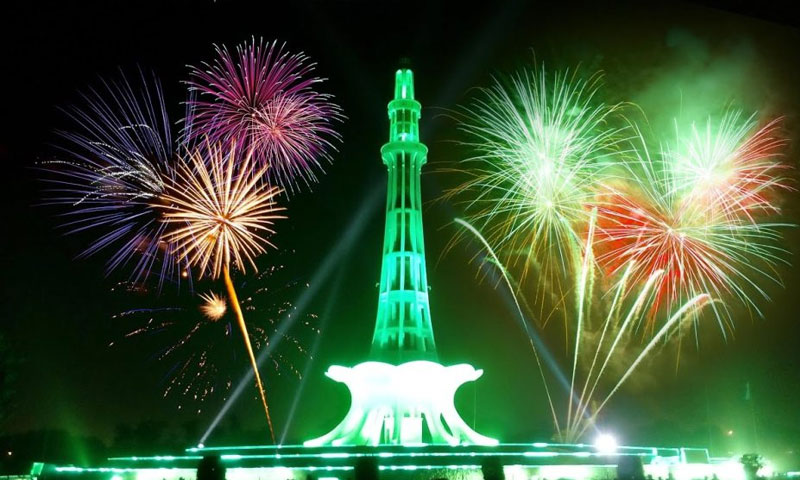
As the clock struck midnight and August 14 began, Pakistan completed 79 years of independence and entered its 80th year. The arrival of Friday, August 14, 2026, formally opened Independence Day celebrations across the country. Pakistanis welcomed another year in the country’s journey that began in 1947. Cities across Pakistan had already turned green and white before midnight. National flags decorated homes, markets, roads and public buildings. Authorities also planned flag-hoisting ceremonies, cultural programmes and special events for Independence Day. For millions of Pakistanis, August 14 carries meaning far beyond the celebrations. The day marks the success of a long political struggle for a separate homeland for the Muslims of British India. Why Muslims demanded a separate homeland Pakistan came into existence after British colonial rule in the Indian subcontinent ended in August 1947. The partition of British India created two independent countries, Pakistan and India. The demand for Pakistan grew as Muslim political leaders became increasingly concerned about their future in a Hindu-majority political system. Muslims formed a large community across British India. However, they remained a numerical minority in the subcontinent as a whole. Muhammad Ali Jinnah and the All India Muslim League argued that Muslims formed a distinct political nation. They had their own religious beliefs, cultural traditions, social values and political interests. Jinnah believed constitutional guarantees alone could not adequately protect Muslims under permanent majority rule. The demand gained historic momentum on March 23, 1940. On that day, the Muslim League adopted the Lahore Resolution at Minto Park in Lahore. The resolution called for Muslim-majority areas in the northwest and east of British India to form independent political units. The Pakistan Movement gained strength during the following years. Jinnah mobilised Muslims around the demand for political independence and constitutional security. The Muslim League’s electoral success also strengthened its position during negotiations over the future of British India. Eventually, the political struggle led to the creation of Pakistan in August 1947. Independence came with enormous sacrifices Freedom, however, carried an extraordinary human cost. Partition triggered one of the largest migrations of the 20th century. Around 14 million people crossed the newly created borders during the upheaval. Millions of Muslims travelled toward Pakistan. At the same time, millions of Hindus and Sikhs moved toward India. Families abandoned homes, businesses, farms and possessions that generations had built. Communal violence also spread across several regions, particularly Punjab. Historians give different estimates for the number of people who died during Partition. Estimates range from about 200,000 to as many as two million. Countless families lost relatives during violence and migration. Many refugees reached Pakistan with little more than the clothes and belongings they could carry. Those experiences became a permanent part of Pakistan’s national memory. The new state also faced enormous challenges from its first days. Pakistan had to establish government institutions, accommodate refugees and build an economy almost from scratch. Despite those difficulties, the country survived its difficult early years and developed its institutions. Pakistan enters its 80th year At midnight between August 13 and 14, 2026, Pakistan completed 79 full years as an independent country. It has now entered the 80th year of its national journey. Across Pakistan, people are marking the anniversary with national flags, songs, ceremonies and public celebrations. Many also remember the leaders and ordinary citizens who struggled for the country’s creation. The occasion particularly recalls the leadership of Quaid-e-Azam Muhammad Ali Jinnah and the political movement that turned the demand for a Muslim homeland into reality. August 14 also serves as a reminder of the millions who endured displacement, violence and loss during Partition. 79 years later, the green and white flag continues to represent the homeland created after decades of political struggle. As another August 14 begins, Pakistan celebrates not only its independence but also the sacrifices behind its creation. At 79, the country now begins another year of its continuing national journey.
