As the clock struck midnight and August 14 began, Pakistan completed 79 years of independence and entered its 80th year.
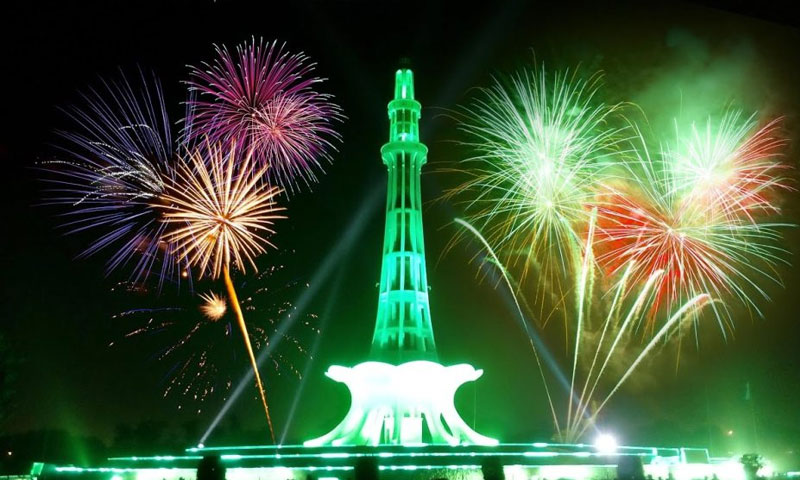
The arrival of Friday, August 14, 2026, formally opened Independence Day celebrations across the country. Pakistanis welcomed another year in the country’s journey that began in 1947.
Cities across Pakistan had already turned green and white before midnight. National flags decorated homes, markets, roads and public buildings. Authorities also planned flag-hoisting ceremonies, cultural programmes and special events for Independence Day.
For millions of Pakistanis, August 14 carries meaning far beyond the celebrations. The day marks the success of a long political struggle for a separate homeland for the Muslims of British India.
Why Muslims demanded a separate homeland
Pakistan came into existence after British colonial rule in the Indian subcontinent ended in August 1947.
The partition of British India created two independent countries, Pakistan and India.
The demand for Pakistan grew as Muslim political leaders became increasingly concerned about their future in a Hindu-majority political system.
Muslims formed a large community across British India. However, they remained a numerical minority in the subcontinent as a whole.
Muhammad Ali Jinnah and the All India Muslim League argued that Muslims formed a distinct political nation. They had their own religious beliefs, cultural traditions, social values and political interests.
Jinnah believed constitutional guarantees alone could not adequately protect Muslims under permanent majority rule.
The demand gained historic momentum on March 23, 1940. On that day, the Muslim League adopted the Lahore Resolution at Minto Park in Lahore.
The resolution called for Muslim-majority areas in the northwest and east of British India to form independent political units.
The Pakistan Movement gained strength during the following years. Jinnah mobilised Muslims around the demand for political independence and constitutional security.
The Muslim League’s electoral success also strengthened its position during negotiations over the future of British India.
Eventually, the political struggle led to the creation of Pakistan in August 1947.
Independence came with enormous sacrifices
Freedom, however, carried an extraordinary human cost.
Partition triggered one of the largest migrations of the 20th century. Around 14 million people crossed the newly created borders during the upheaval.
Millions of Muslims travelled toward Pakistan. At the same time, millions of Hindus and Sikhs moved toward India.
Families abandoned homes, businesses, farms and possessions that generations had built.
Communal violence also spread across several regions, particularly Punjab.
Historians give different estimates for the number of people who died during Partition. Estimates range from about 200,000 to as many as two million.
Countless families lost relatives during violence and migration. Many refugees reached Pakistan with little more than the clothes and belongings they could carry.
Those experiences became a permanent part of Pakistan’s national memory.
The new state also faced enormous challenges from its first days. Pakistan had to establish government institutions, accommodate refugees and build an economy almost from scratch.
Despite those difficulties, the country survived its difficult early years and developed its institutions.
Pakistan enters its 80th year
At midnight between August 13 and 14, 2026, Pakistan completed 79 full years as an independent country. It has now entered the 80th year of its national journey.
Across Pakistan, people are marking the anniversary with national flags, songs, ceremonies and public celebrations. Many also remember the leaders and ordinary citizens who struggled for the country’s creation.
The occasion particularly recalls the leadership of Quaid-e-Azam Muhammad Ali Jinnah and the political movement that turned the demand for a Muslim homeland into reality.
August 14 also serves as a reminder of the millions who endured displacement, violence and loss during Partition.
79 years later, the green and white flag continues to represent the homeland created after decades of political struggle.
As another August 14 begins, Pakistan celebrates not only its independence but also the sacrifices behind its creation.
At 79, the country now begins another year of its continuing national journey.