

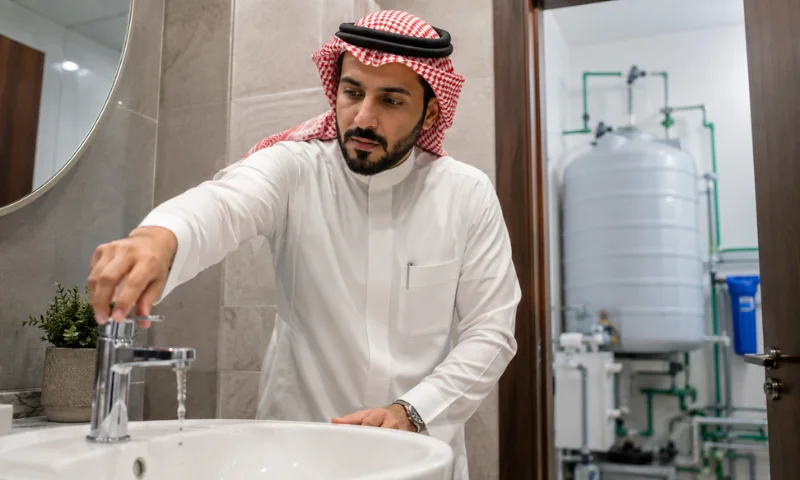
Saudi Arabia has approved updated water efficiency and conservation regulations that introduce fines of up to SR200,000. The rules will apply across urban, agricultural and industrial sectors from March 21, 2027. The Ministry of Environment, Water and Agriculture approved the revised executive regulations for monitoring compliance with water-efficiency standards. They give the National Water Efficiency and Conservation Center authority to investigate violations, address breaches and enforce the rules. Saudi Arabia’s official gazette, Umm Al-Qura, published the regulations this week. The rules cover homes, commercial properties, construction sites, public facilities, landscaping and other urban water users. Penalties rise for inefficient fixtures Under the new schedule, using sanitary fixtures that fail to meet water-efficiency standards will carry a SR1,000 fine for a first offence. The fine rises to SR2,000 for a second offence and SR10,000 for a third. The rules cover products such as faucets, mixers, showers, bidets and flush tanks. Authorities will also penalise anyone who tampers with or removes water-saving components from sanitary fixtures. Read More: From Iran to the US: 10 Places Running Out of Water That violation carries a SR500 fine for a first offence. A second offence costs SR1,000, while a third can bring a SR2,000 fine. The regulations also target avoidable water loss from underground and rooftop storage tanks. Leaks caused by cracks, inadequate insulation, malfunction or the absence of a float valve can trigger a SR5,000 first-offence fine. A repeat violation will cost SR10,000. A third offence can bring a SR50,000 penalty. Drinking water misuse can cost SR200,000 The steepest urban penalties apply when consumers misuse potable water despite having access to suitable alternatives. These alternatives can include treated wastewater, a treated-water network or a licensed well. The first such violation carries a SR25,000 fine. A second or third offence can result in a SR200,000 penalty. The wider regulations also cover failures involving greywater treatment systems and inefficient irrigation. They also address leaks in irrigation or internal networks and missing water-conservation awareness material at public facilities. Saudi pushes broader conservation drive The tougher enforcement comes as Saudi Arabia expands its water-efficiency programmes. The National Center for Water Efficiency and Rationalization began operations in 2023. Its CEO, Fahad Al-Dosari, said in July that government-sector conservation efforts had generated savings exceeding SR300 million since then. Residential-sector savings reached nearly SR200 million. Daily water savings reached about 158,000 cubic metres in the first half of 2026. That compares with about 25,000 cubic metres per day in 2023. Read More: Saudi Arabia Stocks 2.2 Million Bottles of Zamzam Water for Ramadan Al-Dosari also said around 80% of leak cases detected by the center involved ground tanks, float systems and hidden meter-to-tank connections. The figure helps explain the new focus on preventable storage-tank leaks. The center has also expanded conservation work into agriculture and industry. Saudi Arabia is developing efficiency measures for irrigation and other high-consumption activities. The new rules form part of a broader effort to curb unnecessary consumption and improve water efficiency across the kingdom.
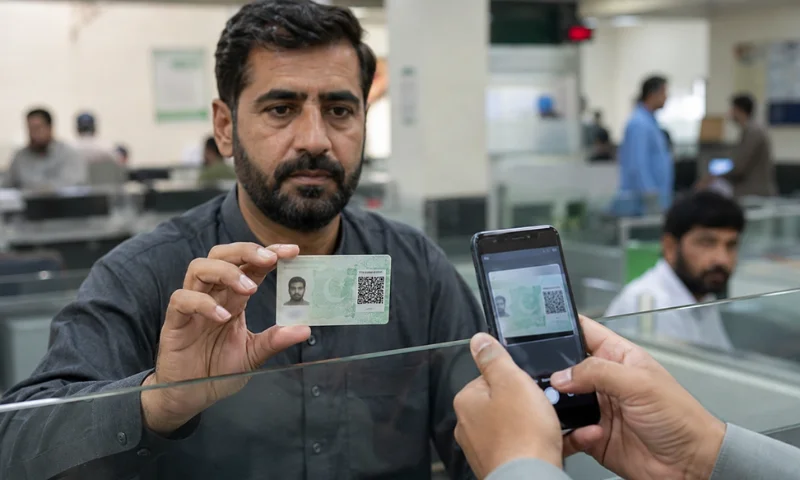
Pakistan Gets New Chipless CNIC With Smartphone Verification
NADRA has started phased issuance of a new chipless National Identity Card in Pakistan, replacing the standard CNIC with a locally manufactured card carrying a secure QR code. The National Database and Registration Authority launched the new format on August 14, 2026. NADRA says the change will make digital identity verification easier while reducing reliance on imported microchips. The National Security Printing Company in Karachi manufactures the card under NADRA’s technical and security requirements. The federal government approved the new format on February 23, 2026, after changes to identity card rules allowed QR-based verification. QR code replaces imported microchip The biggest change is the replacement of the microchip with a secure, machine-readable QR code. Citizens and authorised institutions can verify it through a smartphone using NADRA’s Pak Identity, or PakID, application. NADRA says the QR code contains relevant cardholder information along with the holder’s photograph. This will allow organisations to capture names, addresses and other required details directly into computerised systems. The authority expects the system to reduce manual data-entry errors. The card will also show the family number. Special symbols will identify persons with disabilities, senior citizens, organ donors and citizens of the State of Azad Jammu and Kashmir. Names and addresses will appear in both Urdu and English. NADRA has also updated visible and covert security features to meet current requirements and match local manufacturing capabilities. Why NADRA is moving away from chips Pakistan introduced the chip-based Smart National Identity Card around 14 years ago. However, NADRA says its chip functions could not work as intended because chip readers and supporting infrastructure were not widely available. The QR-based system aims to remove that barrier. An ordinary smartphone or suitable software linked to a camera can perform verification without a specialised chip reader. Telecom companies, banks, hospitals, Pakistan Railways, police and other authorised bodies will receive software capable of reading and verifying the new QR code. “The new card is being introduced in phases,” NADRA said in its official announcement. Rollout expands to NICOP and other cards in 2027 In the first phase, which began on August 14, the QR-enabled polycarbonate card will replace only the standard National Identity Card. From January 2027, NADRA plans to issue the format across all national identity card categories. These will include the National Identity Card for Overseas Pakistanis, or NICOP, and Juvenile Cards. The Pakistan Origin Card will move to the chipless QR-based format in the final phase. NADRA has not announced a date for that stage. People who already hold CNICs, Smart CNICs, NICOPs or other identity cards do not need to replace them immediately. NADRA says all existing identity cards will remain valid until their respective expiry dates. NADRA’s website now separately lists the CNIC with QR-code as a newer version designed to allow faster verification and authentication of cardholder data.

Pakistan Could Get the New Kia Picanto Sooner Than Expected
Kia is reportedly preparing to bring a newer Picanto to Pakistan next month after ending the outgoing hatchback’s six-year local run. Automotive expert Suneel Munj reports that Lucky Motor Corporation is preparing to introduce the latest Picanto in the Pakistani market. However, Lucky Motor has not officially confirmed the plan or announced a launch date. New Picanto launch reportedly under consideration The report comes only days after the company ended sales of the existing 1,000cc Picanto. The hatchback has disappeared from Kia Pakistan’s current showroom lineup, while new bookings have reportedly closed permanently. Kia Pakistan’s website currently lists models including the Sportage L, Stonic, Sorento, Carnival, EV5 and EV9, but not the Picanto. Read More: Kia Pakistan Announces Massive Rs1 Million Discount on Sportage Kia introduced the Picanto in Pakistan in September 2019 as a locally assembled entry in the 1,000cc hatchback segment. The model remained on sale for nearly six years before Lucky Motor ended its production and sales. Pakistan received the second-generation TA Picanto, even though Kia had already introduced the third-generation car internationally. That gap became more noticeable as Kia continued updating the Picanto in overseas markets. Picanto exits Pakistan after six years PakWheels reported on August 7 that Lucky Motor had discontinued the model and closed new bookings. It also said the Picanto had competed with established hatchbacks such as the Suzuki Cultus and Wagon R. Reports about its exit pointed to slow sales, rising prices, resale concerns and relatively expensive spare parts. However, Lucky Motor has not publicly detailed the reasons behind the discontinuation. Read More: Kia Pakistan Ends Fuel Confusion, Says Skip High-Octane and Save Money Kia’s latest international Picanto uses the company’s newer Opposites United design language and carries a much sharper exterior than Pakistan’s outgoing model. The redesigned front includes a wider grille, updated bumper treatment and a more modern lighting signature. Depending on the market and trim, the current Picanto can also offer an 8-inch touchscreen, Apple CarPlay, Android Auto and a 4.2-inch driver display. Higher trims add features such as LED lighting and additional driver-assistance systems. Kia offers 1.0-litre and 1.2-litre petrol powertrains in some international markets, with manual and automatic options. These overseas specifications do not confirm what Pakistan will receive. Price, specs and assembly status still unknown For Pakistani buyers, the biggest questions remain unanswered. Lucky Motor has not disclosed the engine, variants, features, price or whether it plans local assembly. The company has also not said whether it would launch the same specification sold in markets such as the United Kingdom or a Pakistan-specific version. Munj’s report suggests the Picanto nameplate may continue in Pakistan despite the retirement of the older model. If the reported timeline holds, more details could emerge within the coming weeks. Until Lucky Motor makes an official announcement, the launch remains unconfirmed. Still, the old model’s removal and fresh replacement reports have raised expectations of a quick return for Kia’s smallest hatchback.
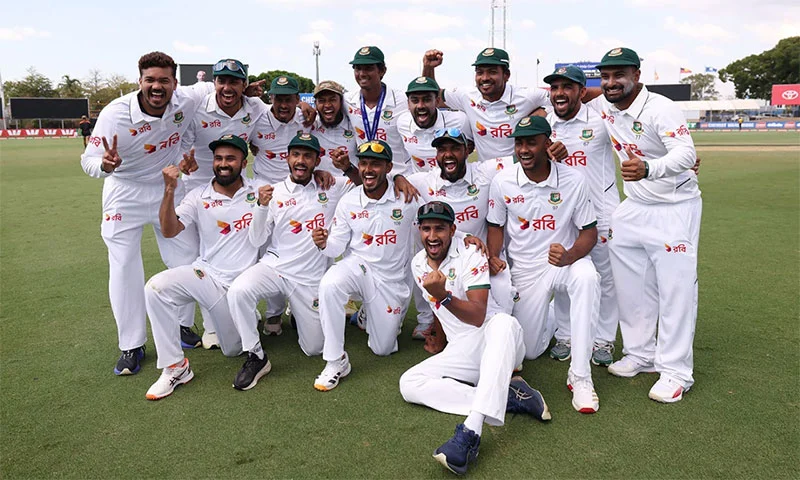
Bangladesh Stun Australia to Register First Test Win Down Under
Bangladesh produced one of the biggest upsets in Test cricket history on Sunday, crushing Australia by nine wickets to claim their first Test victory on Australian soil. The visitors chased 57 for victory after dismissing Australia for 284 on day four at Marrara Stadium. Mominul Haque sealed the historic win by cutting Beau Webster to the backward-point boundary. He finished unbeaten on 30, while Shadman Islam made 25 not out. Bangladesh reached 57-1 after losing first-innings centurion Tanzid Hasan for a duck to Josh Hazlewood. Read More: Starc Becomes Most Successful Left-Arm Bowler in Test History The result completed a remarkable turnaround for Bangladesh. Before the Test, a Cricket Australia XI had inflicted a heavy warm-up defeat on them, with Bangladesh collapsing for 54 in one innings. Few expected them to challenge a full-strength Australian side in Darwin. Mehidy Hasan Miraz Destroys Australia Australia resumed Sunday on 161-4 with Cameron Green and Alex Carey carrying their hopes. However, Mehidy Hasan Miraz quickly shifted the match firmly towards Bangladesh. Carey survived nervously early on and edged Hasan Mahmud through the vacant slip region twice. His luck ended on 30 when Mehidy found his outside edge and Litton Das completed the catch. Mehidy then bowled Webster for five. Captain Pat Cummins followed after edging Mehidy to short leg, where Shadman took the chance. Australia remained under severe pressure despite Green’s resistance. Read More: Afghanistan Reach 2027 World Cup Crushing Ireland by 92 Runs Green and Mitchell Starc finally pushed Australia beyond Bangladesh’s first-innings total. Starc made 18 before falling, while Green continued towards his third Test hundred. He eventually reached 104 after nearly five hours at the crease. Hasan Mahmud ended Green’s resistance when a delivery stayed low and crashed into his stumps. Mehidy then trapped Nathan Lyon lbw to complete figures of 5-66 and dismiss Australia for 284. Hasan finished with nine wickets in the match and earned Player of the Match honours. Tanzid Century Sets Up Famous Bangladesh Win Bangladesh had controlled the Test since bowling Australia out for just 198 on the opening day. The visitors then piled up 426 from 138 overs in difficult Darwin heat and humidity. Opener Tanzid Hasan led the innings with his maiden Test century, scoring 101. The lengthy innings also forced Australia’s celebrated bowling attack to spend extended time in the field. Bangladesh’s bowlers maintained that advantage through Australia’s second innings. They struck regularly whenever the hosts threatened to build a partnership. Read More: Pakistan Set Unwanted Away Test Record After West Indies Loss The nine-wicket result gave Bangladesh only their second Test victory over Australia. Their previous success came by 20 runs in Dhaka in 2017. More importantly, Sunday’s result delivered their first Test win in Australia. Australia captain Pat Cummins admitted after the defeat that the home side’s batting was “not quite functioning as we would like”. Bangladesh now carry a 1-0 series lead into the second Test, which begins in Mackay on August 22.
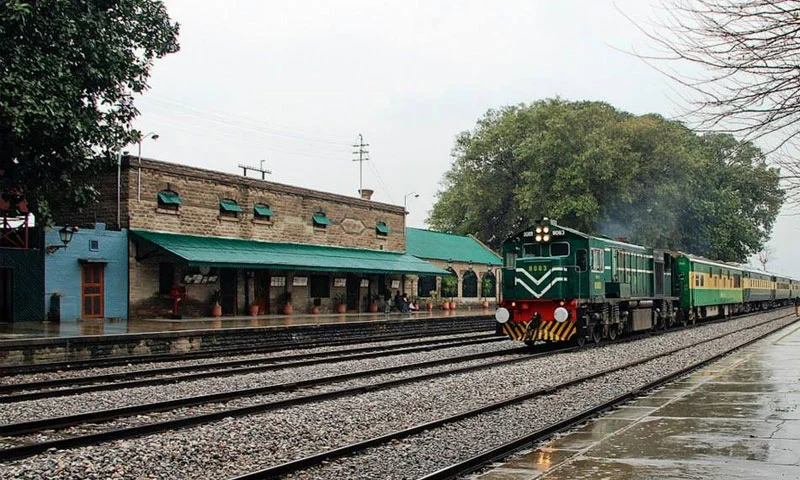
Pakistan Railways Sets October 30 Deadline for ML-1 Review
Pakistan Railways Chairman Syed Mazhar Ali Shah has directed officials to complete the review phase of the Main Line-1 project by October 30, 2026, as the government moves to advance the long-delayed railway modernisation programme. Shah issued the instructions while chairing a high-level meeting at Pakistan Railways Headquarters. International design consultants, review consultants and senior railway officials also attended. The meeting examined the proposed upgrade of the Karachi-Rohri section and reviewed preparation, progress and future steps. Read More: Pakistan Railways Ordered to Pay Rs50,000 to Delayed Passenger The chairman also ordered continuous monitoring of the project. Officials will now conduct weekly progress reviews to address outstanding technical and procedural matters. Pakistan Railways also decided to begin the second phase of market consultation on September 8, 2026. The process will involve detailed discussions with market experts and relevant stakeholders on project preparation, technical issues and implementation options. Karachi-Rohri Section Takes Centre Stage Pakistan Railways plans to use market proposals, international experience and expert advice to make ML-1 more modern, effective and commercially viable. Officials also agreed to maintain merit, transparency and competitiveness throughout project preparation and implementation. The Karachi-Rohri corridor stretches about 480 kilometres and forms a critical part of Pakistan’s main railway network. Earlier market engagement outlined plans to renew tracks, strengthen foundations, modernise signalling and telecommunications, and rehabilitate bridges and civil structures. Pakistan Railways expects the upgraded section to support train speeds of up to 160 kilometres per hour. The improvements should also increase freight capacity, cut travel times and improve service reliability. Read More: India’s Railway Theft Case. The Most Stolen Item Will Surprise You The first market engagement phase began in March. Development partners, contractors, consultants and technology providers took part in discussions on the project’s scope and procurement approach. Hanif Abbasi Calls ML-1 Key to Railway Modernisation Federal Minister for Railways Muhammad Hanif Abbasi received a briefing after the meeting and expressed satisfaction with the progress. “ML-1 is the foundation for the development and modernization of Pakistan Railways and for meeting future requirements,” Abbasi said. He said the upgrade would significantly improve train speeds, passenger facilities and the overall performance of Pakistan Railways. The minister added that officials would incorporate the best proposals and expert opinions into the project. Read More: Meet the Volunteers Keeping a 100-Year-Old Swiss Railway Alive Abbasi also stressed the importance of merit, transparency and competitiveness. He said there would be no compromise on these principles during the project’s development. The minister said Prime Minister Shehbaz Sharif was taking a keen interest in ML-1 and had directed officials to complete it within the stipulated timeframe. APP reported that the prime minister was also monitoring progress on the project. Abbasi expressed optimism that the flagship project could move towards formal launch this year as the review and consultation processes advance.
