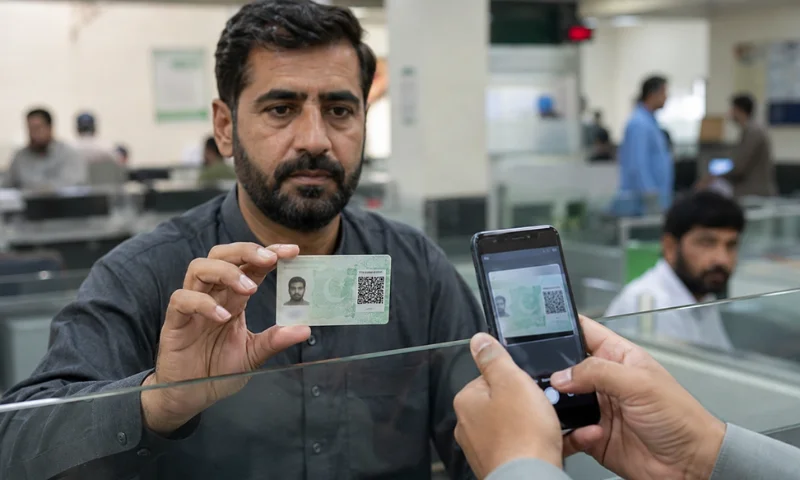
NADRA has started phased issuance of a new chipless National Identity Card in Pakistan, replacing the standard CNIC with a locally manufactured card carrying a secure QR code.
The National Database and Registration Authority launched the new format on August 14, 2026. NADRA says the change will make digital identity verification easier while reducing reliance on imported microchips.
The National Security Printing Company in Karachi manufactures the card under NADRA’s technical and security requirements. The federal government approved the new format on February 23, 2026, after changes to identity card rules allowed QR-based verification.
QR code replaces imported microchip
The biggest change is the replacement of the microchip with a secure, machine-readable QR code. Citizens and authorised institutions can verify it through a smartphone using NADRA’s Pak Identity, or PakID, application.
NADRA says the QR code contains relevant cardholder information along with the holder’s photograph. This will allow organisations to capture names, addresses and other required details directly into computerised systems. The authority expects the system to reduce manual data-entry errors.
The card will also show the family number. Special symbols will identify persons with disabilities, senior citizens, organ donors and citizens of the State of Azad Jammu and Kashmir.
Names and addresses will appear in both Urdu and English. NADRA has also updated visible and covert security features to meet current requirements and match local manufacturing capabilities.
Why NADRA is moving away from chips
Pakistan introduced the chip-based Smart National Identity Card around 14 years ago. However, NADRA says its chip functions could not work as intended because chip readers and supporting infrastructure were not widely available.
The QR-based system aims to remove that barrier. An ordinary smartphone or suitable software linked to a camera can perform verification without a specialised chip reader.
Telecom companies, banks, hospitals, Pakistan Railways, police and other authorised bodies will receive software capable of reading and verifying the new QR code.
“The new card is being introduced in phases,” NADRA said in its official announcement.
Rollout expands to NICOP and other cards in 2027
In the first phase, which began on August 14, the QR-enabled polycarbonate card will replace only the standard National Identity Card.
From January 2027, NADRA plans to issue the format across all national identity card categories. These will include the National Identity Card for Overseas Pakistanis, or NICOP, and Juvenile Cards.
The Pakistan Origin Card will move to the chipless QR-based format in the final phase. NADRA has not announced a date for that stage.
People who already hold CNICs, Smart CNICs, NICOPs or other identity cards do not need to replace them immediately. NADRA says all existing identity cards will remain valid until their respective expiry dates.
NADRA’s website now separately lists the CNIC with QR-code as a newer version designed to allow faster verification and authentication of cardholder data.