

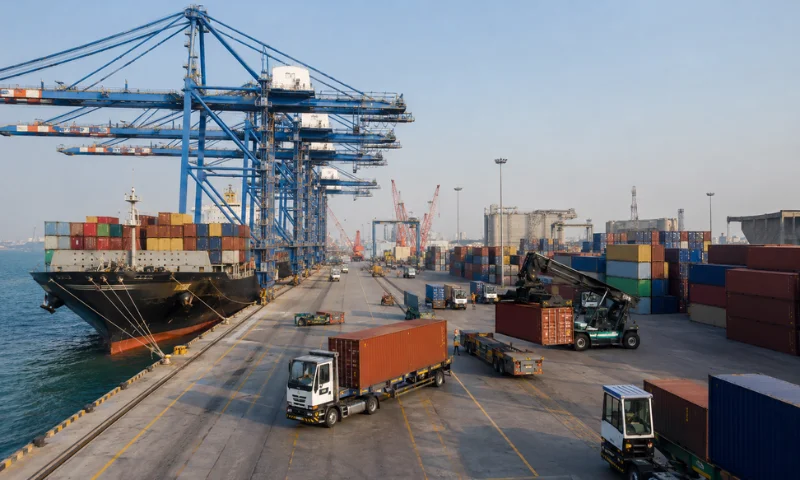
Hutchison Ports Pakistan has announced a $76 million investment programme for 2026 and 2027 to modernise and electrify operations at its deep-water container terminal in Karachi. The programme will add two electric remote-controlled quay cranes, 17 electric remote-controlled Rubber Tyre Gantry Cranes, 70 e-trucks and 50 trailers. The terminal has already received 20 e-trucks, 10 trailers, a reach stacker and an empty container handler this year. Hutchison Ports Pakistan operates the country’s first deep-water container terminal. Its facility can accommodate super post-Panamax vessels and sits at the Keamari Groyne basin. Investment Targets Faster, Greener Port Operations The new equipment forms part of Hutchison’s wider modernisation and sustainability strategy. The company expects its cumulative investment at Hutchison Ports Pakistan to exceed $690 million by the end of 2026. The terminal already uses remote-controlled quay cranes and advanced container-handling technology. Hutchison previously became the first operator in Pakistan to introduce fully remote-controlled quay cranes. It also began introducing electric trucks into Karachi Port operations in 2025. The move forms part of Hutchison Ports Group’s wider target of achieving net-zero emissions by 2050. “Our continuous investment reflects our unwavering commitment to Pakistan’s economic growth and maritime leadership,” said CS Kim, CEO of Hutchison Ports Pakistan. “Working hand-in-hand with MOMA, KPT, and the Government, we are fully focused on turning the Prime Minister’s vision to establish Pakistan as a premier transshipment hub into a reality. By deploying cutting-edge technology, we are enabling faster turnaround times, optimizing cargo clearance, and unlocking long-term economic value for the nation.” Hutchison Seeks Additional Land for New Facility Hutchison has also submitted a proposal to the government for additional land. The company wants to develop a Centralized Examination Area as part of its broader terminal upgrade programme. The facility aims to improve container examination and cargo clearance processes. Hutchison is also advancing discussions over a wider investment framework proposed to Prime Minister Shehbaz Sharif last year. The government and Hutchison have previously discussed upgrades to both South Asia Pakistan Terminal and Karachi International Container Terminal. Those plans include automation, electrification, advanced equipment and better road connectivity. In 2025, Hutchison presented a separate $1 billion investment plan for its Pakistan operations. The proposal focused on efficiency, logistics links and automation. Pakistan Pushes Regional Transshipment Ambitions Pakistan wants to strengthen Karachi’s role as a regional logistics and transshipment hub connecting South Asia, Central Asia and the Middle East. Hutchison has also proposed a much larger expansion of its Karachi operations. The wider plan includes increased terminal capacity, warehousing and logistics infrastructure. However, regulatory and contractual issues have slowed parts of that proposal. The latest $76 million equipment programme gives Hutchison an immediate route to improve existing operations while broader negotiations continue. For Pakistan, the investment could support faster cargo movement, lower emissions and more efficient port operations. For Hutchison, it strengthens an established presence in Karachi. The company says it has already invested about $600 million in the terminal, while Karachi Port Trust has spent more than $350 million on reclamation and dredging.
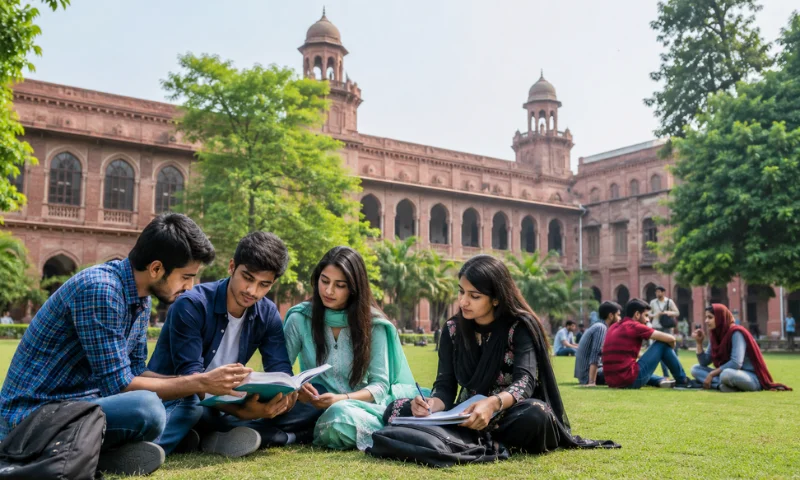
Punjab Workers’ Children Can Now Study Free at GCU Lahore
Government College University Lahore has announced 100% free education opportunities for eligible industrial and mine workers and their children through a partnership with the Punjab Workers Welfare Fund. The scheme offers 50 reserved seats across Intermediate and undergraduate programmes at GCU Lahore’s Main Campus and Kala Shah Kaku, or KSK, Campus. Applicants must meet both PWWF eligibility conditions and GCU’s admission requirements. The Punjab Workers Welfare Fund operates under the Labour and Human Resource Department and provides educational assistance and other welfare support to eligible workers. 20 Intermediate Seats Available GCU has reserved 20 seats for Intermediate programmes. The Main Campus will offer five seats, while the KSK Campus will offer 15. The available streams include Pre-Medical, Pre-Engineering, ICS or General Science, I.Com and Arts or Humanities. Each programme has one reserved seat at the Main Campus and three seats at KSK. The scheme aims to give workers’ families access to higher-quality education without the financial pressure of regular tuition costs. Students cannot secure admission through the reserved quota solely on the basis of their worker status. They must also satisfy GCU Lahore’s academic criteria, merit requirements and other admission conditions for their chosen programme. GCU Reserves 30 Seats for BS Programmes The university has allocated another 30 seats across 15 undergraduate programmes, with two seats available in each selected discipline. At the Main Campus, programmes include BS Botany, BS Gender and Climate Change, BS Persian, BS Philosophy, BS Punjabi and BS Turkish Language and Literature. KSK Campus options include BS Art History, BS Disaster Management, BS Geography, BS Global Studies and B.Ed. Four-Year. Students can also apply for reserved seats in BS History, BS Islamic Studies, BS Physical Education and BS Remote Sensing and GIS at KSK. The programme significantly expands the choices available to eligible workers’ children, covering science, humanities, education, climate studies and emerging geographic technologies. Who Can Apply and How? The opportunity targets eligible industrial workers, mine workers and their children. Applicants must fulfil conditions set by the Punjab Workers Welfare Fund. The worker must meet relevant employment and service requirements. Registration with institutions such as PESSI or EOBI may also apply, depending on the applicant’s category. Applicants need educational records, identity documents and proof related to the worker’s employment and registration. Candidates must obtain the Nomination-cum-Admission Form through the Punjab Workers Welfare Fund and submit it with the required supporting documents. The announced deadline for applications is August 28, 2026. Applicants should check their worker eligibility and GCU programme requirements before submitting the form. The initiative gives eligible families access to one of Punjab’s major public universities while reducing the financial burden of Intermediate and undergraduate education.
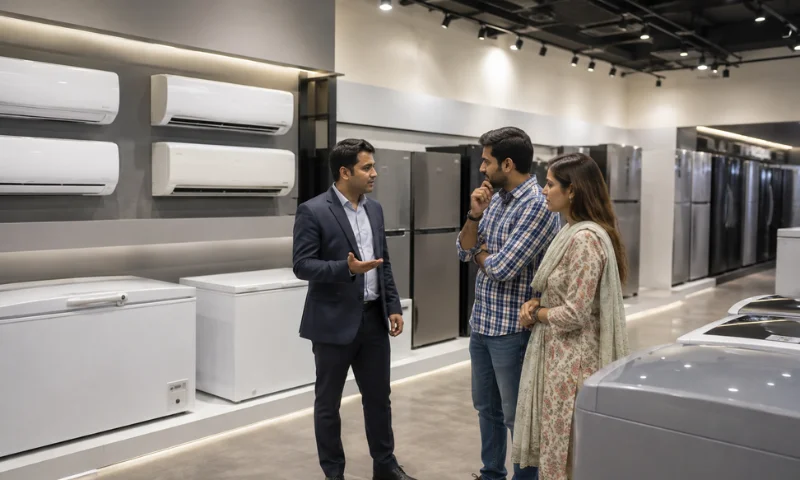
Waves Appliances Plans to Raise Rs1.5 Billion for Expansion
Waves Home Appliances Limited plans to raise about Rs1.5 billion through a rights issue. The company wants to expand its air-conditioner business, strengthen working capital and reduce expensive debt. Waves will issue 150.02 million new ordinary shares at Rs10 each. Existing shareholders will receive 56 right shares for every 100 ordinary shares they hold. The issue represents 56% of the company’s existing share capital. The company has appointed Bank Makramah Limited as banker to the issue. “Bank Makramah Limited (BML) has been appointed, in the right issue, as the banker to the Issue with whom an account is opened and maintained by the issuer for keeping the issue amount,” the document said. Waves to Use Rs800 Million for Working Capital Waves plans to spend up to Rs800.16 million, or 53.3% of the proceeds, on working capital. The funds will support raw material purchases, production and inventory. They will also help Waves reduce its dependence on bank borrowing. “The principal purpose of the rights issue is to strengthen the company’s financial position and support its medium-term operational and growth objectives,” the company said. It added: “The proceeds will be utilised to broaden the company’s product portfolio, fund its working capital requirements, and reduce the company’s existing high-cost liabilities, including loan payable to the holding company.” Waves recently returned to the air-conditioner market. It now wants to increase its presence in that segment. The company will also continue investing in refrigerators and deep freezers. This strategy aims to broaden its product portfolio and improve sales. Rs700 Million to Go Towards Loan Repayment Waves will use the remaining Rs700 million, or 46.7% of the proceeds, to repay part of a loan owed to its holding company. The company expects the repayment to lower financing costs and strengthen its balance sheet. It also hopes the move will improve cash flows for future operations. The rights shares will carry a price of Rs10 each. Waves said its board determined the price after considering the company’s breakup value and future growth potential. The funding plan comes as the company prepares to increase manufacturing activity across several appliance categories. Production Target to More Than Double in FY2027 Waves currently has an installed manufacturing capacity of about 482,500 units per year. The company plans to increase production from 50,975 units in FY2026 to 110,000 units in FY2027. “Planned production is expected to increase from 50,975 units in FY2026 to 110,000 units in FY2027, primarily across deep freezers, refrigerators and air conditioners, while production of washing machines, microwaves and water heaters is also planned to resume,” Waves said. The company expects better working capital to improve raw material availability and increase factory utilisation. It also plans to restart production of washing machines, microwaves and water heaters. Waves Home Appliances, formerly Samin Textiles Limited, started operations as a public limited company in 1989. It now designs, manufactures, assembles, distributes and trades domestic appliances and light engineering products. The rights issue forms part of Waves’ wider plan to strengthen finances while expanding production and rebuilding its position in Pakistan’s home appliance market.

Man Finally Finds 10/10 Bench After Reviewing More Than 300
A British man who has spent seven years reviewing public benches has finally awarded his first perfect 10/10, after returning to a favourite bench on his wedding day. Sam Wilmot started the Instagram account Rate This Bench in 2019 after jokingly judging benches while walking with friends. Since then, he has reviewed more than 300 benches and attracted nearly 18,000 followers. His long search for perfection ended at St John The Baptist Church in Old Sodbury, South Gloucestershire. The bench overlooks countryside stretching towards Bristol and Wales. Wedding Day Turns a 9/10 Into Perfection Wilmot had previously reviewed the same bench and awarded it 9/10. In fact, the Old Sodbury bench appeared among his favourite early reviews. Its significance grew after Wilmot and his wife, Sophie, chose the church for their wedding. “The first time I reviewed it, I gave it a 9/10. But when we first discussed getting married, I mentioned that I would like this church to be involved purely on the basis of this bench,” Wilmot said. Read More: Becca Bloom’s Plane Shopping Viral Video Sparks Huge Reaction After the ceremony, the newlyweds returned to the bench in their wedding clothes for photographs. “On the wedding day we came back in our suit and dress, and I reviewed it again and it was the very first 10.” Wilmot said the emotion surrounding the day made the bench impossible to beat. “People are always asking why there’s never been a 10,” he said. “I’m never going to sit on a bench again that’s going to have that feeling.” Seven Years of Reviewing Benches Wilmot said the account began almost by accident. “I was jokingly judging benches whilst out on a walk with friends, and one of them said ‘that’d make a good Instagram account’, so I just went for it,” he said. Read More: Social Media Search Helps Bring Wasim Akram’s Puppy Home Since 2019, his reviews have covered benches across England, Wales and Dubai. Followers also send him photographs and personal stories explaining why particular benches matter to them. Wilmot said those emotional connections are among the reasons he plans to continue the account despite finally finding his 10/10. Sophie has played an important role in the project as the account’s photographer since the couple met. “Taking the photos of all the benches is something I feel very grateful for, not only to help, but mainly be a part of the journey,” she said. She described their wedding-day return simply: “The best view, on the best day, sat on the best bench.” What Makes a Perfect Bench? Wilmot uses a surprisingly detailed scoring system. “They need to have armrests and a backrest, there needs to be curvature to the seat, I like a bench to be made out of wood,” he explained. He also awards points for a solid base, the surrounding view and location, and a dedication or plaque. The final point comes from what he calls the “wow factor”. City-centre benches often perform badly because of dividing barriers, awkward armrests and designs that limit comfort. “It qualifies as a bench, but it’s not really a bench,” Wilmot said. After hundreds of reviews, the Old Sodbury seat finally delivered something no technical scoring system could fully measure: a personal memory linked to the day he married the woman he loves.
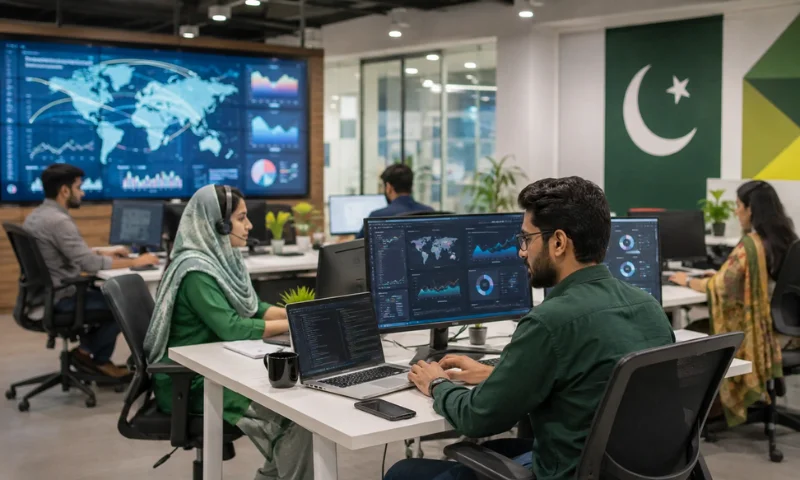
Pakistan Earns $417 Million From IT Exports in Just One Month
Pakistan’s information technology and IT-enabled services exports rose 18% year-on-year to $417 million in July 2026, giving the country’s digital sector a strong start to the new fiscal year. The latest figures show that technology services remained Pakistan’s largest services export category. IT and digital services generated about 45% of the country’s total services export earnings during July. The $417 million figure compares with around $354 million in July 2025. Pakistan Software Export Board data put the annual increase at 17.8%. The category covers telecommunications, computer and information services. It also captures earnings generated through software services, IT-enabled businesses and parts of Pakistan’s expanding freelance economy. Total services exports reach $927 million Pakistan’s overall services exports climbed to $927 million in July, up about 27% from $728 million in the same month last year. On a monthly basis, however, services exports slipped from $942 million in June, a decline of roughly 2%. Read More: Pakistan IT Exports Hit Record $4.6 Billion in FY26 as AI and Robotics Drive Growth Despite the strong export performance, Pakistan continued to run a deficit in services trade. Services imports reached about $1.16 billion in July, leaving a deficit of approximately $228 million. The wider balance of payments also showed pressure from imports. Pakistan recorded a current account deficit of $328 million in July, although stronger remittances helped offset much of the trade and income gap. Travel and business services record strong growth Several other services categories also posted sharp increases during the month. Other business services climbed 46% year-on-year to $218 million. Travel exports recorded one of the strongest increases, jumping 138% to $112 million. Transport services rose 17% to $75 million, while government goods and services exports increased 5% to $68 million. Read More: SBP Eases Forex Rules, Lets Freelancers Retain Up to $5,000 Monthly to Boost IT Exports The broader “other services” category moved in the opposite direction. Its exports declined 24% year-on-year to around $37 million. Technology nevertheless remained far ahead of the other major categories, reflecting a longer-term shift in Pakistan’s export structure. IT sector carries momentum into new fiscal year Pakistan’s IT sector entered FY2026-27 after a strong previous year. Technology and digital services exports reached about $4.6 billion in FY2025-26, compared with $3.81 billion a year earlier. Total services exports crossed $10 billion during FY2025-26, with technology contributing nearly 46% of the total. The Pakistan Economic Survey had already highlighted IT as the main driver of services export growth during the first nine months of FY2025-26. IT services accounted for 46.1% of services exports during that period. The latest July figures suggest that momentum has continued into the new fiscal year. With $417 million earned in a single month, technology remains one of Pakistan’s most important sources of services export revenue and foreign exchange.
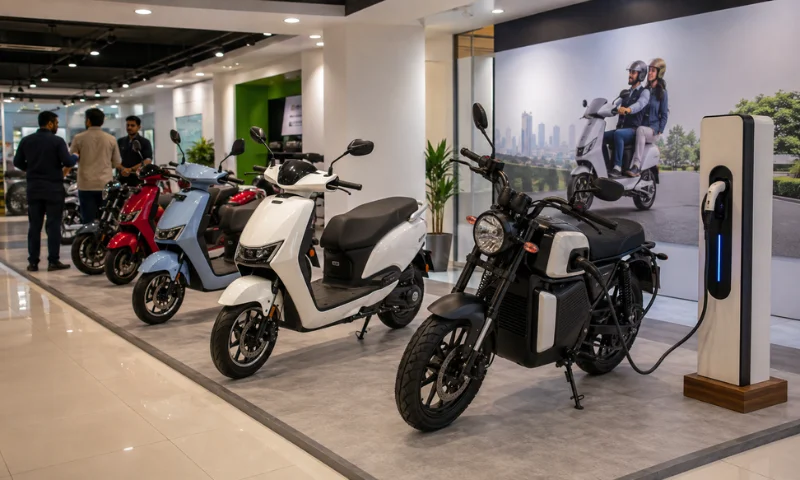
Inverex GO Launches 8 Electric Bikes and Scooters in Pakistan
Inverex GO has entered Pakistan’s expanding electric two-wheeler market with eight model families, moving the renewable-energy brand deeper into electric mobility. Its lineup covers four scooters and four motorcycle families. Charlie, Roar and Volterra also come in Lite, Pro and Swap variants. Jesper Jesper offers an 85 km claimed range, a 65 km/h top speed and a 72V 30Ah battery. Charging takes five to six hours at up to 10A. Inverex claims a 15-year battery life. Price: Rs 355,000. Vexa Vexa has a 2,000W motor, 72V 30Ah battery and 85 km claimed range. Charging takes five to six hours. Its battery warranty covers three years or 50,000 km, while claimed battery life stands at 15 years. Price: Rs 285,000. Rogue Rogue uses a 2,000W motor and 72V 30Ah battery. It offers an 85 km claimed range and five to six hour charging. Battery warranty is three years or 50,000 km. Price: Rs 335,000. Read More: New EV Brand Ofero Enters Pakistan With Three Electric Scooters E-Lara E-Lara gets a 1,000W motor, 72V 30Ah battery and 85 km claimed range. Charging takes six hours at 5A. Battery warranty is 1.5 years. Price: TBA. Charlie Lite Charlie Lite offers 100 km range and a 60 km/h top speed. Charging takes two to three hours at 10A. Battery warranty covers three years or 60,000 km. Starting price: Rs 449,000. Charlie Pro Charlie Pro raises motor output to 2,000W and range to 130 km. It reaches 70 km/h and supports 15A fast charging in two to three hours. Battery warranty is three years or 60,000 km. Charlie Swap Charlie Swap uses a 3,000W motor and offers a claimed 150 km range. Top speed reaches 90 km/h, while its battery swap takes only 30 seconds. Fire Bird Lite Fire Bird Lite uses a 3,000W motor and 72V 32Ah battery. It offers 100 km claimed range, a 95 km/h top speed and two-hour charging at 15A. Starting price: Rs 485,000. Fire Bird Pro Fire Bird Pro retains the 3,000W motor but adds dual 72V 32Ah batteries. Range increases to 200 km. Charging takes two hours at 15A, while top speed remains 95 km/h. Roar Lite Roar Lite combines a 1,500W motor with a 60V 30Ah battery. It offers 100 km range and reaches 60 km/h. Charging takes two to three hours at 10A. Starting price: Rs 435,000. Roar Pro Roar Pro uses a 2,000W motor and 72V 40Ah battery. It delivers 130 km claimed range and a 70 km/h top speed. It supports 15A charging in two to three hours. Roar Swap Roar Swap gets a 3,000W motor and 72V 54Ah battery. It offers 150 km claimed range, reaches 90 km/h and supports a 30-second battery swap. Volterra Lite Volterra Lite uses a 1,500W motor and 60V 30Ah battery. It offers 100 km range and a 60 km/h top speed. Charging takes two to three hours at 10A. Starting price: Rs 389,000. Volterra Pro Volterra Pro offers a 2,000W motor, 72V 40Ah battery and 130 km claimed range. It reaches 70 km/h and supports 15A charging in two to three hours. Volterra Swap Volterra Swap combines a 3,000W motor with a 72V 54Ah battery. It offers a claimed 150 km range, 90 km/h top speed and a 30-second battery swap. Inverex GO says selected motorcycles use semi-solid lithium technology along with portable or swappable batteries. The expanded range gives Pakistani riders more choices across commuter and higher-performance electric two-wheelers.
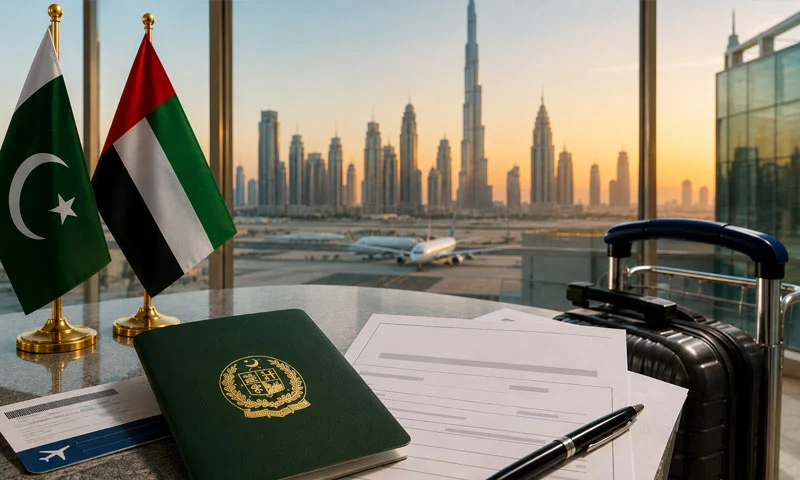
Kaff Exclusive: ‘Good News Within a Month’: Pakistan, UAE Move Closer to Manpower Agreement
Pakistan and the United Arab Emirates are moving closer to manpower arrangements that could revive employment opportunities for Pakistani workers, with progress possible within weeks, according to Adnan Paracha, Vice Chairman of the Overseas Employment Promoters Association. Speaking on the Kaff Podcast with host Raja Kamran, he said the UAE had shared certain documentation requirements with Pakistan. Islamabad must meet those requirements before Pakistani workers can gain wider access to the UAE labour market. “I hope that within the coming month, Pakistan’s youth should receive some good news,” Paracha said. He said employment business from the UAE remained limited. However, he expects movement within the next month to six weeks if both governments complete the proposed arrangements. Pakistan’s interior minister was also taking an interest in the matter, he added. Paracha said workers from other countries had filled many UAE jobs during the past three years. At the same time, the flow of Pakistani manpower slowed sharply. He said the UAE now needed workers again. That could give Pakistan a chance to regain ground in one of its most important overseas employment markets. Paracha also rejected the view that UAE employment visa problems began after the Iran-US war. He said the difficulties had developed over nearly three years. Recent regional tensions alone could not explain the situation. UAE visa problems predate recent conflict Paracha said Pakistan’s manpower relationship with the UAE dates back to around 1975. Pakistani workers played a major role in the country’s construction and development during the 1980s and 1990s, he added. He estimated that 1.3 million to 1.4 million Pakistanis currently live and work in the UAE. The UAE also remains one of Pakistan’s biggest sources of remittances after Saudi Arabia. Paracha said monthly remittances from the UAE had at times approached $1 billion. Pakistan received around $1 billion from the UAE about a month before the interview, he added. Problems with visit visas became more visible after Covid-19, especially from 2022. Employment visas then started becoming increasingly difficult for Pakistanis from November 2023, according to Paracha. He linked the decline partly to changes in the UAE’s immigration and employment systems. Pakistan sent around 220,000 workers to the UAE in 2022, he said. The figure later fell to about 129,000 to 130,000. It then dropped further to around 60,000 to 70,000. “This difference has been continuing for the last three years. It is not because of the war,” he said. Paracha said the same pressure that existed before the recent conflict had simply continued. The decline has also affected white-collar workers, skilled professionals and educated Pakistanis. Many of them traditionally preferred the UAE as an employment destination. Paracha said around 90,000 educated and professional Pakistanis had once gone abroad each year. That number later fell to about 62,000. It has now dropped to around 40,000 to 45,000, he said. He argued that reduced access to major employment markets had contributed to the decline. Pakistan’s wider regional role The discussion also touched on Pakistan’s wider regional position. Host Raja Kamran referred to Pakistan’s defence cooperation with Saudi Arabia and Turkiye. He also noted Islamabad’s relations with Iran and other major powers. Paracha credited Pakistan’s armed forces and national leadership with maintaining strong ties with several countries. He specifically mentioned the United States, Iran and China. He said defence arrangements with Muslim countries could expand further. Paracha also expected more Gulf states to become part of such cooperation in the future. The conversation then returned to speculation about strains between Pakistan and the UAE. Paracha said the employment visa problem should not be treated as evidence that recent tensions had caused the issue. Visit visas, illegal agents and overstays Paracha said many young Pakistanis began travelling to the UAE on visit visas after employment visas became harder to obtain. After the pandemic, international demand for workers rose sharply. However, countries maintained different quotas and manpower policies for Pakistan, Bangladesh, Nepal and other labour-exporting states. Some Pakistanis found jobs after arriving in the UAE. They then paid the required fees and converted their status from visit visas to employment visas. Others fell victim to what Paracha called an “agent mafia”. He drew a clear distinction between illegal agents and licensed overseas employment promoters. Licensed promoters operate within the government’s formal system, he said. Illegal agents work outside it. According to Paracha, some agents sent unskilled Pakistanis to the UAE on short visit visas. Many workers did not fully understand the difference between visit and employment visas. Some travelled on one-month or two-month visas. Those who found jobs within that period could regularise their status. Those who failed faced several difficult options. They could return to Pakistan, overstay, abscond or become involved in begging or other activities. Paracha acknowledged that some Pakistanis became involved in such practices. However, he said social media gave disproportionate attention to negative cases. He argued that the majority who followed the law received far less attention. Paracha said the Pakistani government should have acted when the problem became visible in 2021 and 2022. He added that authorities could still take action against those responsible. Families spent heavily to send workers abroad Paracha said many workers therefore did not want to return empty-handed. The situation became worse when workers could no longer easily convert visit visas into employment visas. A person with a two-month visit visa had only 60 days to secure a job, he said. Some workers chose to overstay rather than return home. Once they became undocumented, financial pressure increased. Fear of the authorities also made them more vulnerable to illegal agents and other forms of exploitation. Paracha said he had repeatedly raised these problems on media platforms and with government institutions. When asked about deportations, he said Pakistan’s Interior Ministry would have the exact figures. He said deportations had increased during recent months. However, he argued that the reasons differed from those seen after Covid-19. The two periods should therefore be examined separately, he said. Overseas employment costs rise sharply Paracha also
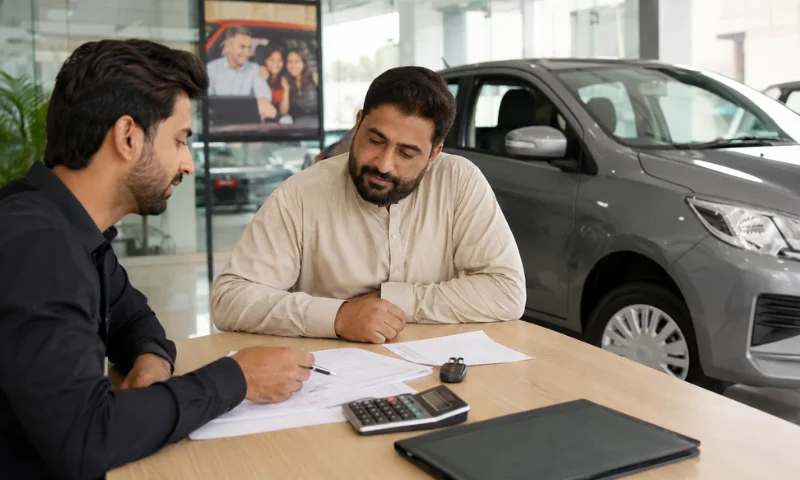
Pakistan Auto Financing Hits Record Rs 386 Billion
Auto financing in Pakistan climbed to a record Rs 386.29 billion in July 2026, extending a strong recovery in consumer borrowing as vehicle demand and bank lending continued to rise. Latest State Bank of Pakistan data showed auto financing increased 1.2% from Rs 381.69 billion in June, which had itself marked a record high. On a year-on-year basis, automobile financing rose nearly 40% from Rs 276.61 billion in July 2025. The increase comes as Pakistan’s auto market shows signs of stronger demand following a period of weak sales, high borrowing costs and economic pressure. Auto financing reaches new peak The Rs 386.29 billion figure marks the highest outstanding level of automobile financing recorded in Pakistan. Financing has risen steadily as borrowing conditions improve from the tighter monetary environment seen in previous years. However, financing costs remain relatively high, with the State Bank keeping its policy rate at 11.5% in July. The recovery has coincided with stronger vehicle sales. Pakistan’s car sales reached 17,216 units in July 2026, representing a 141% increase compared with the same month last year. Industry analysts linked the increase partly to easier leasing conditions and lower borrowing costs compared with previous years. Passenger car sales had already risen 39% during fiscal year 2025-26 to 155,631 units, according to industry data. Housing and consumer borrowing also rise Auto loans were not the only area showing higher household borrowing. Financing for house building reached about Rs 285.95 billion at the end of July. That represented an increase of 38.12% from a year earlier and a 7.06% rise from Rs 267.09 billion in June. Personal financing also grew. Outstanding loans for personal use reached Rs 298.19 billion, rising 13.51% year-on-year and 5.41% from the previous month. Read More: Tesla Hits 10 Million EVs as Global Auto Race Intensifies Overall consumer financing climbed to around Rs 1.19 trillion, up 30.46% compared with July last year. It also increased 4.05% on a monthly basis. Separate figures cited in industry reports showed credit-card financing reaching around Rs 212 billion, up roughly 30.5% from Rs 163 billion a year earlier. Private sector credit reaches Rs 10.9 trillion Outstanding credit to Pakistan’s private sector also expanded during July. SBP data showed private-sector loans reached approximately Rs 10.9 trillion, representing a 12.68% year-on-year increase. However, lending fell 2.32% compared with Rs 11.16 trillion in June. Loans to the manufacturing sector stood at Rs 5.79 trillion, up 8.14% from a year earlier. Agriculture, forestry and fishing credit jumped 37.73% to Rs 681.44 billion. Read More: Local Auto Parts Production Gets Major Boost in Pakistan The latest numbers suggest borrowing demand remains strong across several parts of the economy, despite interest rates remaining in double digits. For the auto industry, record financing alongside sharply higher vehicle sales points to a significant recovery in consumer demand after several difficult years for Pakistan’s car market.
