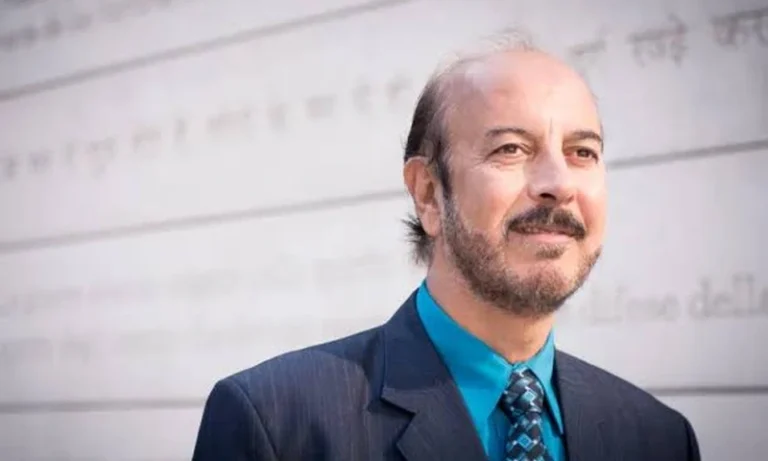

Pakistan and the United Arab Emirates are moving closer to manpower arrangements that could revive employment opportunities for Pakistani workers, with progress possible within weeks, according to Adnan Paracha, Vice Chairman of the Overseas Employment Promoters Association.
Speaking on the Kaff Podcast with host Raja Kamran, he said the UAE had shared certain documentation requirements with Pakistan. Islamabad must meet those requirements before Pakistani workers can gain wider access to the UAE labour market.
“I hope that within the coming month, Pakistan’s youth should receive some good news,” Paracha said.
He said employment business from the UAE remained limited. However, he expects movement within the next month to six weeks if both governments complete the proposed arrangements.
Pakistan’s interior minister was also taking an interest in the matter, he added.
Paracha said workers from other countries had filled many UAE jobs during the past three years. At the same time, the flow of Pakistani manpower slowed sharply.
He said the UAE now needed workers again. That could give Pakistan a chance to regain ground in one of its most important overseas employment markets.
Paracha also rejected the view that UAE employment visa problems began after the Iran-US war.
He said the difficulties had developed over nearly three years. Recent regional tensions alone could not explain the situation.
UAE visa problems predate recent conflict
Paracha said Pakistan’s manpower relationship with the UAE dates back to around 1975.
Pakistani workers played a major role in the country’s construction and development during the 1980s and 1990s, he added.
He estimated that 1.3 million to 1.4 million Pakistanis currently live and work in the UAE. The UAE also remains one of Pakistan’s biggest sources of remittances after Saudi Arabia.
Paracha said monthly remittances from the UAE had at times approached $1 billion. Pakistan received around $1 billion from the UAE about a month before the interview, he added.
Problems with visit visas became more visible after Covid-19, especially from 2022. Employment visas then started becoming increasingly difficult for Pakistanis from November 2023, according to Paracha.
He linked the decline partly to changes in the UAE’s immigration and employment systems. Pakistan sent around 220,000 workers to the UAE in 2022, he said.
The figure later fell to about 129,000 to 130,000. It then dropped further to around 60,000 to 70,000.
“This difference has been continuing for the last three years. It is not because of the war,” he said.
Paracha said the same pressure that existed before the recent conflict had simply continued. The decline has also affected white-collar workers, skilled professionals and educated Pakistanis. Many of them traditionally preferred the UAE as an employment destination.
Paracha said around 90,000 educated and professional Pakistanis had once gone abroad each year.
That number later fell to about 62,000. It has now dropped to around 40,000 to 45,000, he said.
He argued that reduced access to major employment markets had contributed to the decline.
Pakistan’s wider regional role
The discussion also touched on Pakistan’s wider regional position.
Host Raja Kamran referred to Pakistan’s defence cooperation with Saudi Arabia and Turkiye. He also noted Islamabad’s relations with Iran and other major powers.
Paracha credited Pakistan’s armed forces and national leadership with maintaining strong ties with several countries.
He specifically mentioned the United States, Iran and China.
He said defence arrangements with Muslim countries could expand further. Paracha also expected more Gulf states to become part of such cooperation in the future.
The conversation then returned to speculation about strains between Pakistan and the UAE. Paracha said the employment visa problem should not be treated as evidence that recent tensions had caused the issue.
Visit visas, illegal agents and overstays
Paracha said many young Pakistanis began travelling to the UAE on visit visas after employment visas became harder to obtain.
After the pandemic, international demand for workers rose sharply. However, countries maintained different quotas and manpower policies for Pakistan, Bangladesh, Nepal and other labour-exporting states. Some Pakistanis found jobs after arriving in the UAE. They then paid the required fees and converted their status from visit visas to employment visas.
Others fell victim to what Paracha called an “agent mafia”. He drew a clear distinction between illegal agents and licensed overseas employment promoters.
Licensed promoters operate within the government’s formal system, he said. Illegal agents work outside it.
According to Paracha, some agents sent unskilled Pakistanis to the UAE on short visit visas. Many workers did not fully understand the difference between visit and employment visas.
Some travelled on one-month or two-month visas. Those who found jobs within that period could regularise their status.
Those who failed faced several difficult options. They could return to Pakistan, overstay, abscond or become involved in begging or other activities.
Paracha acknowledged that some Pakistanis became involved in such practices. However, he said social media gave disproportionate attention to negative cases.
He argued that the majority who followed the law received far less attention. Paracha said the Pakistani government should have acted when the problem became visible in 2021 and 2022.
He added that authorities could still take action against those responsible.
Families spent heavily to send workers abroad
Paracha said many workers therefore did not want to return empty-handed. The situation became worse when workers could no longer easily convert visit visas into employment visas. A person with a two-month visit visa had only 60 days to secure a job, he said.
Some workers chose to overstay rather than return home. Once they became undocumented, financial pressure increased.
Fear of the authorities also made them more vulnerable to illegal agents and other forms of exploitation.
Paracha said he had repeatedly raised these problems on media platforms and with government institutions.
When asked about deportations, he said Pakistan’s Interior Ministry would have the exact figures. He said deportations had increased during recent months.
However, he argued that the reasons differed from those seen after Covid-19. The two periods should therefore be examined separately, he said.
Overseas employment costs rise sharply
Paracha also criticised weaknesses within Pakistan’s own overseas employment system. He said many institutions take part in the process.
They include departments linked to human resource development, health, education, finance and youth development. He alleged that corruption and extra charges had pushed costs much higher.
A process that once cost around Rs200,000 to Rs400,000 can now cost about Rs650,000 to Rs700,000, he said. He estimated that overall costs had risen by around 30 percent in the past two years.
“The overseas employment promoter has not taken Rs650,000 or Rs700,000. There is an entire system of corruption behind it,” he said.
Medical examinations were one of the areas that needed urgent reform, Paracha added. He said medical fees had increased from around Rs16,000 to Rs18,000 to about Rs40,000.
He questioned how an unemployed young person could afford that amount. Pakistan has around 20 medical centres authorised by different foreign countries, according to Paracha.
These centres conduct examinations for workers seeking jobs abroad. He called for stronger involvement from Pakistan’s Health Ministry.
Testing fees and skills spending
Paracha raised similar concerns about testing and certification. He said some tests had an actual fee of around Rs15,000 to Rs16,000.
Yet applicants were allegedly paying between Rs50,000 and Rs60,000 to complete the process. He said testing organisations linked to the Education Ministry lacked proper checks and balances.
“The poor are being crushed,” he said. Paracha also called for a third-party audit of government spending on youth skill development.
He said Prime Minister Shehbaz Sharif and the field marshal had shown strong interest in youth development. However, he argued that authorities must tackle corruption at lower administrative levels.
Without reform, the burden on young workers would continue to grow, he warned. Paracha also questioned proposals for new soft-skills requirements.
He said Pakistan already has protector offices, briefing offices and officials who prepare workers before departure. The government should make those institutions effective first, he argued.
He questioned the need for new five, seven, eight or 10-hour requirements. He also opposed allocating another large budget for a new system when existing institutions could perform the task.
Labour exports fall across Gulf markets
Paracha said around 5,000 active overseas employment promoters were also suffering from the fall in manpower exports. Pakistan sent around 862,000 workers abroad annually three years ago, he said. That number later fell to roughly 750,000.
By the beginning of August 2026, around 370,000 workers had gone abroad, according to Paracha. He said Pakistan sent about 762,000 workers overseas during the previous year. Around 630,000 of them were labourers and drivers.
“We have become a country that is only sending labourers and drivers,” he said. Paracha argued that Pakistan had highly skilled workers.
However, the country was failing to secure enough overseas opportunities for them.
Oman, UAE and Qatar markets weaken
The UAE is not the only traditional market facing difficulties. Paracha said Pakistan had once sent around 80,000 workers to Oman. That figure fell to around 10,000 in 2025.
During the first seven months of 2026, only about 500 to 800 workers went to Oman, he said. The UAE market also fell sharply.
Paracha said the figure dropped from around 225,000 workers to approximately 50,000 to 70,000. Even those numbers did not fully reflect newly generated jobs, he argued. Many Pakistanis were setting up companies in the UAE.
They then obtained employment status through their own business structures.
Paracha estimated that 80 to 90 percent of such activity involved business formation rather than jobs generated from Pakistan.
Qatar’s employment market had also remained difficult for Pakistani workers for around four to five months, he said.
Paracha urged the government to examine why Pakistan had lost access to several traditional manpower markets at the same time.
‘Build systems instead of crackdowns’
Asked what the government should do, Paracha called for structural reforms. “Crackdowns will not end the problem. The problem will end by creating a system,” he said.
He said repeated crackdowns and negative campaigns harmed Pakistan’s image. They also demoralised young people and created pressure for overseas employment promoters and government institutions. Lower overseas employment also affected the wider economy, he added. Fewer workers abroad meant less potential for remittance growth.
Paracha said the government should reduce the time needed to send a worker overseas. The process currently takes around two months, he said.
He wanted it reduced to around one month. Paracha also alleged that corruption accounted for around 25 to 30 percent of the process. He said authorities should at least minimise it.
When Kamran challenged his view that corruption could not disappear completely, Paracha pointed to problematic individuals in several departments and sectors.
He said such people continued to damage the industry.
Remittances could reach $50 billion
Paracha described overseas employment and remittances as an economic field worth around $41 billion. He said Pakistan should aim to raise remittance inflows to around $50 billion.
According to him, remittances in July were around $1 billion higher than exports. He questioned why export industries received incentives and rebates while overseas employment promoters received no similar support.
Paracha said the sector had helped send around 10 million Pakistanis abroad over time.
Those workers do not consume electricity, food and other resources inside Pakistan while living overseas, he said. Instead, they earn foreign currency and send money back home.
He argued that Pakistan should treat overseas workers as economic assets and brand ambassadors.
Domestic industries create jobs inside Pakistan, he said. The manpower sector creates jobs abroad and brings money back through remittances.
Paracha said the government should formally recognise the sector as an industry rather than treat it simply as a trade.
NADRA role proposed for biometrics
Kamran suggested moving biometric and fingerprinting services to NADRA. He questioned why private operators handled those services.
Paracha supported the idea. He said NADRA could generate revenue for the state and reduce corruption at the same time. He also proposed reforms to the medical system.
Semi-government and other reputable institutions could seek approval from foreign governments to conduct medical examinations, he said. That could cut costs and improve the use of existing institutions.
Paracha said government testing bodies could also conduct required tests. They could generate revenue while reducing the financial burden on the state.
He did not call for the complete removal of the private sector. Instead, he said private participation needed stronger regulation, policy and oversight.
Degree verification delays skilled workers
Paracha also raised problems faced by educated Pakistanis already living in the UAE. He pointed to degree equivalence, certification and visa transfer procedures.
UAE authorities sometimes email Pakistani universities to verify degrees, he said. Some universities fail to respond on time. That can delay certification and visa transfers.
Paracha urged universities and relevant authorities to improve coordination. He also called on Pakistan’s embassy and consulate in the UAE to support Pakistanis facing such problems.
Why vloggers and investors can still travel
Kamran asked why Pakistani vloggers and businesspeople continued to travel to the UAE despite employment visa problems.
Paracha said vloggers generally travelled on visit visas. Foreign investors could also continue to form companies in the UAE. He noted that Pakistan, Saudi Arabia, Qatar and other countries also welcome foreign investment.
However, he stressed that company formation and employment have different economic effects.
A person who establishes a business abroad usually takes capital out of Pakistan, he said. A worker on an employment visa earns abroad and sends income back home.
“Our objective is to send our youth abroad for employment,” he said.
Deportations and social media misuse
The discussion also addressed claims that some Pakistanis had broken laws in the UAE.
Paracha said every nationality had a small number of people who violated rules. He rejected the idea that isolated cases represented the entire Pakistani community. If one or two people out of 100 were involved in wrongdoing, he said, the other 98 or 99 should not face the same label.
Pakistanis on proper employment visas generally followed local laws, he added. He said strict UAE enforcement encouraged compliance.
Asked about social media misuse, Paracha said the UAE had carried out crackdowns and deportations. He claimed that some deported Pakistanis had misused social media. The UAE had tightened its enforcement, he said.
Anyone living in another country must follow local laws, whether they hold a visit or employment visa. Paracha also urged media organisations and social media users to highlight positive examples of Pakistani workers.
He said isolated negative cases should not define the image of the wider community.
Pakistan should aim for two million workers in UAE
Despite current difficulties, Paracha said Pakistan should aim much higher in the UAE labour market. He estimated that 1.3 million to 1.4 million Pakistanis currently live and work there. Pakistan should try to raise that number to around two million, he said.
That would require adding roughly 600,000 to 700,000 workers over time. Paracha said the government, overseas employment promoters, traditional media and social media platforms would all need to play a role.
Pakistan also needed reforms at home and stronger efforts to reopen overseas labour markets, he added.
For now, Paracha said the immediate focus remained on the proposed manpower arrangements with the UAE.
“I hope that within the coming month, Pakistan’s youth should receive some good news,” he said.