

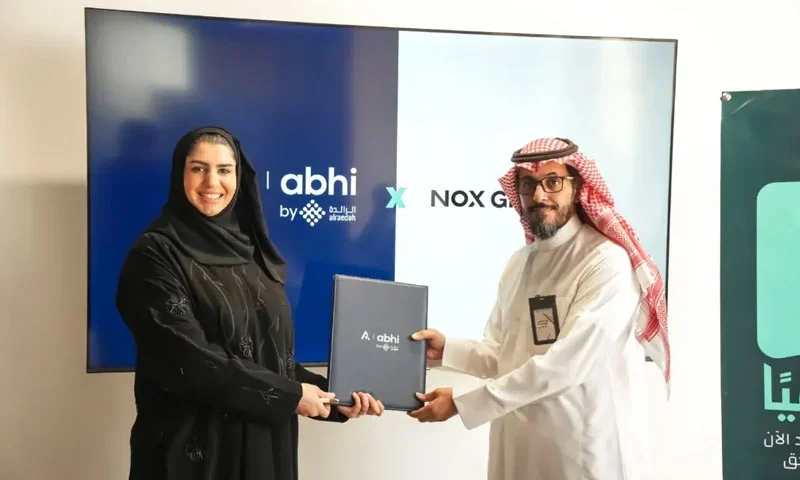
Pakistan-based fintech company ABHI has partnered with Saudi Arabia’s NOX Group to provide employees with early access to their earned salaries. The partnership will introduce ABHI’s Earned Wage Access, or EWA, solution to eligible NOX Group employees. The service allows workers to access part of the salary they have already earned before their scheduled payday. ABHI said the arrangement will give employees greater control over cash flow and more flexibility when dealing with financial needs. Read More: ABHI Bank Takes Strategic Role at EPL Summit 2026 The announcement on Thursday marks another step in ABHI’s expansion across Gulf markets. The company currently operates across Pakistan, the United Arab Emirates, Saudi Arabia and Oman. It says it works with more than 7,000 businesses and serves over one million users across the region. NOX Employees Get Early Salary Access Through the agreement, NOX Group employees will not always have to wait until payday to access money they have already earned. Instead, eligible workers can withdraw a portion of accrued salary in real time. The model aims to help employees manage short-term expenses without changing their regular salary structure. ABHI Co-Founder and CEO Omair Ansari said access to earned income can form an important part of employee financial wellbeing. “Financial wellbeing starts with having greater control over the income you have already earned. At Abhi, we believe employees should have the flexibility to access their earned wages when they need them, rather than being restricted by a fixed payday. Our partnership with NOX Group reflects a shared commitment to creating a more supportive employee experience, where financial flexibility is an integral part of the workplace.” ABHI describes EWA as one part of a broader financial infrastructure platform. Its products also include payroll processing, payroll financing and financing services for small and medium-sized businesses. The company says its salary-access platform lets workers obtain earned income through digital channels rather than waiting for the traditional monthly pay cycle. Partnership Comes as Saudi Arabia Expands Fintech Sector The agreement also comes as Saudi Arabia continues to expand digital financial services under Vision 2030. The kingdom’s Financial Sector Development Program places fintech growth among its major priorities. Saudi Arabia wants to develop a stronger fintech ecosystem and increase the number of companies operating in the sector. Vision 2030 documents set a target of 525 fintech companies by 2030. They also call for wider use of technology and stronger collaboration across the financial sector. Read More: Abhi Bank to Sell 14% Stake in Major Pakistan IPO ABHI said Saudi employers are increasingly looking beyond traditional compensation when designing employee benefits. Financial wellbeing is becoming part of that shift, according to the company. Technology-based products such as earned wage access can give employees more flexibility when unexpected expenses arise. ABHI has used the same model in partnerships with employers in Pakistan. For example, it partnered with FAST Cables in 2025 to provide employees with access to earned salaries before payday. The NOX Group deal extends that approach into Saudi Arabia as ABHI builds its regional footprint. ABHI Also Preparing for PSX Listing The Saudi partnership comes as ABHI pursues another major development in Pakistan. ABHI Microfinance Bank is preparing for an initial public offering on the Pakistan Stock Exchange. The lender plans to raise around Rs2 billion to Rs3 billion by offering roughly 14% in new shares, according to a Bloomberg report cited by Business Recorder. The bank intends to use the IPO proceeds to strengthen its capital base. Read More: Saudi Arabia’s Riyadh Air Officially Starts Flights to Pakistan ABHI and TPL Corp completed the acquisition of FINCA Microfinance Bank in January 2025. The State Bank of Pakistan had approved the acquisition of up to 94.8% of FINCA in November 2024. Under the transaction, ABHI acquired 61.61%, while TPL Corp acquired 33.17%. The business later became ABHI Microfinance Bank. The bank reported profit after tax of Rs1.019 billion for 2025. That compared with a loss of Rs1.754 billion a year earlier. ABHI was founded in 2021 by Omair Ansari and Ali Ladhubhai. Its expansion from Pakistan into the Gulf reflects a broader strategy of providing financial access infrastructure across emerging markets. The NOX Group agreement now gives ABHI another corporate customer in Saudi Arabia and brings its earned wage access model directly into the workplace.

India’s Asiatic Lion Population Jumps 70% in Just a Decade
India’s Asiatic lion population has surged by more than 70% over the past decade, marking a major conservation success for one of the world’s rarest big cats. The population reached an estimated 891 lions in 2025, up from 523 in 2015. The latest figure also represents a 32% increase from 674 lions counted in 2020. The findings come from the 16th Asiatic Lion Population Estimation, carried out across Gujarat in May 2025. Union Environment Minister Bhupender Yadav highlighted the figures on World Lion Day on August 10, 2026. “India’s success in conserving the Asiatic Lion is a proud testament to our unwavering commitment to wildlife and biodiversity,” Yadav said. The recovery is particularly significant because India holds the world’s only remaining wild population of Asiatic lions. Lion Range Expands Far Beyond Gir The lions have not only increased in number. They have also spread across a much larger area of western India. Their range covered around 30,000 square kilometres in 2020. It now extends across nearly 35,000 square kilometres and 11 districts of Gujarat. That represents an increase of about 16.7% in just five years. In 1990, the animals occupied only about 6,600 square kilometres. Their current range is more than five times larger. Government data shows that lions have moved into new forest areas, river corridors and revenue wastelands. India has also strengthened veterinary services to tackle disease risks and reduce conflict between people and lions. Officials use satellite telemetry and real-time tracking to study lion movements. The recovery follows decades of conservation work. Asiatic lions once ranged much more widely across Eurasia. Today, their only wild population survives in western India. Their numbers had fallen dramatically because of hunting and habitat loss. Only around 40 to 60 lions remained in and around Gir during the early 20th century, according to historical conservation accounts. Better Prey Base Helps Lions Recover Conservation authorities credit several factors for the population increase. India gave Asiatic lions strict legal protection and expanded conservation beyond the traditional Gir protected areas. Officials also worked to rebuild populations of wild prey. Spotted deer, sambar, nilgai and wild pigs now account for around 74% of the lions’ diet. In 1974, wild prey made up only about 26%. This stronger prey base has helped reduce the lions’ dependence on livestock. Local communities have also played an important role. Authorities have secured more than 55,000 open wells to prevent lions from falling into them. Compensation schemes for livestock losses have also helped reduce conflict with residents. Project Lion, announced in 2020, now supports a wider landscape-based conservation strategy. The programme focuses on habitat restoration, disease monitoring, veterinary care, scientific tracking and community participation. Lions Return to Barda After More Than a Century One of the clearest signs of the population’s recovery has come from Barda Wildlife Sanctuary. Asiatic lions disappeared from the area during the 19th century. They naturally returned to Barda in 2023. By 2025, the sanctuary supported 17 lions, including six adults and 11 cubs. The Indian government describes Barda as an emerging second home for the species. The sanctuary covers more than 192 square kilometres across Porbandar and Devbhumi Dwarka districts. India has also approved plans for a safari park in the wider Barda area alongside additional wildlife conservation projects. Despite the strong recovery, conservation challenges remain. The Asiatic lion still exists as a single wild population concentrated within one region. That leaves the species vulnerable to disease outbreaks, natural disasters and other large-scale threats. However, the rise from 523 lions in 2015 to 891 in 2025 shows how dramatically the population has recovered. With the number now approaching 1,000, India’s Asiatic lion conservation programme has become one of the country’s most prominent wildlife recovery efforts.

Japan’s Permanent Residency Fee Jumps 1,900% to ¥200,000
apan has approved a sharp increase in its permanent residency fee, raising the cost from ¥10,000 to ¥200,000 from October 2026. The increase represents a 1,900% jump and makes the fee 20 times higher than the current charge. The Japanese government formally adopted the ordinance on August 25. The new immigration fee structure will take effect on October 1, 2026. The move forms part of wider changes to Japan’s immigration system. The government will also significantly raise fees for changing or renewing residence status. Japan’s parliament approved amendments to the Immigration Control and Refugee Recognition Act on May 29. The legislation was promulgated on June 5. It included higher statutory limits for immigration-related fees. Permanent Residency Fee Jumps to ¥200,000 At present, foreign residents pay ¥10,000 for permanent residence permission. From October 1, the fee will rise to ¥200,000. That means an applicant will pay an additional ¥190,000 under the new system. The increase is particularly significant because Japan is implementing the full rise at once. The government has not introduced a gradual increase. The current ¥10,000 fee itself only took effect in April 2025. Before that change, permanent residence permission cost ¥8,000. Japan had initially presented the ¥200,000 figure as part of a proposed fee structure in July. The August 25 ordinance has now confirmed the amount. Applications submitted before October 1 will remain subject to the current fee schedule. This applies even if authorities issue a decision after the new charges take effect, according to immigration advisory firm Fragomen. Residence Renewal Fees Also Rise Sharply Permanent residency is not the only procedure becoming more expensive. Japan will replace the current flat ¥6,000 fee for many in-person residence extensions and status changes with a tiered structure. From October, an in-person application involving a stay of up to three months will cost ¥10,000. The fee will rise to ¥18,000 for more than three months and up to six months. A period of more than six months but under one year will cost ¥25,000. For a one-year period, the fee will reach ¥33,000. Applicants receiving more than one year but less than three years will pay ¥48,000. A period of three years to under five years will cost ¥64,000. The highest in-person fee will be ¥75,000 for periods of five years or longer. Online applications will remain cheaper for several categories. Online fees will range from ¥10,000 to ¥65,000, depending on the residence period granted. Permanent residence applications do not have an equivalent online fee option under the published structure. The government has also expanded the group of people who may qualify for reduced fees. Reports said this includes some applicants facing financial hardship and people with refugee status. Millions of Foreign Residents Could Feel Impact The higher fees come as Japan’s foreign resident population continues to grow. Official Immigration Services Agency data showed 4,125,395 foreign residents at the end of 2025. That was a record and marked the first time the figure had exceeded four million. The total increased by 356,418, or 9.5%, from a year earlier. Permanent residents made up the largest single residence-status group. Japan had 947,125 permanent residents at the end of 2025, an increase of 29,009 from the previous year. The fee changes therefore affect a system serving a growing foreign population. Japan’s government has also been reviewing permanent residency rules more broadly. The Justice Ministry announced revisions to permanent residence guidelines in August, with parts of those changes also beginning from October 1. For foreign residents planning to seek permanent status, timing could now make a substantial financial difference. Those who submit qualifying applications before October 1 can remain under the current fee structure. Applicants filing after the deadline will face the new ¥200,000 permanent residency charge. The October changes will also raise the cost of routine residence renewals and status changes, particularly for people receiving longer periods of stay.

Meta Set for Major Teen Restrictions After $18 Billion Deal
Meta Platforms will pay up to $18 billion over the next decade under sweeping settlements with nearly all US states. The agreements resolve claims that Meta designed Facebook and Instagram to addict children and misled the public about platform safety. The deal also forces major changes to how teenagers use both platforms. It ends a closely watched federal trial that began in Oakland, California, on August 18. California, Colorado, Kentucky and New Jersey had prepared to seek close to $200 billion in civil penalties, according to Reuters. Meta denied wrongdoing as part of the settlement. “The focus of this case was to protect our kids,” Colorado Attorney General Phil Weiser said in a statement. “The relief we are getting in this settlement is very meaningful and well beyond what any court has ordered or is likely to order.” The agreement could also become a model for thousands of other lawsuits against social media companies. Governments worldwide are tightening rules for young social media users. Australia, for example, has moved to ban social media access for children under 16. Facebook and Instagram Get Two-Hour Limit for Teens Meta will impose a default two-hour daily limit on Facebook and Instagram for users under 18. The limit applies across both platforms rather than separately to each app. Parents can provide permission to change the restriction. Meta will also block most use between midnight and 6am by default. During school hours, from 8am to 3pm, teenagers will not receive most push notifications. Direct messages and certain safety alerts will remain exempt. Meta will also show teenagers prompts after every 15 minutes of continuous use. The company has agreed to strengthen age-assurance technology. It will try to identify under-18 users even when they provide an adult birthday. Meta will also step up efforts to find accounts belonging to children under 13. The company must maintain stricter content settings for teenagers. It will also strengthen parental controls and protections against unwanted contact from suspicious adults. The restrictions could become tougher if Snapchat, TikTok and YouTube adopt comparable protections. Under that second stage, daily limits could fall to one hour per platform. Night restrictions could also expand from 10pm until 7am. However, the settlement does not force Meta to abandon personalized recommendations or targeted advertising. It also leaves some controversial content issues outside the agreement. These include posts that Meta researchers previously linked to body-image concerns among Instagram users. Meta said teen safety remains a priority. “Ensuring teens have a safe and productive experience on our platforms is an absolute imperative for Meta,” the company said. “We want to get this right for parents and teens.” Meta has also urged TikTok and YouTube to adopt the same protections. The company plans to push for wider industry action because teenagers often move between multiple social media platforms. Meta Faces Billions in Payments Reuters reported that Meta agreed to maximum payments of about $16.7 billion to 47 states, Washington, D.C., Puerto Rico, American Samoa and the Northern Mariana Islands. Texas reached a separate child-safety settlement worth more than $1 billion. The Texas attorney general confirmed the payment on Wednesday. California could receive about $2.2 billion, while New York could receive around $1.1 billion. Some states plan to direct parts of the money toward children’s mental health services. Others may place proceeds into general state accounts. The main settlement includes about $12.7 billion in guaranteed payments over a decade. Another $5 billion depends on whether Snapchat, TikTok and YouTube adopt similar protections and reach comparable agreements with states. “This is a big deal,” Northwestern University law professor James Speta said. “Meta and other companies were facing pressure to change business practices whether or not they lost the lawsuits, from the public and from Congress and state legislatures,” he said. “These restrictions will change the experience on Instagram and Facebook, and they are designed to reduce engagement.” Meta also agreed to pay $459 million to resolve separate privacy claims connected with the Cambridge Analytica scandal. The British consulting firm obtained personal information from millions of Facebook users without authorization. California, Illinois, New Mexico and Washington, D.C., brought those privacy claims. US District Judge Yvonne Gonzalez Rogers approved the main settlement late Wednesday. She had overseen the federal trial in Oakland. The judge called the agreement “a good step forward.” “I am quite happy to not have to finish up this trial,” she told lawyers for Meta and the states. Instagram chief Adam Mosseri had started testifying before the parties announced the settlement. Meta CEO Mark Zuckerberg had also been expected to testify. Meta shares rose as much as 4.1% during Wednesday’s trading. They closed the session up about 1.1%. Thousands of Social Media Lawsuits Remain The settlement does not end Meta’s wider legal problems over child and teen safety. Meta and other social media companies still face thousands of lawsuits in federal and state courts. Individuals, school districts, municipalities and government bodies accuse the companies of deliberately designing addictive products. The lawsuits link excessive social media use to anxiety, depression, suicide and other mental health problems among young people. Judge Gonzalez Rogers oversees many of those federal cases. The Meta trial included state consumer-protection claims from California, Colorado, Kentucky and New Jersey. Twenty-nine states also accused Meta of violating the federal Children’s Online Privacy Protection Act. They alleged that Meta knowingly collected children’s personal information without parental consent. They also accused it of using that data to train machine-learning and generative AI systems. Meta has argued that it could not mislead users about “social media addiction” because the term is not a recognized psychiatric condition. The settlement follows several recent legal setbacks for the company. Earlier in August, a New Mexico judge ordered Meta to pay $567 million and implement youth-safety measures. That came after a jury ordered another $375 million payment in the same New Mexico case in March. The combined penalties reached $942 million. Meta has said it will appeal. Also in March, a Los Angeles jury found
