


Gold prices extended their recovery on Thursday as the US dollar weakened and Treasury yields retreated from recent highs. Investors also turned their attention to US payroll data that could reshape expectations for a September Federal Reserve rate increase. Spot gold climbed 1.2 percent to $4,440.87 an ounce by 1217 GMT on September 3. US gold futures gained 1.7 percent to $4,487.70. Bullion had fallen to its lowest level since August 7 on Wednesday. It later reversed course and settled more than 1 percent higher. The recovery followed a pullback in the dollar index from a nearly three-week peak. Treasury yields also eased after reaching multi-year highs. “Modestly weaker dollar, and slightly lower U.S. rates are helping gold. With the Fed currently offering no forward guidance, gold remains highly sensitive to shifts in market expectations for the September meeting,” said UBS analyst Giovanni Staunovo. A softer dollar makes gold less expensive for buyers using other currencies. Lower bond yields can also support bullion because gold pays no interest. Markets weigh September rate increase Traders placed the probability of a September interest rate hike at about 60 percent, according to the CME FedWatch Tool. Those expectations strengthened after Federal Reserve Chair Kevin Warsh addressed the Jackson Hole Economic Policy Symposium last week. He signalled that policymakers may need to raise rates if inflation remains above target. Warsh said recent inflation readings had not shown a meaningful improvement in underlying trends. He also noted that 54 percent of components in the personal consumption expenditures basket recorded price growth above 3 percent. The Federal Reserve will hold its next policy meeting on September 15 and 16, its official calendar shows. Although investors often buy gold as protection against inflation, higher borrowing costs can weaken demand. Rising rates improve returns on interest-bearing assets and raise the opportunity cost of holding bullion. Payrolls report becomes crucial test Markets are now waiting for the closely watched US non-farm payrolls report. The Bureau of Labor Statistics will publish the August employment figures on Friday, September 4, at 8:30 am Eastern Time. The report follows Wednesday’s ADP employment data, which showed moderate growth in private payrolls during August. “The payrolls report will probably be the biggest defining moment of the week. If the jobs report misses expectations, and September rate hike bets decline, that could see gold move higher,” said Ilya Spivak, head of global macro at Tastylive. A weaker employment report could reduce expectations for an immediate rate increase and support gold. Stronger hiring, however, could reinforce the case for tighter monetary policy. Other precious metals also advanced during Thursday’s session. Spot silver rose 0.5 percent to $65.63 an ounce, while platinum gained 0.4 percent to $1,766.19. Palladium posted the strongest increase among the three, climbing 1.3 percent to $1,362.37. Gold’s next direction will depend heavily on payroll figures and the market’s response to the Federal Reserve outlook.
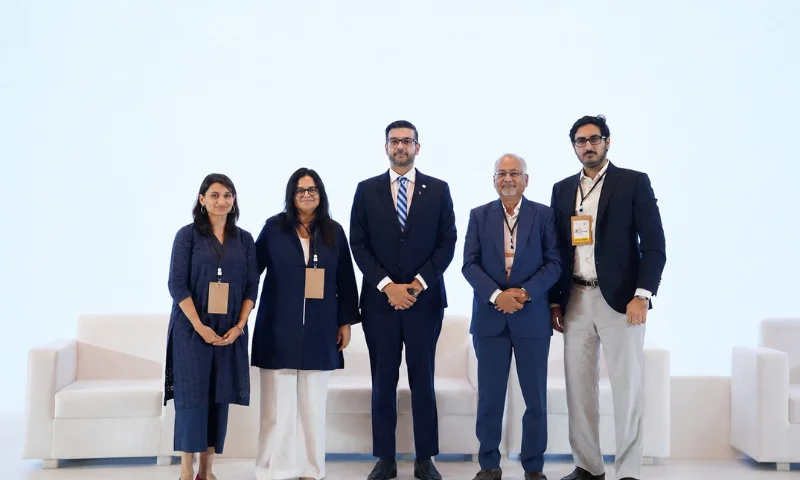
Why Tetra Pak Says Pakistan Must Fix Its Food System Now
Tetra Pak has urged Pakistan to reform food safety laws, taxation and infrastructure as the country confronts widespread child stunting and malnutrition. Food safety and tax reforms “Pakistan’s nutrition challenge goes beyond food availability. It is about ensuring nutritious products remain safe and high-quality while reaching consumers efficiently and affordably. Strengthening food processing, packaging, storage and distribution can help attract more investment across the food value chain, supported by the right policies,” said Noor Aftab, Director, Corporate Affairs for Pakistan, Middle East, North and West Africa at Tetra Pak. Aftab spoke during a recent two-day high-level dialogue in Islamabad. The event brought together global development leaders, policymakers and private sector stakeholders to address Pakistan’s escalating nutrition crisis. Speaking alongside food policy experts and corporate sustainability leaders, he called for comprehensive changes in food safety legislation and taxation. He said updated laws must support safe, scalable and processed nutritional products. Aftab also sought structural fiscal reforms and tax relief to keep nutrient-dense foods affordable. He said this had become especially important amid high inflation and weakening purchasing power. “A food or a product may be full of nutrition but may not be safe to consume,” he said. He called food safety the “critical middle” of the food system. Processing, packaging, logistics, storage and transportation determine whether nutritious food reaches consumers safely, he added. The dialogue described stunting, which affects four in every 10 Pakistani children under five, as a “national emergency”. UNICEF also reports widespread micronutrient deficiencies among Pakistani children. Dairy industry holds major potential Aftab identified dairy as a clear route to better nutrition and broader economic gains. Pakistan’s large milk output could strengthen farmer incomes, food security, industrial growth and future exports, he said. The UN Food and Agriculture Organization ranks Pakistan among the world’s largest milk producers. Its latest outlook estimated national milk production at 66 million tonnes in 2024. The Pakistan Economic Survey 2025-26 says livestock contributes 62.4 percent of agricultural value addition and 14.6 percent of GDP. “Average milk yields in Pakistan remain considerably below those achieved in leading dairy markets, creating an opportunity to improve productivity while strengthening the economics of dairy farming. Higher productivity, combined with greater processing capacity and stronger food safety systems, could significantly expand the economic potential of Pakistan’s dairy industry,” Noor said. School feeding programmes Aftab also presented school feeding as a model for linking nutrition programmes with reliable food systems and sustained partnerships. Tetra Pak has supported school milk programmes globally since 1962. Millions of children have received milk and fortified beverages in its packages across countries. The company says 66 million children in 44 countries received milk or other nutritious drinks in Tetra Pak packages at school in 2022. Participants concluded that Pakistan must repair supply chain incentives, improve workforce capabilities and standardise food safety nationwide to tackle malnutrition.

Who Actually Needs Wi-Fi 7 Before Wi-Fi 8 Arrives?
Wi-Fi 8 routers are nearing reality, but consumers have little reason to delay a necessary upgrade or buy early hardware. The next standard remains under development, while compatible phones, laptops and client devices remain some distance away. Mainstream products will likely begin arriving during the second half of 2028, according to XDA Developers. Wi-Fi 8 specification remains unfinished Wi-Fi 8 uses the technical name IEEE 802.11bn and carries the Ultra High Reliability designation. IEEE’s working group continues to develop the specification and expects final approval during 2028. The latest IEEE project timeline points towards key final approvals in May 2028. Manufacturers may demonstrate draft-based routers before ratification, as companies have done during previous Wi-Fi transitions. However, buyers should treat any early Wi-Fi 8 branding carefully until certification and compatible clients arrive. Wi-Fi 8 will focus less on lifting headline speeds and more on improving performance under difficult conditions. Developers aim to strengthen connections in crowded networks, at coverage edges and while devices move between access points. Qualcomm describes Ultra High Reliability as “consistently delivering low-latency, high-throughput connectivity” in demanding real-world environments. Proposed features include better coordination between access points, smoother roaming and more stable performance during interference. Wi-Fi 7 offers more speed than many homes need Wi-Fi 7 already introduces major technical gains over Wi-Fi 6 and Wi-Fi 6E. These include 320 MHz channels, 4K QAM and Multi-Link Operation. Multi-Link Operation lets compatible devices send data across multiple wireless bands. Intel says this can improve throughput, reduce latency and strengthen connection reliability. Intel also says Wi-Fi 7 can offer up to 2.4 times the peak throughput of Wi-Fi 6E. Users need Wi-Fi 7 support at both ends of the connection. Buying a new router will not unlock the standard’s benefits on older phones or laptops. The internet package can also remain the main bottleneck. A Wi-Fi 7 router may deliver little visible improvement when everyday browsing and streaming already work smoothly. XDA argues that even homes with compatible devices may notice limited change during normal use. The upgrade makes more sense for people who can saturate multi-gigabit connections or frequently transfer large files across local networks. Who should upgrade now and who should wait Households using a stable Wi-Fi 6 or 6E network can reasonably postpone Wi-Fi 7. Waiting could bring lower prices, broader device support and a clearer Wi-Fi 8 roadmap. Power users with multi-gig internet, fast network storage or demanding local transfers may still benefit from Wi-Fi 7 today. They should confirm that their devices support its key features before spending more. People struggling with an ageing Wi-Fi 5 router should not wait two years for Wi-Fi 8. A well-placed Wi-Fi 6, 6E or mesh system could solve immediate coverage and capacity problems. For everyone else, Wi-Fi 8 remains a technology to watch rather than buy. Until IEEE completes the standard and certified client devices arrive, promises of future-proof Wi-Fi 8 hardware deserve caution.
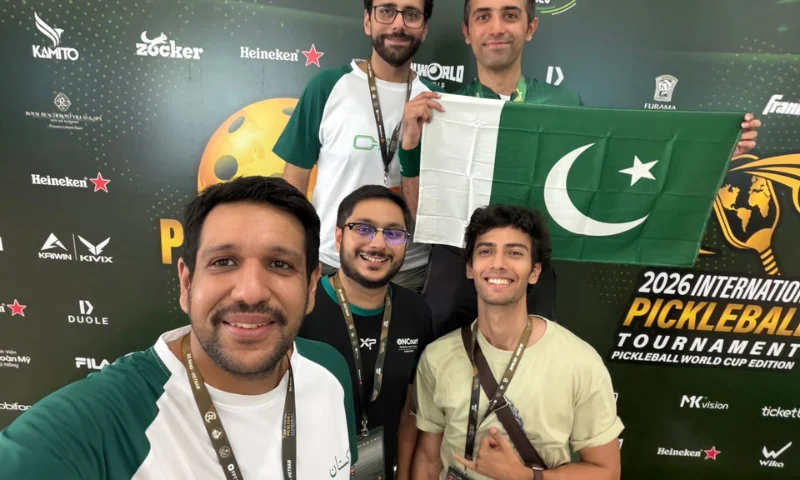
Zain Waseem Strikes Gold After Defeating Indian Players Twice
Pakistan has made a strong start at the 2026 Pickleball World Cup in Da Nang, Vietnam, securing one gold and one bronze medal. Zain Waseem delivered both podium results. He won the men’s singles title before partnering with Malik Ali Haider for bronze in the men’s doubles competition. The tournament runs from August 30 to September 6 and marks the first Pickleball World Cup staged in Asia. Zain Waseem defeats Indian players to win gold Waseem claimed Pakistan’s first medal in the Men’s Singles 30+, 3.5+ category. He defeated Indian opponents in both the semifinal and final to complete his title run. The victories placed Waseem at the top of the podium and gave Pakistan an early gold medal in Da Nang. Reporting by The Nation identified him as a player from Shapes Gym Lahore. Waseem also invited his Indian opponents to join him on the podium after the final. The gesture attracted praise for promoting sportsmanship and mutual respect beyond the result. Khawaja Nadeem Ahmed, owner of Shapes Gym, congratulated Waseem and called for official recognition of his performance. “Winning a gold medal at the Pickleball World Cup is a great achievement,” Nadeem said. He also urged the government and sports authorities to reward the player. Nadeem argued that recognition could encourage other Pakistani athletes to compete at major international events. Waseem and Malik Ali Haider secure bronze Pakistan’s second medal came in the Men’s Doubles 30+, 4.0+ category. Waseem and Malik Ali Haider combined to secure the bronze medal. Pickleball Pakistan confirmed the doubles result through its social media account. The organisation described the pair’s performance as an important result for the national contingent. The categories use DUPR ratings to group players according to competitive ability. The age and skill divisions allow athletes to face opponents with broadly similar playing profiles. Competition week in Da Nang features both national-team events and international divisions organised by age and playing rating. Pakistan’s athletes are contesting individual and team events across the programme. Pakistan sends 18-member squad to global event Pakistan has sent an 18-member contingent to compete in Vietnam. The squad’s two early medals have raised expectations as the remaining matches continue until September 6. Organisers expect more than 5,000 athletes from 81 countries and territories. Event information lists seven venues and 76 courts across Da Nang for the eight-day competition. Pakistan entered the 2026 competition after winning three medals on its World Cup debut in Florida in 2025. That campaign produced one gold, one silver and one bronze medal. Komal Safdar won the women’s singles gold last year. Aneel and Fatima earned mixed doubles silver, while Haroon Ahmad and Zeeshan Raza claimed men’s doubles bronze. Waseem’s gold and the doubles bronze have now extended Pakistan’s medal record at the event. They also provide a timely boost for a sport still developing its organised national presence in Pakistan.
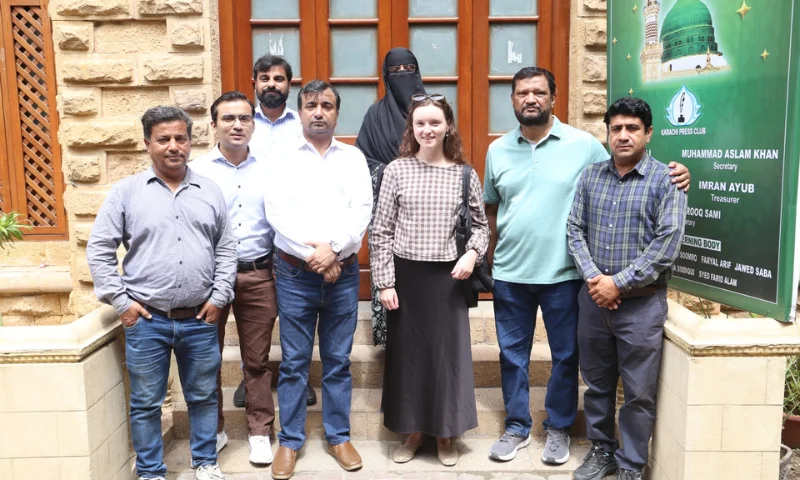
Alice Fidler Praises Pakistan During Karachi Press Club Visit
Alice Fidler, Deputy Head of Communication at the British High Commission Islamabad, visited the Karachi Press Club following an invitation from senior journalist Qazi Yaser of ARY News. The visit brought a British diplomatic communications official into direct contact with Karachi’s working journalists and press club representatives. Discussions covered media relations, cultural connections, regional peace and Pakistan’s place in the United Kingdom’s wider foreign policy outlook. The British government’s official media contact page confirms Fidler’s role at the High Commission. Alice Fidler tours KPC facilities During the visit, Fidler toured the press club and reviewed services available to journalists. She inspected the press conference hall, modern gymnasium, dedicated women’s room, health centre, computer lab and digital studio. KPC’s official website lists a sports complex, women’s complex, digital studio, press conference hall, computer lab and dental clinic among its services. Read More: Google Is Hiring in Karachi, But Can You Qualify? Fidler acknowledged the club’s work to improve professional and welfare facilities for members. KPC remains an important venue for press conferences, professional gatherings and public debate in Karachi. The visit therefore provided space for direct engagement between diplomatic communication officials and the city’s media community. Historic M.F. Husain mural attracts attention Fidler showed particular interest in the historic artwork by renowned artist M.F. Husain displayed inside the club. She paused during the tour to photograph the mural and expressed strong admiration for the work. Husain created the artwork during a visit to Karachi in the early 1990s. Dawn previously reported that his hosts expected a painting on canvas, but the artist chose the club’s wall instead. “Walls cannot be sold,” Husain reportedly explained. “You can’t make a replica of a wall and sell it to ‘art lovers’.” The mural has since become an important part of the press club’s cultural identity. It also connects the building’s journalistic history with the wider artistic heritage of South Asia. Career, diaspora links and regional peace discussed Sharing details about her diplomatic career, Fidler said Pakistan represents her first international posting. Before this assignment, she worked on the Afghanistan Desk at the Foreign, Commonwealth and Development Office in London. Her work there included the period surrounding the withdrawal of Western forces from Afghanistan. That experience gave her exposure to the diplomatic and strategic challenges affecting Pakistan’s immediate neighbourhood. Read More: Hutchison Ports Announces $76 Million Karachi Terminal Upgrade Fidler said her personal connections with Britain’s Pakistani diaspora influenced her decision to choose Pakistan for her first overseas assignment. She also praised the warmth, hospitality and rich cultural heritage she had encountered in the country. The conversation addressed Pakistan’s diplomatic initiatives and its efforts to promote regional peace. Participants also discussed Pakistan’s strategic importance within the UK’s broader foreign policy framework. The UK government’s Pakistan development partnership identifies media freedom, accountable institutions and engagement with civil society among its priorities. Those goals give professional exchanges with journalists added relevance. The KPC meeting highlighted how direct contact between diplomats and local journalists can support constructive dialogue, stronger media relations and sustained professional exchange.
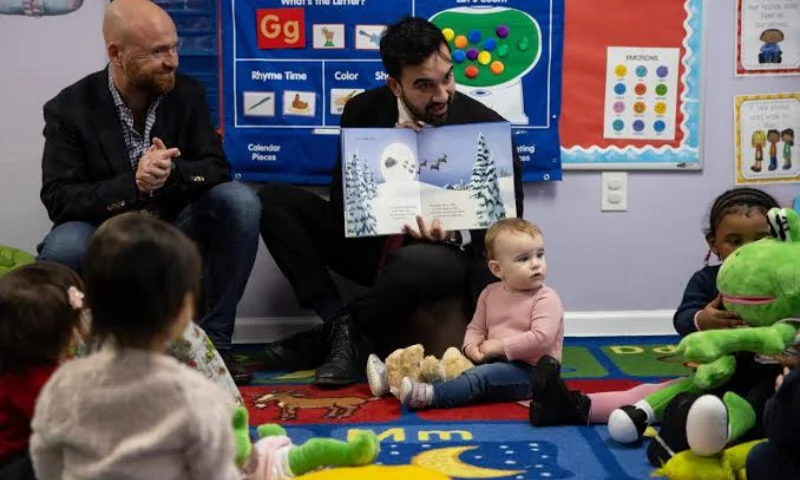
Mamdani Blocks AI Access for Most New York City Students
New York City has imposed a one-year moratorium on student use of generative AI in public elementary and middle schools. The policy covers students from 2-K through eighth grade during the 2026-27 school year. It will affect about 600,000 children in the largest public school system in the United States. City officials described it as the country’s most restrictive school district policy on classroom AI so far. Los Angeles and other districts continue to review their own rules. Policy removes AI tools from younger classrooms Mayor Zohran Mamdani announced the restrictions at a press conference on Wednesday. He said younger students need direct interaction, independent thinking and stronger relationships with teachers and classmates. “Children need teachers and human connection in order to learn and grow. They need to develop skills alongside their peers, build relationships with educators and wrestle with tough problems on their own,” Mamdani said. Read More: Why Did NY Mayor Zohran Mamdani Reject a $47,000 Pay Raise? Schools will discontinue or disable the AI features of more than 38 previously approved programs. Reuters described the change as affecting about 40 educational tools currently used in classrooms. New York City Public Schools said the ban specifically targets student-facing generative AI. The policy maintains access to assistive technology required under students’ Individualized Education Programs or 504 plans. Students with disabilities and English-language learners can continue using other necessary tools. Limited AI access for high school students The city will allow high school students to use AI in limited, supervised settings. Five approved pilot programs will operate with defined learning goals. Officials will limit each student’s participation to one pilot and no more than 45 minutes weekly. Mamdani said the pilots will not introduce ChatGPT, Claude or similar chatbots into the curriculum. High school students must also complete two 45-minute AI literacy modules. These lessons will cover how AI works, data privacy, bias and appropriate academic uses. Teachers may continue using approved AI tools for lesson planning, scheduling and other operational work. However, staff cannot use AI for grading, behaviour monitoring, promotion, graduation or placement decisions. Google, Anthropic and Microsoft did not immediately respond to Reuters requests for comment. Earlier ChatGPT ban gives way to tougher policy New York City temporarily blocked ChatGPT soon after its 2022 launch. The city later removed that restriction and introduced a custom AI-powered teaching assistant, according to Microsoft. Microsoft holds a stake in OpenAI, the company behind ChatGPT. The latest policy marks another shift as officials weigh AI literacy against concerns over privacy, bias and independent learning. Read More: Punjab’s AI Push Gets Major Boost From Huawei Partnership The broader policy also limits routine individual screen use. It recommends a daily maximum of 30 minutes for grades three to five and 45 minutes for grades six to eight. The city will review the moratorium after one year. Officials plan to consult teachers, parents, students and outside experts before deciding what should change. Other major school districts will closely watch New York’s year-long experiment.

Jaecoo J5 Price Jumps by Rs. 1.1 Million in Pakistan
Nexgen Auto Pvt. Ltd. has raised Jaecoo J5 prices in Pakistan by Rs. 1.1 million for each variant. The company linked the revision to the government’s 25 percent sales tax on hybrid and plug-in hybrid electric vehicles. The move follows tax-driven price revisions from Toyota and Honda. J5 Comfort and Premium get new prices The Jaecoo J5 Comfort now costs Rs. 7,799,000, compared with its previous price of Rs. 6,699,000. That represents an increase of Rs. 1,100,000, or about 16.4 percent. Nexgen has priced the Jaecoo J5 Premium at Rs. 8,799,000. It previously cost Rs. 7,699,000, so the increase also comes to Rs. 1,100,000, or around 14.3 percent. The company’s latest circular leaves the Jaecoo J7 Premium price unchanged at Rs. 10,499,000. As a result, the gap between the J5 Premium and J7 Premium has narrowed to Rs. 1.7 million. Read More: New Omoda 7 PHEV Arrives in Pakistan at Rs10.649 Million Nexgen launched the J5 in Pakistan in January 2026, less than six months before the tax change. That short window highlights how quickly its market positioning shifted. At launch, the J5 carried the same original prices cited in the new circular. Those prices included applicable taxes and the new-energy vehicle levy, according to PakWheels. Both J5 variants use the same hybrid powertrain. Local launch coverage lists output at 221 horsepower and 295 Nm, paired with a dedicated hybrid transmission. The company claims fuel economy of about 18.8 kilometres per litre. Finance Act changes the tax equation The federal tax change took effect on July 1, 2026. Nexgen said the revised prices follow the 25 percent sales tax applied to HEVs and PHEVs. The Federal Board of Revenue’s updated Sales Tax Act shows that preferential treatment for locally manufactured hybrid vehicles ran until June 30, 2026. The Finance Act 2026 then omitted that concession. Separate tax reporting confirms that the 25 percent rate now applies to imported and locally supplied hybrid vehicles. Nexgen has attributed the J5 revision to the tax measure. Its circular did not link the increase to a specification change or a new model-year update. Toyota and Honda announce similar increases Other hybrid SUVs became costlier after the same tax change. Indus Motor Company raised prices for two Toyota Corolla Cross HEV variants. The Corolla Cross HEV rose from Rs. 8,535,000 to Rs. 9,849,000, an increase of Rs. 1,314,000. The Corolla Cross HEV X climbed from Rs. 8,935,000 to Rs. 10,299,000, adding Rs. 1,364,000. Read More: All You Need to Know: Jaecoo J5 Hybrid SUV Price, Features & Delivery Dates Honda Atlas Cars also increased the HR-V e:HEV price by Rs. 1,370,000. Its price moved from Rs. 8,999,000 to Rs. 10,369,000. Customers considering either J5 variant now face a seven-figure increase without a corresponding equipment upgrade. The revised prices also reshape competition among locally available hybrid crossovers. Buyers will now compare the J5’s features and running costs against rivals carrying the same heavier tax burden.
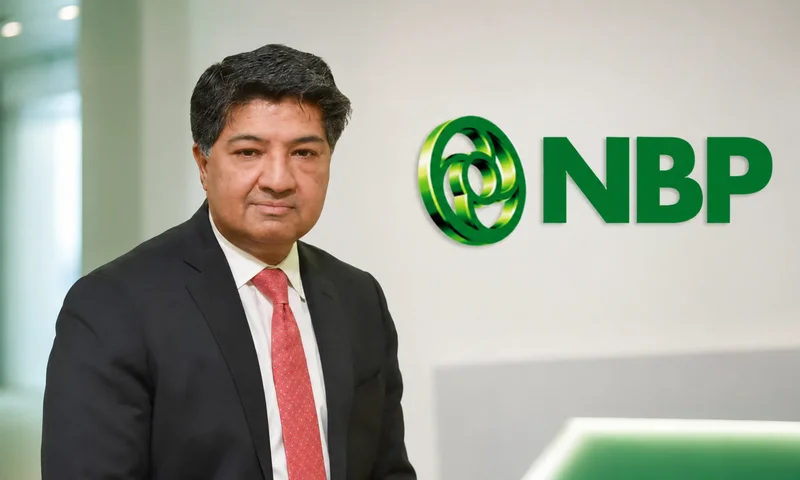
Imran Sarwar Appointed NBP CEO for Three-Year Term
The federal government has appointed Imran Sarwar as president and chief executive officer of the National Bank of Pakistan for three years. The appointment takes effect immediately and ends a leadership transition after former president Rehmat Ali Hasnie’s departure in August. Government issues formal appointment notification The Finance Division’s Internal Finance Wing confirmed Sarwar’s appointment in a notification dated September 3, 2026. It is marked for publication in Part-III of the Gazette of Pakistan. The government made the appointment under Section 11(3)(a) of the Banks (Nationalization) Act, 1974. The notification carries file number F.No.1(9)Bkg-III/2022-696. Read More: NBP Appoints Insider Abdul Wahid Sethi to Its Top Position Amna Shabbir, Deputy Secretary to the Government of Pakistan, signed the order. The notification followed a Cabinet Division memorandum issued on September 2. That document confirmed the cabinet’s decision but did not publicly identify the selected candidate. Sarwar will now take charge of Pakistan’s largest state-owned bank. NBP reported a half-year pre-tax profit of Rs33.9 billion, up 21 percent from the corresponding period. Cross-border banking and risk experience Sarwar moves to NBP from United Bank Limited, where he served as Group Executive for Risk and Credit Policy and Group Chief Risk Officer. He oversaw the bank’s risk architecture, regulatory compliance, underwriting strategy and credit policy framework. He brings more than 27 years of banking leadership, strategy and risk experience. His career spans Pakistan, the United Arab Emirates, the United Kingdom and Australia. Before joining UBL in August 2017, Sarwar held senior positions at Standard Chartered Bank in Pakistan and the UAE. His role there was Managing Director and Head of Corporate and Institutional Banking for the UAE. Sarwar has also served on the boards of Khushhali Microfinance Bank and the Pakistan Mortgage Refinance Company. His Khushhali profile also lists directorships at UBL Bank Tanzania and UBL Funds. His work has included setting risk policies, developing governance frameworks and embedding operational, market and information technology risk functions. The experience gives him a strong background in credit oversight and cross-border banking operations. Sarwar holds a degree in business and accounting from Ohio Wesleyan University in the United States. He also earned an LLB from Punjab University Law College. The combination of risk expertise and legal training has shaped his approach to credit governance. Appointment concludes competitive selection The Finance Division launched the recruitment process on June 14. Its advertisement sought a “dynamic, qualified, and high-caliber corporate leader” to head NBP. Hasnie’s three-year term ended in August after the government granted him a final two-week extension. That extension expired on August 21. Read More: NBP Marks August 14 With Focus on Digital Transformation NBP Chief Financial Officer Abdul Wahid Sethi then assumed temporary charge as acting president and CEO. The Finance Division limited the arrangement to three months or until the appointment of a permanent chief. A panel chaired by the finance minister interviewed nine candidates in mid-August. Other leading contenders included Bank of Punjab President Zafar Masud and Bank of Khyber chief Hassan Raza.
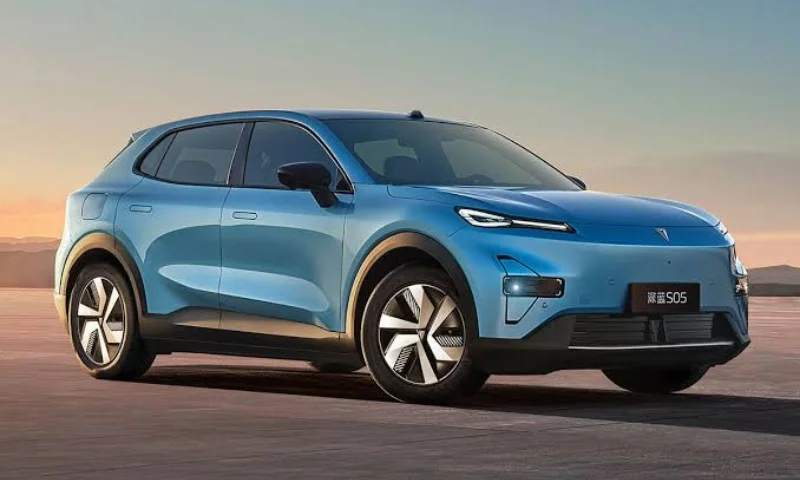
Shipping Chaos Delays Rs10 Million Deepal S05 in Pakistan
Master Changan Motor Limited has warned customers that deliveries of the Deepal S05 may arrive up to three weeks late in Pakistan. The automaker linked the delay to international shipping disruptions and congestion affecting shipment timelines. Typhoon and port congestion disrupt schedules Master Changan said a typhoon in China disrupted shipping schedules and reduced the availability of freight vessels. The resulting vessel shortage affected the planned movement of Deepal S05 shipments to Pakistan. The company also blamed congestion at Pakistani ports following a goods transporters’ strike in August. The strike restricted cargo movement and created delays that continued after transport operations began recovering. Dawn reported on August 15 that the strike had disrupted port activity for six days. Large vehicles carrying heavy loads between provinces remained off the roads at that stage. Read More: Changan Unveils UNI-S SUV in Pakistan, Targets Premium Market Master Changan said the combined disruptions could extend S05 delivery timelines by as much as three weeks. It is working with logistics partners to minimise the impact and deliver vehicles “as soon as possible.” The company apologised to customers for the inconvenience. It did not announce any change in the S05’s price, specifications or availability in Pakistan. Logistics reports showed that Typhoon Dolphin struck eastern China on August 9 and created extensive vessel backlogs. However, Master Changan did not identify the typhoon involved in its notice. S05 faced an earlier production delay This is not the first disruption to affect the S05’s rollout in Pakistan. Master Changan temporarily faced delayed production earlier in 2026 because completely knocked down kits arrived late at its Karachi plant. The company announced in February that it had received the pending kits and restarted full-scale production. “We know that many of you have been waiting for your vehicles with great anticipation,” the company said in its February customer notice. The latest setback stems from shipping and port congestion rather than another announced halt in local production. The S05 entered its delivery phase after appearing at the Pakistan Auto Show on November 14, 2025. Changan markets it as Pakistan’s first locally assembled range-extended electric SUV. Deepal S05 price and specifications Deepal’s official website lists the S05 REEV Max at Rs9,999,000, including freight and CVT, under a limited-time offer. The rear-wheel-drive SUV uses a 160kW electric motor that produces 215 horsepower and 320Nm of torque. Its 27.28kWh lithium iron phosphate battery provides an estimated 170km electric range under the NEDC testing cycle. Read More: Rs1.09 Crore Nevo Hunter Arrives in Pakistan With 900km Range A 1.5-litre petrol range extender raises the claimed combined range to more than 1,000km. The vehicle also supports DC fast charging from 30 percent to 80 percent in 20 minutes. The official brochure lists an eight-year or 240,000km battery warranty. The vehicle carries a five-year or 150,000km limited warranty. Customers awaiting delivery may now need to factor the additional three-week window into their plans.

Pakistan Back in Global Markets With Record Breaking $3bn Deal
Pakistan has raised $3 billion in a dual-tranche Eurobond sale, its largest single international bond transaction, the Ministry of Finance said Thursday. The offering attracted nearly $6 billion in orders, almost double the amount issued. Demand came from broad, diverse institutional investors worldwide. Strong demand reaches 10-year bond Pakistan raised $1.75 billion through a 5.5-year Eurobond carrying a 7.5 percent coupon. It secured another $1.25 billion through a 10-year bond priced at 7.9 percent. Demand remained strong across both maturities, particularly for the longer tranche. The ministry said this showed Pakistan could mobilise sizeable long-term financing as investors reassessed its macroeconomic and credit fundamentals. 𝘕𝘖𝘛 𝘍𝘖𝘙 𝘙𝘌𝘓𝘌𝘈𝘚𝘌, 𝘗𝘜𝘉𝘓𝘐𝘊𝘈𝘛𝘐𝘖𝘕 𝘖𝘙 𝘋𝘐𝘚𝘛𝘙𝘐𝘉𝘜𝘛𝘐𝘖𝘕 𝘐𝘕, 𝘖𝘙 𝘐𝘕𝘛𝘖, 𝘛𝘏𝘌 𝘜𝘕𝘐𝘛𝘌𝘋 𝘚𝘛𝘈𝘛𝘌𝘚, 𝘈𝘜𝘚𝘛𝘙𝘈𝘓𝘐𝘈, 𝘊𝘈𝘕𝘈𝘋𝘈 𝘖𝘙 𝘑𝘈𝘗𝘈𝘕. 𝗣𝗮𝗸𝗶𝘀𝘁𝗮𝗻 𝗜𝘀𝘀𝘂𝗲𝘀 𝗥𝗲𝗰𝗼𝗿𝗱 𝗨𝗦$𝟯 𝗕𝗶𝗹𝗹𝗶𝗼𝗻 — 𝗦𝗶𝗻𝗴𝗹𝗲… — Ministry of Finance, Government of Pakistan (@Financegovpk) September 2, 2026 “The competitive pricing across both maturities, together with strong demand extending to the 10-year tenor, demonstrates Pakistan’s ability to mobilise sizeable longer-term financing,” the ministry said. Fitch assigned the bonds a B- rating with a Recovery Rating of RR4. S&P had raised Pakistan’s sovereign rating to B with a stable outlook in July, citing institutional stability and progress on IMF-backed reforms. New GMTN programme widens market access The sale marked a milestone in the government’s road-to-market strategy and became the first issuance under Pakistan’s renewed Global Medium-Term Note programme. It followed the country’s inaugural Panda Bond and successive improvements in its sovereign credit profile. The ministry said the GMTN framework would support more diversified access to global capital markets. It stressed that the objective was “not simply to raise additional debt”, but to manage sovereign liabilities more actively. Read More: New US Visa Bond Targets 50 Countries: Is Pakistan on the List? The strategy seeks to diversify funding, extend maturities and lower refinancing and rollover risks. It also aims to replace shorter and more expensive liabilities with longer-duration financing when economically beneficial. Pakistan has already retired substantial domestic debt before maturity. The ministry said the government was now extending that approach to external financing. “Borrow better. Extend maturities. Diversify funding. Reduce refinancing risk. Improve the sovereign debt profile,” it said. Investors reinforce confidence in Pakistan Successive rating upgrades and improved market access have reflected Pakistan’s economic progress during the past three years. The ministry called the order book, investors’ geographical diversity and 10-year demand a “powerful market-based signal of renewed confidence”. “Now, global investors have reinforced that assessment with billions of dollars of actual capital,” it added. However, the ministry said Pakistan still needed sustained fiscal discipline, structural reforms, export competitiveness, investment and productivity growth. It described the deal as a landmark in the shift from economic stabilisation towards sustainable growth. The Debt Management Office played a pivotal role in executing the transaction. Read More: Pakistan Turns to International Bonds as Saudi Oil Facility Expires Pakistan returned to the Eurobond market in April with an initial $500 million three-year issue. Stronger demand triggered a $250 million green-shoe option, raising the total to $750 million. The bond, carrying a 6.975 percent coupon, matures in April 2029. Pakistan also repaid about $1.4 billion against a maturing Eurobond in April. That repayment helped re-establish a pricing benchmark after years of heavier reliance on multilateral, bilateral and commercial financing.
