


The Securities and Exchange Commission of Pakistan has called for greater digitalisation across capital markets, real estate investment trusts and insurance. SECP Chairman Dr Kabir Ahmed Sidhu said digital platforms could improve the distribution, accessibility and adoption of regulated financial products. Wider access could also bring more retail investors into formal financial markets. He made the remarks during a meeting with senior representatives of VEON and JazzWorld in Islamabad. The delegation included VEON Group CEO Kaan Terzioglu, JazzWorld CEO Aamir Ibrahim and Syed Zaheer Mehdi. SECP Commissioner Ali Farid Khawaja also attended the meeting. Participants discussed how digital platforms could connect more Pakistanis with investment, savings, insurance and other financial services. They also explored technology-led solutions for capital markets and REITs. The meeting highlighted the potential for collaboration between regulators, telecommunications companies and digital service providers. Such cooperation could extend regulated products to people who have limited access to traditional financial institutions. VEON plans another $1 billion investment VEON and JazzWorld reaffirmed their long-term commitment to Pakistan during the meeting. The companies said they have invested approximately $11 billion in the country over the past three decades. They plan to invest another $1 billion during the next three years. The funding will support connectivity, digital infrastructure, network modernisation and the expansion of digital platforms. “Pakistan’s digital transformation requires significant investment in infrastructure, technology, and new financial models. As a long-term investor in Pakistan, VEON sees an opportunity to work with institutions such as SECP to develop frameworks that unlock capital, encourage innovation, and support the country’s digital economy,” Terzioglu said. JazzWorld has expanded beyond traditional telecommunications into financial services, insurance, banking, entertainment, healthcare, cloud services and artificial intelligence. The company says its digital ecosystem serves more than 100 million users. Its large customer base and distribution network could help regulated financial products reach individuals and businesses nationwide. JazzCash had reached 60 million users by the first quarter of 2026, according to JazzWorld. The platform also onboarded one million merchants using Raast QR payments. JazzWorld’s FikrFree platform had 17.8 million active insurance policies. These figures reflect the growing public adoption of app-based financial services in Pakistan. Financial literacy remains essential Sidhu also stressed the importance of financial literacy and investor education. He said digital access alone could not ensure responsible participation in financial markets. Both sides agreed that wider digital distribution should accompany stronger public awareness. Consumers need clear information about financial planning, investment risks and the features of regulated products. The discussions also focused on building investor confidence and encouraging responsible investment. Better digital outreach could help SECP explain regulatory protections and warn users about unlicensed financial schemes. The meeting aligns with Pakistan’s wider push to expand financial inclusion and formalise economic activity. Digital platforms can reduce geographical and administrative barriers for underserved communities. SECP, VEON and JazzWorld agreed to continue working with relevant stakeholders. Their proposed cooperation will focus on investment access, financial inclusion and technology-led innovation.
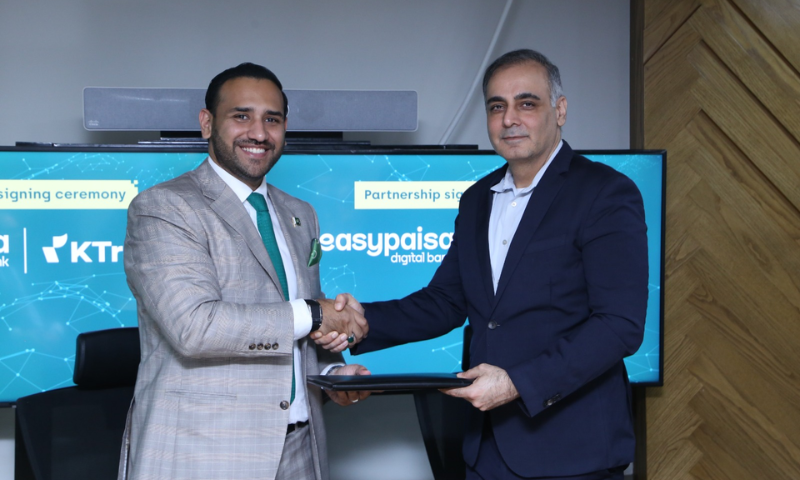
New Easypaisa Feature Could Bring Millions of Investors to PSX
Easypaisa Digital Bank and KTrade have launched an in-app service that allows users to open Pakistan Stock Exchange investment accounts within 10 minutes. The first-of-its-kind partnership aims to remove paperwork and other barriers that have limited retail participation in Pakistan’s capital markets. Users can complete the onboarding process digitally through the Easypaisa app. The service connects users with a KTrade PSX account, giving them a route to begin stock market investment from their mobile phones. The companies said the partnership promotes financial inclusion and opens new wealth creation opportunities for Pakistanis. Partnership sets single-day PSX account record Easypaisa and KTrade formally unveiled the collaboration during a ceremony in Islamabad last week. Senior representatives from Pakistan’s financial sector attended the event. Participants included SECP Commissioner Muzaffar Mirza, NCCPL CEO Naveed Qazi and CDC CEO Badiuddin Akber. Senior officials from Easypaisa and KTrade also attended. The companies said the service recorded the highest number of investment accounts opened in a single day in PSX history. They described the result as a new benchmark for digital investor onboarding in Pakistan. “At easypaisa, our mission is to unlock access to financial opportunities for every Pakistani. Through our partnership with KTrade, we are extending this vision beyond payments and banking into investments, enabling users to participate in Pakistan’s capital markets through a simple, secure, and fully digital experience. This partnership marks another important step towards building a more financially empowered and inclusive Pakistan. I would also like to thank the SECP, NCCPL, and CDC for their continued support in digitizing the onboarding of brokerage accounts, laying the foundation for millions more Pakistanis to participate in the formal investment landscape and helping drive the next phase of growth in Pakistan’s capital markets,” Easypaisa President and CEO Jahanzeb Khan said. Pakistan targets wider retail investment KTrade CEO Mahmood Ali Shah Bukhari said the partnership would bring investment opportunities closer to ordinary citizens. “The future of investing lies in accessibility and convenience. Through our collaboration with easypaisa, we are bringing the stock market closer to millions of Pakistanis and making wealth creation opportunities available at their fingertips. Together, we are helping cultivate a stronger investment culture in the country.” NCCPL representatives highlighted how digital innovation can expand investor participation and strengthen Pakistan’s financial ecosystem. The companies also acknowledged CDC’s role in supporting the infrastructure and collaboration behind the initiative. The launch follows strong growth in Pakistan’s investor base. SECP data showed that stock market investor accounts increased by 48 percent during fiscal year 2025-26. The total rose from 392,775 to 583,052, adding 190,277 investors within one year. Easypaisa has more than 60 million registered users. It also became Pakistan’s first digital bank to start commercial operations. The partnership supports wider national efforts to increase retail investment and promote digital financial services. It also aligns with the State Bank of Pakistan’s goal of inclusive economic growth. Investors should still assess market risks before trading, as share prices can rise or fall. Digital onboarding improves access, but it does not guarantee investment returns.

Big Bash League Opens Its Doors to Private Money From 2027
Cricket Australia will introduce private investment into the Big Bash League from the 2027-28 season, starting with the sale of the Melbourne Renegades. The governing body plans to invite bids for the Twenty20 franchise, currently owned by Cricket Victoria. The Renegades won their only BBL championship in the 2018-19 season. “CA will invite bids from private owners for the Renegades with a view to them playing the 2027-28 season under new ownership,” Cricket Australia said. The outcome of the sale will guide decisions on other BBL clubs. State cricket associations will retain the choice to assess whether private investment suits their teams and communities. “Pending the result of that process, CA will consider taking other clubs to market under a self-determination model that gives each state member the ability to assess the optimal pathway for its own club and community.” Cricket Australia will retain authority over international scheduling, player availability, salary caps, proposed branding changes, investor approvals and reserve prices for club licences. Previous A$600 million plan faced opposition An earlier privatisation proposal would have allowed investors to purchase 49 percent stakes in most BBL franchises. States with two teams could also sell one franchise completely. Cricket boards in New South Wales and Queensland blocked that proposal in April. Officials and former players had raised concerns about losing local control over Australian cricket assets. Cricket Australia had hoped to raise as much as A$600 million, then worth about $432.48 million. It planned to use the money to strengthen its finances and compete in the expanding global T20 market. CA reported a net deficit of A$11.3 million for the 2024-25 financial year. The loss came despite higher revenue from Australia’s lucrative five-Test home series against India. “By opening the door to private investment in the Big Bash Leagues, Cricket Australia is taking a deliberate step to strengthen and secure the long-term future of the game,” CA Chairman Mike Baird said. “Importantly, CA and its members will maintain control over the most significant aspects of Australian Cricket operations …” Concerns grow over IPL ownership influence Opponents fear private ownership could increase the influence of Indian Premier League investors. IPL franchise owners already control or hold stakes in teams across England, South Africa, the United Arab Emirates and the West Indies. CA Chief Executive Todd Greenberg rejected those concerns in May. “India are such a huge part of cricket, but we’re not looking to sell the game to India. That’s it, full stop,“ Greenberg told SEN radio. “We are looking to add value to our clubs and bring good partners in, and the decision on who those partners are is at the behest of the states.” The BBL is also increasing its presence in India. Australian Prime Minister Anthony Albanese announced in July that the next season opener would take place in Chennai. The Melbourne Renegades will face the Perth Scorchers in that match in December. It will mark the competition’s first regular-season fixture in India.

Palace Clarifies Harry and Meghan’s Future After Their UK Return
King Charles III has confirmed that Prince Harry and Meghan will remain non-working members of the royal family following their return to the United Kingdom. The clarification means the Duke and Duchess of Sussex will not resume official duties on behalf of the monarch. They will also continue to refrain from using their His and Her Royal Highness styles. The couple still hold the titles Duke and Duchess of Sussex, which Queen Elizabeth II granted them on their wedding day in 2018. However, their HRH styles have remained in abeyance since they stepped back from royal duties in 2020. The Lord Chamberlain, the royal household’s most senior official, communicated the king’s position through a letter to senior government and military officials. He also sent it to lord lieutenants, who serve as the monarch’s representatives across the country. “To help avoid doubt or confusion, The King has directed that (this) information be shared,” the letter said. Charity work to remain private The letter states that Harry and Meghan will conduct any charitable or commercial work in a private capacity. Their activities will not represent the king or the official work of the royal family. Buckingham Palace first established this arrangement in 2020 after the couple decided to step away from royal duties. They later moved to the United States and built independent media, commercial and charitable ventures. Read More:Harry and Meghan Plan UK Return Six Years After Royal Exit The palace confirmed in February 2021 that the couple would not return as working royal family members. At the time, Harry relinquished several honorary military appointments, while the couple returned their royal patronages. Their return to Britain after living in the United States for six years prompted questions about whether their position had changed. The new letter confirms that the original arrangement remains in place. Some palace observers believe the public clarification reflects concern about confusion between the couple’s private activities and official royal work. Their presence in Britain could otherwise create the appearance of a parallel royal operation competing with working family members. Security decisions remain with RAVEC The letter also addressed Harry and Meghan’s security arrangements. It said operational decisions remain the responsibility of the relevant police and government agencies. Harry has fought a long-running legal battle over the loss of publicly funded police protection. Authorities removed the automatic security arrangement after he and Meghan stopped carrying out official royal duties. The Royal and VIP Executive Committee, known as RAVEC, decides the level of government-funded protection provided to senior royals and other public figures. The committee considers the circumstances and risks linked to individual visits. Read More: How Prince Harry Makes Sure Princess Diana Is Never Forgotten The palace has maintained that independent authorities, rather than the royal household, make operational security decisions. “Any specific questions from official and State organisations about the courtesies which should be extended to the Duke and Duchess, and particularly where recourse to public funds may be required, should be directed to Buckingham Palace,” the Lord Chamberlain said in his letter. The clarification draws a firm boundary between the Sussexes’ family connection to the monarchy and their public role. They remain members of the royal family but will operate as private citizens rather than representatives of the Crown.
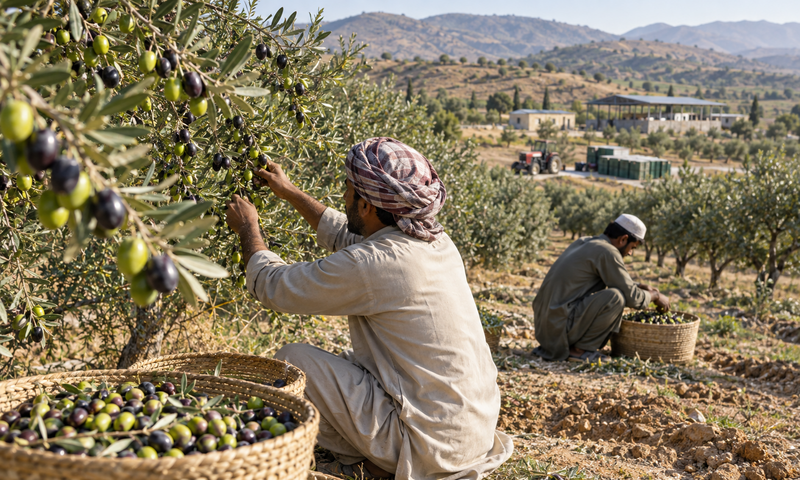
Pakistan Olive Cultivation Targets $4 Billion Import Bill
Pakistan is rapidly expanding olive cultivation to reduce its annual $4 billion edible oil import bill and develop a high-value export industry. The country now has nearly seven million olive trees, compared with about half a million in 2016. Cultivation has expanded across Potohar, Khyber Pakhtunkhwa and parts of Balochistan, where the climate and soil support commercial production. Dr. Muhammad Tariq, Project Director for the Promotion of Olive Cultivation on a Commercial Scale, said government support had already reduced dependence on imported olive oil. “Due to our interventions and with government support over the past four to five years, our olive oil imports have decreased by about half, dropping from 400,000 tons to approximately 200,000 tons,” Tariq told Arab News. He said Pakistan’s spending on olive oil imports fell from $14 million to roughly $9 million during fiscal year 2024-25. Olive oil exports have also shown steady growth. “Looking at the current pattern, I think over the next three to four years our olive oil imports will be substituted by local production,” he added. Government targets another 15,000 acres Pakistan currently grows olives on about 60,000 acres. The government plans to add another 15,000 acres over the next three years. Prime Minister Shehbaz Sharif formally launched the National Olive Value Chain Policy on August 24. The initiative covers cultivation, processing, quality control, branding and exports. Sharif said Pakistan spends around $4 billion each year on crude edible oil imports. He described potential annual savings of $400 million as a “monumental service” to the country. The longer-term goal is complete self-sufficiency. The prime minister also announced government-funded training for 100 young agricultural graduates in Italy. They will study olive farming, processing, quality control and marketing. Pakistan’s olive programme began more than two decades ago. However, large-scale commercial cultivation has accelerated during recent years. Dr. Faiyaz Alam, General Secretary of the Olive Council, Sindh, said wild olives have grown for centuries across the country’s hilly regions. “Public awareness grew significantly after videos highlighting Pakistan’s wild olive resources emerged in 2020,” he said. “Government plantation programs subsequently accelerated the spread of commercial olive cultivation.” Early grafting efforts started around 2000. Pakistan installed its first olive extraction machine at Tarnab Farm in Peshawar. Exporters see billion-dollar opportunity Industry leaders believe Pakistan can move beyond import substitution and capture part of the global olive oil market, estimated at around $22 billion. “We have only seven million trees at the moment … We can plant 100 million trees and join the billion-dollar club of the global economy,” Loralai Olives founder and CEO Shaukat Rasool said. His company has secured four international recognitions during the past two years, including awards in New York, Dubai, Berlin and London. Rasool said Pakistani extra virgin olive oil offers competitive quality, high polyphenol levels and low acidity. “I think there is a huge potential for Pakistan,” he said. “We have four million hectares of land available and the good thing is that olive is not in competition with other crops. So, we can grow as much olives as we can.”
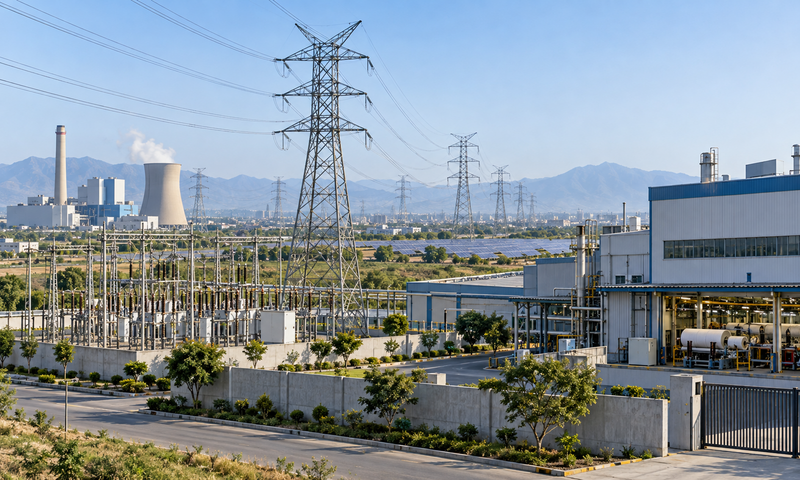
Pakistan’s First 400MW Power Auction Moves Closer
The National Electric Power Regulatory Authority has approved uniform use of system charges for bulk power consumers, clearing a major hurdle to Pakistan’s competitive electricity market. The decision will allow eligible consumers to purchase electricity from private suppliers through open access. They will pay the national grid to transport power from the generation source to their premises. The charges cover transmission and distribution costs, cross-subsidies and fixed grid expenses. Consumers must pay them in addition to the electricity supply price negotiated with private producers. Pakistan has more than 3,000 bulk power consumers. The approved framework applies uniformly across all distribution companies, including K-Electric. Nepra set the charge for B-3 industrial consumers at Rs6.23 per unit. B-4 industrial consumers will pay Rs9.09 per unit. C-3 consumers will face a charge of Rs14.95 per unit. Rates for C-2 consumers will range between Rs17.74 and Rs19.62 per unit. A-2 and A-3 consumers will pay Rs19.14 and Rs19.10 per unit, respectively. A fixed grid charge of Rs1 per kilowatt per month will also apply. Nepra will calculate it according to each consumer’s sanctioned load. Higher costs outside the auction Eligible consumers that seek open access without joining the competitive auction will pay substantially higher charges. These rates include stranded costs linked to existing electricity supply commitments. Non-participating B-3 consumers will pay Rs19.17 per unit, while B-4 consumers will face Rs25.45 per unit. Charges for C-3 and C-2 consumers will rise to Rs31.30 and as much as Rs32.56 per unit. The rates for non-participating A-2 and A-3 users will stand at Rs32.08 and Rs32.04 per unit, respectively. Nepra reviewed submissions from the Power Division, the Independent System and Market Operator, K-Electric and industrial consumers before issuing its decision. The regulator approved a uniform transmission and distribution loss factor of 8.04 percent for consumers connected at 11kV. It also accepted the Power Division’s proposed 1.51 percent loss factor for connections at 132kV. Nepra said differences created by uniform charges must follow the existing inter-Disco settlement mechanism. It rejected the idea of passing those differences only to wheeling consumers. The regulator also ruled that “additional charge shall be applied to all consumers, both open access users and consumers of the SOLRs” to maintain uniformity. ISMO to launch first 400MW auction ISMO will now conduct the first open-access auction for 400MW of electricity. It will announce the auction calendar and detailed procedures within days. The government has allocated 800MW for sale in two phases under five-year arrangements. Officials plan to expand the volume after evaluating the trial phase. Nepra has also approved amendments requiring auction projects to install battery energy storage equal to at least 10 percent of firm capacity. The requirement mainly targets expected solar and wind participation. Bids will carry no upper or lower price limit. Successful bid values will remain fixed for one year. The approvals advance reforms under Pakistan’s IMF programme. The original programme timelines required auction guidelines by December and uniform wheeling charges by January 2026.
