

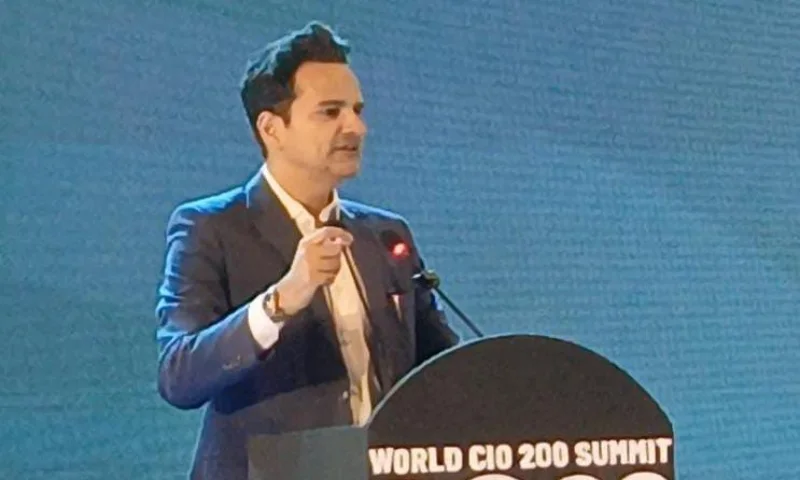
The Sindh government pledged support for technology training and startups at the World CIO 200 Summit & Awards 2026. Officials and industry leaders called for closer cooperation to strengthen Pakistan’s digital economy and global competitiveness. Ali Rashid, special assistant to the Sindh chief minister for science and information technology, addressed the Pakistan edition as chief guest. He urged government, businesses and technology leaders to work together on digital transformation and economic recovery. Global CIO Forum organised the daylong event with ITCN Asia at a Karachi hotel. Around 1,000 IT leaders, cybersecurity specialists, entrepreneurs, innovators and corporate executives attended, including Pakistani-origin professionals working overseas. Sindh promises skills and startup support Rashid said the turnout demonstrated Pakistan’s substantial technology talent pool. He said Sindh had launched IT education and training programmes for college and university students to address emerging skills shortages. “Learning the latest IT skills is no longer an option; it has become essential for fresh talent entering Pakistan’s economic, financial and industrial workforce if we are to turn around the country’s economy,” Rashid said. He urged graduates to acquire contemporary skills as technology reshapes science, business and industry. Sindh would support advanced training while helping entrepreneurs innovate and build sustainable businesses, he added. “The doors of my office are always open to emerging technology talent and technology leadership in Pakistan,” Rashid said. He invited professionals and entrepreneurs to develop public-private partnerships with the government. Industry leaders outline Pakistan’s potential Syed Abdul Qadir, executive director at A.F. Ferguson (PwC Pakistan) and the summit’s global advisor, delivered the keynote address. He said participants could become the “architects and brains” behind Pakistan’s digital future. Qadir identified three strengths: emerging talent, an aptitude for innovation and increasingly sophisticated technology infrastructure. Combining them effectively could transform Pakistan’s IT sector, he said. He described the summit as a platform connecting talent, leadership and innovation. Global CISO Forum President Dr. Erdal Ozkaya said Pakistan’s technology workforce could compete with professionals in developed countries. He pledged continued recognition, support and development opportunities for emerging talent. Ozkaya said the event formed part of the World CIO 200 Roadshow 2026, spanning more than 60 countries. The organiser’s website also lists responsible artificial intelligence, cybersecurity, cloud systems and future workforce needs among this year’s themes. Karachi hub ambitions and leadership awards ITCN Asia CEO Muhammad Umair Nizam said Sindh, particularly Karachi, could become a regional IT hub through its talent and infrastructure. He urged stronger government-industry cooperation. Universities should develop innovators, startup founders and technology leaders capable of building globally competitive products and businesses, he said. Meezan Bank President and CEO Syed Amir Ali urged corporations to invest in training and professional development for young technology workers. Around 50 senior technology and IT executives received the Tech Leader Excellence Award for their achievements and leadership. The gathering enabled CIOs, CISOs, entrepreneurs and emerging professionals to exchange ideas and explore partnerships. Speakers stressed that sustained investment in skills, infrastructure, entrepreneurship and supportive policies would determine Pakistan’s technological progress.
Rs100 Petrol Relief Announced: Who Qualifies and How to Apply?
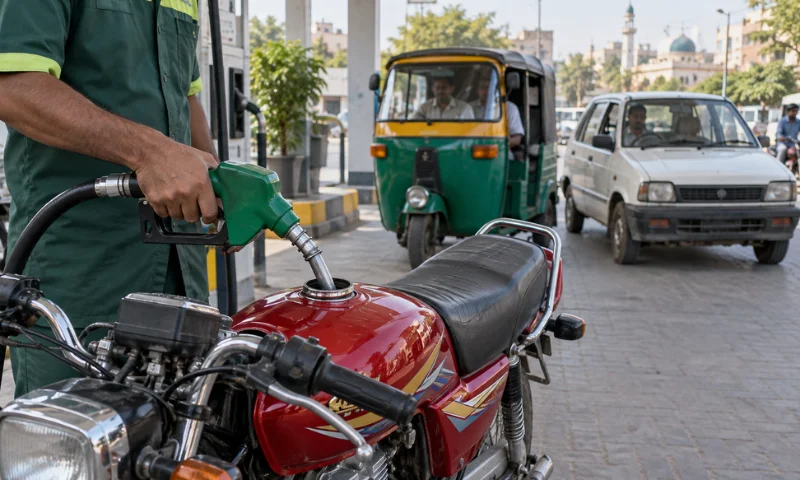
Prime Minister Shehbaz Sharif on Sunday announced a Rs100 per litre petrol relief scheme for motorcycles, rickshaws and small cars. The initiative aims to ease household transport costs as Middle East tensions drive up fuel prices. Motorcycles, rickshaws, Qingqi rickshaws and other two and three-wheelers qualify for discounted petrol on up to 20 litres monthly. Vehicles with engines up to 800cc qualify for 30 litres. The quotas translate into maximum monthly savings of Rs2,000 for eligible two and three-wheelers and Rs3,000 for small cars. Shehbaz said the government understood the financial pressure on citizens and would not leave them alone during difficult times. “We are launching a special scheme to reduce the burden of rising fuel prices on those using motorcycles, rickshaws, Chingchis and small vehicles,” he said. When the petrol relief scheme begins The scheme starts in Islamabad at midnight between Monday and Tuesday, September 15. Authorities will extend it nationwide at midnight between Wednesday and Thursday, September 17, including Azad Jammu and Kashmir and Gilgit-Baltistan. Registration opened on Sunday, according to Radio Pakistan’s report on the announcement. The prime minister thanked provincial governments for sharing vehicle registration data to support implementation. Petrol currently costs Rs375.82 per litre following Friday’s Rs5.02 increase. High-speed diesel rose by Rs5.28 to Rs403.32 per litre. At the current petrol price, the discount would bring eligible purchases to Rs275.82 per litre within the monthly quota. The actual discounted price will depend on the prevailing pump rate when motorists purchase fuel. How to register through 9771 The Ministry of Information Technology outlined an SMS registration and token process for eligible citizens. Applicants must send REG followed by their CNIC number to 9771. They must also provide their vehicle number, provincial code and registration date. After establishing eligibility, applicants can request a fuel token by sending TOK to 9771. They can then present the token to obtain petrol at the discounted rate. The ministry reiterated the monthly limits of 20 litres for motorcycles and Qingqi rickshaws and 30 litres for eligible small vehicles. Middle East conflict drives fuel pressure Pakistan shifted to daily fuel price reviews in July as renewed Middle East hostilities increased volatility in international oil markets. Authorities had introduced weekly reviews after Israel and the United States attacked Iran on February 28. Before that change, Pakistan reviewed petroleum prices fortnightly. Iran subsequently closed the Strait of Hormuz, disrupting a critical energy shipping route. The collapse of a fragile June ceasefire between Tehran and Washington renewed fears of wider conflict and further shipment disruptions. The International Energy Agency estimates that Hormuz carried around 20 million barrels of oil daily in 2025. That represented roughly one-fifth of global oil consumption and about a quarter of seaborne oil trade. Around 80% headed towards Asia.
Nine Years After Its First Reveal, Tesla Roadster Returns on October 1
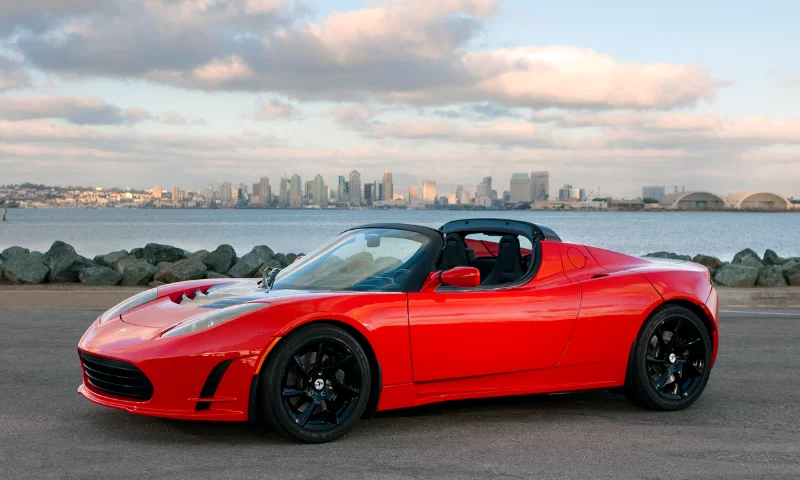
Tesla will unveil its long-delayed Roadster on October 1, chief executive Elon Musk said on Saturday, setting another milestone for the electric sports car. The announcement comes nearly nine years after Tesla first presented the next-generation model and six years after its original delivery target. Tesla posted “Go for launch” on X, the social media platform Musk also owns, alongside a graphic displaying the date. Musk then replied: “New Tesla Roadster Unveil 10.01” The announcement establishes an unveiling date. It does not provide a timetable for production or customer deliveries, leaving those questions open after repeated postponements. SpaceX thrusters could feature at unveiling The Information reported in August that Tesla could unveil a redesigned Roadster as early as that month. Its report outlined plans for a possible demonstration involving a limited-edition version with cold-gas thrusters developed alongside SpaceX. The publication identified SpaceX’s test facility in McGregor, Texas, as the expected demonstration location. Those details remain reported plans. Musk’s brief announcement did not confirm the venue, demonstration format or which version Tesla would show. Reuters’ August coverage of The Information report included further details about the proposed demonstration. Tesla could operate the thruster-equipped car remotely because of the noise and force it generates. The standard Roadster and SpaceX-branded edition would reportedly look similar. However, the report said the thruster version would likely lack approval for public roads. Its price could reach hundreds of thousands of dollars, or potentially millions. Tesla did not immediately respond to Reuters’ request for comment at that time. Roadster design has reportedly changed Tesla first revealed the next-generation Roadster in 2017 and promised deliveries from 2020. The programme subsequently suffered repeated delays. Its engineering direction has also reportedly changed substantially. Tesla abandoned an alternative design using Model S Plaid components and pursued an entirely new carbon-fibre hypercar, according to the supplied Reuters report. That would mark a shift from the programme’s earlier approach as a conventional high-performance electric vehicle. Tesla initially accepted $50,000 deposits for the standard Roadster and $250,000 for the limited Founder’s Series, Reuters reported in August. Those reservation amounts do not establish the redesigned car’s final pricing. Announcement follows Cybercab rides The Roadster news follows Tesla’s introduction of Cybercab rides in limited parts of Austin, Texas, last week. The two-seat vehicle has neither a steering wheel nor pedals. Musk has described the Cybercab as central to his ambition of making Tesla a dominant player in driverless transport. The two programmes target different uses: high-performance motoring and autonomous passenger services. For Roadster reservation holders, the October event could offer a first detailed look at how the project has changed. The announcement alone, however, leaves final specifications, pricing and delivery dates unresolved.

Mahira Khan Pregnancy: Second Baby Announced at TIFF Debut
Mahira Khan has revealed she is expecting her second child as she makes her Toronto International Film Festival (TIFF) debut. The appearance combines a personal milestone with her efforts to promote Pakistani cinema internationally. The actor shared the news 17 years after becoming a mother to her son, Azlan. Speaking to Dawn Images, she discussed pregnancy, representation and her changing priorities. Her TIFF schedule includes moderating a conversation under the festival’s Community Impact programming and attending a world premiere. Bringing Pakistan’s voice to TIFF Khan said the invitation offered an opportunity to present Pakistan as a distinct South Asian voice, with its own stories and cinema. “To be able to be part of that conversation on a platform like TIFF feels very special to me.” She described choosing international platforms carefully, considering their purpose and what she could contribute. Pakistan’s identity, she said, should remain visible within broader discussions about South Asian representation. Read More: Aag Lagay Basti Mein Trailer Finally Drops Ahead of Eid ul Fitr Her programme includes the premiere of Your Mother Your Mother Your Mother, directed by Pakistani-origin filmmaker and TIFF Tribute Award recipient Bassam Tariq. Academy Award winner Mahershala Ali stars in the film. The film follows a grieving Muslim hitman balancing fatherhood, faith and violence. Khan’s conversation with Tariq will explore storytelling, diaspora experiences and more authentic representation in global cinema. She said the trailer immediately appealed to her. Discovering Tariq’s Pakistani roots strengthened her interest, alongside her growing enthusiasm for collaboration with South Asian diaspora filmmakers. Recognition for cinema and representation Khan and Tariq will receive the Muslim Excellence in Cinema and Art award at the Muslim International Film Festival Toronto. The honour recognises their cinematic contributions and work bringing underrepresented perspectives to wider audiences. Her appearance comes through Us Studios’ South Asian Women Excellence in Cinema and Arts Programme, working with the Muslim International Film Festival Toronto. The initiative connects South Asian artists with international festivals and industry opportunities. It also brought Sanam Saeed to Cannes in 2026. Hassan ‘Huss’ Khan, a 26-year-old American model and film producer, founded Us Studios to advance South Asian storytellers internationally. A different experience of motherhood Khan acknowledged feeling apprehensive about revealing personal news and dressing for a red carpet while visibly pregnant. She ultimately chose a sari by Aafrinish by Niazi. “It’s very different this time, and definitely more challenging.” She contrasted becoming pregnant at 24 with her experience now, at 41. Physical limitations have disrupted her usual pace of work and travel. Emotionally, she described joy alongside fear, exhaustion and vulnerability. Starting again has also required adjusting expectations shaped by an older son, established routines and independence. “You imagine a lot of things for yourself and for your life, and this wasn’t necessarily one of the things I had imagined at this point. But we plan and then God plans, and of course His plans are supreme.”
Pakistan Digital Assets Push: UN Appeal for Global Rules
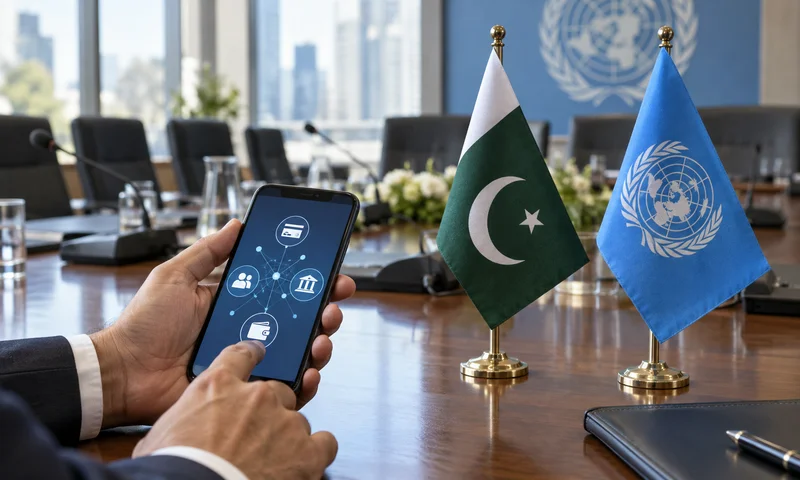
Pakistan has urged stronger global cooperation on digital assets, calling for regulatory and institutional frameworks that support innovation and protect consumers. It warned that countries must shape the future of finance or risk others shaping it for them. Minister of State Bilal Bin Saqib delivered the message virtually at the United Nations Headquarters. He also chairs the Pakistan Virtual Assets Regulatory Authority (PVARA). The session carried the title “Digital Assets and Blockchain for Sustainable Development: Advancing Digital Finance through Innovation.” Pakistan’s Permanent Mission to the UN convened it with UNDP, UNCTAD and the Office of the Secretary-General’s Envoy on Technology (ODET). Member states, UN entities and private-sector stakeholders attended. “The question before this room is not whether these technologies will scale. They will. The question is: who will shape them, and in whose interest,” he said. Financial inclusion and remittance costs Bin Saqib said digital assets, tokenisation and distributed ledger technologies could help emerging economies redesign financial infrastructure around inclusion, efficiency and access. He cited around 1.4 billion adults outside the formal financial system. Billions more, he said, face expensive remittances, slow settlements and limited credit. Sending $200 across borders still costs more than twice the 3% target under Sustainable Development Goal 10.c, he noted. Closing that gap could return billions of dollars annually to families. The World Bank’s Remittance Prices Worldwide website reports an average global transfer cost of 6.36%, supporting that comparison. At that rate, sending $200 costs about $12.72, compared with $6 at 3%. (World Bank) Opportunities beyond payments Bin Saqib said digital identity and verifiable financial histories could help small businesses, farmers and women entrepreneurs demonstrate economic activity. These tools could reduce reliance on conventional collateral or documentation. Tokenisation could mobilise capital by dividing assets into smaller investment units, including infrastructure bonds and renewable energy projects. Distributed ledger technology could also improve transparency in public spending and supply chains. However, he cautioned that technology alone would not solve development challenges. He identified retail market volatility, illicit finance and concentrated economic power among the risks. He also warned of a widening regulatory divide between technologically advanced countries and those lacking institutional capacity. Regulation must keep pace “The choice before every Member State is not regulate or don’t regulate. It is simpler, and starker, than that: to govern the future, or be governed by it,” he said. Bin Saqib argued that regulation must evolve alongside innovation. Delays could expose consumers and markets to harm. Rules driven mainly by fear could push digital activity into less transparent environments. Emerging international experience, he said, showed that regulation could help build markets rather than block their development. “No nation rises alone, and no nation should be left to rise alone,” Bin Saqib said, urging deeper international cooperation. He called on member states to make the UN briefing a starting point for that effort.
