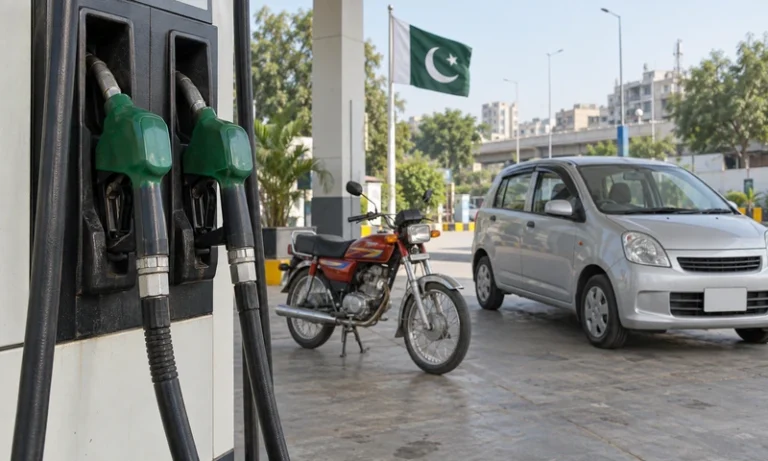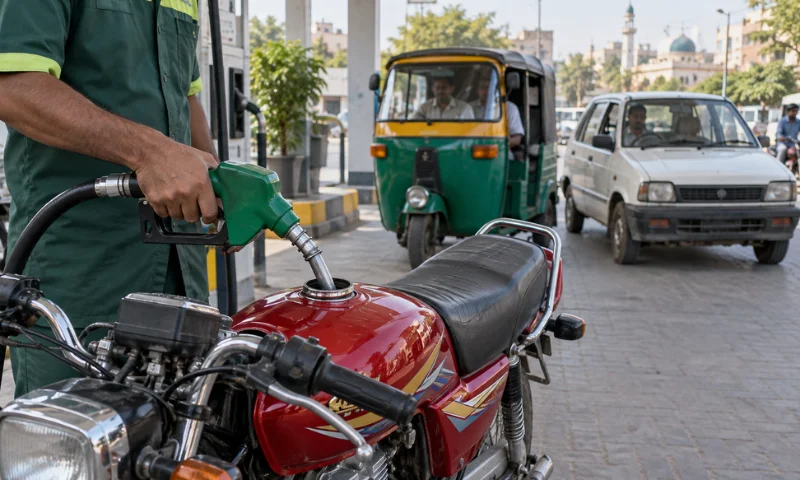
Prime Minister Shehbaz Sharif on Sunday announced a Rs100 per litre petrol relief scheme for motorcycles, rickshaws and small cars. The initiative aims to ease household transport costs as Middle East tensions drive up fuel prices.
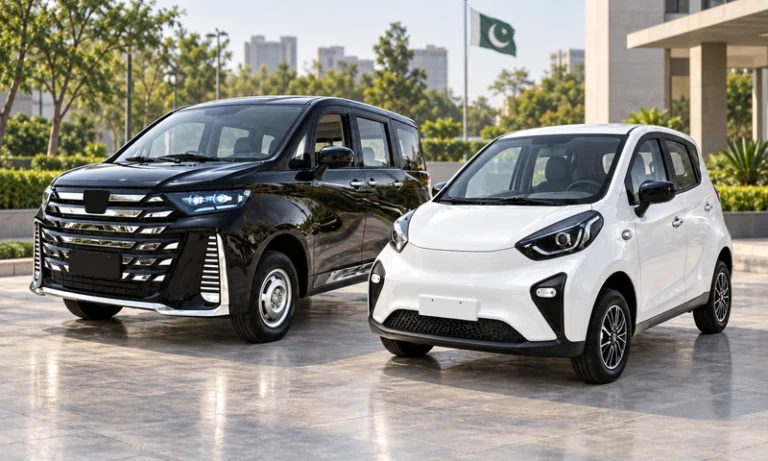
Motorcycles, rickshaws, Qingqi rickshaws and other two and three-wheelers qualify for discounted petrol on up to 20 litres monthly. Vehicles with engines up to 800cc qualify for 30 litres.
The quotas translate into maximum monthly savings of Rs2,000 for eligible two and three-wheelers and Rs3,000 for small cars.
Shehbaz said the government understood the financial pressure on citizens and would not leave them alone during difficult times.
“We are launching a special scheme to reduce the burden of rising fuel prices on those using motorcycles, rickshaws, Chingchis and small vehicles,” he said.
When the petrol relief scheme begins
The scheme starts in Islamabad at midnight between Monday and Tuesday, September 15. Authorities will extend it nationwide at midnight between Wednesday and Thursday, September 17, including Azad Jammu and Kashmir and Gilgit-Baltistan.
Registration opened on Sunday, according to Radio Pakistan’s report on the announcement.
The prime minister thanked provincial governments for sharing vehicle registration data to support implementation.
Petrol currently costs Rs375.82 per litre following Friday’s Rs5.02 increase. High-speed diesel rose by Rs5.28 to Rs403.32 per litre.
At the current petrol price, the discount would bring eligible purchases to Rs275.82 per litre within the monthly quota. The actual discounted price will depend on the prevailing pump rate when motorists purchase fuel.
How to register through 9771
The Ministry of Information Technology outlined an SMS registration and token process for eligible citizens.
Applicants must send REG followed by their CNIC number to 9771. They must also provide their vehicle number, provincial code and registration date.
After establishing eligibility, applicants can request a fuel token by sending TOK to 9771. They can then present the token to obtain petrol at the discounted rate.
The ministry reiterated the monthly limits of 20 litres for motorcycles and Qingqi rickshaws and 30 litres for eligible small vehicles.
Middle East conflict drives fuel pressure
Pakistan shifted to daily fuel price reviews in July as renewed Middle East hostilities increased volatility in international oil markets.
Authorities had introduced weekly reviews after Israel and the United States attacked Iran on February 28. Before that change, Pakistan reviewed petroleum prices fortnightly.
Iran subsequently closed the Strait of Hormuz, disrupting a critical energy shipping route. The collapse of a fragile June ceasefire between Tehran and Washington renewed fears of wider conflict and further shipment disruptions.
The International Energy Agency estimates that Hormuz carried around 20 million barrels of oil daily in 2025. That represented roughly one-fifth of global oil consumption and about a quarter of seaborne oil trade. Around 80% headed towards Asia.